

Early Blight vs Late Blight: How to Tell Them Apart
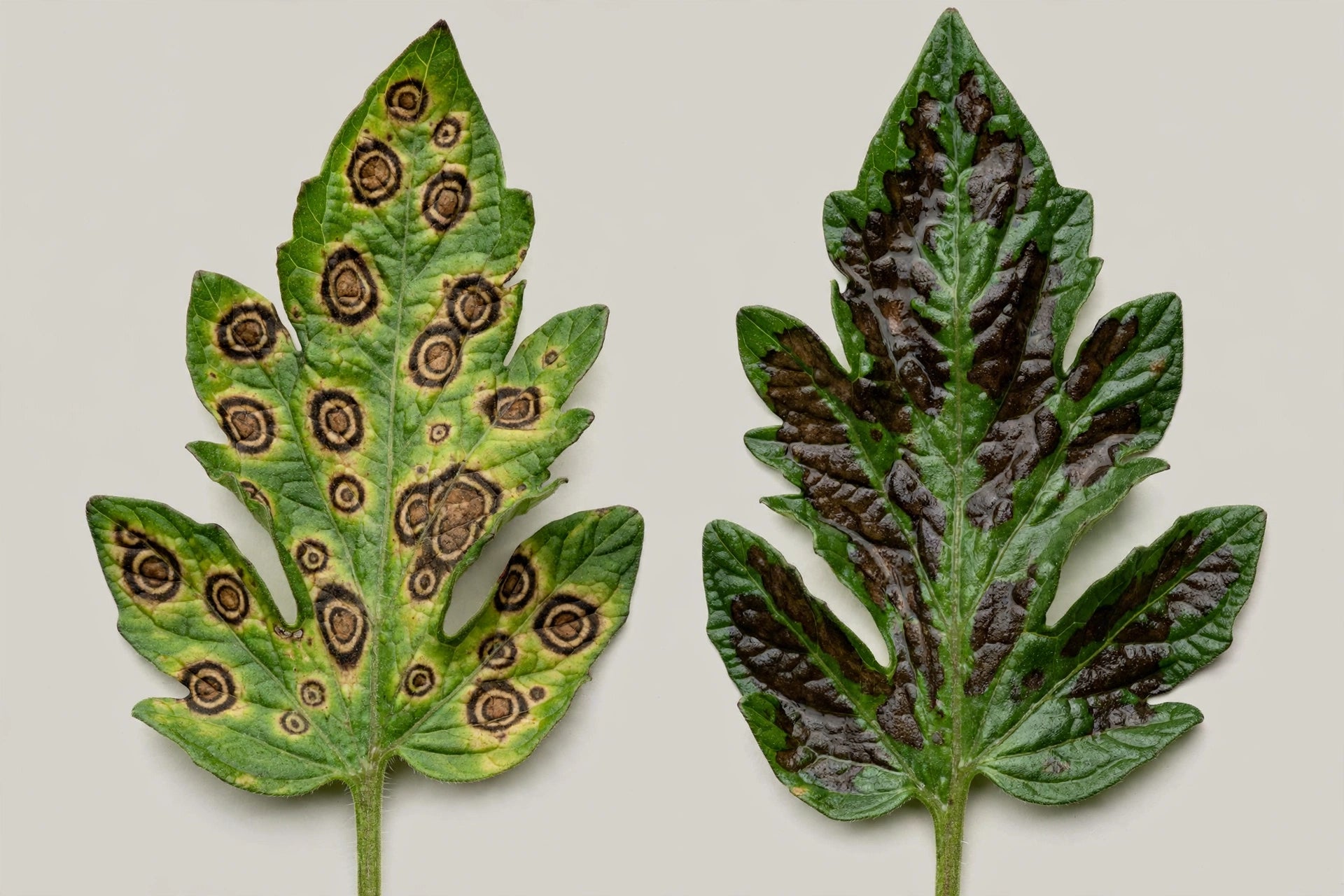
Leaf spots: Early blight — round, dark, with concentric target rings. Late blight — irregular, water-soaked and greasy, no rings.
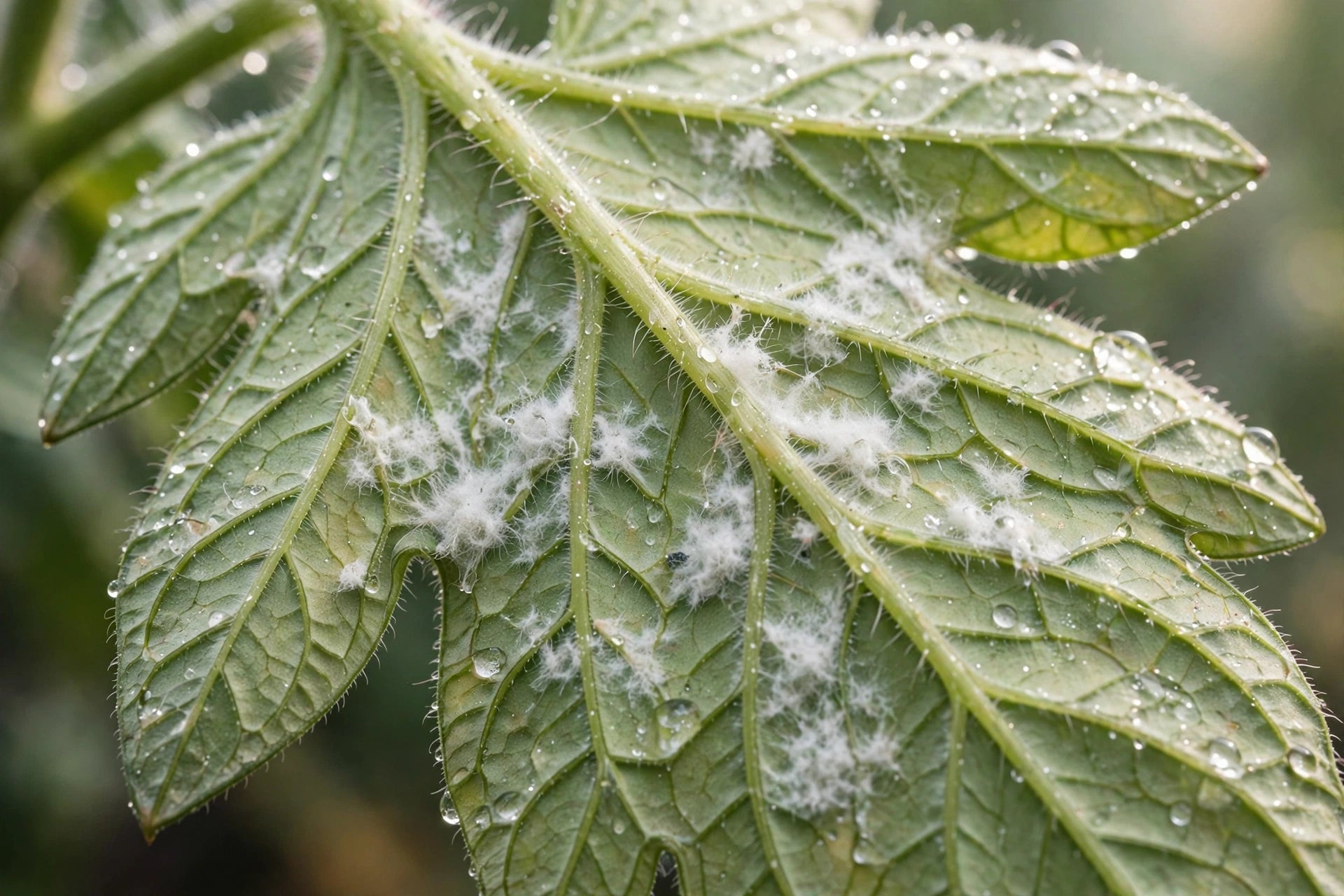
Underside fuzz: Early blight — none. Late blight — white fuzzy growth on leaf undersides in humid weather.
Favorite weather: Early blight — warm 75–85°F, humid. Late blight — cool and wet 60–70°F, rainy.
Stem symptoms: Early blight — dark sunken spots, rarely girdling. Late blight — dark, almost black lesions that can girdle and collapse stems.
Fruit symptoms: Early blight — dark leathery sunken spots at the stem end, with rings. Late blight — firm, dark, greasy blotches anywhere on fruit; fruit rots.
Overwinters in:
Where it starts: Early blight — oldest, lowest leaves. Late blight — anywhere, often upper leaves and stems.
Speed: Early blight — slow, climbs over weeks. Late blight — explosive, can collapse plants in days.fferent speeds, and prefer different weather — once you know the contrasts, you will rarely confuse them again.
At a glance
Pathogen: Early blight — Alternaria solani (a true fungus). Late blight — Phytophthora infestansblight target-ring spots, right leaf with late blight water-soaked dark blotches, neutral background, no text in image">
Early blight — debris, soil, nightshade weeds. Late blight — living tissue: volunteer potatoes, saved tubers, debris.
Typical response: Early blight — manage all season: remove leaves, mulch, water at base. Late blight — emergency: remove and destroy affected plants fast.
Side-by-side: the full comparison
Prefer a table? Here is every contrast in one place — scan down your symptom column and see which one it matches.
| Early blight | Late blight | |
|---|---|---|
| Pathogen | Alternaria solani — a true fungus | Phytophthora infestans — an oomycete ("water mold") |
| Symptom appearance | Dry, round, dark brown-to-black spots with concentric target rings; crisp edges | Irregular, water-soaked and greasy dark blotches, no rings, diffuse edges; white fuzzy growth on leaf undersides in humid weather |
| Speed of spread | Slow — climbs from lower leaves upward over weeks; plants keep producing while you manage it | Explosive — can brown and collapse whole plants within days of first symptoms; gardeners describe it as the plant "melting" |
| Weather trigger | Warm and humid: 75–85°F, soil splash | Cool and wet: 60–70°F, rain, prolonged leaf wetness |
| Where it starts | Oldest, lowest leaves near splashing soil — bottom-up disease | Anywhere — often upper leaves and stems first after wind-blown spores arrive |
| Stem symptoms | Dark sunken lesions, rarely girdling | Dark, almost black lesions that can girdle and collapse stems |
| Fruit symptoms | Dark leathery sunken spots at the stem end, often with rings | Firm, dark, greasy blotches anywhere on the fruit; fruit rots |
| Tuber risk (potatoes) | Low — yield is lost mainly through defoliation, not direct tuber damage | High — spores wash down through soil and rot tubers directly |
| Overwintering | Debris, soil, nightshade weeds — for years (hence rotation) | Living tissue only — volunteer potatoes, saved tubers, cull piles |
| First action | Strip spotted lower leaves, mulch, water at the base, scout weekly | Remove and bag (or deeply bury) affected plants immediately; do not compost; protect neighboring plants |
| Urgency level | Routine management — a weekend-afternoon job, then weekly habit | Emergency — same-day action; speed is everything |
Strains and resistant varieties: what's current
A quick heads-up from the extension world: late blight is not one identical foe everywhere. University lineage surveys (Cornell, University of Wisconsin) have identified US-23 as the dominant late blight lineage in the US in recent years, with occasional detections of other strains such as US-8 and US-25. That matters because tomato resistance genes are strain-specific — the Ph2 and Ph3 genes performed excellently against US-23 in Cornell field trials. Varieties carrying these genes — Iron Lady, Mountain Magic, Mountain Merit, Defiant PhR, and Plum Regal — have shown strong late blight resistance in those trials, and Iron Lady is additionally resistant to early blight and Septoria leaf spot. No variety is bulletproof, and resistance does not replace scouting and sanitation — but if you grow in a late blight region, ask your local extension which resistant varieties hold up best for your area. Planning next season? Browse our tomato seeds collection to start with vigorous, healthy plants. Our full variety roundup is in the resistant tomato varieties for blight guide.
Reading the spots
The single most reliable difference is the lesion itself. Early blight spots are dry-looking, round, and ringed — the target pattern described in our brown spots diagnostic. Late blight lesions look wet and greasy even in dry weather, with diffuse edges rather than crisp circles, and in humid mornings you will find a fringe of white fuzzy sporulation on the leaf underside. That fuzz is definitive: early blight never makes it.
Location is the second clue. Early blight is a bottom-up disease — it starts on the lowest leaves nearest splashing soil and climbs. Late blight can strike the top of the plant first, especially after wind-blown spores arrive, and it attacks stems aggressively, sometimes snapping them.
Reading the weather and the speed
Check your recent weather. A cool, rainy spell in the 60s is late blight weather; a hot, humid stretch in the high 70s to mid-80s favors early blight. Then clock the speed: early blight defoliates over weeks and plants keep producing while you manage it. Late blight browns whole sections within days — gardeners often describe it as the plant "melting." If your plant looked fine three days ago and is collapsing now, treat it as late blight until proven otherwise.
Why the response differs so much
Early blight is manageable because it is slow and stays on foliage you can remove. The full program — strip spotted leaves, mulch, water at the base, rotate — is covered in the early blight pillar guide and the 48-hour action plan.
Late blight is different because of its speed and its spores: a single infected plant can shower a whole neighborhood with wind-borne sporangia. Extension guidance is blunt — remove and bag (or bury deeply) affected plants immediately, do not compost them, and protect neighboring plants with labeled protectant fungicides if the disease is active in your area. Check with your local extension office: many regions run late blight alert networks during cool, wet summers.
One more difference that matters for potatoes: late blight rots tubers directly and famously caused the Irish Potato Famine, while early blight on potatoes mainly costs yield through defoliation. If you grow potatoes, learning both diseases is non-negotiable.
Our verdict: which one is it?
Diagnose early blight if the spots are round, dry, and ringed like targets; the disease started on the lowest leaves and has been creeping upward for weeks; and the weather has been warm and humid. This looks most like early blight — but that is a working diagnosis, not a guarantee. If any lesions turn greasy or fast-moving, or white fuzz appears underneath the leaves, the verdict changes.
Diagnose late blight if the lesions are water-soaked and greasy with no rings; white fuzz appears on leaf undersides on humid mornings; dark lesions are girdling the stems; or a healthy-looking plant is collapsing within days. But remember: this looks most like late blight does not mean it is late blight — early blight, Septoria, and other disorders can look similar at a glance. When the picture is mixed, default to the late blight response while you confirm. Speed kills; caution is cheap.
When to call your extension clinic: if the disease is moving fast and you are not sure what it is; if you want a photo or sample confirmed (many clinics can diagnose from either); or if late blight is confirmed — extension offices track outbreaks and alert neighboring growers. You can also report a confirmed case to USAblight, the national late blight project, which maps confirmed reports and lets gardeners sign up for outbreak alerts.
Frequently asked questions
Can a plant have both at once? Yes, in transitional weather — and that is genuinely confusing. Diagnose by the dominant lesion type, and default to the late blight response if any greasy, fast-moving lesions with underside fuzz are present. Speed kills; caution is cheap.
Does copper spray work for both? Copper-based protectants labeled for home gardens help against both as preventives, but neither disease is cured by spraying spotted leaves. For late blight, timely protectant coverage of healthy plants during an outbreak is far more valuable than spraying after symptoms.
Which one overwinters in my soil? Early blight survives in debris and soil for years — hence rotation. Late blight needs living tissue (volunteer potatoes, saved tubers, cull piles), so destroying volunteers and not composting infected material breaks its cycle.
Is late blight common in home gardens? It is sporadic — some years it never appears, other years cool wet summers bring regional outbreaks. That unpredictability is exactly why the fast response matters when it does show up.
Sources
- Cornell University Extension — late blight and early blight of tomato and potato: comparative diagnosis. - UC Integrated Pest Management — Phytophthora infestans management and alert guidance. - University of Minnesota Extension — distinguishing early and late blight in home gardens. - Penn State Extension — tomato blight diseases: identification and emergency response.
When in doubt, assume late blight
If you're not sure which blight you're looking at, act as if it were late blight for the first 24 hours: remove the worst-affected foliage, stop overhead watering, and protect neighboring plants. That emergency response is the right move for both diseases in the short term, and you can refine the diagnosis as the pattern develops — rings and slow spread will confirm early blight, while speed and fuzz will confirm your caution was warranted.
Keep going: the late blight cluster
Ready to go deeper on the dangerous one? Our late blight cluster covers it end to end. Start with the late blight guide for tomatoes and potatoes, then learn to read the warning signs: black spots spreading fast on leaves, why plants suddenly wilt, tomato plants wilting, and tomato fruit rotting on the vine. Growing potatoes? Don't miss late blight on potatoes. Then arm yourself with how to scout for late blight and plan next season's comeback with resistant tomato varieties for blight.
Wrapping things up!
Rings and slow means early blight — manage it and keep harvesting. Greasy blotches, underside fuzz, and terrifying speed mean late blight — act like it is an emergency, because it is. Learn both patterns now, while your plants are healthy, and you will never waste the critical first days on the wrong response. For the full early blight playbook, start with the pillar guide; for season-long resilience, browse tomato and potato varieties in our vegetable collection, and stock the gardening tools that make base-watering and mulching easy before the season starts.
