

Plant Suddenly Wilting Overnight? 7 Causes and What to Do
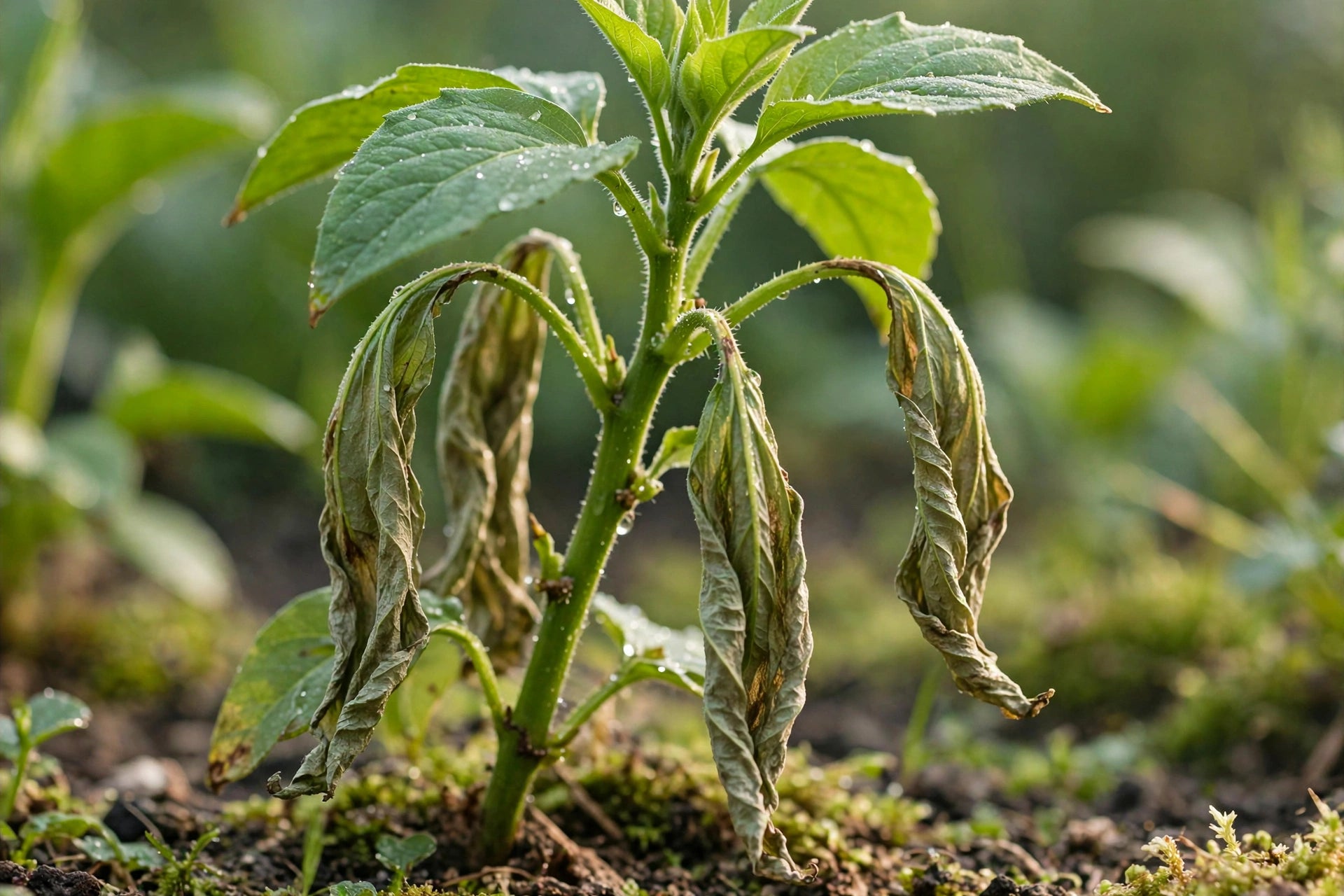
You walked past your garden last night and everything looked fine. This morning, a plant — maybe your favorite one — is drooping like a deflated balloon. Leaves limp, stems floppy, the whole thing looking like it gave up overnight.
Here's the hard truth about sudden wilting: it's a symptom, not a diagnosis. Seven very different problems can all look like "my plant wilted overnight," and treating the wrong one wastes the little time you have. A thirsty plant needs water now; a blighted plant needs to come out now.
So don't panic — triage. In this guide, we'll rank the most common causes of sudden wilting from most to least urgent, give you a one-glance triage table, and walk you through the simple tests that separate the killers from the recoverable. One framing rule for the whole article: plant diagnosis is rarely certain from symptoms alone. Think "this looks most like X, but Y is also possible" — and you'll make better decisions than anyone chasing certainty.
The Wilt Triage Table: Rank Your Suspects First
Before you touch a watering can or a pair of pruners, spend sixty seconds with this table. Find the row that matches your plant's speed and clues, run its one test, and you'll know which section below to read first.
| Cause | Speed | Key clue | The one test | Urgency |
|---|---|---|---|---|
| Underwatering / heat stress | Hours | Soil dry; wilts in afternoon heat, perks up by evening | Finger test 2 inches down | Low — water and watch |
| Root rot (overwatering) | Days | Soil soggy; lower leaves yellow, stem base mushy | Squeeze soil; inspect roots | Medium — fix drainage fast |
| Cutworms | Overnight | Seedling severed at soil line or toppled | Dig 1–2 inches around base at dusk | Medium — they're still there |
| Late blight | Days | Dark, water-soaked lesions on stems and leaves | Look for stem lesions + white fuzz on leaf undersides in morning damp | High — spreads fast |
| Bacterial wilt | 1–3 days | Whole plant wilts but leaves stay green; no spots | Cut-stem ooze test in clear water | High — no cure, remove |
| Fusarium wilt | Weeks | One-sided yellowing and wilting, starting low | Slice stem lengthwise: brown vascular ring | High — no cure, remove |
| Verticillium wilt | Weeks | V-shaped yellow lesions from leaf margins | Same stem slice: light tan discoloration near base | Medium — seldom kills, saps yield |
Speed is your sorting hat. Hours = water or heat. Days with spots = blight. Days without spots = bacterial wilt. Weeks = the soilborne fungal wilts. Now let's meet each suspect properly.
Suspect 1: Late Blight — The Fast One With Spots
Late blight — Phytophthora infestans, the same pathogen behind the Irish potato famine — is the speed demon of the wilt world. It doesn't just wilt leaves; it attacks stems with dark, water-soaked lesions that turn chocolate brown to near black. When a lesion wraps all the way around a stem, everything above it collapses. Fast. In cool, wet weather, an entire planting can defoliate within about two weeks.
The fingerprints: pale green to brown spots on leaves, often with water-soaked margins; dark lesions on stems and petioles; and — the tell — a white, downy fuzz on the undersides of leaves on damp mornings. That fuzz is the pathogen sporulating, and each spore rides the wind to your next plant. If your leaf spots show target-like concentric rings instead, you're more likely looking at early blight — our early blight vs late blight comparison sorts those two out.
Late blight loves cool, wet weather (roughly 60–75°F with high humidity), so it's a bigger threat in the Pacific Northwest, the Northeast, and anywhere with rainy summers than in hot, dry regions. Timing and pressure vary by climate region — check what's typical for yours.
IPM-first response, in order: there's no curing infected tissue, so prevention and sanitation lead. Remove affected leaves — and whole plants if stem lesions are girdling — into the trash or municipal green waste, never the home compost pile. Then protect what's still healthy: improve airflow, water at the base to keep foliage dry, and as a last resort consider a copper-based protectant labeled for home vegetable gardens on the remaining healthy plants — with the honest caveat that these shield new growth rather than cure what's already infected. Our late blight guide has the full playbook, and how to scout for late blight shows you the weekly check that catches it early.
Suspect 2: Bacterial Wilt — The Fast One Without Spots
Bacterial wilt — caused by Ralstonia solanacearum — is late blight's evil twin: just as fast, but with no spots to warn you. The whole plant wilts within days, yet the leaves stay green. It looks exactly like a plant that desperately needs water — except watering does nothing, because the bacteria have clogged the plant's water pipes from the inside.
It favors warm, humid weather (worst when temperatures sit in the mid-80s to mid-90s with moisture), and it hits tomatoes, peppers, eggplants, and potatoes — the whole nightshade family.
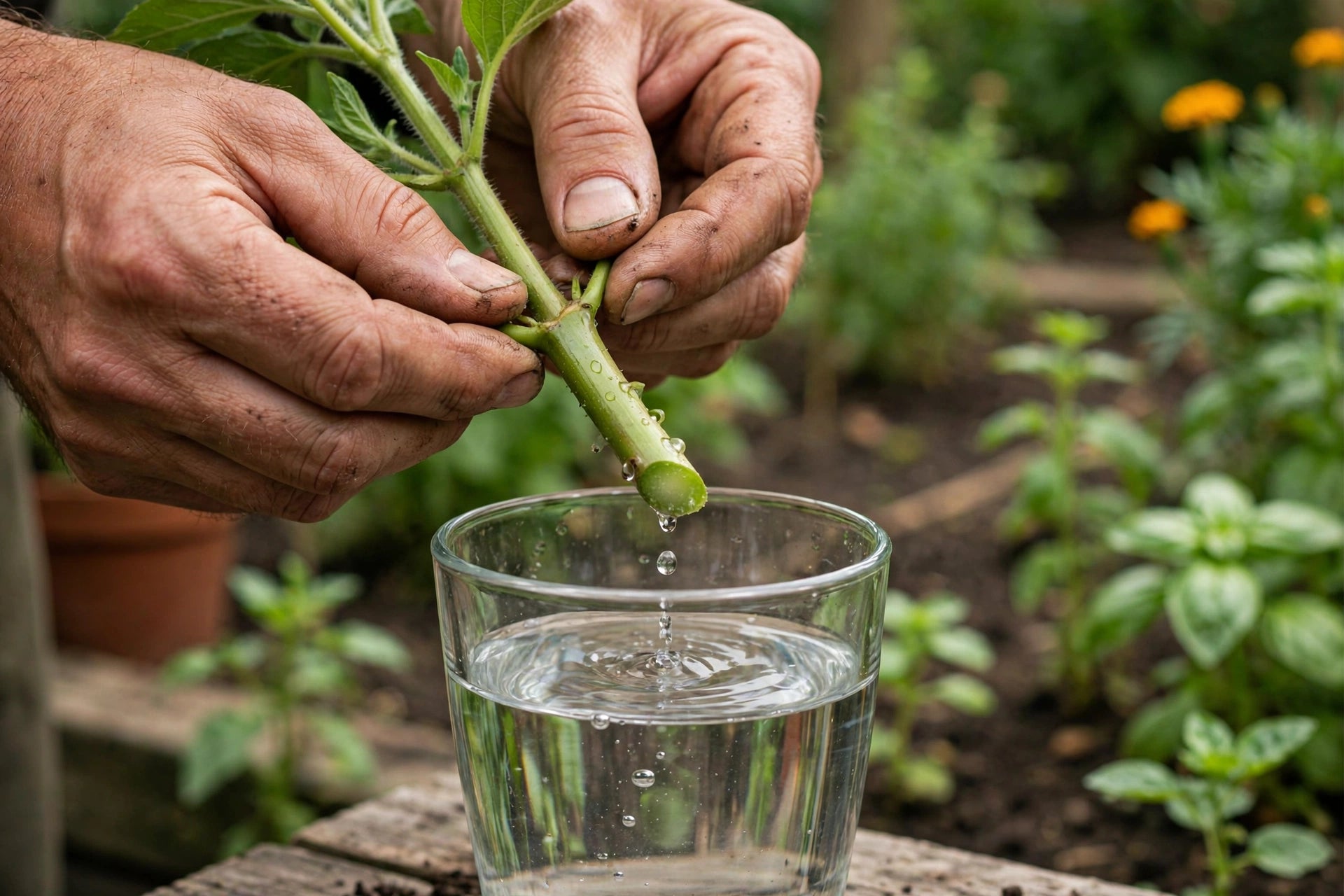
The one test — and it's a good one — is the cut-stem ooze test. Cut a 2–3 inch section of stem from a freshly wilted plant near the base, and suspend the cut end just under the surface of a clear glass of clean water. Within minutes to about half an hour, fine milky-white threads stream out of the cut end and sink toward the bottom. That milky ooze is millions of bacteria, and it's a strong field indicator of bacterial wilt. No ooze after 30 minutes? That points away from bacterial wilt — toward the fungal wilts or root problems below.
The hard news: there's no cure for bacterial wilt. Once the test is positive, the responsible move is to pull the plant, bag it, and trash it — don't compost it. Then rotate that bed away from nightshades for several seasons (our crop rotation guide explains the rhythm), clean your tools between plants, and next time choose varieties labeled with bacterial wilt resistance.
Late Blight vs Bacterial Wilt: The 60-Second Split
These two get confused constantly — both kill fast, both love moisture. Here's the side-by-side so you can split them in under a minute:
| Late blight | Bacterial wilt | |
|---|---|---|
| Pathogen | Phytophthora infestans (water mold) | Ralstonia solanacearum (bacterium) |
| Speed | Days to about 2 weeks for full collapse | 2–3 days from first wilt to dead |
| Spots? | Yes — dark, water-soaked lesions on stems and leaves | No — leaves stay green, stems look fine outside |
| Signature sign | Brown-black stem lesions; white fuzz on leaf undersides in damp weather | Milky bacterial ooze from a cut stem in clear water |
| Favorite weather | Cool and wet (60–75°F) | Warm and humid (mid-80s–90s°F) |
| Cure? | None for infected tissue; protectants only shield healthy growth | None — remove and discard infected plants |
Verdict: choose late blight if you see any dark lesions on stems or leaf spots — especially with white fuzz on damp mornings. Choose bacterial wilt if the plant collapsed fast with green, spot-free leaves and the cut-stem test shows milky ooze. When wilting arrives with spots, think blight first; when it arrives alone, think bacteria — but keep the humility either way.
Suspects 3 and 4: Fusarium and Verticillium — The Slow, One-Sided Ones
Not every wilt is a sprint. Fusarium and verticillium wilts are soilborne fungi that play the long game — weeks, not days — and they leave a signature the fast killers don't: asymmetry.
Fusarium wilt (Fusarium oxysporum) is the one-sided one. Yellowing and wilting start on one side of the plant, or even one side of a single leaf, beginning with the lower leaves and climbing. Plants often wilt in the afternoon heat and partially recover overnight — for a while. Slice an infected stem lengthwise and you'll find the calling card: brown discoloration of the vascular tissue, while the pith stays healthy. It favors warm soils and can persist in soil for years.
Verticillium wilt (Verticillium dahliae) is its cooler-weather cousin. Look for V-shaped yellow lesions that narrow inward from the leaf margins on lower leaves, plus the same afternoon-wilt, morning-recovery pattern. The stem slice shows a lighter tan discoloration, mostly near the base. The honest note from UC IPM: verticillium seldom kills outright, but it saps vigor and yield all season.
Both share the same hard truth: no cure once the fungus is inside the plant. Pull infected plants (trash, not compost), rotate to non-host crops like corn or small grains for several years, and replant with varieties carrying resistance — look for "F" (fusarium) and "V" (verticillium) codes on the label. Starting clean with fresh vegetable seeds in a rotated bed beats fighting a losing battle in infected soil.
Suspect 5: Root Rot — The Drowning
Sometimes the plant isn't thirsty — it's drowning. Overwatered or poorly drained soil starves roots of oxygen and invites water molds like Pythium and Phytophthora species, whose swimming spores thrive in saturated soil. The result looks exactly like drought: wilted, yellowing leaves. The cruelest trick in gardening.
The separator: check the soil and the roots. If the soil is soggy and the plant still wilts, pull back the mulch and look — brown, soft, mushy roots (sometimes with the outer layer sloughing off) mean rot, not thirst. Plants may wilt at midday and recover at night in the early stages, then decline for good.
IPM-first fix: stop watering and let the top inches dry; improve drainage (raised beds are the honest long-term answer for heavy clay); water at the base in the morning so foliage and crowns stay dry; and avoid planting susceptible crops into known soggy spots. There's no rescuing fully rotted roots — prevention is the whole game here.
Suspect 6: Cutworms — The Overnight Chew
If seedlings were fine at dusk and toppled by dawn, look down, not up. Cutworms — the night-feeding caterpillars of certain moths — chew through stems right at the soil line, and the plant above simply falls over. Some subterranean types feed on roots and underground stems instead, which shows as mysterious wilting rather than a clean cut.
The one test: go out at dusk with a flashlight, or gently dig the top inch or two of soil around the damaged plant — you'll often find the culprit curled in a C-shape right there. No slime trail (that would be slugs), just a clean chew.
The classic fix is gloriously low-tech: handpick any you find into soapy water, and slip a collar — a cardboard tube or cut plastic cup — around each remaining seedling, an inch into the soil and a couple of inches up. Clean up weeds and debris where moths lay eggs, and consider floating row covers over new transplants. The hand tools for dusk patrols are all on our gardening tools page.
Suspect 7: Heat Stress and Simple Thirst — The Recoverable Ones
Let's end the lineup with the good news: the most common cause of sudden wilting is also the easiest to fix. A plant losing water faster than its roots can supply it — hot afternoon sun, a missed watering, a container that dried out — droops dramatically and looks half-dead. Then you water it, and by evening it's standing tall again like nothing happened.
The one test everyone should run first, before any disease detective work: push your finger two inches into the soil. Dry? Water deeply at the base and check again in a few hours — recovery confirms the diagnosis. Moist? Stop, put the watering can down, and rejoin the suspect list above; watering a drowning plant only hurries the rot.
Heat stress deserves its own note because it fools everyone. On scorching afternoons — and heat waves are arriving earlier and lasting longer across most climate regions — even well-watered plants wilt as a defense, then recover overnight. If the pattern is "sad at 3pm, fine at 8am," that's heat talking, not disease. Mulch the soil, water deeply in the morning, and give containers afternoon shade. Timing and heat pressure vary by climate region, so adjust to your local rhythm.
What to Do in the Next 10 Minutes
Ranked by urgency, here's your triage run:
1. Finger-test the soil. Dry two inches down → deep water at the base, then recheck in a few hours. Moist → don't water; keep diagnosing. 2. Scan the stems. Dark, water-soaked lesions → treat as suspected late blight: remove affected tissue to the trash. Chewed at the soil line → cutworm patrol at dusk. 3. Run the cut-stem test if a plant wilted fast with green, spot-free leaves → milky ooze means bacterial wilt: pull, bag, trash. 4. Slice a stem if the wilt is slow and one-sided → brown vascular ring means fusarium; pull and plan rotation. 5. Check the roots if the soil is soggy → brown and mushy means rot: stop watering, fix drainage. 6. Note the weather and the clock. Cool and wet plus spots = blight weather. Hot afternoon plus recovery by morning = heat or an early vascular wilt. Write down what you see — patterns across days are diagnostic gold.
Whatever you find, keep diseased material out of the compost and off the ground, wash your hands and tools after handling suspect plants, and when in doubt, your local extension service can confirm an ID from a sample.
Frequently asked questions
My plant wilted overnight but the soil is wet — what does that mean? Wet soil plus wilt means the roots can't deliver water: root rot, or a vascular wilt like bacterial or fusarium wilt. Don't water more — run the stem tests above instead.
Can a wilted plant recover? If it's thirst or heat stress, usually yes — within hours of a deep watering. If it's bacterial wilt, fusarium wilt, or advanced late blight, no — and removing it protects the rest of the garden.
Is the cut-stem ooze test reliable? It's a strong field indicator used by extension services, but not a lab diagnosis. Milky streams within about 30 minutes point strongly toward bacterial wilt; no ooze points away. When a whole bed is at stake, confirm with your local extension service.
Should I compost a plant that died of wilt? No — trash or municipal green waste. Home compost rarely gets hot enough to kill soilborne pathogens, and you'd just be spreading the problem around.
Why did only one side of my plant wilt? One-sided wilt looks most like fusarium wilt — but slice the stem to check for the brown vascular ring before you decide, since other problems can mimic it.
Can I replant in the same spot? For bacterial, fusarium, or verticillium wilt, rotate those crops out for several years and choose resistant varieties. For late blight, the pathogen doesn't survive long without living tissue, so next season with clean transplants and rotation is usually fine.
Sources
- Cornell Cooperative Extension
- UC Integrated Pest Management (UC IPM)
- Penn State Extension
- NC State Extension
- University of Minnesota Extension
- USDA
Wrapping things up!
Sudden wilting is scary, but it's also information — speed, spots, soil, and stems tell you nearly everything. Start with the finger test, run the stem tests before you reach for any product, and remember the framing: "this looks most like X, but Y is also possible" will steer you right far more often than a hasty certainty.
Bookmark the late blight guide and the tomato wilting walkthrough for the next scare, browse vegetable seeds when you're ready to replant with a clean start, and keep the gardening tools handy for dusk patrols. And as always — if anything in your garden has you stumped, we're here to help.
