
Mulching to Prevent Soil Diseases in the Garden
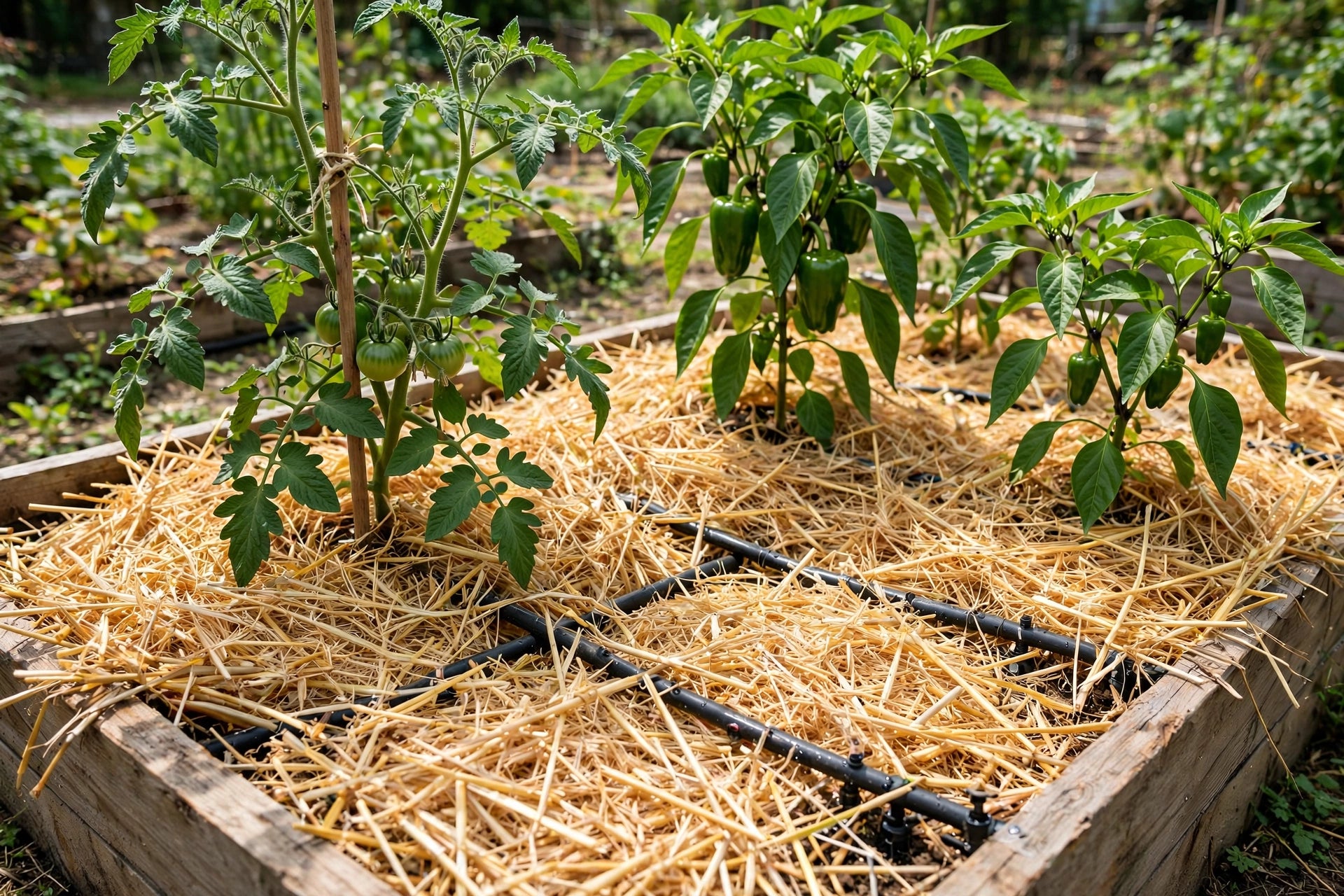
If you do one thing to prevent early blight this season, make it mulch. The disease starts when rain or watering splashes soil — where the fungus overwinters — onto the lowest leaves. A 2–4 inch blanket of mulch breaks that splash cycle physically: raindrops hit straw instead of soil, and the spores never get their ride upstairs. University extension trials consistently rank mulching among the highest-impact, lowest-cost disease controls available to home gardeners, and it pays side benefits in moisture retention and weed suppression.
How mulch stops soil diseases
Soil-borne pathogens like the early blight fungus live in the top layer of soil and in last season's debris. They cannot fly; they travel in water droplets. A hard rain hitting bare soil launches thousands of micro-droplets upward, each a potential spore taxi to the lower leaves. Mulch intercepts the impact. The drop hits straw, shredded leaves, or wood chips, and the splash — if any — carries mulch, not soil.
This is why mulching matters most for the diseases that start low and climb: early blight, Septoria leaf spot, and the whole family of splash-dispersed problems. It is also why mulch pairs so well with the other two splash controls — watering at the base and removing the lowest leaves. Together they close every delivery route the fungus uses.
Which mulch to use
Straw is the classic vegetable-garden mulch: cheap, light, easy to spread thick, and it breaks down into organic matter. Use straw, not hay — hay contains seed heads that will sprout a weed crop.
Shredded leaves are free every fall and excellent — run a mower over them so they mat less and let water through.
Wood chips or shredded bark work well around established plants and in paths, but keep them on the surface (not mixed into soil, where they tie up nitrogen as they decompose) and a few inches from stems.
Avoid: dyed mulches of unknown origin, fresh grass clippings in thick layers (they mat into slime — dry them first or apply thinly), and any mulch that might carry disease — never mulch with debris from diseased plants.
How to apply it right
- Depth: 2–4 inches. Less than 2 inches does not reliably block splash; more than 4 inches can stay soggy and harbor slugs. - Timing: mulch after the soil has warmed in spring (mulching cold soil keeps it cold) and after seedlings are established. In warm climates you can mulch earlier; timing varies by climate region. - Keep it off the stems. Leave a 2–3 inch mulch-free ring around each stem. Mulch piled against stems — "volcano mulching" — traps moisture and invites stem rot, trading one disease for another. - Extend it wide. Cover the whole bed, not just a circle around each plant — splash comes from everywhere. - Replenish. Organic mulches decompose; top up mid-season if the layer thins below 2 inches.
Mulch mistakes that backfire
- Mulching diseased debris in. Always clear last season's infected leaves and vines before mulching — otherwise you are tucking the pathogen in under a blanket. - Volcano mulching. Piled against stems, mulch holds moisture where stems need air. The ring gap is non-negotiable. - Mulching too early in cold soil. In northern gardens, bare soil warms faster in spring. Wait until soil temperatures are reliably warm, then mulch. - Plastic mulch without drip. Black plastic blocks splash brilliantly but needs drip irrigation underneath — overhead watering on plastic just sheets water (and spores) around.
The full splash-defense trio
Mulch is one leg of a three-legged stool. The other two: water at the base (drip or soaker, morning only if foliage must get wet) and clear the lowest leaves (prune the bottom 8–12 inches of foliage once plants are established, and strip any spotted leaves at first sight per the action plan). Add crop rotation across seasons, and soil diseases run out of moves.
Frequently asked questions
Will mulch cause more slugs? Thick, constantly damp mulch can shelter slugs. Keep the layer at 2–4 inches (not deeper), keep it off stems, and let the surface dry between waterings. The disease protection outweighs the risk for most gardens.
Can I mulch with newspaper or cardboard? Yes, as a base layer under straw or leaves — a few sheets of plain newspaper or unwaxed cardboard suppress weeds well. Avoid glossy or heavily inked paper.
Does mulch really replace fungicides? For early blight in home gardens, mulch plus the other cultural steps often makes fungicides unnecessary. It does not replace them in every situation — severe disease pressure or a late blight emergency is different — but it is the highest-return step you can take.
Should I remove mulch at season's end? If disease was present, remove and dispose of mulch along with plant debris rather than tilling it in. If the season was clean, it can be turned into the soil or composted.
Sources
- Cornell University Extension — mulching for vegetable disease management. - University of Minnesota Extension — mulch types, depths, and application timing. - Penn Stat
e Extension — splash-dispersed foliar diseases and cultural controls. - UC Integrated Pest Management — mulch in home vegetable gardens: benefits and cautions.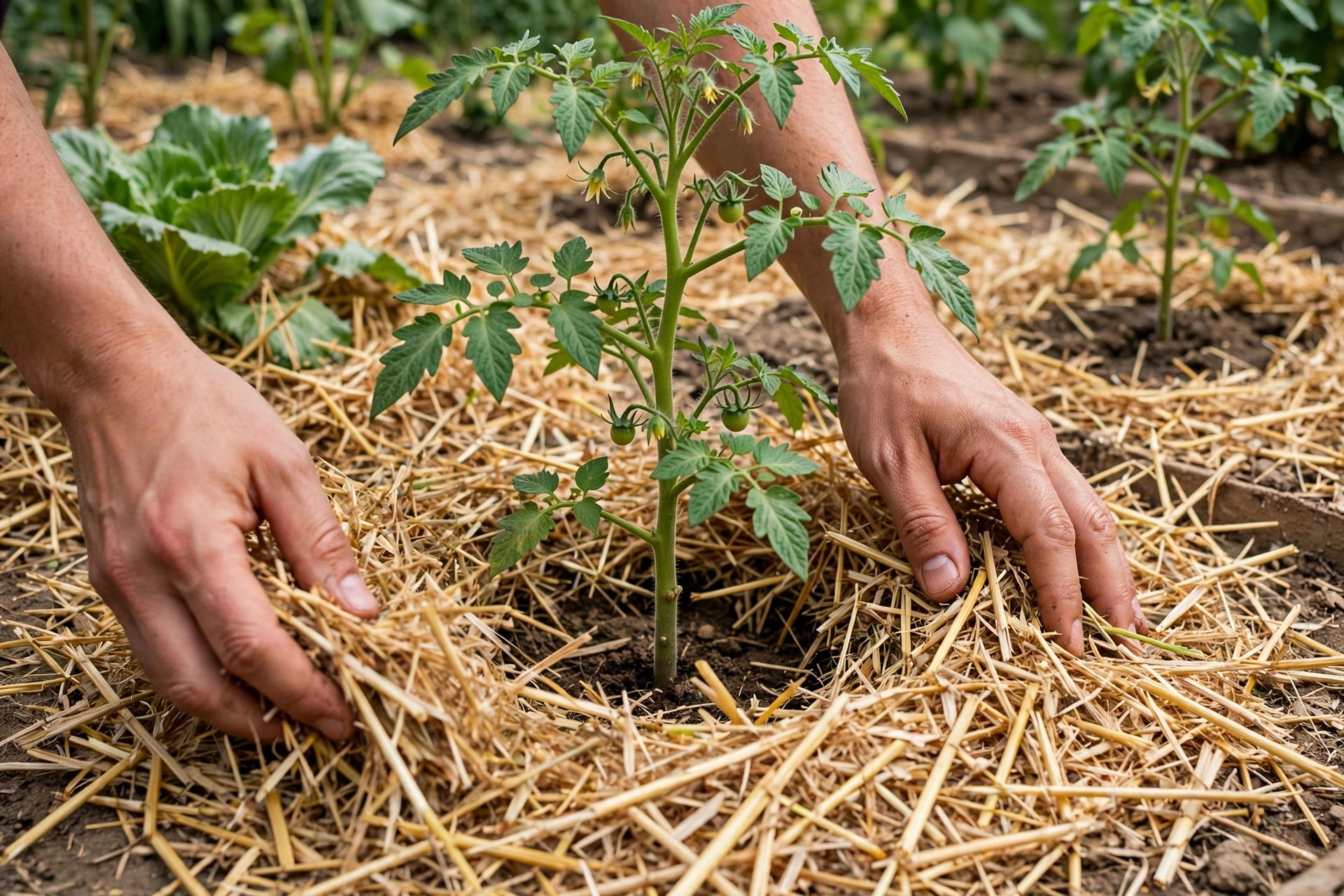
Wrapping things up!
Mulch is the rare garden input that prevents disease, saves water, smothers weeds, and feeds the soil — all for the price of a bale of straw. Lay 2–4 inches, keep it off the stems, and combine it with base watering and rotation. Your lower leaves will stay cleaner, your plants will stay leafier, and early blight will have to find another garden. Need straw, soaker hose, or a moisture meter to complete the setup? Our gardening tools page has the practical picks, and our vegetable collection has the seeds to plant into that beautiful mulched bed.