
Early Blight on Tomatoes: Identification and Treatment
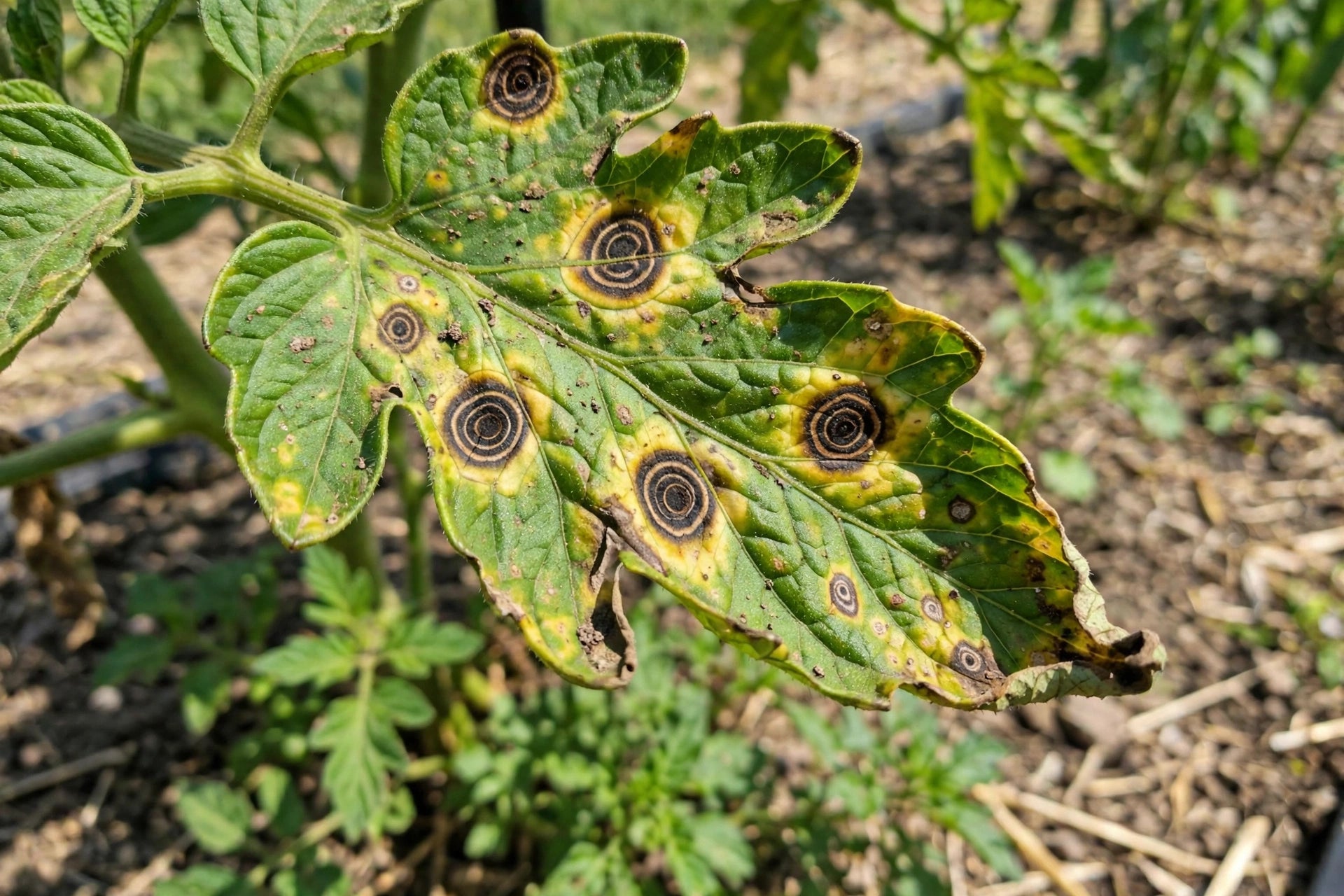
Early blight is a fungal disease of tomatoes caused mainly by Alternaria solani (and on tomato, Alternaria tomatophila). It shows up as dark brown spots with concentric rings — like a target — on the oldest, lowest leaves first, then climbs the plant as the season goes on. Left alone it defoliates plants from the bottom up, exposes f
What early blight is
Early blight is caused by the fungus Alternaria solani. On tomatoes, a closely related species, Alternaria tomatophila, causes the same disease. The fungus survives the winter in infected plant debris left in the garden and in the soil, and it also persists on nightshade weeds like horsenettle and black nightshade. In spring, spores are released and spread by wind and by rain splashing soil onto lower leaves.
Once a spore lands on a wet leaf, it germinates and enters through wounds or directly through the leaf surface. The fungus then grows inside the leaf, and within days th
How to identify early blight
The signature symptom is the target spot: a roughly circular brown-to-black lesion, about a quarter to a half inch across, with distinct concentric rings inside it. Our symptom guide to brown spots on tomato leaves walks through this pattern and its look-alikes in detail.
Watch for this progression:
- It starts low. The first spots appear on the oldest, lowest leaves — the ones closest to splashing soil. If your top growth looks perfect but the bottom leaves are spotted and yellowing, early blight is the prime suspect. - Yellow halos. The tissue around each spot turns yellow as the leaf's green fades. Heavily spotted leaves yellow entirely, then brown, dry up, and drop. - Bottom-up defoliation. As spots multiply, lower leaves fall and the disease climbs. A classic mid-season sight is a tomato plant that is bare-legged at the bottom with a healthy-looking top. - Stem lesions. Dark, sunken, elongated spots with concentric rings can app
Conditions that favor early blight
Knowing what the fungus wants tells you exactly how to fight it:
- Warm, wet weather. Temperatures of 75–85°F with leaf wetness for several hours are ideal. Humid summers and rainy spells are peak season. - Soil splash. Spores overwinter in debris and soil. Rain or overhead watering that splashes soil onto lower leaves is the main delivery system — which is why mulching to prevent soil diseases is one of the highest-impact controls. - Dense, airless plantings. Crowded plants stay wet longer after rain or dew. Staking, pruning, and proper spacing dry foliage faster. - Plant stress. Heavy fruit load, nitrogen deficiency, drought stress, and root damage all make plants more susceptible. Well-fed, well-watered plants hold the disease off longer. - Nightshade weeds and volunteers. Horsenettle, black nightshade, and volunteer tomatoes and potatoes harbor the fungus between seasons.
Start clean
- Buy resistant or tolerant varieties. No tomato is immune, but varieties bred with early blight tolerance hold up noticeably longer. Ask your local extension office which ones perform well in your region. - Use clean seed and healthy transplants. Start from fresh seed or buy transplants that are stocky, green, and spot-free. Inspect the lower leaves before you buy. - Rotate crops. Do not plant tomatoes, potatoes, peppers, or eggplant in the same spot year after year — the fungus survives in soil and debris. Our crop rotation plan for tomato diseases lays out a simple 3-year scheme.
Cultural controls: change the environment
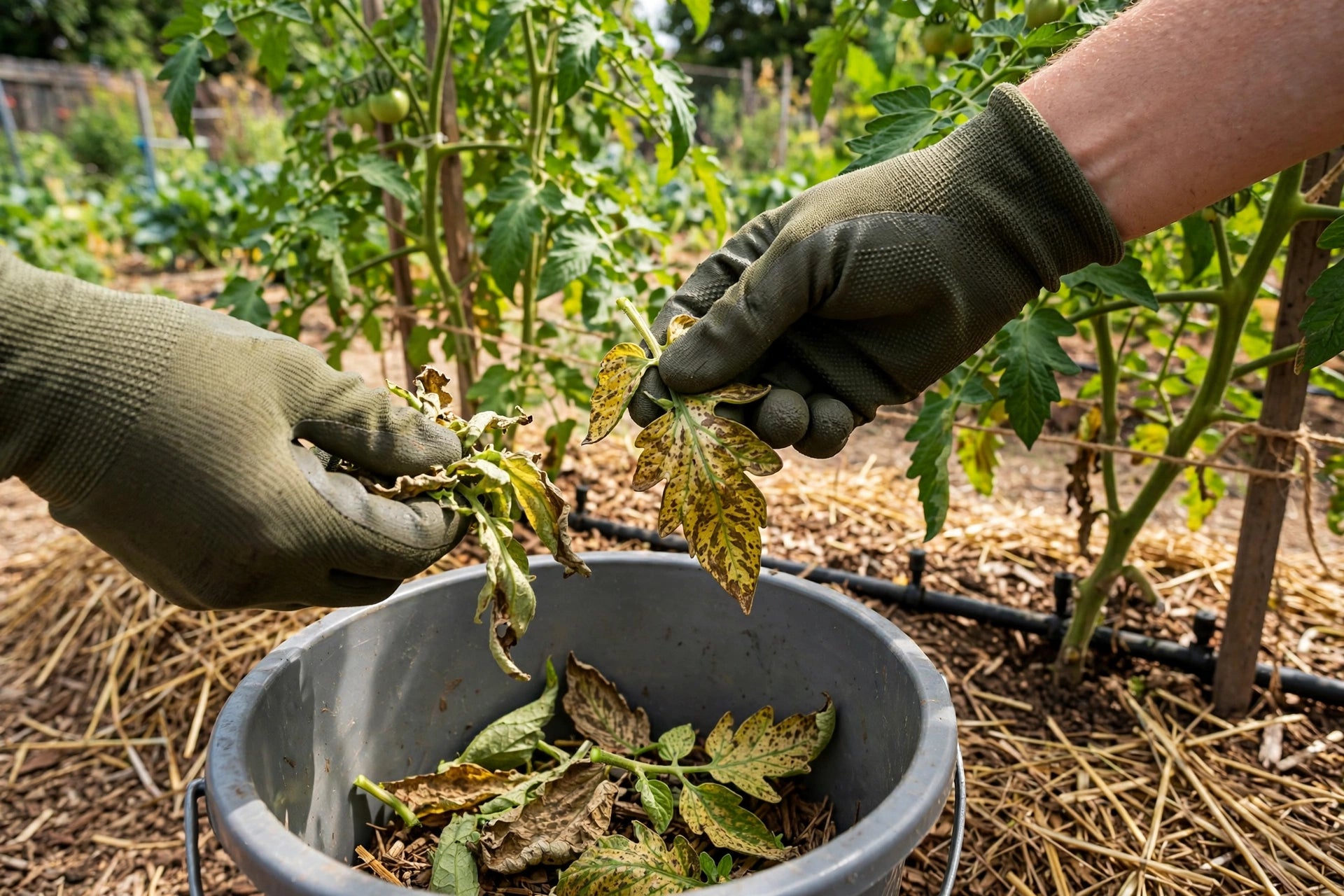
- Mulch heavily. A 2–4 inch layer of straw or shredded leaves under plants blocks the soil splash that starts nearly every infection. Keep mulch a couple of inches away from stems. - Water at the base. Drip irrigation or a soaker hose keeps foliage dry. If you must use
Biological and organic options
- Copper-based products labeled for home vegetable gardens are the traditional organic option for early blight. They work as protectants — they must coat the leaf before infection — so they help most when applied early in the season and reapplied per the label after rain. - Bacillus-based biological fungicides are available for home use and can suppress foliar diseases as part of a program, though their effect is modest compared with cultural controls. Treat them as supplements, not replacements.
Conventional fungicides (last resort)
- Products containing chlorothalonil or mancozeb are labeled for early blight on tomatoes in many states and are effective protectants. If you go this route, read the label completely, observe pre-harvest intervals, and rotate modes of action. For most home gardeners, the cultural program above makes this step unnecessary.
An IPM plan for early blight
Treat in this order — prevention first, least-toxic options next. Most home gardens never need to go beyond the cultural steps.
ear on stems, especially near the soil line on seedlings (a condition sometimes called collar rot). - Fruit rot at the stem end. Fruit is usually infected at the stem end, where dark, leathery, sunken lesions with concentric rings develop. Infected fruit may drop or rot on the vine.
One caution from extension pathologists: early blight almost never appears on young, upper foliage first. Spots that start at the top of the plant, or that lack the ring pattern, point to a different problem — see our comparison of early blight vs late blight and the general guide to tomato leaves turning yellow for the full differential.
e first spots appear. New spores form in the center of each spot, and the cycle repeats — splashing rain and overhead watering carry them to higher leaves. Warm weather speeds everything up: the disease is most aggressive when temperatures sit between about 75 and 85°F (24–29°C) with frequent leaf wetness from rain, dew, or sprinklers.
Early blight is primarily a disease of older, stressed, or aging tissue, which is why it almost always starts on the lowest leaves. Young vigorous plants resist it better; plants that are stressed by poor nutrition, drought, or heavy fruit load succumb faster. That is also why the disease typically appears mid-season, just as plants are loaded with fruit and their lower leaves are aging.
ruit to sunscald, and cuts yields. The good news: early blight is one of the most manageable tomato diseases, because almost every effective control is cultural — spacing, mulching, watering at the base, rotation, and resistant varieties — and all of it is within reach of a home gardener.
Early blight is nearly universal. University extension programs from Cornell to UC IPM to the University of Minnesota list it among the most common tomato diseases in home gardens, especially in warm, humid weather. It rarely kills a plant outright the way late blight can, but it weakens plants steadily, and a badly defoliated plant ripens poor, sunburned fruit. Learning to recognize the target-spot pattern early — and to act in the right order — is the whole game.
Look-alikes: what early blight is NOT
- Late blight produces water-soaked, greasy dark lesions without the target rings, o
Frequently asked questions
Can early blight spread to peppers and potatoes? Yes. The same fungus attacks potatoes and can affect peppers and eggplant. That is why rotation must move the whole nightshade family together — see our guides to early blight on potatoes and early blight on peppers.
Should I pull out a plant with early blight? Usually not. Early blight progresses slowly, and plants can still produce a good crop while you manage it by removing spotted leaves, mulching, and watering at the base. Pull the plant only if it is nearly defoliated or the main stem is girdled.
Can I eat tomatoes from a plant with early blight? Yes — the fungus does not infect people. Fruit with small stem-end lesions can have the bad spot cut away; discard fruit that is extensively rotted. Wash all produce normally.
Does early blight survive winter in my garden? Yes, in infected debris and in soil, and on nightshade weeds. End-of-season cleanup — removing all tomato and potato debris — plus a 3–4 year rotation are the long-term fixes.
Sources
- Cornell University Extension — early blight of tomato: pathogen biology, symptoms, and IPM recommendations. - UC Integrated Pest Management — tomato early blight management guidelines: cultural controls and protectant options. - University of Minnesota Extension — early blight on tomatoes and potatoes: identification and home-garden management. - Penn State Extension — tomato disease management: rotation, sanitation, and resistant varieties. - Clemson University Extension — early blight fact sheet: conditions favoring disease and control options.
Wrapping things up!
Early blight is the tax warm weather charges tomato growers — but it is a manageable one. The target-ring spots are easy to recognize, the disease moves slowly enough to stay ahead of, and the controls (mulch, base watering, spacing, rotation, clean stock) make the whole garden healthier at the same time.
If you are planning next season already, that is the perfect moment to act: choose tolerant varieties and fresh seed — our vegetable collection has tomato varieties for every region — map your rotation, and put mulch on the shopping list. Found spots today? Start with the 48-hour action plan and the gardening tools that make base watering easy.
