

Early Blight on Potatoes: Signs and Control
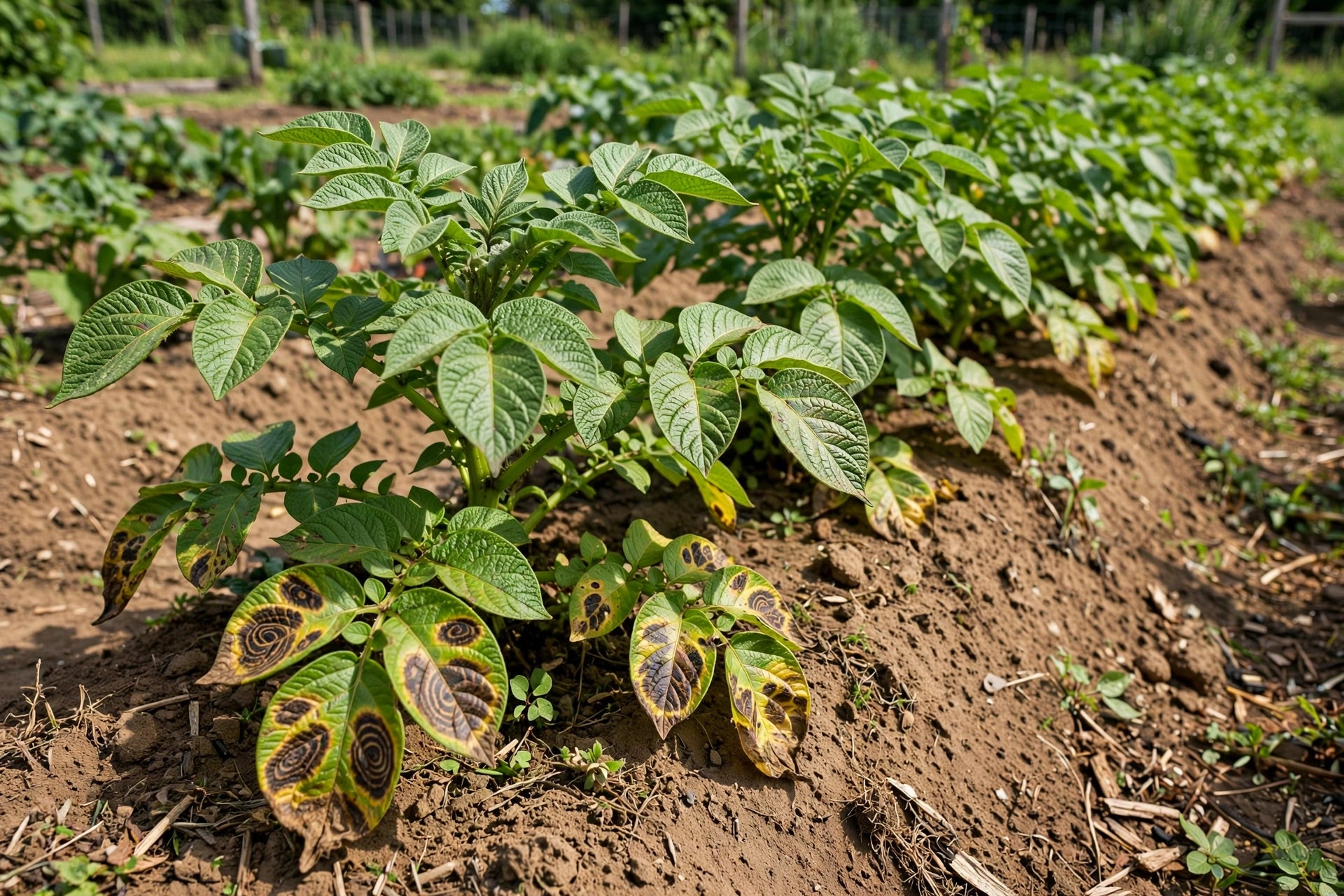
The same fungus that causes early blight on tomatoes — Alternaria solani — is also the classic early blight of potatoes. In fact, potato growers named the disease: it was "early" blight because it arrived earlier in the season than the devastating late blight. On potatoes the pattern is familiar: target-ring spots on older lower leaves, yellowing, and defoliation that works upward. The damage that matters most is invisible — every lost leaf is lost photosynthesis, and lost photosynthesis means smaller tubers at harvest.
How early blight looks on potatWhy potatoes are especially vulnerable
Potatoes share the nightshade family with tomatoes, peppers, and eggplant, so the fungus moves freely among them — a tomato bed this year is a potato risk next year if you do not rotate. Two potato-specific factors raise the stakes:
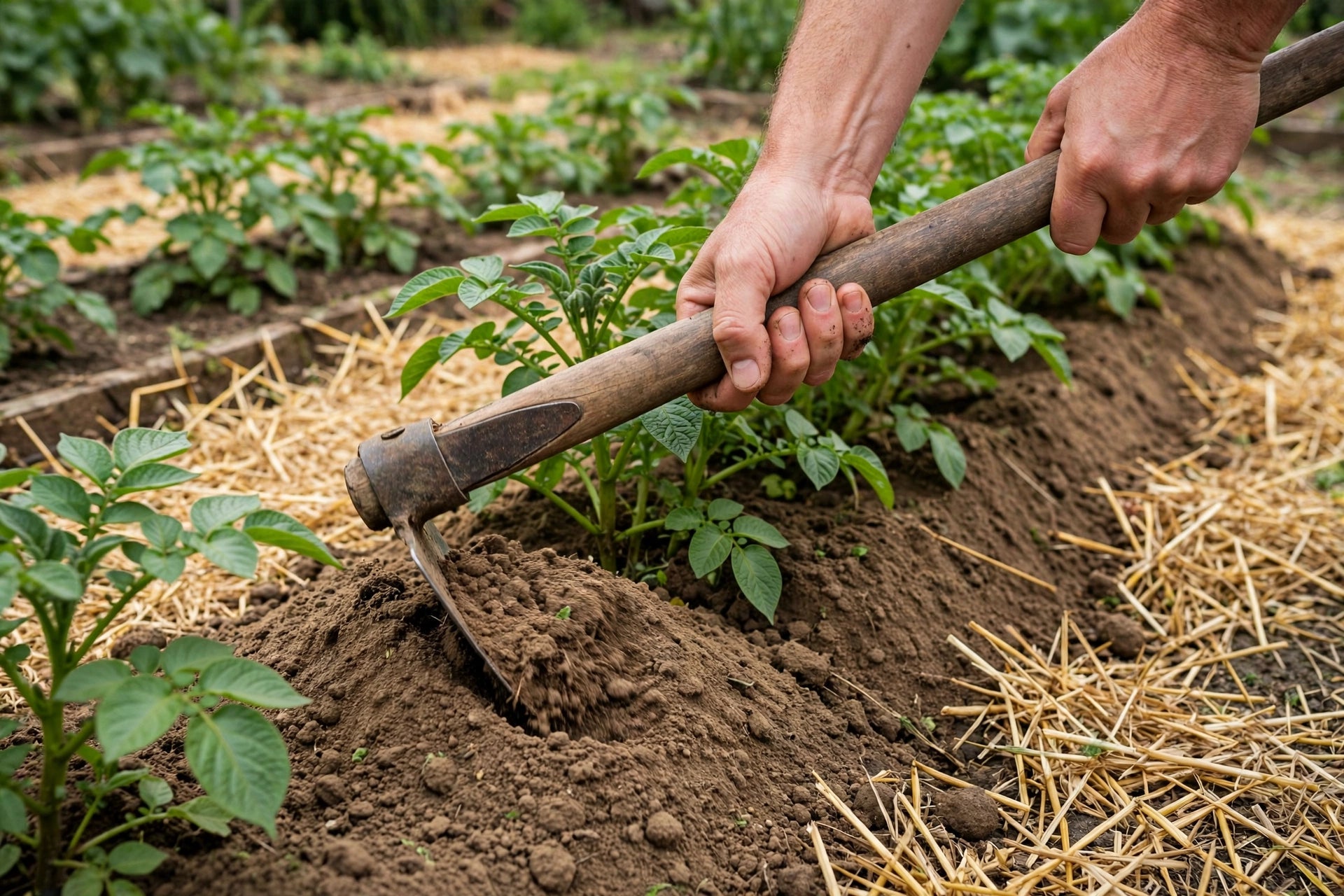
- Hilling matters. Tubers forming near the soil surface are exposed to sun (greening) and to any spores washing down. Proper hilling — mounding soil around the plants as they grow — protects developing tubers and is standard practice anyway. - Overhead watering is common. Many gardeners water potatoes with sprinklers, which is exactly the leaf-wetting the fungus needs. Switching potatoes to drip or soaker watering is one of the highest-impact changes you can make.
Warm weather (75–85°F) with frequent leaf wetness drives epidemics, just as on tomatoes. Dense canopies that stay damp after rain or dew are where it starts.
Control plan for potatoes
Start with certified seed potatoes. Seed-borne disease is a real entry point. Certified seed potatoes are inspected and far less likely to carry blight and other tuber diseases than saved or grocery-store potatoes.
Rotate the whole nightshade family. Do not follow tomatoes, peppers, or eggplant with potatoes (or vice versa) — give nightshades 3–4 years out of each bed. Our crop rotation plan covers the full family scheme.
Hill up. Keep mounding soil around plants through the season so tubers stay covered and protected.
Water at the base. Drip or soaker lines under mulch keep foliage dry. If you irrigate overhead, do it early in the morning.
Mulch. A thick straw mulch under potato plants blocks soil splash, conserves moisture, and — as a bonus — makes harvest cleaner. Details in the mulching guide.
Remove infected lower leaves at the first sign, and get them out of the garden (trash, not home compost). Never work among wet potato plants.
Choose tolerant varieties where available — ask your local extension which potato varieties hold up best against early blight in your region. Timing and variety performance vary by climate region, so local advice beats generic lists.
End-of-season cleanup. Remove all potato vines after harvest. Volunteer potatoes sprouting next spring are a disease bridge — pull them.
Early blight vs late blight on potatoes
This distinction matters more on potatoes than on any other crop, because late blight on potatoes is the historic killer — the Irish Potato Famine pathogen, Phytophthora infestans. Early blight: target rings, lower leaves first, slow, warm weather. Late blight: water-soaked greasy lesions, white fuzz underneath in humidity, explosively fast, cool wet weather — and it rots tubers directly. Our early blight vs late blight comparison covers both crops.
Frequently asked questions
Can I eat potatoes from plants with early blight? Yes. Early blight affects foliage; the tubers are safe. (Do not eat green-skinned potatoes, but that is solanine from sun exposure, unrelated to blight.)
Should I cut off the vines before harvest? If blight is heavy near harvest, many growers cut vines 2–3 weeks before digging to let skins set and reduce any disease carryover. It is good practice in blight years.
Does early blight survive in stored potatoes? The fungus survives in debris and soil, not typically inside healthy stored tubers. Store only sound, undamaged tubers in cool, dark conditions.
Can I plant potatoes where tomatoes had blight last year? Not ideally — same pathogen, same family. Rotate to a bed that has not hosted nightshades for 3–4 years.
Sources
- Cornell University Extension — early blight of potato: symptoms and IPM. - University of Minnesota Extension — potato early blight management for home gardens. - Penn State Extension — potato disease management: certified seed, hilling, and rotation. - UC Integrated Pest Management — potato cultural disease controls.
Wrapping things up!
On potatoes, early blight is a slow tax on your harvest rather than a sudden disaster — but small tubers at digging time are a disappointing way to learn that. Certified seed, rotation, hilling, mulch, and dry foliage keep the tax low. Planning next year's potato patch? Start with the rotation plan, find vegetable varieties suited to your region in our vegetable collection, and grab a soaker hose from our gardening tools page to keep foliage dry while you water.

- Target spots on lower leaves first. Dark brown lesions with concentric rings, about a quarter to a half inch across, often with yellow halos — the same signature as on tomatoes. - Upward defoliation. Spotted leaves yellow, dry, and drop; the disease climbs through the canopy over weeks. - Stem lesions. Dark, slightly sunken spots on stems, usually not girdling the way late blight can. - Tuber effects are indirect. The fungus rarely rots tubers directly the way late blight does. The yield loss comes from defoliation: fewer working leaves means less energy stored in the tubers, so harvests run small.
Because the foliar symptoms mirror tomatoes so closely, the brown spots diagnostic works for potato leaves too — shape, rings, location, and speed read the same way.