

Early Blight Found? Your Step-by-Step Action Plan
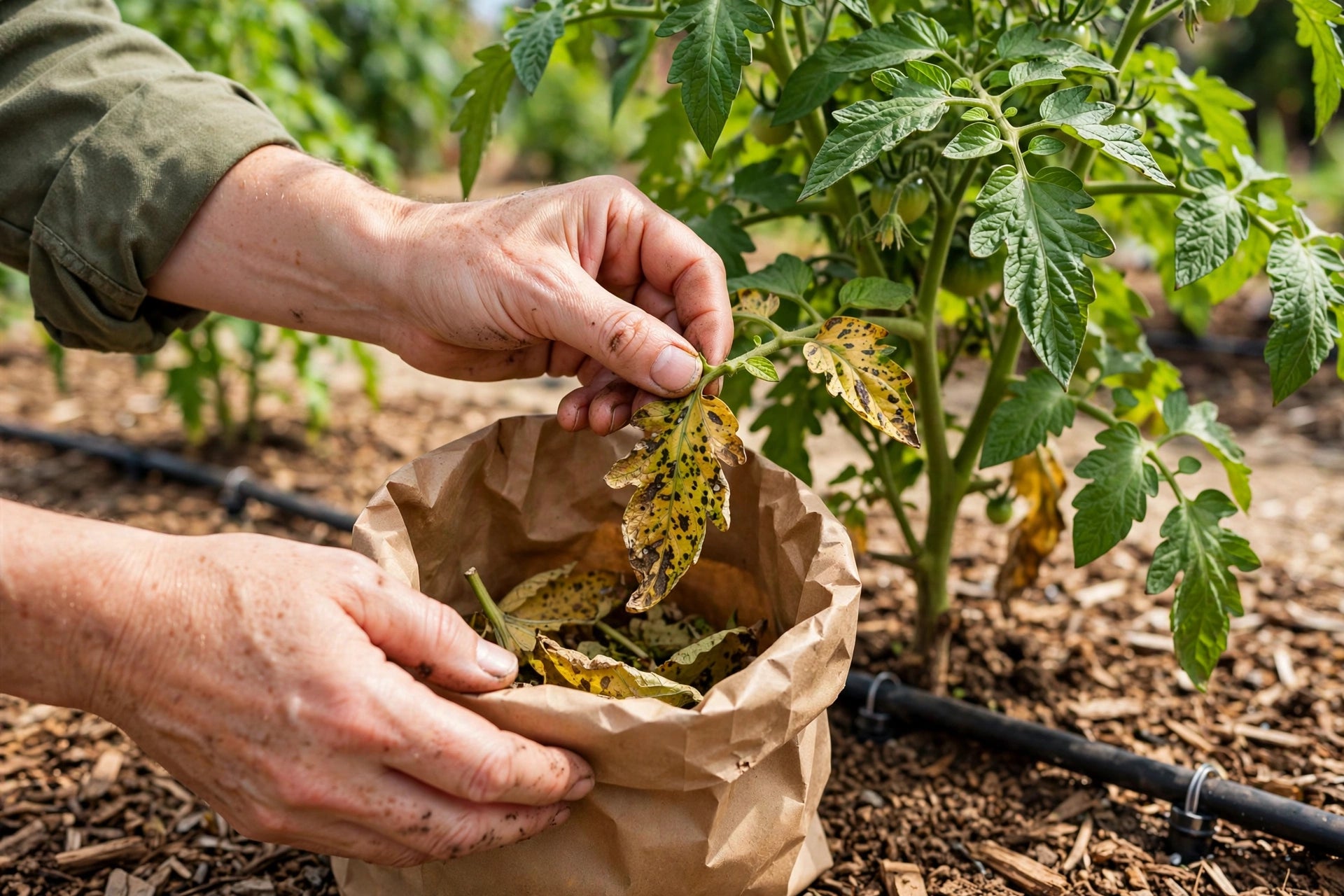
You found the spots — dark, ringed, starting on the lower leaves. Before you do anything else: breathe. Early blight is not a plant emergency the way late blight is. It moves slowly, it responds to simple cultural steps, and plants routinely produce good harvests while you manage it. What matters is doing the right things in the right order, starting today. Here is the plan: the first 48 hours, then the weekly routine, then the end-of-season moves that make next year easier.
First, confirm it (30 minutes)
Do not treat on a hunch. Check the three early blight signatures:
1. Target rings — round brown spots with concentric rings inside. Compare with the brown spots diagnostic. 2. Bottom-up — worst on the lowest, oldest leaves; top growth still clean. 3. Slow — this has been building for days or weeks, not hours.
If the spots are greasy and water-soaked, spreading fast, or show white fuzz underneath the leaves, stop — that is late blight, and the response is different and urgent. If the spots are tiny with pale centers, it is likely Septoria — treat it exactly like early blight below.
The 48-hour action plan
Hour 0–2: Strip the affected leaves. On a dry day (never when plants are wet), remove every spotted lower leaf, plus any leaf touching the soil or mulch. Put them straight into a bag or bucket — not on the ground, not in the compost. Early blight does not heal spotted tissue, and every removed leaf is inoculum gone. Wash your hands and wipe your pruners when done.
Hour 2–4: Mulch. If the bed is not mulched, lay 2–4 inches of straw or shredded leaves under the plants now, keeping a few inches clear around each stem. This single step blocks the soil splash behind most new infections — full technique in the mulching guide.
Today: Fix the watering. Switch to base watering only — drip, soaker hose, or a careful watering wand at soil level. No more overhead sprinklers on these plants, ever. If you must wet foliage, do it in the morning so leaves dry fast. A moisture meter takes the guesswork out of how much to water.
Today: Open the canopy. Stake or tie up sprawling plants, prune excess suckers on indeterminate varieties, and make sure air moves through the lower plant. Crowded, airless foliage stays wet — and wet is what the fungus wants.
Day 2: Feed if needed. If the whole plant is pale (not just spotted), the plant is hungry as well as sick — stressed plants succumb faster. A balanced fertilizer or compost side-dressing helps the plant outgrow the disease. Do not overdo nitrogen; soft lush growth is more susceptible.
Day 2: Check the neighbors. Inspect nearby tomatoes, potatoes, and peppers — same family, same risk. Strip anything spotted now, while it is a five-minute job.
The weekly routine (rest of the season)
- Scout weekly. Walk the rows once a week, eyes on the lower leaves. Catching new spots early keeps every intervention small. - Keep stripping. Remove newly spotted leaves into the trash as they appear. This is the whole "treatment" for most home gardens — consistent, boring, effective. - Maintain the mulch. Top it up if it thins below 2 inches. - Keep water off the leaves. Every overhead watering is a reset of your progress. - Consider a protectant if the disease is advancing despite good culture: copper-based products labeled for home vegetable gardens, applied to healthy foliage per the label, can slow spread. They protect; they do not cure.
When to pull the plant
Most plants do not need pulling. Pull it only if:
- More than half the foliage is gone and the plant is not recovering, or - The main stem shows dark sunken lesions girdling it, or - Fruit is rotting faster than it ripens and neighboring plants are at risk.
Bag the whole plant — debris, not compost. Then protect the neighbors and put your energy into the fall cleanup below.
If it's late blight, the playbook changes
Everything above is the slow-burn early blight plan — and it will not hold the line against late blight. If you re-read the symptoms and realize you are actually dealing with late blight — greasy water-soaked lesions, white fuzz on leaf undersides, stems collapsing, plants melting in days — the response has to get aggressive, immediately. Same IPM logic, different intensity.
Why the urgency is different. Late blight spreads explosively through wind-borne sporangia, and one infected plant can shower an entire neighborhood with spores — extension guidance calls it a community disease (UMass Extension). With early blight we strip leaves and keep harvesting; once late blight is established, control is about containment, not recovery. A spray alone will not save an infected plant.
1. Remove the whole plant, not just the leaves. With late blight, leaf-stripping is a losing game. Pull the entire plant: cover it with a plastic bag before pulling (spores dislodge during removal), seal the bag, and leave it in a sunny spot for a few days — heat builds up inside and kills the plant tissue — then put it out with the trash. Never compost late blight material; spores keep spreading from debris piles (UMass Extension, University of Vermont Extension). The full emergency routine is covered in our late blight guide for tomatoes and potatoes.
2. Clean up after yourself. Wash your hands and wipe down pruners, stakes, and cages after handling infected plants — spores hitch rides on hands and tools. Pull up fallen fruit and leaves around the spot. Late blight cannot survive long in dead plant tissue, but fresh, wet debris stays infectious while it is still green.
3. Scout the neighbors — yours and theirs. Check every tomato, potato, and nightshade weed around the garden daily for a week, watching for the fast-spreading black spots pattern. Learn what to look for in how to scout for late blight. Then tell your neighbors: wind carries spores from garden to garden, so a heads-up protects everyone. Protect remaining healthy plants with labeled protectant fungicides applied to healthy foliage per the label — these protect, they don't cure.
4. Report it. Contact your local extension office with photos — many regions run late blight alert networks during cool, wet summers. If late blight is confirmed, consider submitting the report to USAblight, the national late blight project, which maps confirmed reports and sends outbreak alerts to nearby growers. Reporting a find is how the whole community gets its early warning.
5. Finish the job in the fall. Destroy volunteer potatoes and cull piles before next spring — the late blight pathogen needs living tissue to overwinter, and volunteers sprouting from overwintered tubers are the most common home-garden bridge into the next season (Penn State Extension). Bag them or bury them deeply; don't leave them in place.
Not sure yet which one you're looking at? Run the full symptom check in how to scout for late blight — and remember the rule: this looks most like early blight, or this looks most like late blight, is a working diagnosis, never a guarantee. When speed is involved, act as if it were late blight for the first 24 hours; you can always step the response back down.
End of season: make next year easier
Early blight is a disease you beat across seasons, not just weeks:
- Remove all nightshade debris after harvest — vines, fallen fruit, everything. Do not till diseased material in. - Pull volunteer tomatoes and potatoes next spring; they are disease bridges. - Rotate. Do not plant nightshades in that bed for 3–4 years. The rotation plan makes this painless. - Choose tolerant varieties next spring — browse the tomato seed collection for this season's varieties, and ask your local extension which ones hold up in your region. Timing and variety choice vary by climate region, so local advice wins.
Frequently asked questions
How long until I see improvement? Spotted leaves never recover, so "improvement" means clean new growth at the top while the disease stalls at the bottom. Give it 1–2 weeks of the routine above.
Can I still eat the tomatoes? Yes — the fungus does not affect people. Cut away stem-end lesions on fruit; discard fruit that is extensively rotted.
Will it spread to my whole garden? It spreads among nightshades (tomato, potato, pepper, eggplant) by splash and wind. It does not infect beans, corn, lettuce, squash, or other families — which is exactly why rotation works.
Should I spray something today? Not before you have done the cultural steps — they matter more than any spray. If you spray, use a product labeled for early blight on tomatoes in home gardens, coat healthy foliage, and reapply per the label after rain.
I found spots on seedlings — same plan? Seedlings with stem lesions at the soil line rarely recover; start fresh with clean seed and sterile mix. Seedlings with a few spotted leaves can be nursed along, but keep them isolated from the main planting.
Sources
- Cornell University Extension — early blight IPM: action thresholds and cultural controls. - University of Minnesota Extension — managing early blight in home vegetable gardens. - UC Integrated Pest Management — tomato early blight: monitoring and treatment timing. - Penn State Extension — sanitation and end-of-season disease management.
Wrapping things up!
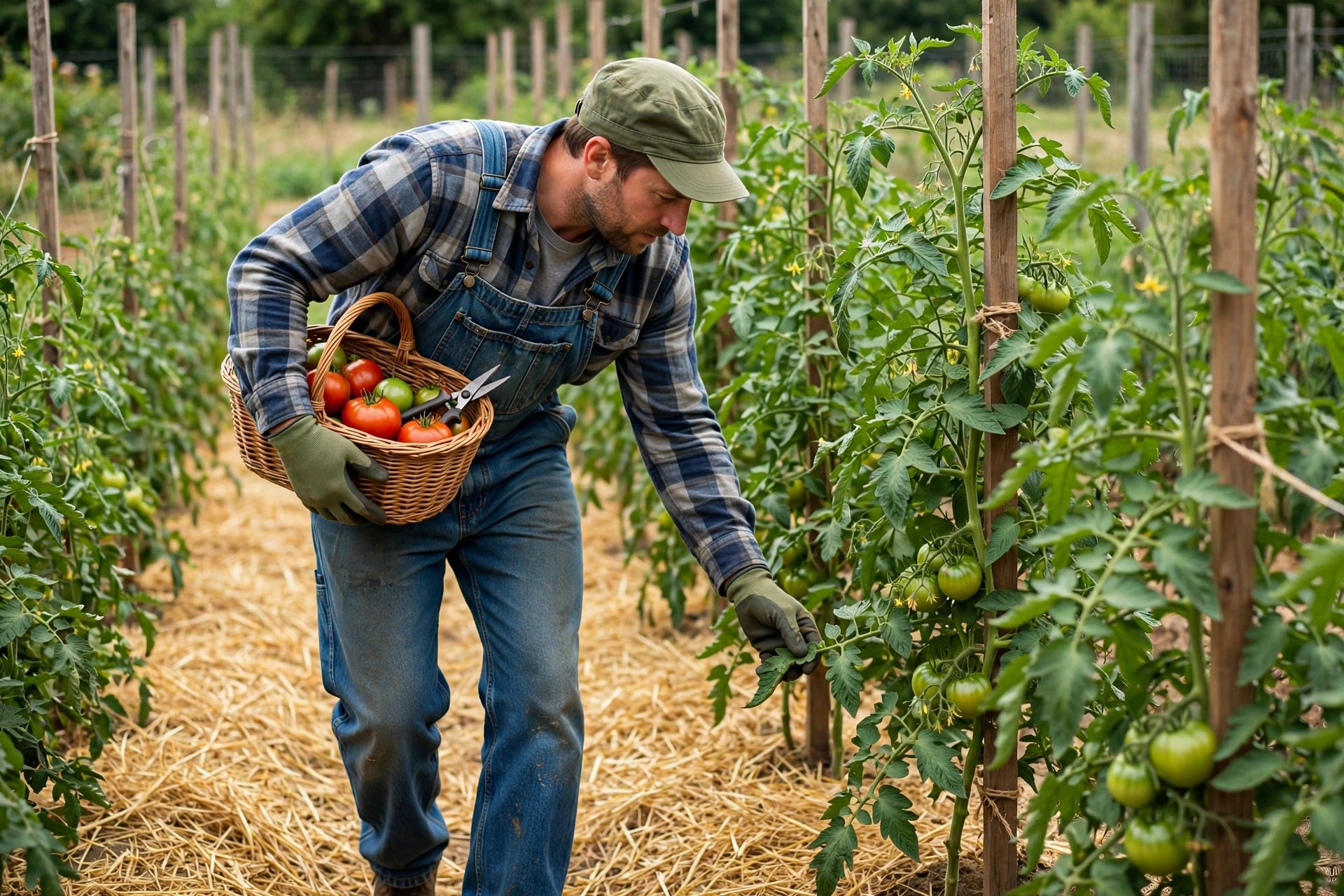
Found it, confirmed it, stripped it, mulched it, watered at the base — that is the whole emergency, and it fits in a weekend afternoon. Then scout weekly, keep the mulch deep and the leaves dry, and plan your rotation for next year. Early blight rewards steady gardeners and punishes neglectful ones; be the steady one. For the complete disease background, read the early blight pillar guide — and when you are planning next season's comeback, our vegetable collection and gardening tools are ready.
