

Brown Spots on Tomato Leaves: Causes and Fixes
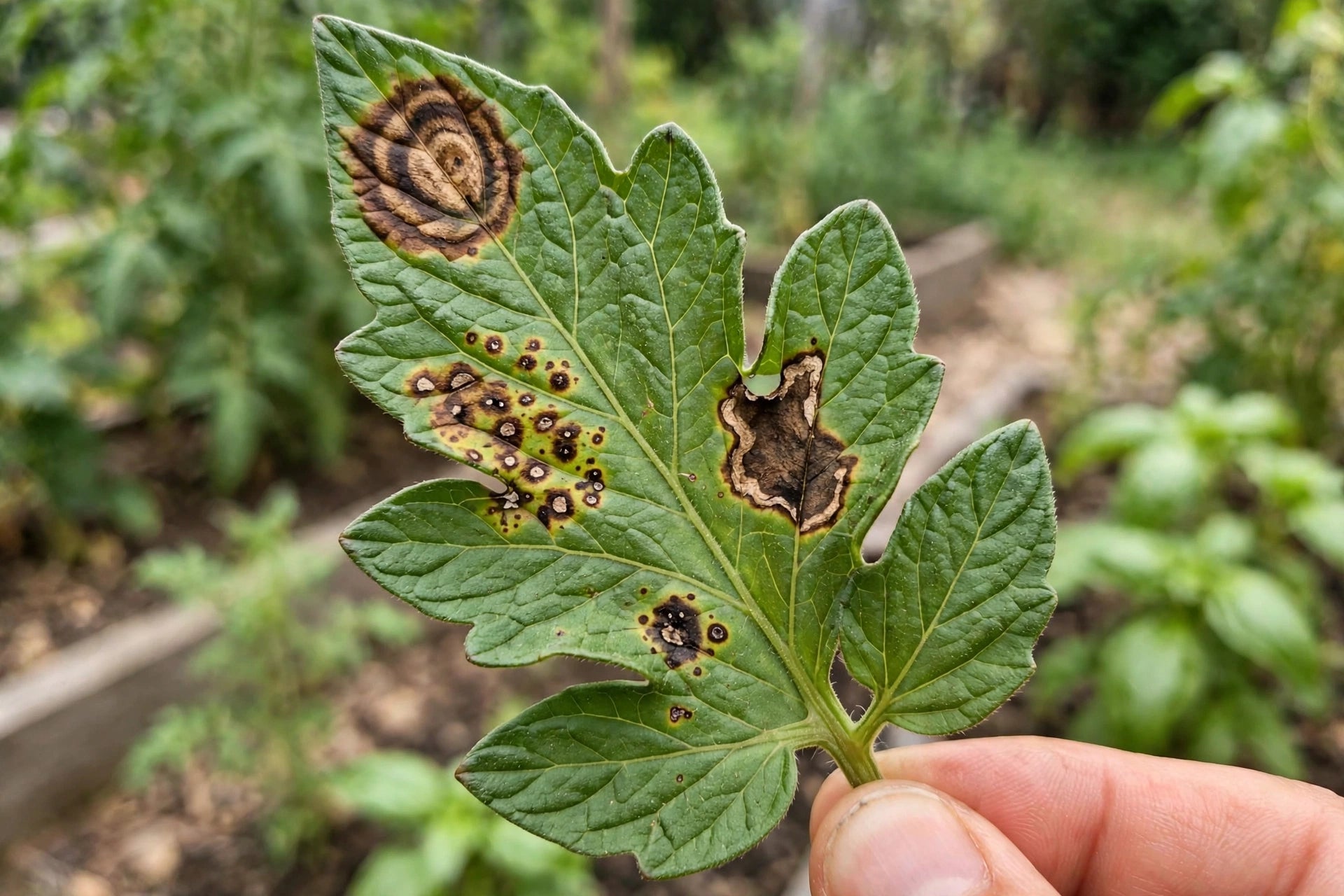
Brown spots on tomato leaves are the plant's way of saying something is wrong — but the spots alone do not name the culprit. The most common cause in home gardens is
The spot patterns that matter
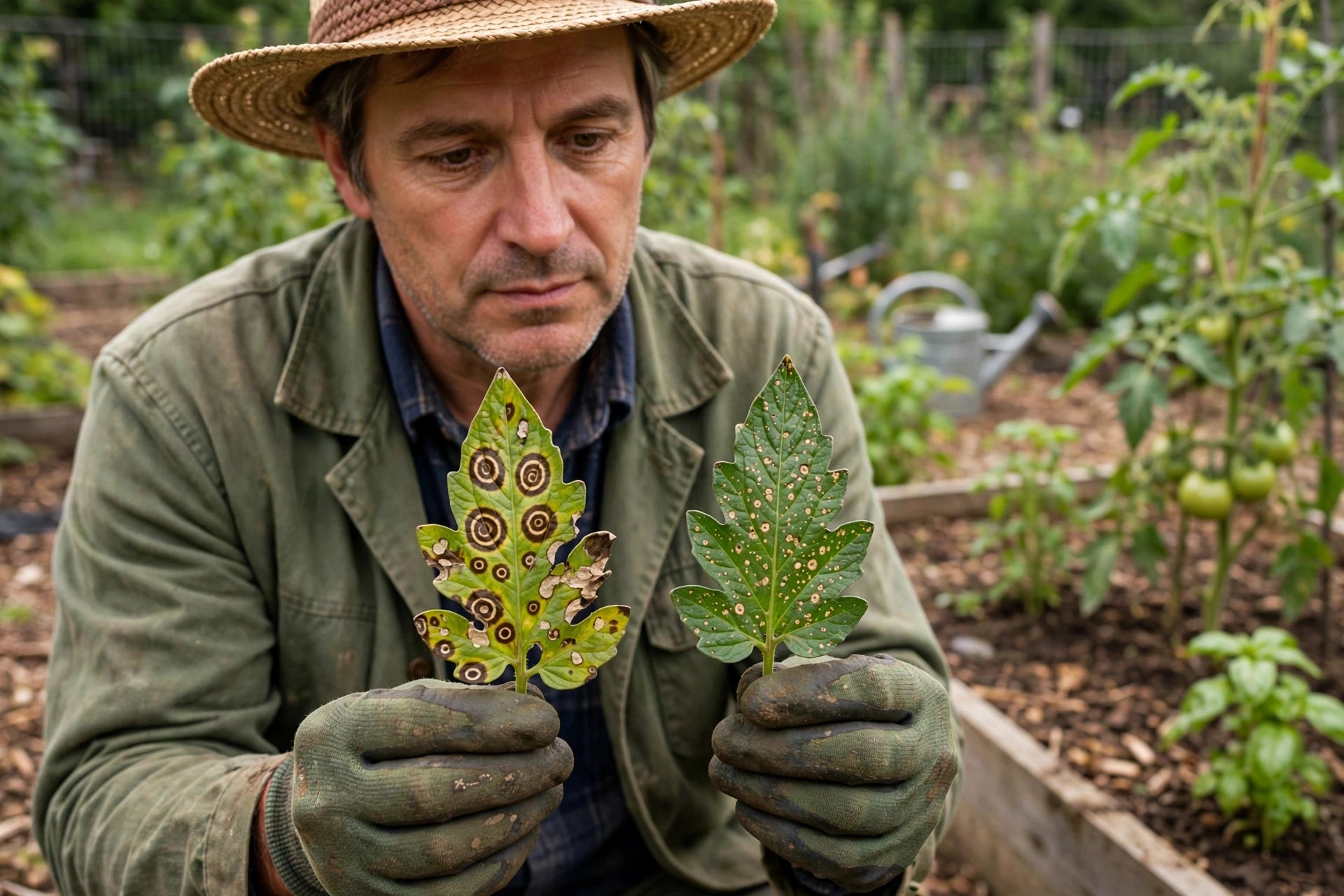
Grab a spotted leaf and check these four things: shape, rings, location, and speed.
Shape and internal pattern. Early blight makes roughly circular spots a quarter to a half inch across with visible concentric rings — like a tiny target. Septoria leaf spot makes much smaller spots (about an eighth of an inch) with pale gray or tan centers and dark borders. Bacterial spot makes small, dark, slightly raised spots that can look greasy or water-soaked, without rings. Late blight makes irregular, water-soaked dark blotches that look greasy rather than dry.
Yellow halos. A yellow ring around a brown spot means the leaf tissue is dying back from the infection. Early blight halos are common; Septoria halos are smaller and tighter.
Where they start. Diseases that splash up from soil — early blight and Septoria — begin on the lowest, oldest leaves. Problems that arrive on wind or affect the whole plant at once, like some bacterial diseases, may appear anywhere. Spots only on leaf edges after a hot windy day point to environmental stress, not disease.
Speed. Early blight climbs slowly over weeks. Late blight can brown whole sections of
The usual suspects, one by one
Early blight. Target-ring spots starting on lower leaves, yellow halos, bottom-up defoliation. Most likely in warm (75–85°F), humid weather on plants carrying a heavy fruit load. See the full early blight guide.
Septoria leaf spot. Tiny spots with light centers, also lower-leaves-first. Very common and often confused with early blight — the small size and pale centers are the giveaway. Management is nearly identical: mulch, base watering, remove affected leaves, rotate.
Bacterial spot and bacterial speck. Small dark spots, sometimes with a yellow halo, that can appear on leaves and fruit. Worse in warm, wet weather. Avoid overhead watering and handling wet plants; copper-based protectants labeled for home gardens can help.
Late blight. Greasy, water-soaked dark blotches, white fuzzy growth on leaf undersides in humid conditions, devastating speed. A plant emergency — compare carefully with early blight vs late blight.
Sunscald and environmental burn. Pale, papery patches on fruit or bleached leaf areas after sudden intense sun — not a disease at all. Often follows defoliation, which is why controlling early blight prevents it indirectly.
Fertilizer or spray burn. Brown leaf margins or blotches appearing within a day or two of feeding or spraying, usually worst where droplets sat. Flush wit
What to do once you have a suspect
If it looks like early blight or Septoria: strip the spotted lower leaves into the trash (not the compost), confirm mulch is in place, and water only at the base going forward. Both diseases are managed the same way culturally — the 48-hour action plan applies to either.
If it looks bacterial: stop overhead watering immediately, avoid touching wet plants, remove the worst-affected leaves, and consider a copper-based protectant labeled for tomatoes.
If it looks like late blight: act fast and be ruthless — remove and bag affected foliage, and be prepared to pull the plant to protect neighbors. Late blight does not wait.
If it looks environmental: adjust the cause (shade new transplants, dilute fertilizer, water consistently) and watch new growth — new leaves should come in clean.
In every case, the single highest-value habit is the same: keep a 2–4 inch mulch layer under your plants and keep water off the leaves. Our guide to mulching to prevent soil diseases shows exactly how. And if whole leaves are yellowing rather than spotting, switch to the tomato leaves turning yellow diagnostic instead.
When spots mean the plant is done
A tomato plant can lose a surprising number of lower leaves and still produce well. The line is defoliation: if more than half the foliage is gone, or the main stem shows dark sunken lesions girdling it, the plant will not recover enough to ripen good fruit. At that point the kindest move is to pull it, bag the debris, and put your energy into protecting the neighboring plants and planning rotation for next year.
Frequently asked questions
My spots don't have rings — is it still early blight? Possibly, in the very early stage before rings develop, but ringless spots more often mean Septoria, bacterial spot, or environmental damage. Watch for a few days: early blight spots develop their target pattern as they mature. If you're not sure, that's completely normal — the early stages of several tomato leaf diseases look nearly identical, and even extension clinics sometimes need a lab test to be certain.
Can brown spots spread to my peppers? Early blight can affect peppers, and bacterial spot definitely does. The early blight on peppers guide covers what to watch for.
Should I spray something right away? Not before you know the cause. Sprays are protectants, not cures — they shield healthy leaves but do not heal spotted ones. Identify first, remove affected leaves, fix the environment, then decide whether a labeled protectant is warranted.
Do I need to worry about spots on seedlings? Yes — seedlings with stem lesions at the soil line (collar rot from early blight) rarely recover. Start with clean seed and sterile mix, and keep seedling foliage dry.
Will the spots go away on their own? Spotted tissue never heals, but the plant can outgrow the problem: new clean growth at the top while you remove spotted lower leaves is a sign you are winning.
Sources
- Cornell University Extension — tomato leaf spot diseases: distinguishing early blight, Septoria, and bacterial spot. - UC Integrated Pest Management — tomato disease diagnosis key for home gardeners. - University of Minnesota Extension — foliar diseases of tomato: symptoms and management. - Clemson University Extension — tomato diseases fact sheets with photographic symptom descriptions.
Wrapping things up!
Brown spots are a symptom, not a diagnosis — but they are a readable one. Check the shape, look for rings, note where they started, and clock their speed, and you will land on the right cause most of the time. For the most common answer, the early blight guide has the full treatment plan, and a bag of mulch plus a soaker hose from our gardening tools page prevents more spots than any spray bottle ever will. Starting fresh next season? Find tomato varieties for your climate in our vegetable collection.

Before you treat anything, work through the patterns below. In most cases you can narrow it to one or two suspects in a few minutes, and the right response is usually simpler than you fear.