

Crop Rotation for Tomatoes: A Simple 3-Year Plan
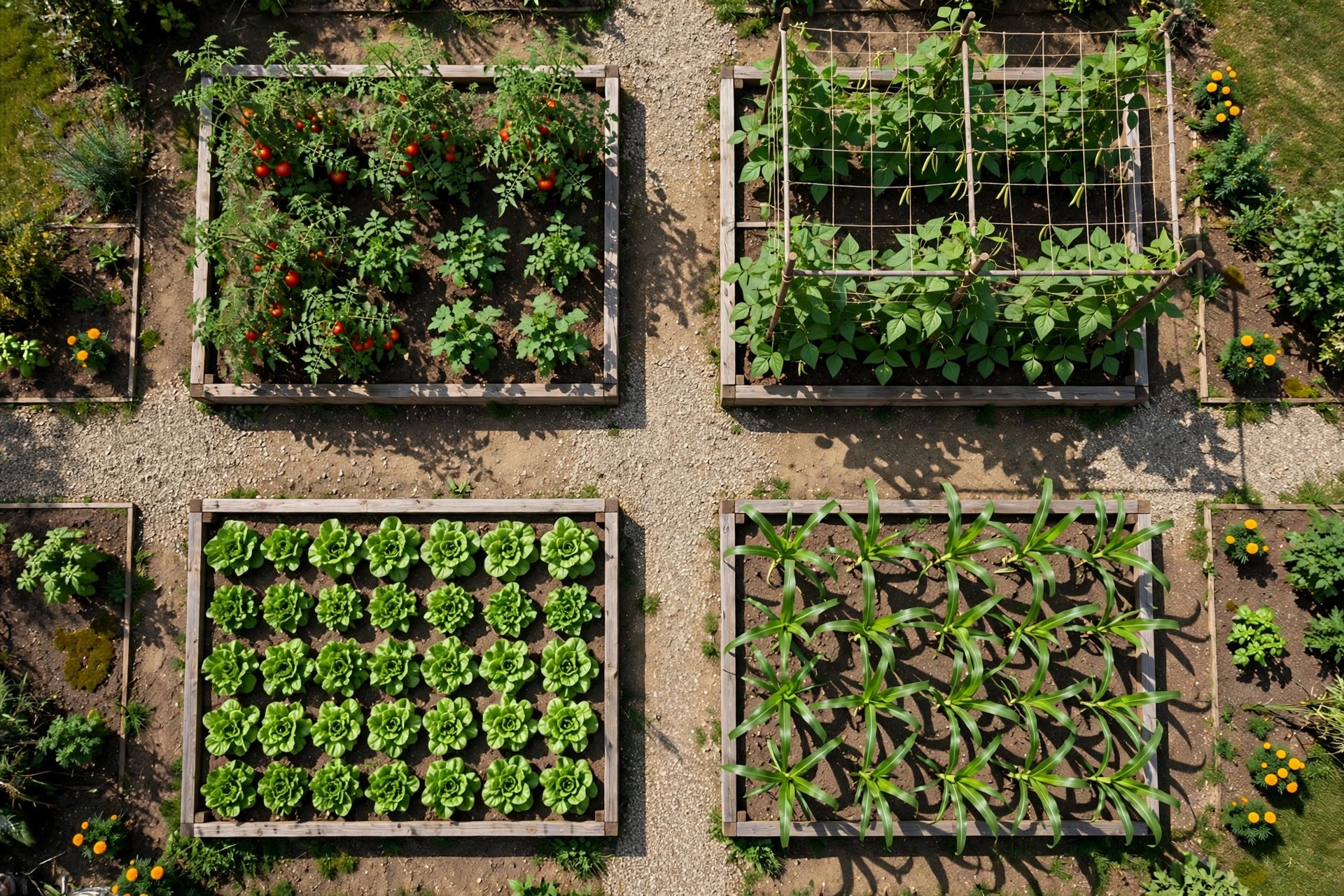
Crop rotation is the closest thing to a free fungicide in the vegetable garden. Soil-borne tomato diseases — early blight, Septoria, Fusarium and Verticillium wilts — survive in soil and debris for years. Every season you plant tomatoes in the same spot, you hand those pathogens a fresh host. Every season you plant something they cannot eat, you starve them. A simple 3-to-4-year rotation is the single most effective long-term control for early blight, and it costs nothing but planning.
Why rotation works against early blight
The early blight fungus overwint
The simple 3-year plan
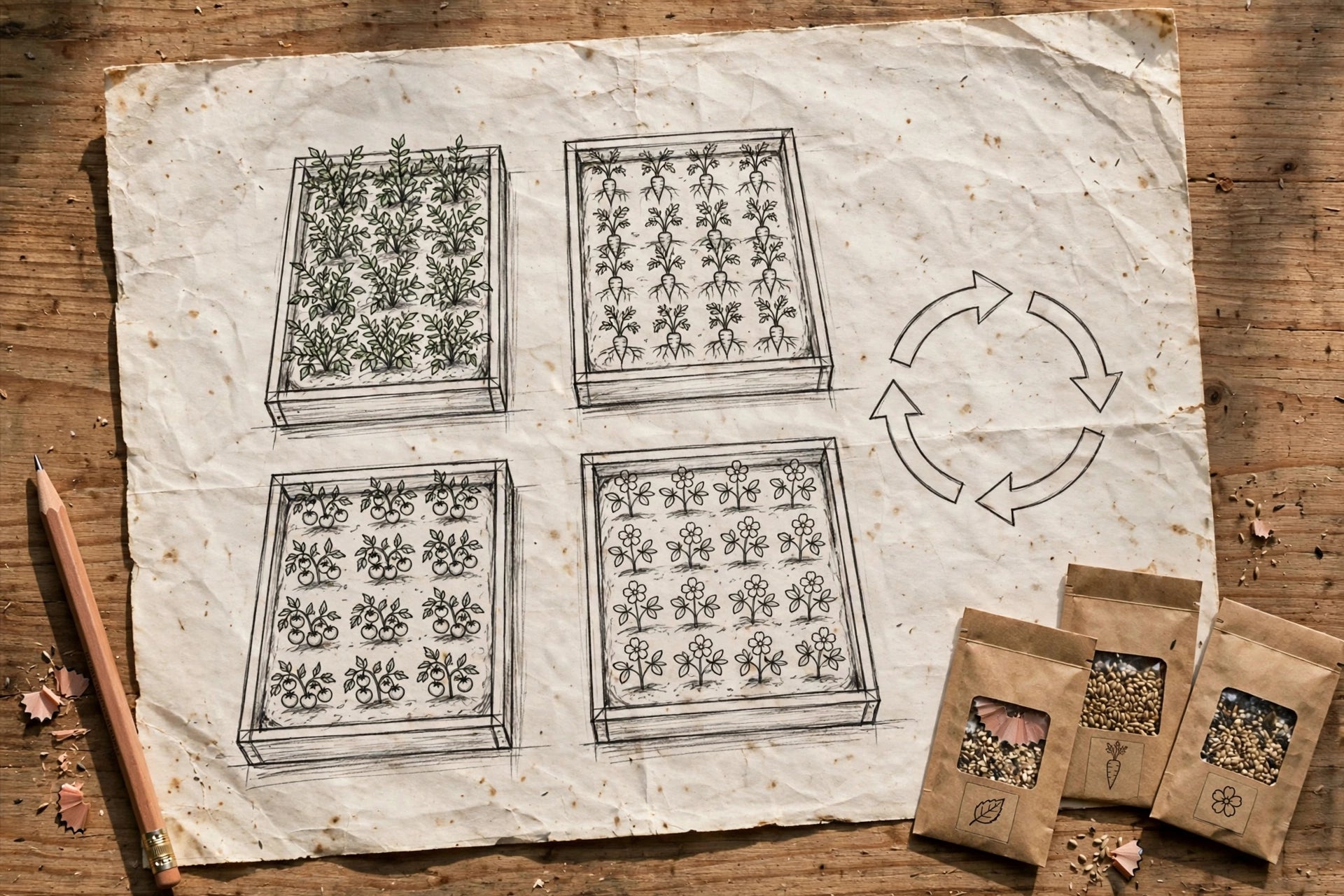
Divide your vegetable space into three (or four) groups and rotate the nightshade block through them. Here is a 4-bed version — the easiest to remember:
| Year | Bed A | Bed B | Bed C | Bed D | |------|-------|-------|-------|-------| | 1 | Nightshades (tomato, pepper, potato, eggplant) | Legumes (beans, peas) | Roots (carrots, beets, onions) | Leafy & brassicas (lettuce, kale, cabbage) | | 2 | Legumes | Roots | Leafy & brassicas | Nightshades | | 3 | Roots | Leafy & brassicas | Nightshades | Legumes | | 4 | Leafy & brassicas | Nightshades | Legumes | Roots |
Each bed hosts nightshades once every four years — comfortably beyond the pathogen's strong-survival window. With three beds, use a 3-year cycle; it still works, just with a slightly tighter margin.
Why these groupings? Legumes fix nitrogen, feeding the heavy-feeding nightshades that follow. Roots are light feeders that do well after legumes. Leafy greens and brassicas are unrelated to nightshade diseases entirely. The sequence also balances soil nutrition, which is rotation's bonus benefit.
Making it work in a small garden
- Even two beds help. Alternate nightshades between two spots and fill the off years with anything non-nightshade. It is not the full 3-year starvation, but it halves the pressure. - Containers are exempt — with fresh mix. A tomato in a pot of fresh potting mix is effectively rotated every year. Never reuse last year's container mix for nightshades without replacing it. - Map it on paper. Draw your beds, label the years, and tape it inside your garden shed. Every gardener who "meant to rotate" but planted tomatoes in the same beloved sunny bed three years running has fed early blight on schedule. - Mind the volunteers. Volunteer tomatoes and potatoes sprouting in a "resting" bed are nightshades — pull them, or the rotation is broken. - Weed the nightshades. Horsenettle and black nightshade weeds harbor the fungus. A weedy fence line next to the garden can re-infect a perfectly rotated bed.
What rotation does not fix
Rotation starves soil-borne pathogens; it does not stop wind-blown spores from a neighbor's infected garden, and it does not cure an infected plant. Pair rotation with the in-season controls: mulch against splash, base watering, spacing for airflow, and prompt removal of spotted leaves. Rotation is the multi-year strategy; those are the weekly tactics.
Also note that planting calendars vary by climate region — in long-season climates you can fit cover crops or a second non-host planting into the rotation's off years, while short-season gardeners should keep the plan simple and just hold the line on the 3-year cycle.
Frequently asked questions
How many years before tomatoes can return to the same bed? Three to four years is the extension standard for early blight and most tomato soil diseases. Four is safer; three is the practical minimum.
Can I plant peppers where tomatoes were last year? No — same family, same diseases. Peppers, potatoes, and eggplant all count as nightshades for rotation purposes.
Does rotation help with late blight too? Somewhat — late blight also overwinters in debris and volunteer potatoes — but late blight spores travel long distances on wind, so rotation is less decisive against it than against early blight. See early blight vs late blight.
What if I only have one bed? Grow nightshades in large containers with fresh mix, and use the bed for non-nightshades. Or accept the risk and lean hard on mulch, spacing, resistant varieties, and debris cleanup.
Do cover crops count in the rotation? Yes, as long as they are not nightshades. A winter rye or clover cover crop in the off years is excellent — it is a non-host that also builds soil.
Sources
- Cornell University Extension — crop rotation for vegetable disease management: intervals and family groupings. - Penn State Extension — rotation planning for tomato soil-borne diseases. - University of Minnesota Extension — home garden rotation schemes. - Clemson University Extension — vegetable garden planning and disease prevention.
Wrapping things up!
Rotation is the patient gardener's superpower: no sprays, no cost, just a plan that starves early blight out of your soil over three to four years. Draw the map this fall while this season's layout is fresh, move the whole nightshade family as one block, and pair the plan with mulch and clean fall cleanup. Planning next year's tomato lineup? Our vegetable collection has varieties for every region, and the planting calendar tool helps you time each bed in the rotation.

That specialization is the lever. Plant beans, corn, lettuce, carrots, or squash where tomatoes grew, and the pathogen population collapses for lack of a host. Two to three years of non-hosts, and the bed is safe for nightshades again. It is biology doing the work that sprays try to imitate.
The critical rule: rotate the whole family together. Tomatoes followed by peppers is not rotation — it is the same disease risk wearing a different hat. Our guides to early blight on potatoes and early blight on peppers show why the family has to move as a unit.