

Tomato Leaves Turning Yellow: 9 Causes and Fixes
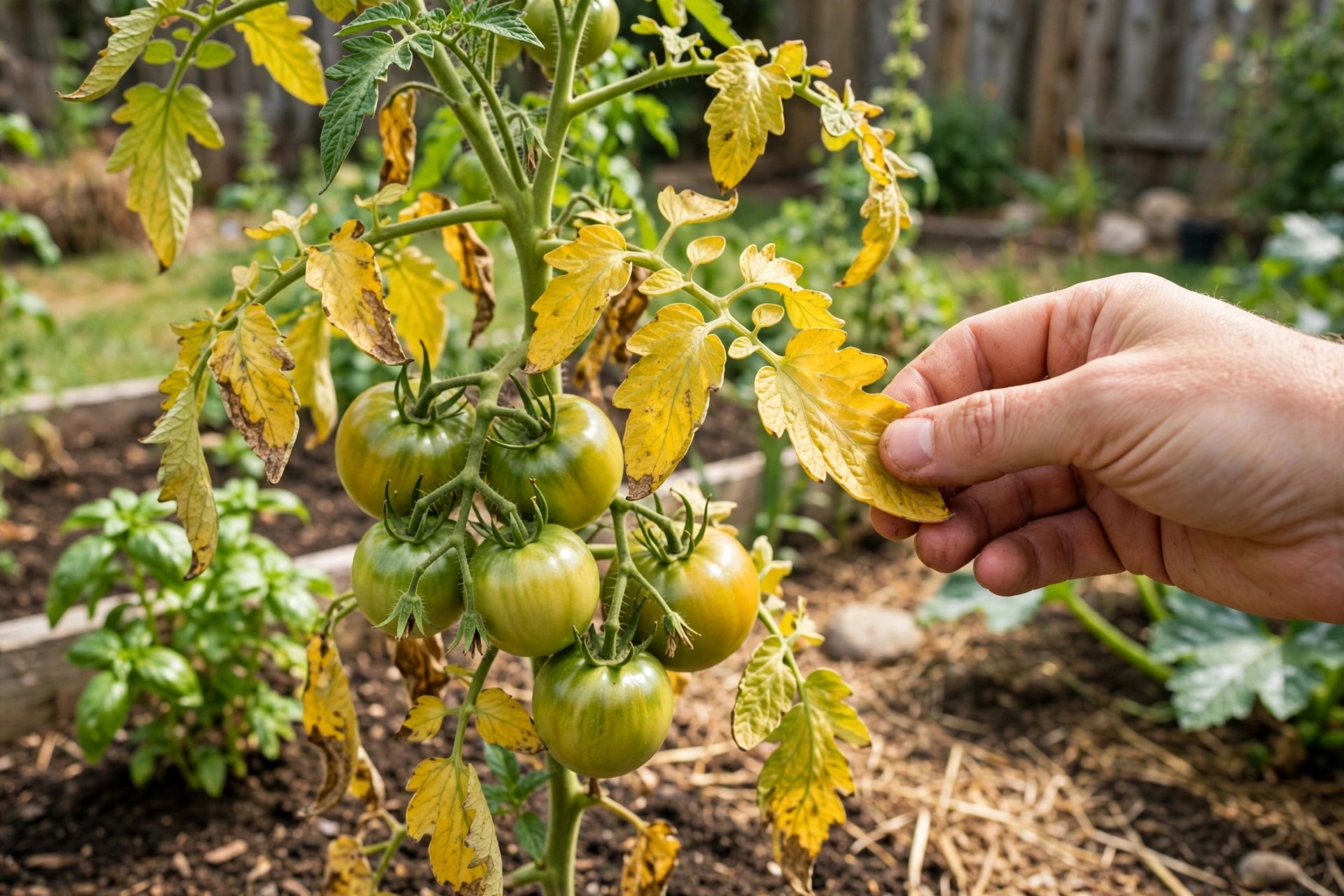
Yellow leaves on a tomato plant are a symptom with at least nine common causes, and they range from "ignore it" to "treat this week." The good news is that the pattern of the yellowing — where it starts, whether spots come with it, how fast it moves — usually points straight at the answer. Work through the nine causes below in order, match your plant's pattern, and you will know what to do before lunch. Don't expect instant certainty on the first pass — if you're not sure, re-check in a few days, because the pattern (rings? uniform fading? mosaic?) usually declares itself as symptoms develop.
The nine causes
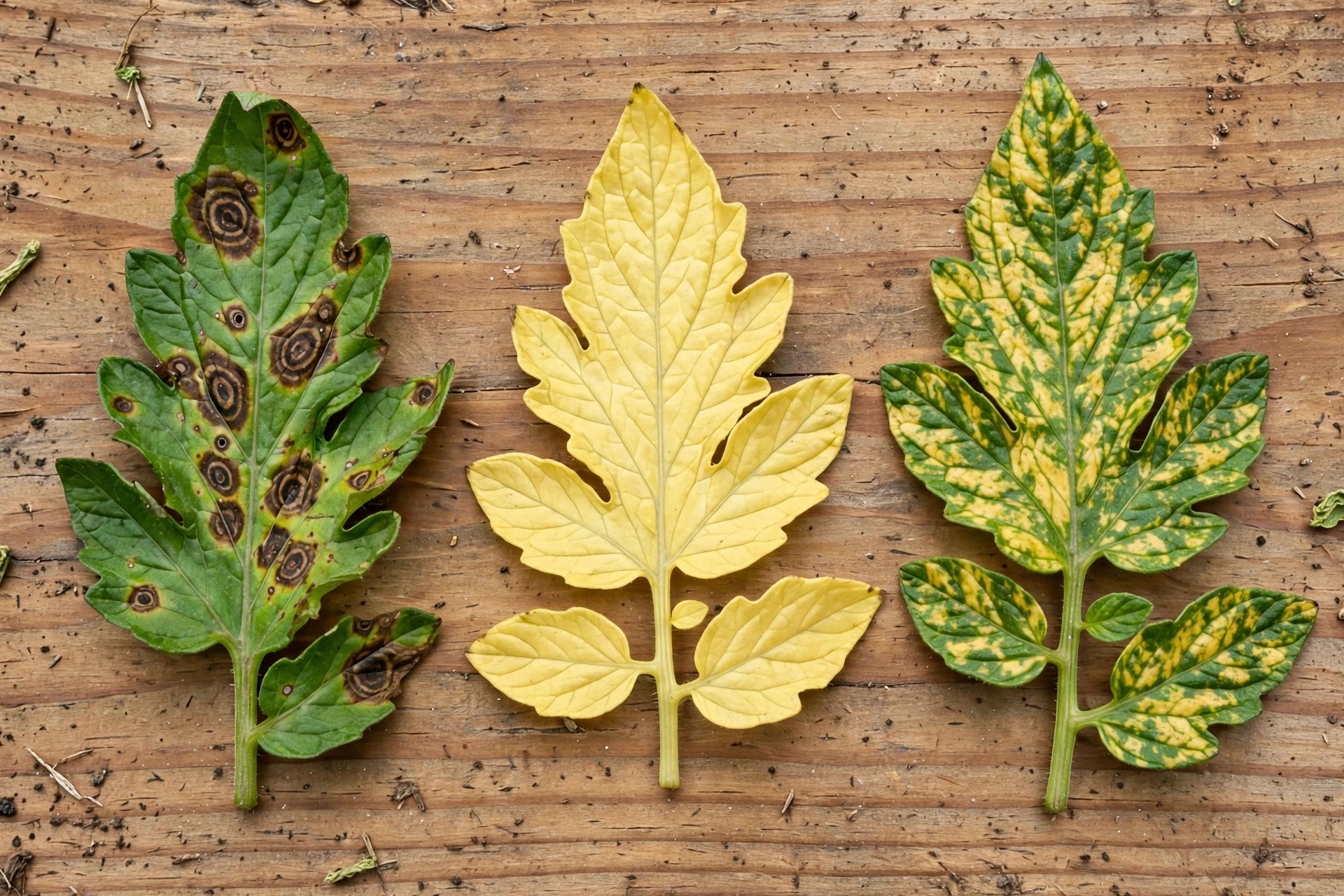
1. Early blight. Yellow halos around target-ring brown spots, starting on the lowest leaves and climbing. The most common disease cause of yellowing in warm, humid weather. Remove spotted leaves, mulch, water at the base — full plan in the early blight guide.
2. Nitrogen deficiency. A general pale-yellow wash over the whole plant, oldest leaves
6. Transplant shock. Yellowing in the week after transplanting, often with wilting despite moist soil. Roots are re-establishing. Shade new transplants for a few days, water consistently, and avoid fertilizing until growth resumes.
7. Viral diseases. Mottled yellow-green mosaic patterns, distorted or curled new growth, stunted plants. Spread by aphids, whiteflies, and thrips, or through handling. There is no cure — pull and bag infected plants to protect neighbors, and control the insect vectors.
8. Pest feeding. Heavy aphid, whitefly, or spider mite feeding drains leaves, causing stippling that merges into yellowing. Check leaf undersides with a hand lens; treat the pest and the yellowing stops spreading.
9. pH or nutrient lockout. In very acidic or alkaline soil, nutrients exist but roots cannot absorb them, mimicking deficiency. A simple soil test (your extension office does them cheaply) settles it; amend per the results rather than guessing with fertilizer.
worst, no spots. The plant is moviThe two-minute diagnostic
Start here and follow the branches:
- Spots with concentric rings? → Early blight. - Tiny spots with pale centers? → Septoria leaf spot (managed like early blight). - Whole plant pale, no spots, oldest leaves worst? → Nitrogen deficiency — feed it. - Soil soggy, leaves limp? → Overwatering — dry it out. - Wilting plus crispy edges? → Underwatering — water deeply. - Mottled mosaic, twisted new growth? → Virus — remove the plant. - Only the bottom leaf or two, everything else perfect? → Normal aging. - Just transplanted last week? → Transplant shock — give it time.
Fixes that cover most cases
Whatever the cause, these habits help nearly every yellowing tomato plant:
- Mulch 2–4 inches under plants to even out soil moisture and block disease splash — the mulching guide has the details. - Water at the base, deeply and consistently, preferably in the morning. - Remove spent or spotted lower leaves for airflow (trash, not compost, if diseased). - Feed appropriately — balanced nutrition prevents both deficiency yellowing and the stress that invites disease.
And note that timing varies by climate region: yellowing that is normal August heat behavior in the South can signal real trouble in June in a northern garden. Judge the pattern against your season, not the calendar alone.
Frequently asked questions
Should I remove yellow leaves? Yes — yellowed leaves will not green up again, and removing them improves airflow and (if diseased) removes inoculum. Cut on a dry day; disinfect tools if disease is suspected.
Can yellow leaves turn green again? Leaves yellowed by nitrogen deficiency can partially recover after feeding, but leaves damaged by disease, age, or severe stress will not. Watch the new growth — that is your report card.
Is it safe to eat fruit from a yellowing plant? In nearly all cases, yes. Leaf problems rarely affect fruit safety; discard any fruit that is itself rotted or moldy. Wash produce normally.
My whole plant yellowed overnight — what happened? Sudden whole-plant yellowing with wilting points to root damage, herbicide drift, or a major watering failure — not the gradual causes above. Check for cut stems, recent spraying nearby, or a broken irrigation line.
Sources
- Cornell University Extension — tomato leaf disorders: nutrient, water, and disease diagnosis. - University of Minnesota Extension — yellowing in tomatoes: abiotic and biotic causes. - UC Integrated Pest Management — tomato nutrient deficiency and virus symptom guides. - Penn State Extension — diagnosing tomato foliage problems in home gardens.
Wrapping things up!
Nine causes sounds like a lot, but your plant is almost certainly showing you which one it is — rings mean blight, uniform fading means hunger or water, mosaic means virus, and a lone retiring leaf means nothing at all. Match the pattern, apply the fix, and watch the new growth. For season-long foliage health, start next year with strong plants: browse tomato varieties in our vegetable collection and set yourself up with the gardening tools that make consistent watering easy.

3. Overwatering. Uniform yellowing with soft, limp leaves and soggy soil. Roots starved of oxygen cannot feed the plant. Let the top inches of soil dry between waterings, improve drainage, and consider a moisture meter to stop guessing.
4. Underwatering. Yellowing plus wilting and brown, crispy leaf edges — the plant is drought-stressed. Deep, consistent watering through mulch fixes it; erratic watering also invites blossom-end rot on the fruit.
5. Natural aging. The lowest one or two leaves yellowing evenly and dropping while everything else thrives. Normal, especially mid-season on heavy-cropping plants. Pick them off and carry on — see why lower leaves yellow and drop.