

Early Blight on Peppers: Signs and What to Do
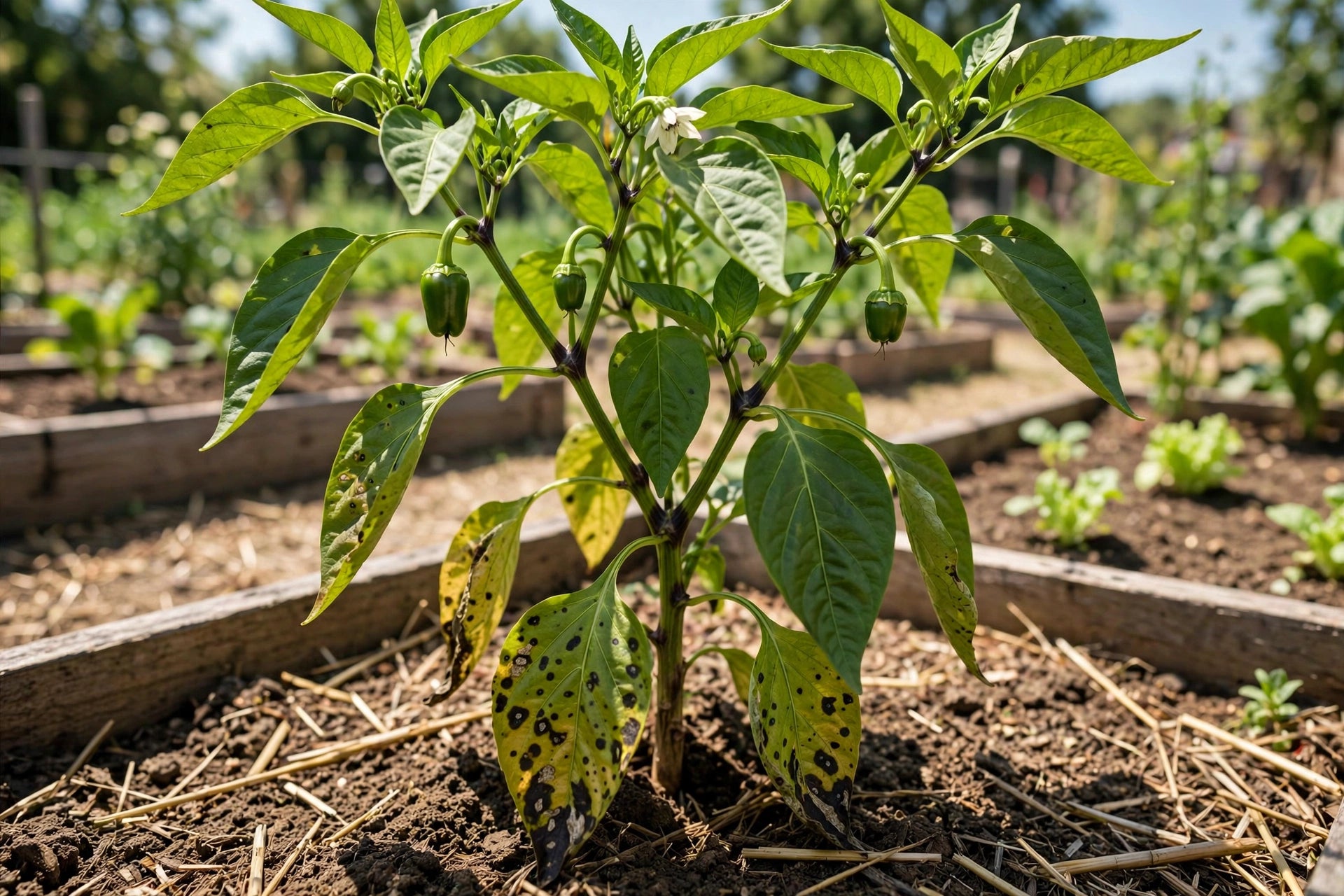
Peppers are the third nightshade in the early blight story, after tomatoes and potatoes. The same Alternaria fungi that cause early blight on tomatoes can spot pepper leaves and, less commonly, mark the fruit. Peppers are generally less susceptible than tomatoes — infections tend to stay lighter — but in warm, wet seasons the disease still defoliates lower leaves and opens the door to sunscald on exposed fruit. The management is the same playbook, with a few pepper-specific twists.
How it looks on peppers
- Leaf spots. D
Why peppers get it
Peppers sit in the same beds, rotations, and weather as tomatoes, so they meet the same fungus. Risk rises when:
- Peppers follow tomatoes, potatoes, or eggplant in the same bed (no rotation). - Overhead watering or rain splashes soil onto lower leaves. - Plants are crowded and slow to dry. - Infected debris from last season's nightshades was left in the bed.
Warm temperatures (75–85°F) with leaf wetness drive it, exactly as on tomatoes.
What to do
The program will look familiar — it is the nightshade disease playbook:
1. Confirm the diagnosis. Rings point to early blight; ringless small raised spots point to bacterial spot. Our brown spots guide and early blight vs late blight comparison sharpen the ID. 2. Strip affected lower leaves into the trash (not compost), on a dry day. Do not handle wet plants. 3. Mulch 2–4 inches to block soil splash — see the mulching guide. 4. Water at the base only; morning watering if you must wet foliage. 5. Space for airflow and avoid crowding peppers against tomatoes. 6. Rotate — peppers are nightshades, so they belong in the 3-year rotation plan alongside tomatoes and potatoes. 7. Clean up all nightshade debris at season's end.
Peppers rarely need fungicides for early blight in home gardens — the cultural steps above usually keep it to a few lower leaves. If bacterial spot is the actual diagnosis, copper-based protectants labeled for peppers are the standard organic option, applied before infection spreads.
One more pepper-specific note: peppers grown in containers with fresh potting mix largely sidestep this disease, since the fungus overwinters in garden soil and debris rather than in fresh mix. If blight has been a recurring headache in your beds, growing next year's peppers in large containers is a legitimate reset button — fresh mix every season is effectively perfect rotation. Just keep the containers spaced for airflow and water at the base as usual.
Frequently asked questions
Are peppers with early blight safe to eat? Yes — the fungus does not affect people. Cut away spotted areas on fruit; discard fruit that is extensively lesioned.
Does early blight spread from my tomatoes to my peppers? Yes, the same pathogens infect the whole nightshade family, and spores move by wind and splash. That is why separating the crops in space and in rotation matters.
My pepper fruit has sunken dark spots — blight or blossom-end rot? Blossom-end rot hits the blossom end (bottom) of the fruit with a smooth, dark, sunken lesion and no rings; early blight fruit lesions are usually near the stem end and may show rings. Both are covered in context in the early blight pillar.
Should I pull the plant? Rarely. Pepper early blight is usually mild; manage the lower canopy and the plant will keep producing.
Sources
- Clemson University Extension — pepper disease management: Alternaria and bacterial spot. - Cornell University Extension — early blight host range across nightshade crops. - UC Integrated Pest Management — pepper foliar disease guidelines. - University of Minnesota Extension — nightshade family disease rotation principles.
Wrapping things up!
Peppers usually get off lightly with early blight — a few spotted lower leaves, not a crisis. Keep the diagnosis honest (rings = blight, no rings = suspect bacterial spot), mulch, water at the base, and rotate the whole nightshade family together. Growing peppers from seed next season? Find varieties for your climate in our vegetable collection, and set up easy base watering with the gardening tools page.

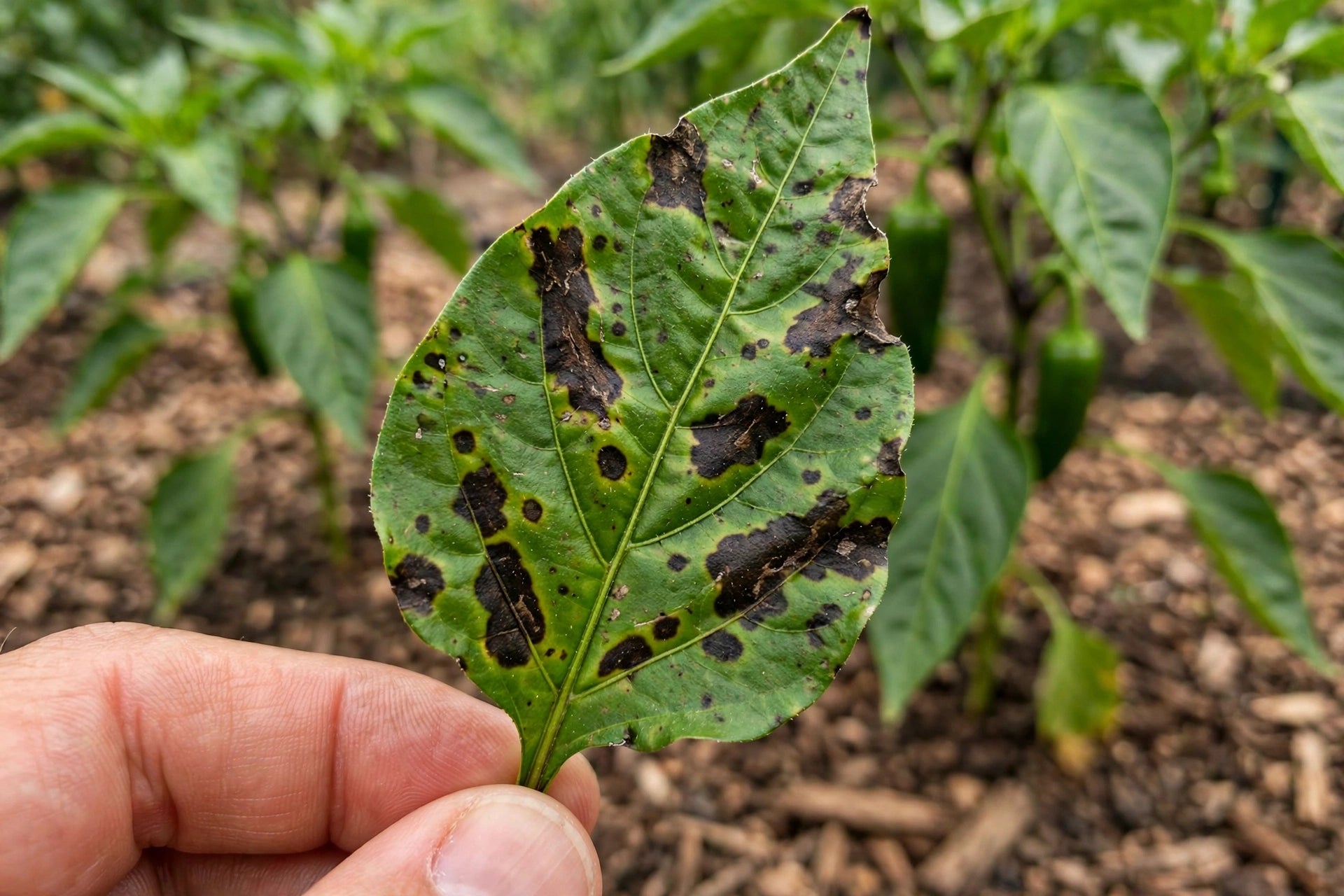
Pepper early blight is easy to confuse with bacterial spot, which is very common on peppers. The key difference: bacterial spot lesions are smaller, often raised or scabby, lack concentric rings, and frequently appear on fruit as raised rough spots. If your spots have no rings at all and the fruit spots feel rough and raised, suspect bacterial spot instead — it demands stricter sanitation (no working wet plants, copper protectants) because it spreads so easily by touch and splash.