

Why Tomato Lower Leaves Turn Yellow and Drop
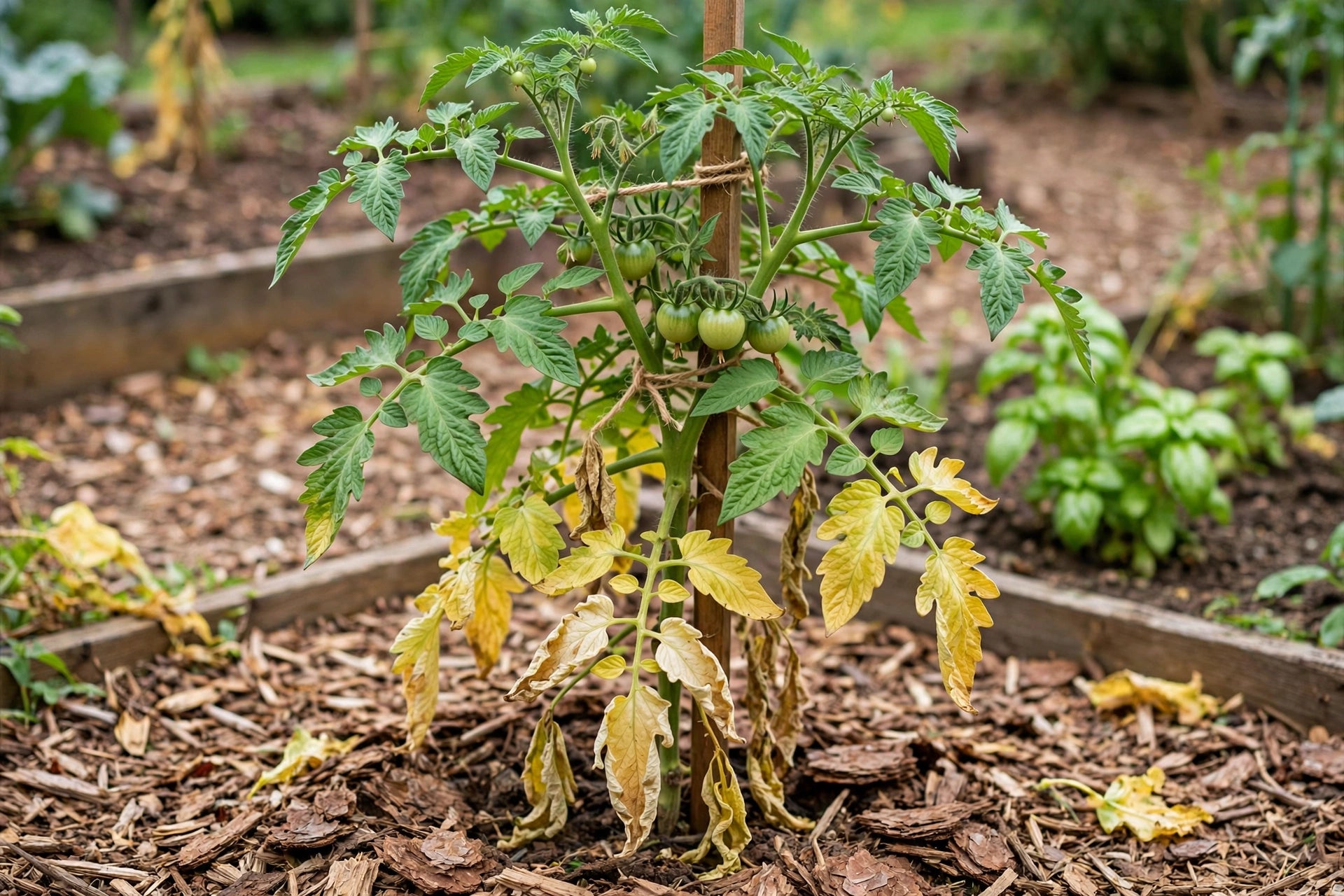
When the bottom leaves of your tomato plant turn yellow and drop while the top stays green, the plant is usually telling you one of two stories: normal aging, or the beginning of a problem that starts low and climbs. Early blight is the classic climbing problem — but overwatering, nitrogen deficiency, and plain old leaf age all yellow lower leaves too. The trick is knowing which story you are in, because the responses range from "do nothing" to "act this week." And if you're not sure after the checks below, that's fine — yellowing lower leaves are one of the least specifi
First: some yellowing is completely normal
Tomato plants shed their oldest leaves as they grow. A lower leaf that slowly pales, yellows evenly, and drops off while the rest of the plant looks vigorous is usually just retirement — the plant redirecting resources to new growth and fruit. This is most noticeable mid-season on indeterminate varieties carrying a heavy crop.
Normal aging has a signature: it is slow (a leaf or two a week), even (the whole leaf yellows uniformly, no spots or rings), and lonely (the rest of the plant looks great). If that describes your plant, the correct action is to pick off the spent leaves for airflow and move on. Nothing is wrong.
When it is early blight
Early blight also starts on the lowest leaves, which is why it gets confused with aging. The differences:
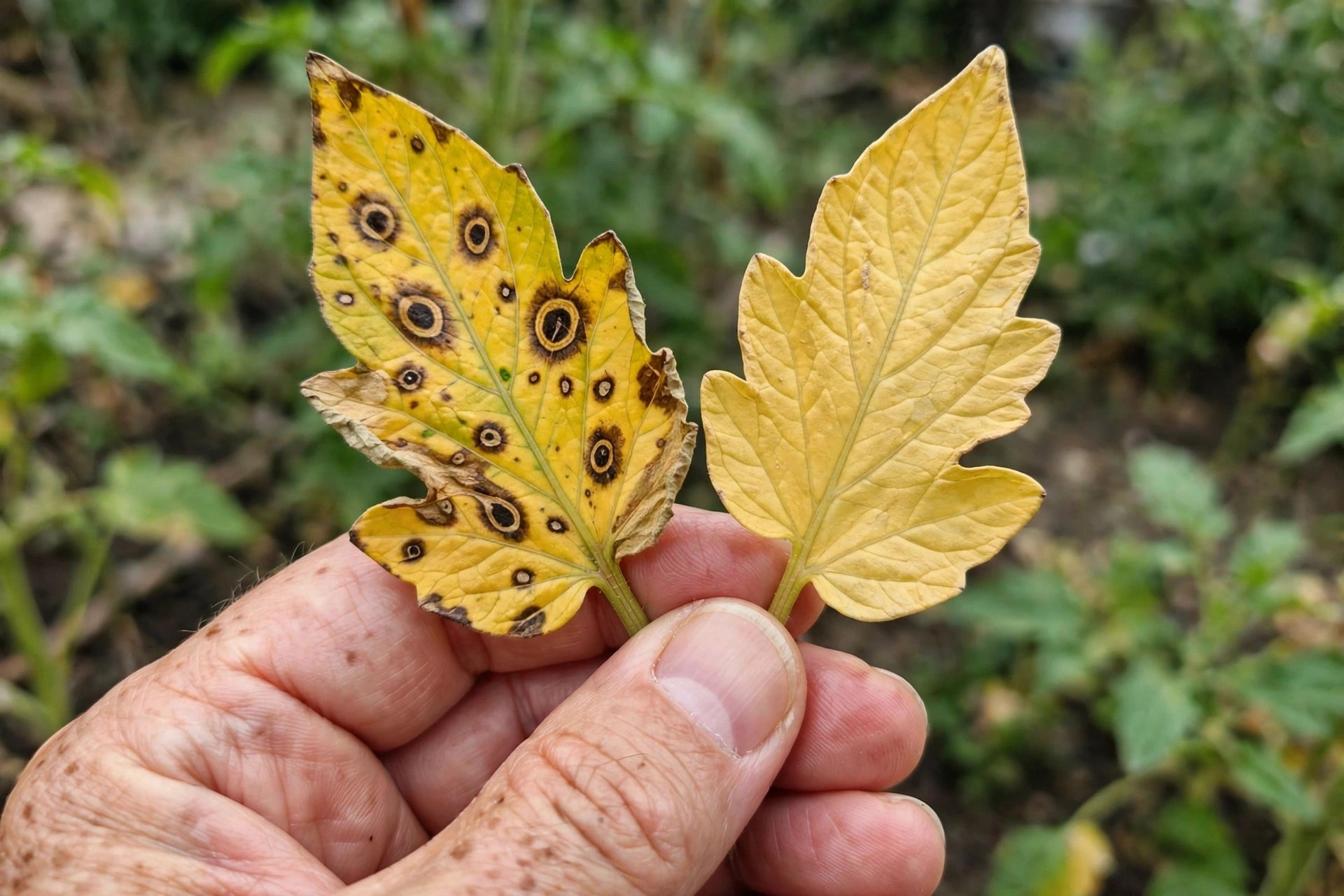
- Spots come first. Yellowing from early blight follows the target-ring brown spots — the leaf does not just fade, it gets lesions with concentric rings and yellow halos. - It climbs steadily. Aging takes a leaf here and there; early blight works upward week after week, defoliating from the bottom. - Defoliation accelerates. Once several spotted leaves drop, the plant looks bare-legged, and exposed fruit risks sunscald.
If you see rings, treat it as early blight: remove affected leaves into the trash, confirm mulch, water at the base, and follow the step-by-step action plan.
When it is water or nutrients
Overwatering yellows lower leaves too, but the pattern differs: leaves look soft and limp rather than dry, the yellowing is often uniform without spots, and the soil is soggy. Plants in heavy soil or containers without drainage are the usual victims. Let the soil dry between waterings and check drainage.
Nitrogen deficiency shows as a general pale-green-to-yellow wash starting with older leaves, because the plant moves mobile nitrogen to new growth. Unlike early blight there are no spots or rings — just fading. A balanced fertilizer or compost side-dressing corrects it, and our tomato leaves turning yellow guide covers the full nutrient differential.
Underwatering usually wilts first and yellows second, with leaf edges browning. The fix is deep, consistent watering — ideally through mulch and drip, which is also the early blight prevention playbook. One habit solves both.
The quick diagnostic
Ask these in order:
1. Are there spots with rings? → Early blight (or Septoria if spots are tiny with pale centers). 2. Is the soil soggy and are leaves limp? → Overwatering. 3. Is the whole plant pale, oldest leaves worst, no spots? → Likely nitrogen deficiency. 4. One or two evenly yellowing leaves, everything else perfect? → Normal aging. 5. Yellowing plus wilting despite wet soil? → Possible root or wilt disease — a different problem needing its own diagnosis.
What to do this week
- Remove yellowed and spotted lower leaves (trash, not compost) to improve airflow and remove inoculum. - Mulch 2–4 inches under the plant if you have not — it blocks the soil splash behind most lower-leaf disease. - Water at the base only, ideally morning, so foliage stays dry. - Feed if the whole plant is pale — a balanced fertilizer rules out nitrogen deficiency fast. - Plan rotation if disease keeps recurring in the same bed: our crop rotation guide shows how to break the cycle.
And remember that garden timing varies by climate region — in hot southern gardens lower-leaf drop in August heat is often just the plant coping, while the same symptom in June in a cool climate deserves a closer look.
Frequently asked questions
Should I remove yellow lower leaves? Yes. Whether they are aging or diseased, spent lower leaves contribute nothing and removing them improves airflow and reduces disease pressure. Prune on a dry day and wash your tools after.
Will the plant keep producing if lower leaves drop? Absolutely, as long as the upper canopy stays healthy. Tomatoes fruit on new growth; a plant can lose its bottom foot of leaves and still crop heavily.
How fast is too fast for leaf drop? Losing more than a few leaves a week, or watching the yellowing climb visibly over days, means something active — usually early blight or a watering problem — rather than aging.
Does yellowing spread to other plants? Aging does not spread. Early blight spreads by splash and wind to nearby tomatoes, potatoes, and peppers, so manage it and consider rotation next season.
Sources
- University of Minnesota Extension — tomato disorders: distinguishing natural senescence from disease. - Cornell University Extension — early blight and lower-canopy defoliation in tomatoes. - UC Integrated Pest Management — tomato yellowing: abiotic vs. biotic causes. - Penn State Extension — watering and nutrition effects on tomato foliage health.
Wrapping things up!
Yellow lower leaves are the tomato plant's check-engine light — sometimes it is just mileage, sometimes it is early blight starting its climb. Look for the rings, check your soil moisture with a moisture meter, and act on what you find: remove, mulch, and water at the base. For the bigger picture on keeping tomato foliage healthy all season, the early blight pillar guide and our vegetable collection — with tomato varieties for every climate — have you covered.
