

Seedlings Not Growing? 9 Causes and How to Fix Them
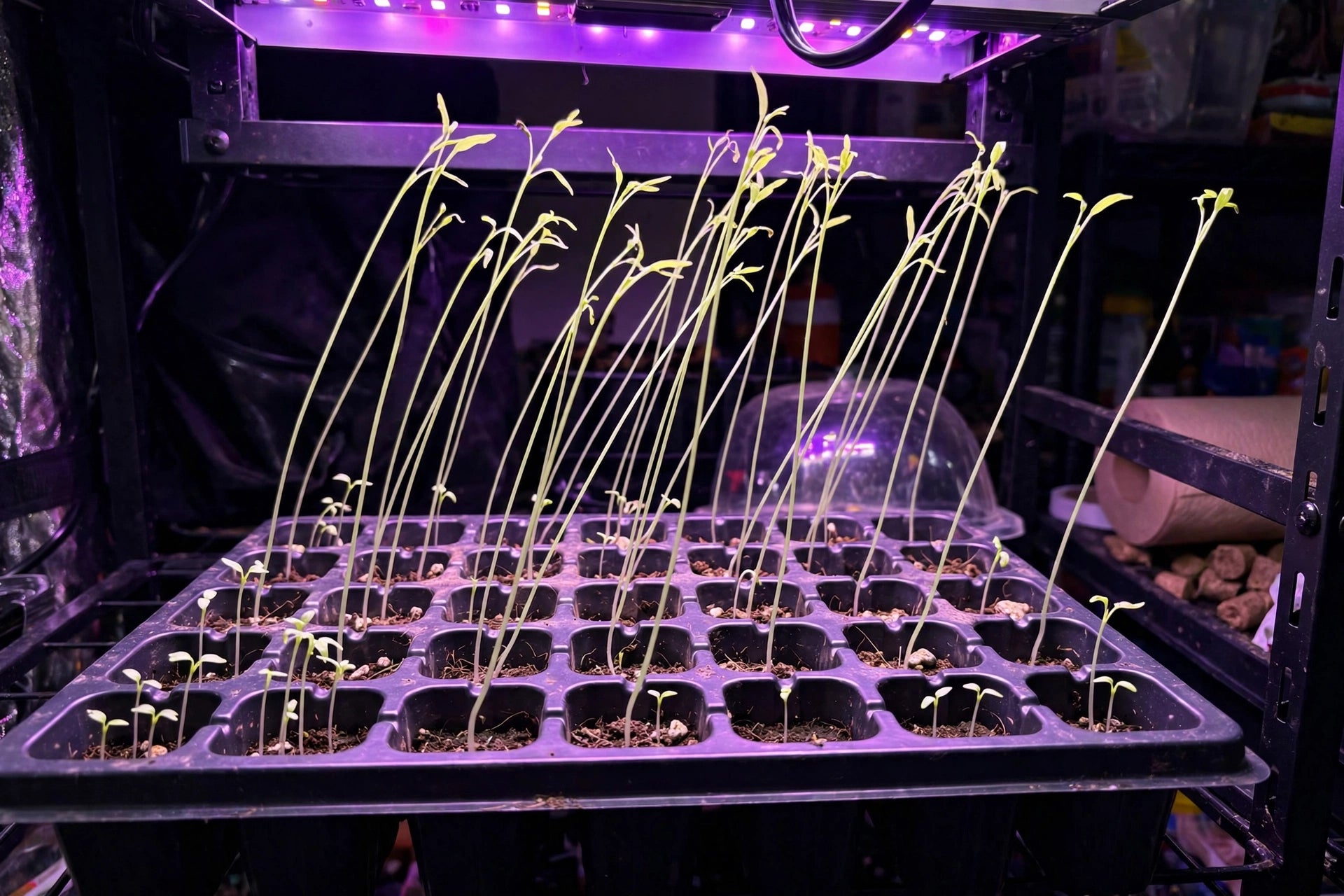
When seedlings sprout and then stop growing, the cause is almost always environmental rather than bad luck: soil that is too cold, seeds buried too deep, water that is either scarce or excessive, weak light, old seeds, or the early stages of damping off. Healthy seedlings should push out their first true leaves within one to three weeks of sprouting, depending on the species, so a tray that stalls for longer than that is telling you something needs to change. This article walks through the nine most common reasons seedlings stall and exactly how to fix each one.
Give it time: normal germination and early growth speeds
Before diagnosing a problem, check whether your seedlings are actually stalled or just on a slow schedule. Parsley, peppers, and many perennials can take three to four weeks to germinate, and the first week after sprouting is mostly root-building below the surface. Compare your tray against the packet's days-to-germination range before you assume failure.
Old seed is the most common reason a tray never gets going. Seed viability declines every year, and seed stored in a hot garage or a damp shed loses vigor much faster. If germination is patchy and slow, try a quick viability check: fold ten seeds into a damp paper towel, seal it in a plastic bag, keep it warm, and count how many sprout in the expected window. Fewer than five sprouts means the seed lot is the problem, not your technique, and no amount of fussing will fix it.
Climate and region matter here too. In cool northern states, starting seeds in an unheated garage or basement in March can mean soil temperatures in the low 50s°F, where even fresh seed germinates slowly and unevenly. Gardeners in warmer regions like Texas or Florida usually have the opposite problem — starting too early in warm rooms and ending up with heat-stressed, leggy trays.
Soil temperature is too low
Temperature is the single biggest lever in seed starting, and it is the one most indoor growers ignore. Most vegetable and flower seeds germinate best with soil temperatures between 65°F and 75°F. Below about 60°F, germination slows dramatically, and seedlings that do emerge often sit still for weeks because cold roots cannot take up water or nutrients efficiently.
The fix is simple: add bottom heat. A seedling heat mat under the tray raises soil temperature into the sweet spot and often transforms a stalled tray within days. Remove the mat once most seeds have sprouted, since seedlings prefer slightly cooler air after emergence. Keep trays away from drafty windows at night, and if you don't own a thermometer, a basic soil thermometer is one of the most useful seed-starting tools on our gardening tools page — guessing at soil temperature is how trays stall.
Peppers, tomatoes, and eggplants are especially temperature-sensitive and will sulk for weeks in cool soil, while lettuce and spinach actually prefer cooler conditions and can stall or go dormant if started on a heat mat set too warm. Match the crop to the temperature.
Seeds were planted too deep
A seed buried too deep burns through its stored energy trying to reach the surface and emerges weak — or never emerges at all. As a rule, plant seeds about twice as deep as the seed is wide. Tiny seeds like lettuce, petunias, and snapdragons need light to germinate and should be pressed onto the surface, not buried.
If your tray shows a few weak, pale sprouts while the rest of the cells sit empty, depth is a prime suspect. There is no fixing a too-deep sowing mid-tray, but the lesson applies to the next round: sow shallow, cover lightly with fine vermiculite rather than heavy mix, and firm the surface gently so the seed makes good contact with moisture without being entombed.
The soil keeps drying out
Seedlings stall fast when the top layer of mix dries out between waterings, because the tiny root zone holds almost no water reserve. Inconsistent moisture is worse than slightly-too-dry: repeated drying and re-wetting stresses young roots and can halt growth for days.
Use a humidity dome or a loose plastic cover until seeds sprout, then remove it promptly — leaving the dome on too long invites the fungal problems described in our damping off guide. Bottom-water by setting trays in a shallow pan of water for 10 to 15 minutes so moisture wicks up evenly, and check trays at least once a day. A fan running nearby will dry trays faster, so water more often once airflow is added.
Too much water, and the first signs of damping off
The mirror-image problem is a tray that never dries. Constantly soggy mix suffocates roots, leaches nutrients, and creates the exact conditions where damping-off fungi thrive. If seedlings sprouted, looked fine, and then stopped growing while the surface stays dark and damp, overwatering is likely — and damping off may be starting.
Watch the stem right at the soil line. Seedlings with damping off develop a pinched, water-soaked, brownish narrowing at the base and then collapse, often within a day. If you see that, read what to do when seedlings damp off immediately, because infected seedlings cannot be saved and the rest of the tray needs protection fast. If instead the seedlings are yellowing slowly with no stem pinching, the problem is more likely plain overwatering — in which case see damping off vs overwatering: how to tell apart before you act.
For either case, the cultural fix is the same first step: let the surface dry between waterings, switch to bottom-watering, add gentle airflow with a small fan, and give the tray more light. These steps are covered in detail in our airflow guide for seedlings.
Not enough light
Light-starved seedlings stretch tall and thin toward the window, then stall because they cannot photosynthesize enough to build new tissue. A sunny windowsill is rarely enough in late winter and early spring — seedlings need 14 to 16 hours of bright light per day, positioned just a few inches above the leaves.
If your sprouts are leggy, pale, and leaning, add a simple shop light or LED grow light on a timer and lower it to two to three inches above the tray, raising it as the plants grow. Legginess itself is a warning: weak, stretched stems are far more vulnerable to damping off, so light and disease prevention go hand in hand.
Crusty, compacted mix
Seed starting mix that forms a hard crust on top makes it physically difficult for sprouts to push through and for water to penetrate evenly. This usually happens with cheap mixes heavy on fine peat, or when the surface is misted repeatedly without ever being watered deeply.
The fix is preventive: use a light, fluffy seed-starting mix rather than garden soil, and top the cells with a thin layer of vermiculite, which stays open and resists crusting. If the surface has already crusted, gently break it with a toothpick — carefully, without disturbing the seeds — and switch to bottom-watering. Starting with clean, fresh mix also matters: reusing old mix can carry the pathogens behind damping off, which is why many growers sterilize their seed starting mix before sowing.
Fertilizer: too much, too soon
Seedlings need almost no fertilizer until they have at least one set of true leaves, because the seed itself carries the starter nutrients. Feeding too early — or at full strength — burns tender roots and stalls growth, sometimes with browned leaf edges as the telltale sign.
Once true leaves appear, feed lightly: a balanced liquid fertilizer at one-quarter strength, once a week, is plenty. Seedlings in fresh, quality mix will tell you when they are hungry by growing steadily and coloring up. If you suspect fertilizer burn, flush the tray once with plain water and hold off feeding until the plants resume growing.
Hidden root damage: fungus gnats and rot
Sometimes the leaves look fine while the roots are under attack. Fungus gnat larvae feed on fine root hairs in damp mix, and a heavy infestation can stall seedlings for weeks — you will notice the tiny black flies hovering over the tray. Letting the surface dry between waterings is the best control, since the larvae need constant moisture; yellow sticky traps catch the adults and break the cycle.
Seedlings that stall with mushy, brown roots when you gently tip one out have root rot, usually from the same wet conditions that invite damping off. Discard badly rotted seedlings rather than nursing them, improve drainage and airflow for the rest, and consider whether the whole batch should be restarted if more than a third of the tray is affected.
The 5-minute seedling rescue routine
When a tray stalls, work through this quick sequence instead of guessing: check soil temperature and add bottom heat if it is below 65°F; feel the mix and adjust watering — bottom-water if dry, let dry if soggy; move the light closer or add hours; inspect stems at the soil line for the pinched brown ring of damping off; and look for fungus gnats. Most stalled trays recover within a week once the limiting factor is fixed, because young plants are remarkably resilient when their basic needs are met.
Starting your own vegetable seeds indoors gives you a head start on the season, but only if the tray keeps moving. Keep notes on what you changed — temperature, watering, light — so next year's seed starting is a refinement rather than a repeat of the same mystery.
Frequently asked questions
How long should I wait before deciding my seedlings have stalled? Give them at least a full week past the packet's days-to-germination before worrying, and two weeks of zero new growth after sprouting before declaring a stall. Some species are simply slow, and disturbing the tray to "check" only sets them back.
Can stalled seedlings recover, or should I start over? Most recover once the limiting factor is fixed — cold, dryness, or weak light are all reversible. Restart only if damping off has killed a large share of the tray, roots are rotted, or the seed itself was non-viable, since a fresh sowing in corrected conditions will outpace a struggling tray.
Why do my seedlings grow fine for a week and then stop? The first week runs on energy stored in the seed. When that runs out, growth depends on light, root function, and nutrients — so a stall at week two usually points to weak light, cold or waterlogged roots, or the onset of disease. Check the stem bases for damping-off signs first.
Do seedlings need fertilizer to keep growing? Not until the first true leaves appear. Before that, the seed provides everything. After true leaves emerge, a quarter-strength balanced liquid feed once a week supports steady growth; full-strength feeding too early is a common cause of stalling.
Is my tap water stalling my seedlings? Very rarely. Extremely soft water with high sodium can cause problems over time, but most municipal water is fine for seed starting. Let water sit out overnight if your area heavily chlorinates, though this is a minor factor compared with temperature, light, and watering habits.
Should I transplant stalled seedlings into bigger pots? No — transplanting stressed seedlings usually makes things worse. Fix the environment first and let them resume growing. Move them up only when they are growing vigorously and roots fill the cell.
Sources
- UC Integrated Pest Management — damping-off causes, symptoms, and cultural prevention for seedlings - Cornell Cooperative Extension — indoor seed-starting guidance including temperature, light, and watering - Utah State University Extension — damping-off causal agents, symptoms, and moisture management - Oregon State University Extension — pasteurizing soil and sanitizing containers for seed starting
Wrapping things up!
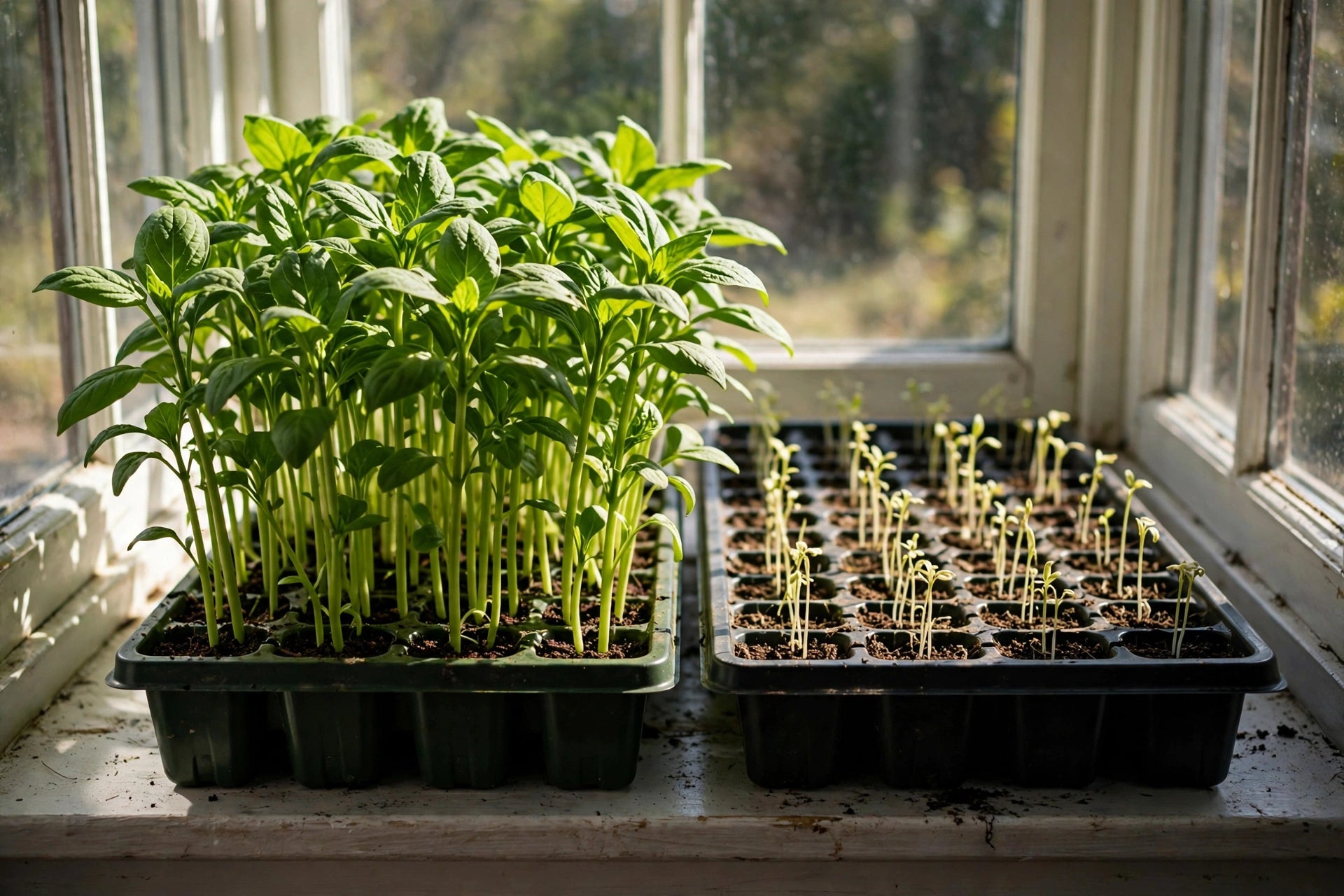
A stalled seedling tray is frustrating, but it is almost never a mystery once you check the basics in order: temperature, depth, water, light, seed age, mix quality, feeding, and hidden root pests. Fix the limiting factor, give the tray a week, and you will usually see new growth resume.
And if the diagnosis turns out to be damping off rather than a simple stall, act fast — remove the affected seedlings, dry and brighten the tray, and start your next sowing with clean mix and good airflow. Your future self, transplanting stocky green seedlings into the garden, will thank you.
