

Damping Off in Seedlings: Causes, Signs, and Prevention
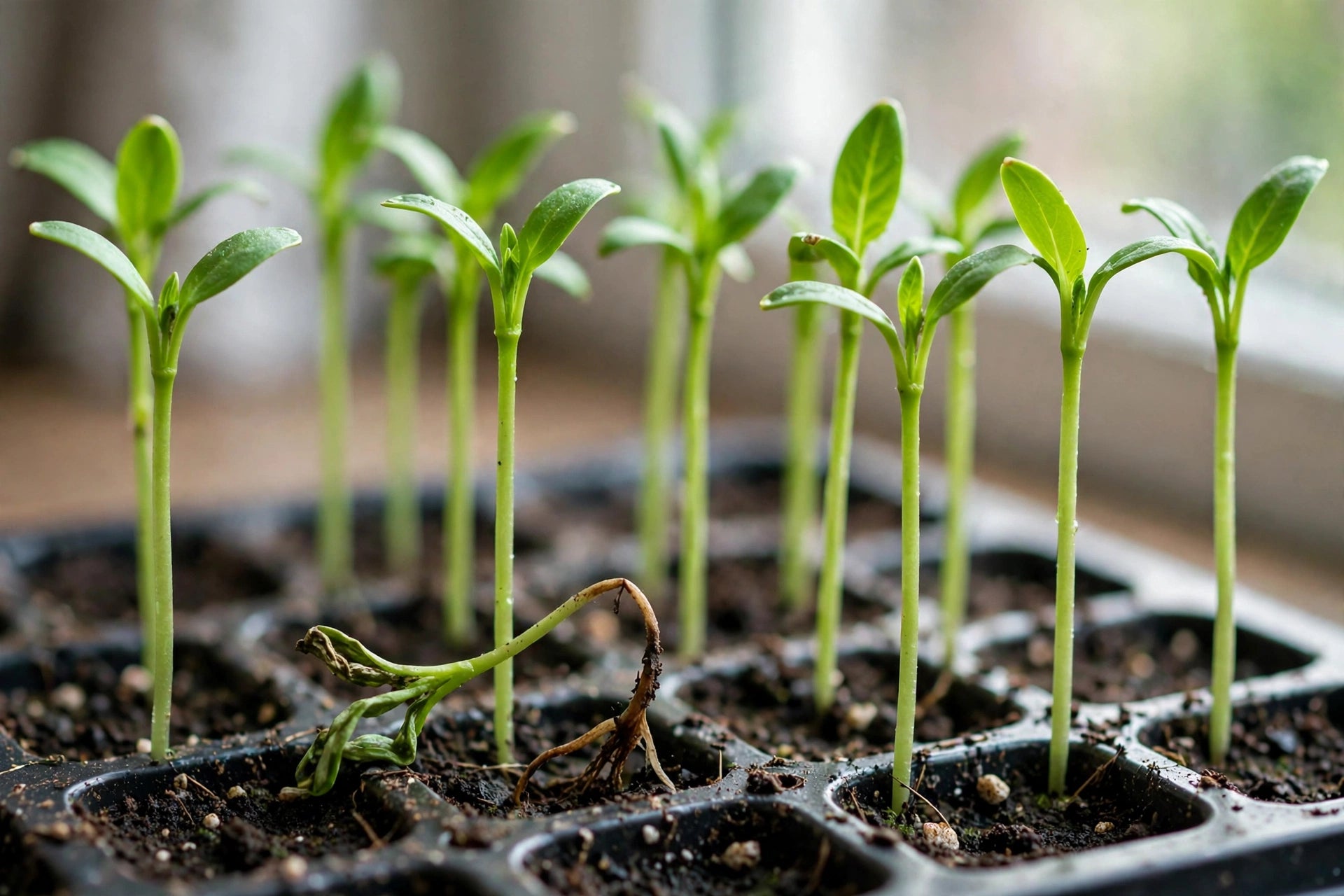
Damping off is a seedling disease caused by soil-borne fungi and oomycetes — mainly Pythium, Rhizoctonia solani, Fusarium, and Phytophthora species — that rots seeds in the soil or collapses young seedlings at the soil line. There is no cure for a seedling that has already been infected, which is why prevention is the entire game. The good news: damping off is almost entirely preventable with sterile seed-starting mix, correct watering, good air circulation, and the right soil temperature.
Damping off is the single most common reason new gardeners lose entire trays of seedlings indoors. It strikes fast — a tray can look fine at breakfast and be flat by evening — and it is indiscriminate, attacking vegetables, flowers, and herbs alike. University extension programs across the United States, including Penn State Extension and the University of California's Integrated Pest Management program, list it as one of the most frequent causes of seedling failure. Understanding what it is and how it spreads is the first step to never losing a tray to it again.
What damping off actually is
Damping off is not caused by a single pathogen. It is a group name for the rotting of seeds in the soil and the destruction of newly emerged seedlings by several different fungi and fungus-like organisms. Penn State Extension notes that the organisms most often responsible belong to the genus Pythium, with Fusarium and Rhizoctonia species also common causes. Phytophthora can be involved too, particularly in field situations.
Technically, Pythium and Phytophthora are oomycetes (sometimes called water molds) rather than true fungi, but for the home gardener the practical point is the same: these organisms live in soil, survive on contaminated containers, tools, and reused potting mix, and they thrive in cold, wet conditions. They do not need much to get started — a damp seed coat in cool mix is an invitation.
These pathogens are indiscriminate. They attack almost any seedling species, which means crop rotation and resistant varieties are not effective control strategies for damping off, according to university extension guidance. What matters instead is the environment you give your seedlings.
The two phases: pre-emergence and post-emergence
Damping off happens in two distinct phases, and recognizing which one you are dealing with helps you fix the right thing.
Pre-emergence damping off happens below the soil surface. The pathogen attacks the seed or the emerging root and shoot before the seedling ever breaks through the mix. From above, the tray simply looks like nothing germinated — but the seed has rotted in place. Our companion article on seeds rotting before germination covers this phase in detail, since it is one of the most confusing seed-starting failures.
Post-emergence damping off happens after the seedling is up. The stem rots at or just below the soil line, developing a water-soaked, pinched, thin area. The seedling then topples over and collapses, even though the leaves may still look green for a short time. Affected seedlings often appear shriveled, brown, or wilted. This is the classic "everything was fine yesterday and now the tray is flat" scenario that frustrates so many growers.
Early warning signs to watch for
Catch damping off early and you can often save the unaffected seedlings in the same tray. Check your trays daily and look for these signs:
- Stems that look water-soaked or pinched at the soil line. This is the hallmark symptom. The base of the stem turns thin and dark, almost like it is melting. Our guide to seedling stems turning brown walks through this symptom and its look-alikes. - Seedlings toppling over while still green. A seedling that falls flat with healthy-looking leaves above a pinched brown base is a textbook case. - Patches of missing seedlings. Damping off often spreads outward from a point of infection, so a dead patch that grows over a day or two is suspicious. - Fuzzy white growth on the mix surface. Surface fuzz is usually harmless saprophytic mold (more on that in our mold on seed starting mix article), but when it appears together with collapsing seedlings, it signals the same overly wet conditions the pathogens love. If the fuzz is growing directly on the seedlings themselves rather than the mix, see our guide to mold on seedlings for what that means.
Because these symptoms can resemble other problems — overwatering, cold injury, cutworm feeding, fertilizer burn — do not rush to a diagnosis. Compare the whole picture before acting.
Why it happens: the conditions that favor damping off
The pathogens that cause damping off are widespread, but they only cause serious damage when conditions favor them. Penn State Extension lists the key risk factors: excessive soil moisture, overcrowded flats, and soil temperatures that are too low before germination (below about 68°F/20°C) or too high after emergence (above about 77°F/25°C).
Here is how each factor works in practice:
- Overwatering and poor drainage. Soggy mix is the number one trigger. Seeds and seedlings need moisture, not saturation, and constantly wet mix both stresses the seedling and favors water-loving pathogens like Pythium. - Cold, wet soil. Sowing into cool mix slows germination, leaving seeds sitting vulnerable for longer. Soil warmth matters — UC IPM guidelines note that waiting until soil temperatures reach roughly 65–70°F generally prevents seedling infections by Pythium, Phytophthora, and Rhizoctonia. Timing varies by climate region, so check your soil temperature rather than the calendar. - Contaminated mix, containers, and tools. Reused potting soil, unwashed trays, and dirty tools can carry pathogens from one season to the next. Spores also move on garden soil brought indoors on hands, tools, or boots. - Sowing too deep. Deeply buried seeds take longer to emerge, extending the window of vulnerability. - Overcrowding. Dense seedlings trap humidity around the stems and slow air movement, creating a perfect microclimate for disease. - Poor air circulation and low light. Still, humid air and weak, leggy growth from insufficient light produce seedlings with less resistance to infection.
There is no cure — here is what to do instead
This is the hard truth every gardener needs to hear: there is no treatment that cures a seedling already infected with damping off. Once the stem is pinched and collapsing, the seedling will not recover. Trying to save it only risks the rest of the tray.
What you should do instead:
1. Remove and discard affected seedlings immediately. Pull out every collapsed or water-soaked seedling, plus a small margin of healthy-looking neighbors if the patch is spreading. Do not compost them in a home pile — bag them and throw them in the trash, since home compost rarely gets hot enough to kill the pathogens. 2. Improve conditions for the survivors right away. Let the mix surface dry slightly between waterings, increase air movement with a small fan, thin out crowded seedlings, and make sure the tray gets strong light. 3. Do not reuse the infected mix. Discard or set aside the contaminated batch. Some gardeners heat-treat mix, but for home use the simplest path is fresh, sterile seed-starting mix.
Prevention: a complete IPM plan for healthy seedlings
Since prevention is everything, here is a plan in integrated pest management order — starting with the simplest, most effective steps.
Start clean: prevention
- Use fresh, sterile seed-starting mix. Most commercially available soilless mixes are free of damping-off organisms. Never reuse old potting soil for seed starting. - Clean and disinfect containers and tools. Wash trays, pots, and tools, then disinfect with a diluted household bleach solution (about 1 part bleach to 9 parts water), soak for around 30 minutes, and rinse well. This step alone prevents a huge share of cases. - Use fresh water and clean hands. Simple hygiene matters — do not set clean trays on dirty benches or floors.
Cultural controls: give seedlings the environment they need
- Water from below and avoid overwatering. Let trays absorb water from the bottom, then drain off the excess. Water in the morning so surfaces dry by evening, and never let trays sit in standing water. A moisture meter takes the guesswork out of when to water. - Provide air circulation. A small fan running gently across your seedling trays is one of the most effective damping-off preventives. It dries leaf and stem surfaces and strengthens stems. See our gardening tools suggestions for fans sized for indoor growing. - Give strong, adequate light. About 12–16 hours of good light per day produces stocky, vigorous seedlings that resist infection far better than leggy ones. - Keep soil at the right temperature. Use bottom heat so the mix stays around 70–75°F (about 21–24°C) during germination, per Penn State Extension guidance. Warm, quickly germinating seeds spend less time vulnerable. - Sow at the proper depth and don't overcrowd. Follow packet depth guidance, sow thinly, and thin seedlings promptly so air moves freely around every stem.
Mechanical and physical steps
- Space trays and thin seedlings so humidity cannot build up in dense patches. - Remove humidity domes promptly once seeds sprout. Domes are great for germination but trap moisture afterward.
Biological options
- Products containing beneficial organisms such as Trichoderma species or Bacillus subtilis are available as preventatives and work by competing with or suppressing damping-off pathogens. University of Delaware Extension lists several of these biological options for vegetable growers. Treat them as supplements to good cultural practices, not replacements — their efficacy varies with conditions and pathogen pressure.
Chemical options (least-toxic first)
- For home gardeners, chemical fungicides are rarely needed and best avoided on seedlings, since some can inhibit germination or root formation. If you do consider one, treat only a portion of the crop first and read the label carefully. Prevention and sanitation will take you much further.
Look-alikes: what damping off is NOT
Before diagnosing, rule out these common impostors:
- Simple overwatering damage can yellow or wilt seedlings without the classic pinched, water-soaked stem at the soil line. - Cold injury can cause seedlings to collapse after a cold night, but the stems are not rotted — they are just limp and watery from freezing. - Cutworm feeding leaves cleanly chewed-through stems, often with the top lying nearby, rather than soft rot. - Fertilizer burn from over-feeding browns leaf edges and root tips rather than pinching the stem base. - Harmless surface mold — white or greenish fuzz on the mix — is usually saprophytic and does not attack living tissue. It does, however, indicate the same excess moisture that favors damping off, so treat it as a warning.
When in doubt, watch the tray for a day: damping off spreads in growing patches, while environmental damage usually stays static.
Frequently asked questions
Can damping off spread from one tray to another? Yes. The pathogens move in water, on tools, and on your hands. Always disinfect tools between trays, avoid splash when watering, and handle infected trays last when working with multiple flats.
Is damping off dangerous to people or pets? No. The organisms that cause damping off are plant pathogens. They do not infect people or animals, and they are different from the household molds that concern indoor air quality.
Should I throw away seeds that didn't sprout in an infected tray? If a tray shows damping off, the mix and remaining unsprouted seeds should be discarded rather than reused. The pathogens persist in the mix, and starting fresh with sterile mix is the reliable route.
Does cinnamon or chamomile tea prevent damping off? These home remedies are widely discussed online, but university extension guidance does not support them as reliable controls. The evidence-backed approach is sanitation, proper watering, air circulation, and correct soil temperature.
How warm should my seed-starting mix be? For germination, aim for about 70–75°F (21–24°C) in the mix, per Penn State Extension. UC IPM notes that soil temperatures around 65–70°F generally prevent Pythium, Phytophthora, and Rhizoctonia seedling infections outdoors. Specific crops vary, so check seed packet guidance for your vegetable or flower varieties.
Can seedlings recover from damping off? No. Once the stem is rotted at the soil line, the seedling cannot be saved. Remove it and focus your energy on protecting the healthy seedlings that remain.
Sources
- UC Integrated Pest Management — damping-off and root rot management in seedlings, including soil temperature thresholds for prevention. - Penn State Extension — "Damping Off" by Gary W. Moorman: pathogens, favoring conditions, and greenhouse control practices. - University of Delaware Extension — managing damping off in direct-seeded vegetables: pathogen identification and biological control options. - UMass Amherst Greenhouse Crops and Floriculture Program — distinguishing saprophytic surface molds from plant pathogens on growing media.
Wrapping things up!
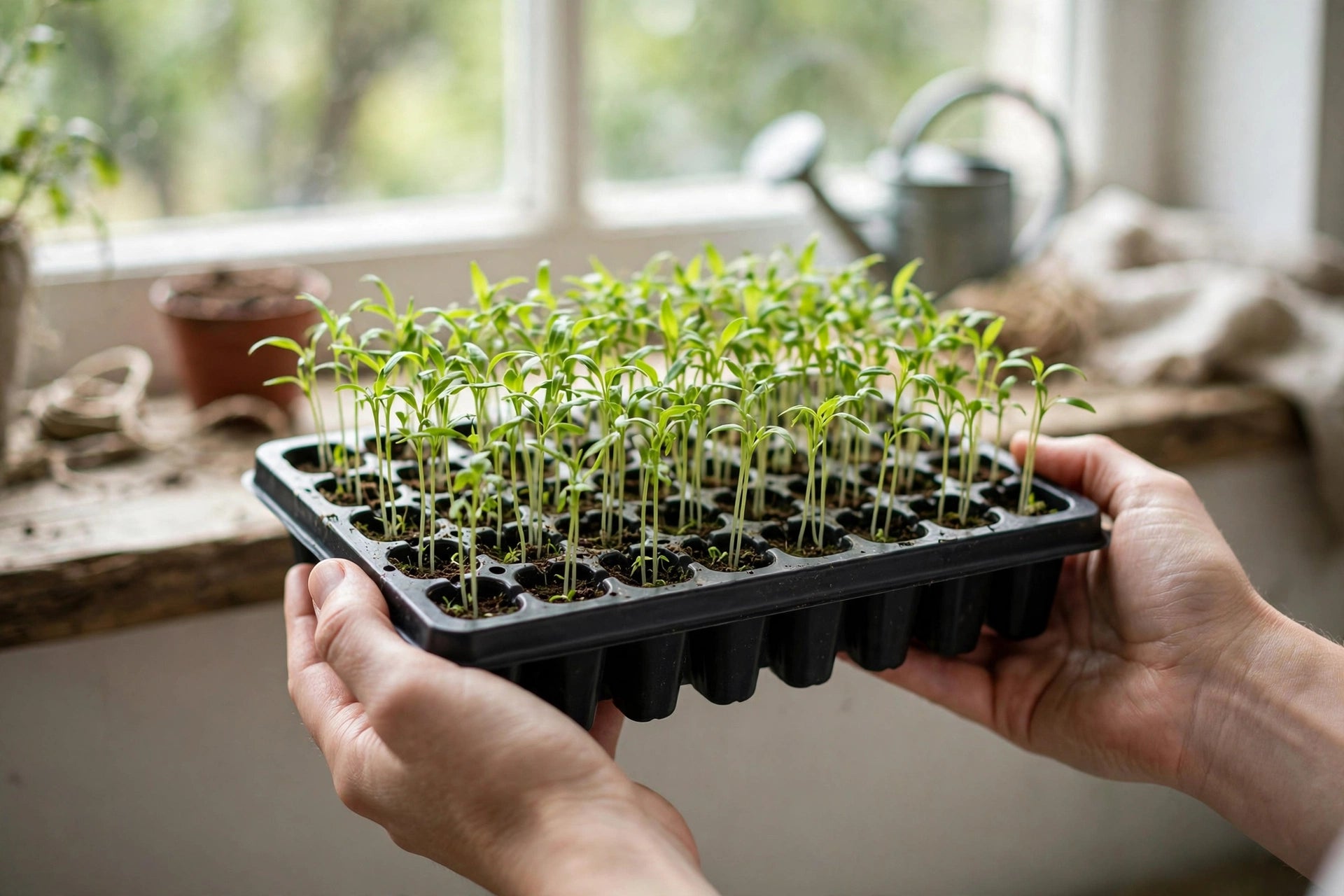
Damping off feels devastating when it hits, but it is one of the most preventable problems in seed starting. Fresh sterile mix, clean containers, watering from below, a gentle fan, and the right soil temperature will protect nearly every tray you sow.
Start clean, keep things dry enough, and let your seedlings grow strong — most damping off losses are simply the garden's way of asking for better airflow and less water.
