

Damping Off vs Overwatering: How to Tell Apart
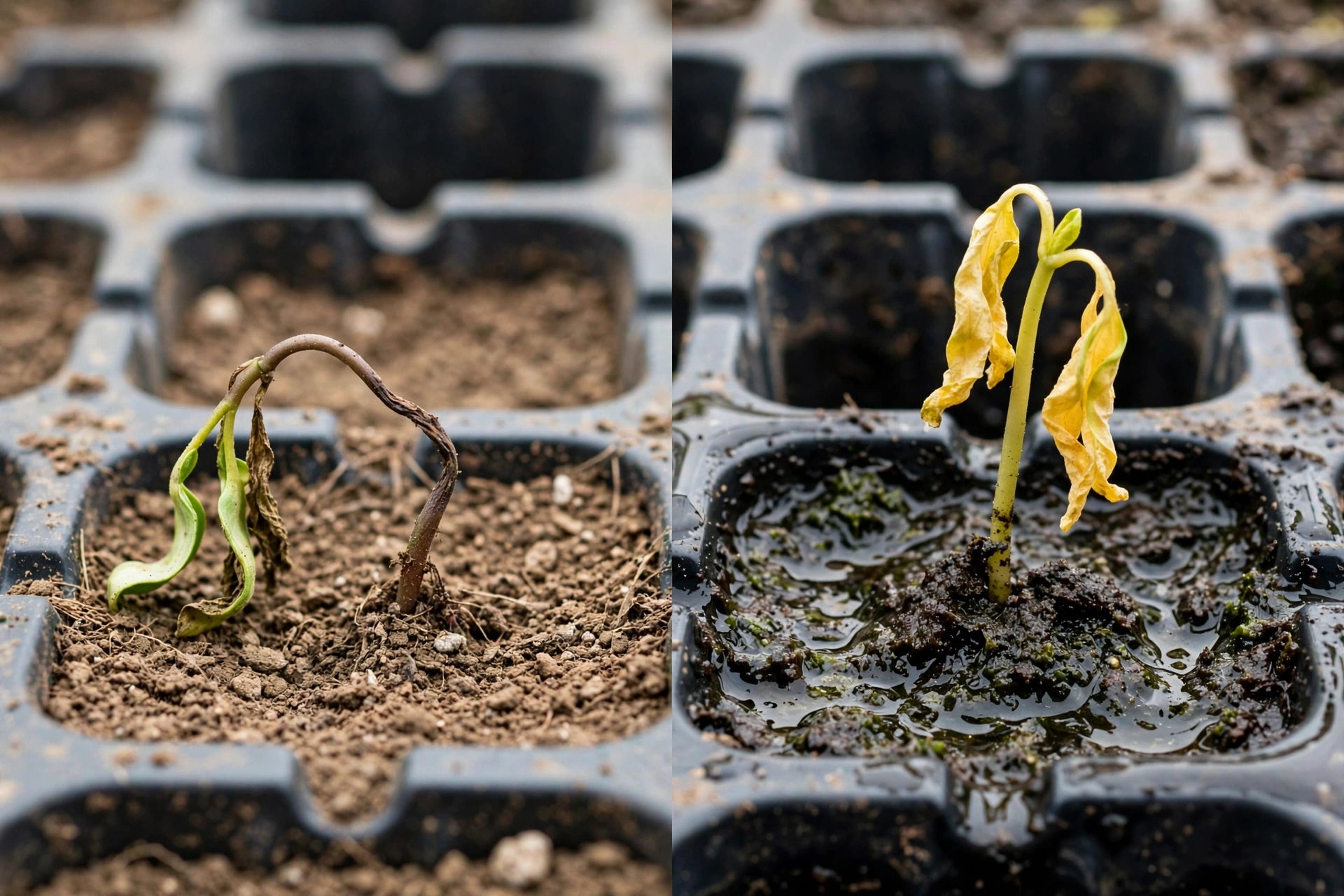
Damping off and overwatering both strike in wet soil and both kill seedlings, which is why growers confuse them constantly. The key difference: damping off is an infection — soil-borne fungi or oomycetes (Pythium, Rhizoctonia, Fusarium, Phytophthora) attacking the stem at the soil line, causing a pinched, water-soaked narrowing and rapid collapse of seedlings that looked healthy the day before. Overwatering is a drowning — roots suffocated by saturated soil, producing slow yellowing, wilting despite wet mix, and mushy brown roots, but usually without that signature pinched stem. The distinction matters because the fixes differ, and the honest truth is that these two often occur together, so uncertainty is normal and this guide will help you act sensibly even when you cannot be sure.
Damping off: the signature signs
Damping off comes in two forms. Pre-emergence damping off means seeds rot before they ever sprout — you get patchy or empty cells and, if you dig, soft mushy seeds. Post-emergence damping off is the dramatic one: seedlings emerge looking fine, then the stem develops a dark, water-soaked, pinched lesion right at or just below the soil line. The narrowed stem can no longer support the top, and the seedling topples over, often within 24 hours of the first visible symptom.
Speed is the hallmark. Damping off moves fast — a tray can go from healthy to devastated in two to three days — and it spreads outward from the first affected seedlings to their neighbors. The roots of a damped-off seedling may look relatively okay at first because the attack centers on the stem base; later the roots rot too. There is no cure for an infected seedling: it must be removed and discarded (not composted) so the pathogens do not spread, as explained in what to do when seedlings damp off.
Overwatering: the signature signs
Overwatered seedlings decline slowly, over days to weeks, and the symptoms point to suffocated roots rather than an attacked stem. Leaves yellow — often starting with the lower leaves — while the soil is visibly wet. The classic paradox: the plant wilts even though the mix is moist, because damaged roots can no longer transport water upward. Growth stalls, and the plant looks heavy and lifeless rather than crisp.
If you gently tip a suspect seedling out of its cell, overwatered roots are brown, soft, and sometimes foul-smelling, while healthy roots are firm and pale. The stem at the soil line usually stays intact — no pinching, no water-soaked ring — though in advanced cases the base can soften. You may also see algae or a greenish film on the soil surface and white mold on the mix, both signs of chronic wetness. Unlike damping off, mild overwatering is reversible: let the tray dry, fix the watering habit, and the plant often recovers.
Side-by-side comparison
| Clue | Damping off | Overwatering | |---|---|---| | Speed | Fast: collapse within a day or two of symptoms | Slow: yellowing and decline over days to weeks | | Stem at soil line | Pinched, water-soaked, brown or dark narrowing; seedling topples | Usually intact; may soften only in advanced rot | | Leaves | Often still green when the seedling falls | Yellowing, often lower leaves first | | Roots | Attack centers on stem; roots rot secondarily | Brown, mushy, foul-smelling roots are the primary damage | | Soil | Can occur in moderately moist mix, not just swamps | Soil is consistently soggy; may show algae or surface mold | | Pattern | Spreads rapidly to neighboring seedlings | Affects the tray uniformly where watering is heaviest | | Recovery | Infected seedlings cannot recover — remove them | Often recovers once watering is corrected |
Use the table as a guide, not a verdict. Real trays rarely read the textbook.
Why the two get confused — and often overlap
Here is the uncomfortable truth this comparison has to state plainly: overwatering creates the conditions for damping off, so the two frequently occur together in the same tray. Soggy, airless mix weakens roots and keeps the stem base wet for hours — the exact invitation Pythium zoospores need to swim to their target. A tray can easily have both: chronic overwatering across the tray plus an active damping-off infection spreading from cell to cell.
That means you should not agonize over a perfect diagnosis before acting. If you see the pinched stem and rapid collapse, treat it as damping off (remove affected seedlings immediately) while also correcting the watering that enabled it. If you see only slow yellowing with intact stems, treat it as overwatering — but keep watching the stem bases for a few days, because an infection can follow. When in doubt, do both: remove anything collapsed, and dry out the tray.
Regional conditions tilt the odds. In cool, wet springs — the Pacific Northwest, the Northeast — Pythium and Phytophthora thrive in cold saturated mix, so damping off is the likelier culprit when seedlings fail. In warm conditions, Rhizoctonia and Fusarium are more active, and simple overwatering with root rot is common in heavy mixes. Your local extension service can help with a definitive diagnosis if a whole sowing fails and you need to know before replanting.
What to do for each
For suspected damping off, follow the triage order: pull and discard every collapsed or pinched seedling at once (do not compost them), thin the tray so air moves between plants, let the surface dry, switch to bottom-watering, add a gentle fan, and maximize light. These are cultural and mechanical controls — the correct first steps in IPM order — and they protect the survivors. Details are in what to do when seedlings damp off, with the full disease background in our damping off guide.
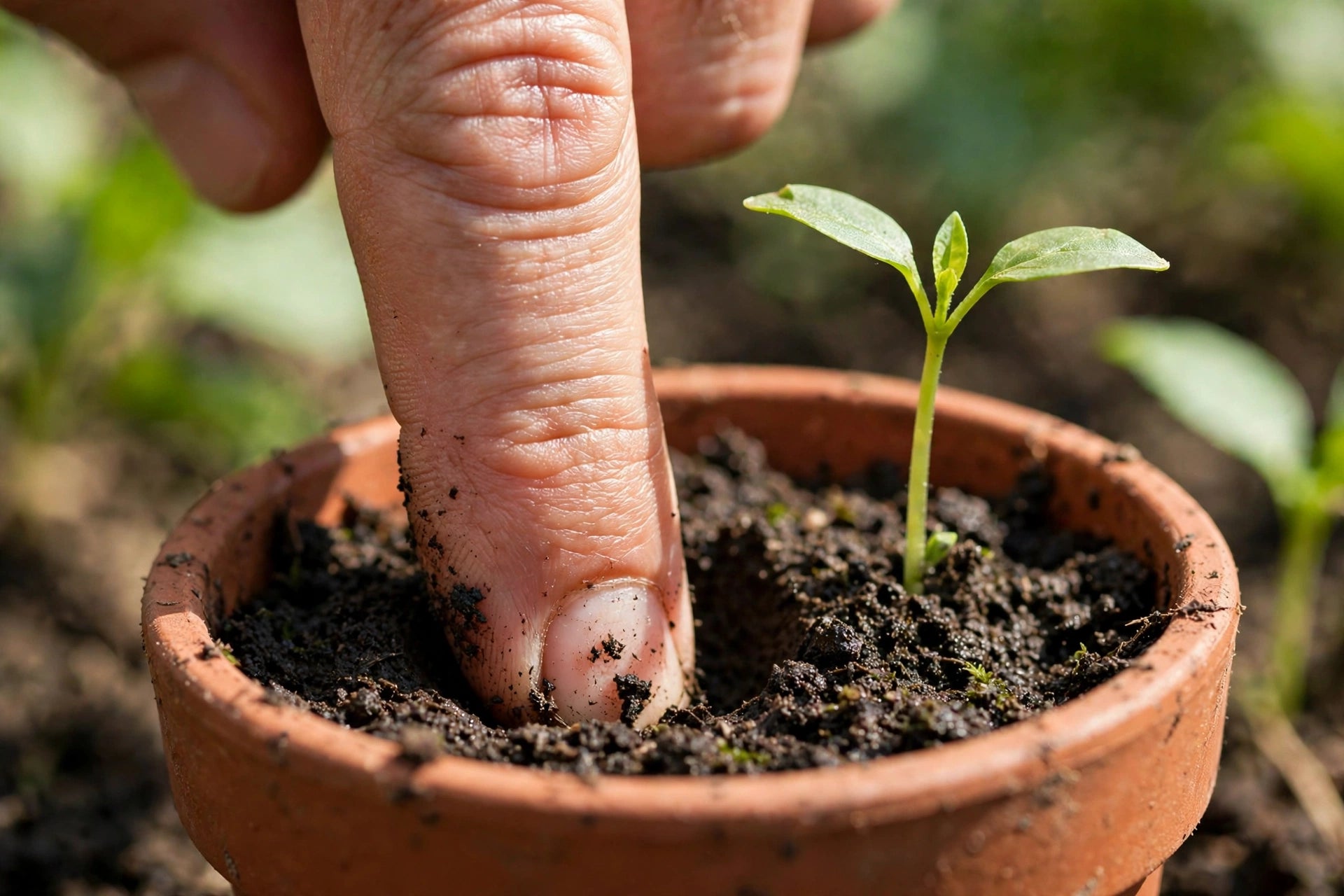
For overwatering, the fix is simpler: stop watering and let the mix dry to barely moist before watering again, always check moisture with a finger before reaching for the can, make sure every container has drainage holes, and empty saucers so pots never sit in water. If roots are badly rotted, trim away the mushy portions with clean scissors and repot into fresh, drier mix. Seedlings usually rebound within a week or two once roots can breathe again.
For both, prevention going forward looks the same: start with sterilized seed starting mix in clean containers, sow at the right depth, water from below, and keep a small fan moving the air — the setup described in our seedling airflow guide. A fan sized for a shelf or two is easy to find among the practical gardening tools on our tools page.
Prevention (clean inputs) comes before cultural fixes (watering, airflow), which come before anything stronger. Home gardeners can find fungicide products labeled for damping off as a last resort in nurseries, but they are preventive, not curative — they protect healthy seedlings, they do not resurrect infected ones — and the label directions must be followed exactly. Most indoor seed-starting problems never need to go beyond the cultural steps.
Whether the tray holds vegetable seedlings for the kitchen garden or flowers for summer color, the diagnostic habit is the same: look at the stem base first, check the roots second, note the speed of decline third — and act on the likeliest cause without waiting for certainty.
Frequently asked questions
Can a seedling have both damping off and overwatering at the same time? Yes, and it is common. Overwatering creates the wet, airless conditions that let damping-off pathogens attack, so a chronically soggy tray often develops an infection on top of the watering problem. Treat both: remove collapsed seedlings and correct the watering.
My seedlings fell over but the stems don't look pinched. Is it damping off? Not necessarily. Seedlings can topple from weak, leggy growth caused by poor light, or from stem rot advanced by overwatering. True damping off shows the narrowed, water-soaked lesion at the soil line — without it, suspect light or watering issues first.
Will letting the soil dry out cure damping off? Drying helps protect the remaining healthy seedlings by making conditions hostile to the fungi, but it cannot cure seedlings that are already infected. Those must be removed. Think of drying as containment, not treatment.
How fast does damping off spread? Very fast under favorable conditions — newly infected seedlings can collapse within a day, and the disease can move across a tray in a few days. That speed is itself a diagnostic clue: slow decline over weeks points away from damping off and toward watering or nutrition problems.
Can I reuse the soil from a tray that had damping off? Not without treating it. The pathogens persist in the mix. Either discard it or sterilize it with heat (180–200°F for 30 minutes) before reuse, and always wash the containers with a 1:9 bleach rinse. When in doubt, start fresh — mix is cheap, seedlings are not.
Should I water less if I'm not sure which problem I have? Reducing water is the safe move in almost every uncertain case: it cannot hurt a damping-off situation (drier conditions slow the fungi) and it directly fixes overwatering. Just don't let the tray go bone-dry — aim for the surface drying between waterings while the root zone stays lightly moist.
Sources
- UC Integrated Pest Management — damping-off symptoms, pathogens, and cultural management - Utah State University Extension — damping-off causal agents and the role of soil moisture - Penn State Extension — damping-off disease conditions, symptoms, and seedling susceptibility - LSU AgCenter — damping-off diagnosis and the distinction between wet-soil diseases and watering injury
Wrapping things up!
Damping off announces itself with a pinched, water-soaked stem and sudden collapse; overwatering announces itself with slow yellowing, wilt in wet soil, and mushy roots. Learn those two patterns and you will diagnose most trays correctly — and when the signs are mixed, remember that the two often travel together, so removing the collapsed seedlings and drying out the tray is the right move either way.
Certainty is nice, but action is what saves seedlings. Check the stem bases today, correct the water, and give the survivors light and air. Most trays tell you exactly what they need if you look closely.
