

Cutworms on Cabbage Seedlings: Protection & Control
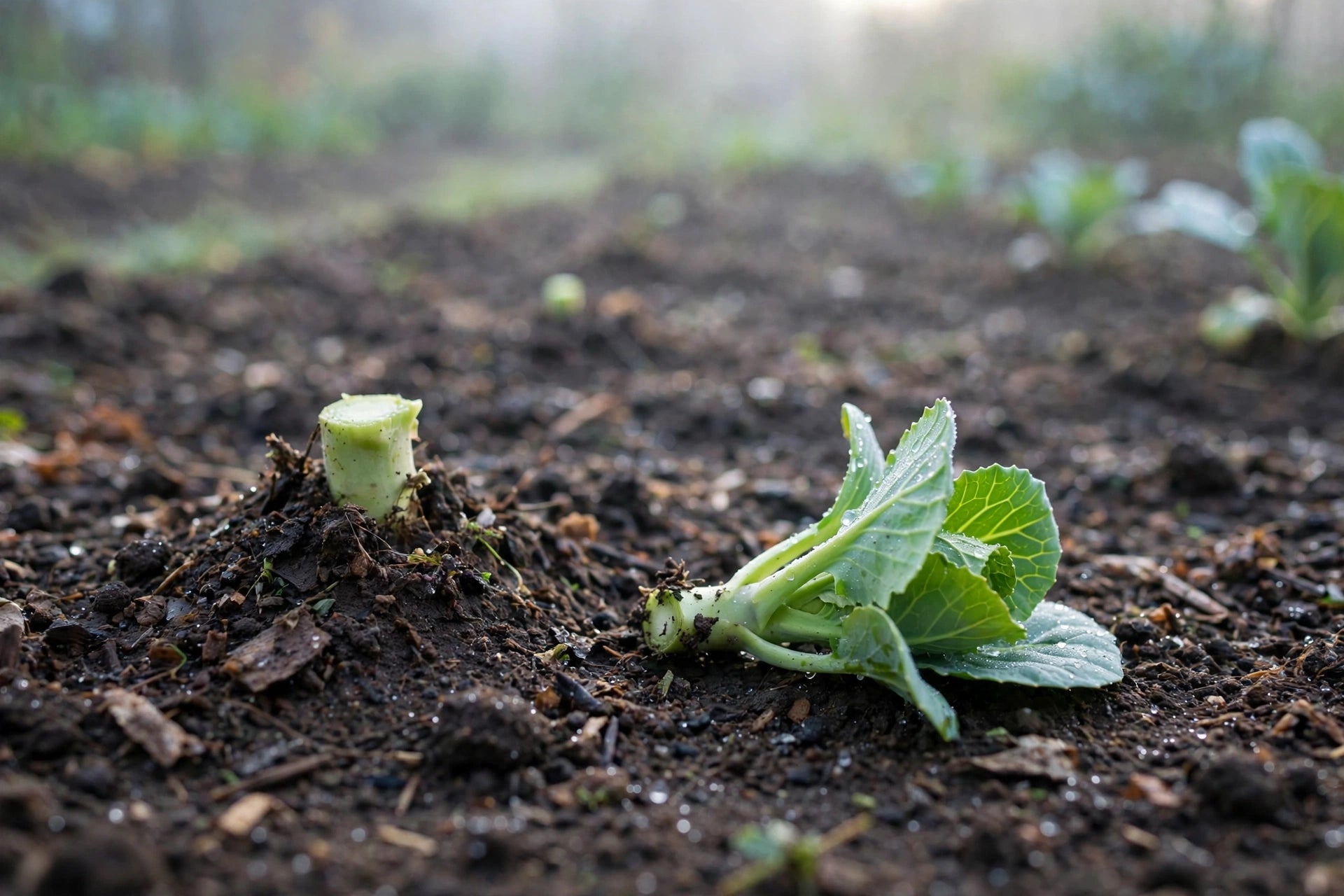
Cabbage seedlings have a dangerous combination of traits: tender stems, a habit of going into the ground early in spring, and a long vulnerable stretch before they toughen up.
That combination makes them one of the cutworm's favorite targets.
If you've found young cabbage transplants lying flat on the soil some morning — stems severed cleanly, as if snipped with scissors — cutworms are the likely culprit. Our core guide to cutworm identification and damage covers the pest itself in full. This article is about protecting cabbage specifically.
The good news: cabbage is one of the crops where simple physical barriers work beautifully. Let's walk through the whole defense plan.
WHY Cutworms LOVE Cabbage Seedlings
Cutworms are the night-feeding larvae of several noctuid moth species, with the black cutworm (Agrotis ipsilon) among the most common in vegetable gardens, according to UC IPM.
They spend the day curled in the top inch or two of soil or tucked under debris near the base of plants. At night they emerge, wrap themselves around a young stem at the soil surface, and chew straight through it.
Cabbage seedlings are ideal victims for three reasons.
First, timing. Cabbage goes out early — often weeks before the last frost in many regions — right when overwintered cutworm larvae are actively feeding in cool spring soil.
Second, stem texture. Young brassica stems are soft and thin. A cutworm can sever one in a single night of feeding. Older, woodier stems resist chewing, which is why established plants mostly escape damage.
Third, the neighborhood. Cutworm moths lay their eggs on weeds and plant debris. If the cabbage bed held weeds the previous fall or wasn't cleaned up, larvae may already be waiting in the soil when transplants arrive. UC IPM specifically flags weed management before planting as a key cutworm prevention step for vegetable crops.
Confirming IT'S Cutworms — NOT Something ELSE
Before you act, make sure of the diagnosis. Cabbage seedlings can fall over for other reasons, and the fixes differ.
Cutworm damage has a signature: the stem is cut cleanly at or just below the soil line, and the top of the plant lies beside the stump — often still green and fresh. The cut looks like a clean slice, not chewed or ragged.
Damping off, by contrast, shows a pinched, brown, water-soaked stem at the soil line. The seedling wilts and collapses rather than lying flat and fresh. Wind damage usually snaps stems higher up and hits plants unevenly across the bed.
For a full rundown of overnight seedling damage, see cutworms vs slugs and our guide to why seedlings fall over.
The definitive test costs nothing: go out after dark with a flashlight. Cutworms feed at night. Scratch the top inch of soil near a damaged plant and you'll often find the culprit curled in a C-shape — a fat, dull gray or brown caterpillar, usually an inch or two long.
Collars: THE Single BEST Cabbage Defense
If you do one thing for your cabbage, make it collars.
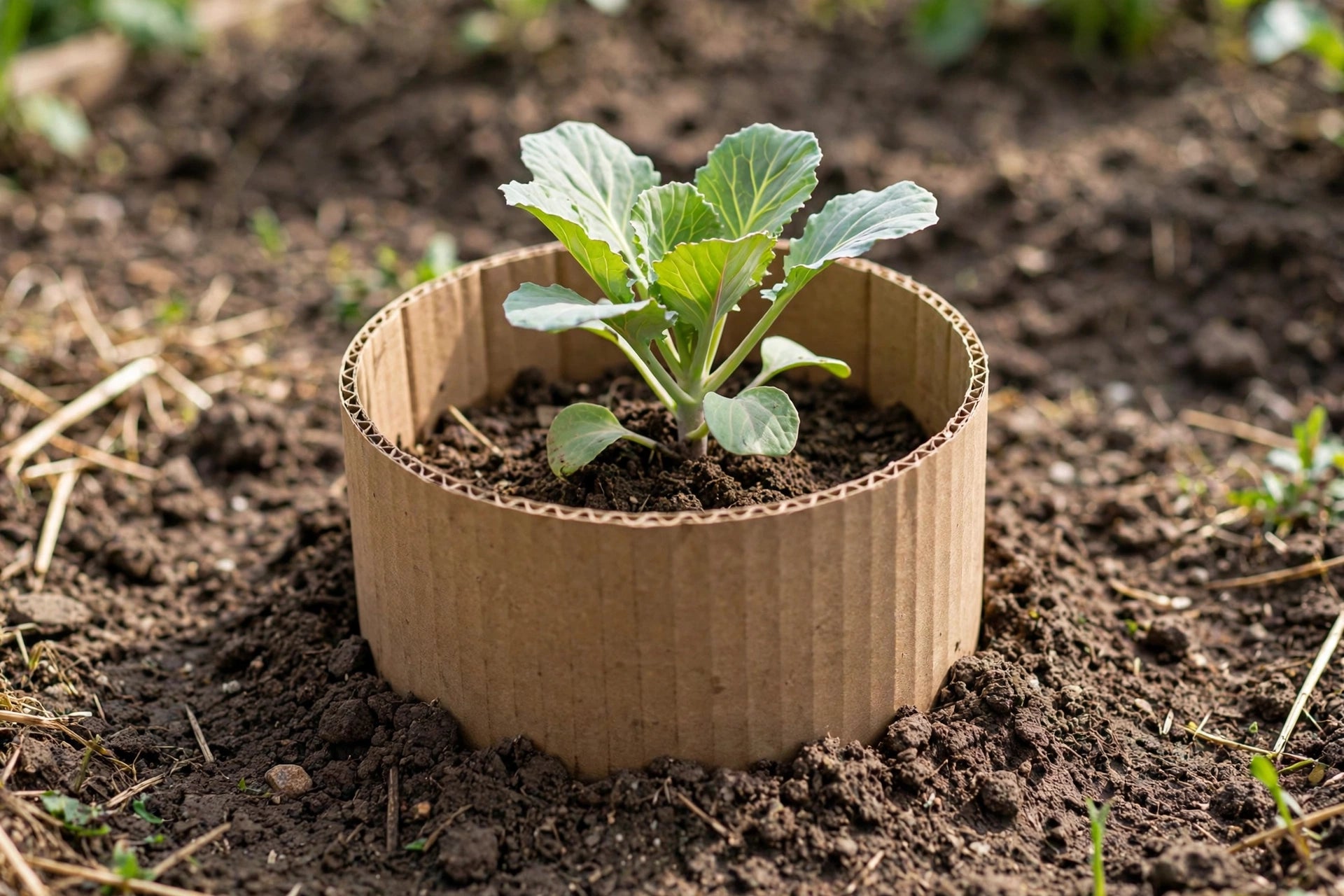
A collar is a simple ring placed around each transplant's stem and sunk slightly into the soil. It physically blocks the cutworm from wrapping around the stem — and wrapping is how they feed.
UC IPM recommends cardboard collars around transplants as a core cutworm control for vegetables. University extension guidance generally suggests collars about 2 to 3 inches tall, pushed roughly an inch into the soil, with an inch or two standing above the surface.
Our step-by-step guide to making cutworm collars walks through free materials — toilet paper tubes, cardboard strips, aluminum foil — plus exactly how to install them and when to take them off.
Two cabbage-specific tips worth remembering:
Put collars on at transplant time, not after damage appears. Cutworms can strike the very first night. Collars are prevention, not rescue.
Leave collars in place until stems thicken — usually 3 to 4 weeks after transplanting, when the stem is roughly pencil-thick. By then the plant has outgrown its vulnerable stage.
ROW Covers FOR THE Vulnerable Weeks
Collars protect individual stems. Row covers protect the whole planting — and they solve a second problem that collars can't touch.
Cutworm moths keep laying eggs through the cabbage season. A lightweight floating row cover over the bed excludes egg-laying moths entirely, which means fewer larvae hatching near your plants in the coming weeks.
Use a lightweight insect netting or spun garden fabric, not heavy frost cloth, once temperatures warm — cabbage needs airflow. Support the cover on hoops so it doesn't rest directly on the seedlings.
One important caution: covers only help if no cutworms are already in the soil. Larvae present from weeds or last season's debris will feed happily underneath a cover. That's why covers pair with collars rather than replacing them — and why cleaning the bed before planting matters so much.
Remove covers once plants are well established and stems have toughened, or sooner if hot weather arrives and the plants need maximum airflow.
Transplant Timing AND SIZE Matter
Bigger transplants survive cutworm pressure better. A sturdy transplant with a stem that's already firming up is simply harder to chew through than a spindly one.
If you start your own cabbage, don't rush undersized seedlings into the ground. Wait until transplants are stocky, with 4 to 6 true leaves and a firm stem. Harden them off properly — soft, greenhouse-tender growth is more vulnerable to everything, cutworms included.
Timing within your season matters too. In regions with a distinct spring cutworm peak, the very earliest transplants can catch the worst of it. Where your climate allows, a main-season planting often faces less pressure than the first one out. Your local extension office can tell you when cutworm activity typically peaks in your area, and the frost date calculator in our gardening tools hub can help you plan transplant windows around your climate.
There's a trade-off, of course: cabbage needs cool weather to head well. Don't delay so long that summer heat ruins the crop. Collars plus sensible timing beat perfect timing alone.
BT AND Other Targeted Controls
When barriers aren't quite enough — or you're protecting a large planting where collaring every single plant isn't practical — Bacillus thuringiensis (Bt) is the most targeted spray option available.
Bt kurstaki is a naturally occurring soil bacterium that kills caterpillars when they eat treated foliage. Extension programs, including UC IPM, list it among the least-toxic options for cutworm management.
A few keys to making it work:
Apply it against young larvae. Bt is far more effective on small, newly hatched cutworms than on large ones. Early action matters more than heavy application.
Spray in the evening. Cutworms feed at night, and Bt breaks down in sunlight. Evening application puts fresh material on the foliage right when they're eating.
Target the base of plants and the nearby soil surface, where cutworms travel and feed — not just the upper leaves.
Repeat as labeled, usually every 5 to 7 days during the vulnerable period, because new larvae keep hatching and Bt doesn't persist long on foliage.
Handpicking is the other targeted option, and it's genuinely effective in small plantings. Go out after dark with a flashlight, find the curled larvae near damaged plants, and drop them into soapy water. A few nights of patrol can clear a bed.
What about the soil itself? Tilling the bed a week or two before transplanting exposes cutworm larvae and pupae to birds and drying — a simple mechanical knockdown. Balance this against your soil health practices; gardeners who don't till can lean on the other methods here with equal success.
What Not to Do
A few common moves that backfire:
Don't reach for broad-spectrum insecticides first. They kill the ground beetles, rove beetles, and parasitic wasps that eat cutworms for free — and cutworm populations typically rebound faster than their predators do. Our guide to ground beetles explains why protecting these allies beats any spray.
Don't leave the bed weedy. Weeds are cutworm nurseries. Keep the area around cabbage cultivated and weed-free — not bare scorched earth, just clean — to remove the moths' egg-laying sites.
Don't assume one treatment ends it. Cutworm pressure arrives in waves as moths keep laying eggs. Keep collars on, keep scouting, and reapply Bt on schedule until plants are clearly established.
Wrapping Things Up!
Cabbage and cutworms cross paths every spring in just about every region. But this is one of the most winnable battles in the garden.
Collars at transplant time. Row covers for the vulnerable weeks. Stocky transplants, clean beds, Bt as backup, and a flashlight patrol when needed. That's the whole playbook — no exotic products, no scorched earth required.
Starting cabbage from seed this season? Browse our vegetable seeds — every variety page links to a free growing guide, so your transplants go into the ground strong and stocky.
Frequently Asked Questions
Will cutworms kill my entire cabbage planting?
They can destroy a large share of young transplants if left unchecked — every severed seedling is a dead plant, since cabbage won't regrow from a cut stem. But with collars installed at transplant time, losses are usually close to zero. Prevention is dramatically more effective than rescue with this pest.
How long do cabbage seedlings need cutworm protection?
Until the stems toughen — typically 3 to 4 weeks after transplanting, when stems reach roughly pencil thickness. In cool spring weather that window can stretch a little longer. Keep collars on until plants are clearly established and growing vigorously.
Can I still eat cabbage from a bed where cutworms were active?
Yes. Cutworms attack stems at the soil line; they don't contaminate the edible head the way some pests do. If a neighboring seedling was cut, your surviving plants are perfectly fine. Just remove the damaged seedling so it doesn't rot in the bed.
Does Bt work on large cutworms?
Poorly. Bt kurstaki is most effective against young, small larvae. Large cutworms nearing pupation eat less and are much less susceptible. That's why early application — combined with collars and handpicking — outperforms spraying alone late in the game.
Should I replant cabbage seedlings that were cut down?
If it's still early in your planting window and you have replacements, yes — replant, and put a collar on each one this time. If the season is getting late for cabbage in your climate, protect the survivors and consider a fall planting instead. Our step-by-step action plan walks through the replant-or-protect decision in detail.