

Cutworms in the Garden: Identification, Damage & Control
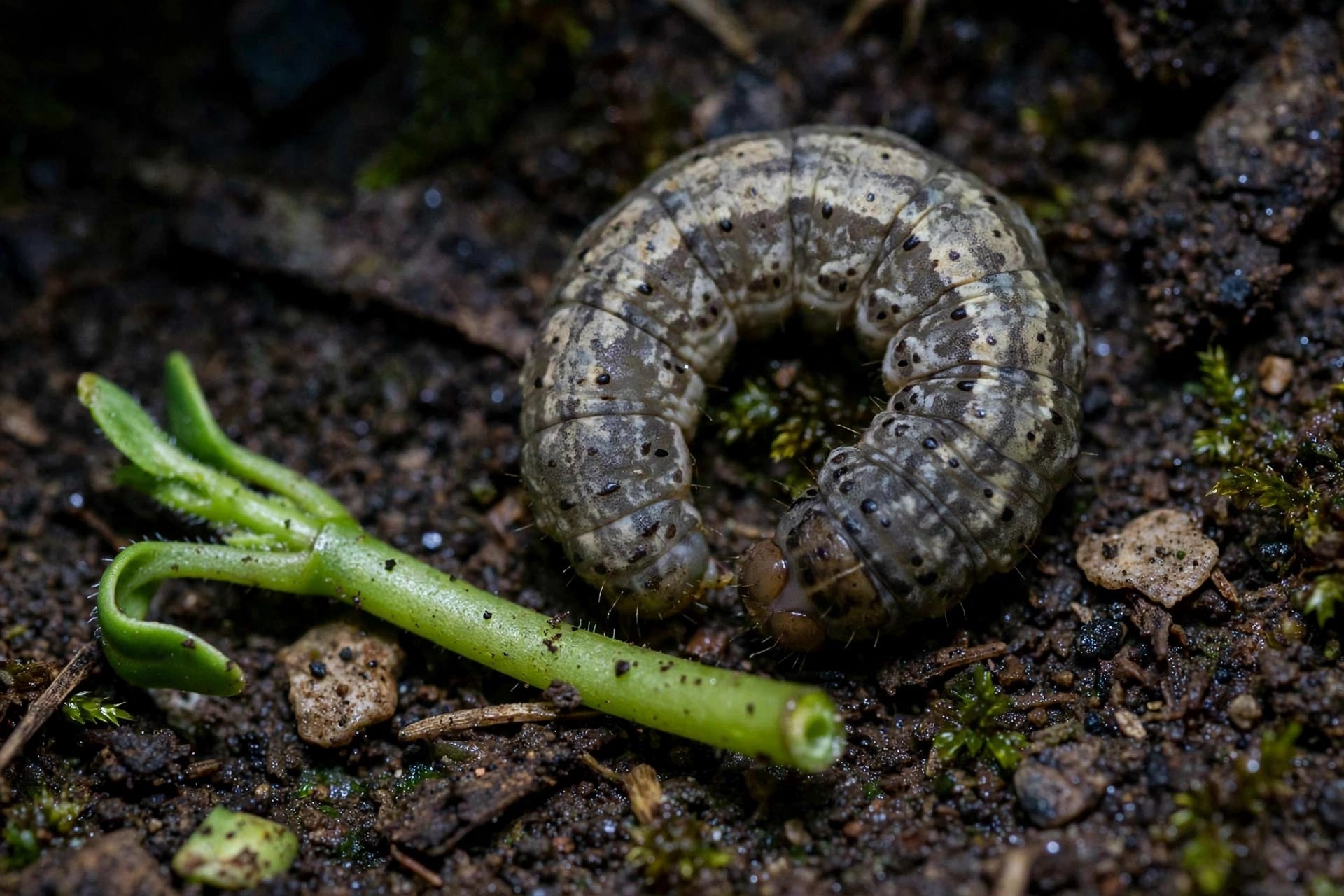
Cutworms are the caterpillar larvae of noctuid moths that cut down young seedlings at the soil line, usually overnight. They feed after dark and hide in the soil by day, so the damage often appears with no visible culprit — healthy transplants in the evening, severed stems by morning — which is why gardeners frequently blame the wrong pest.
The good news: once you know their signature, cutworms are one of the most beatable pests in the garden. A few simple habits stop most of the damage before it starts.
Let me show you what to look for and exactly what to do.
WHAT Cutworms Actually ARE
Cutworms aren't worms at all. They're the caterpillar larvae of noctuid moths — the owlet moth family (Noctuidae), one of the largest moth families in the world.
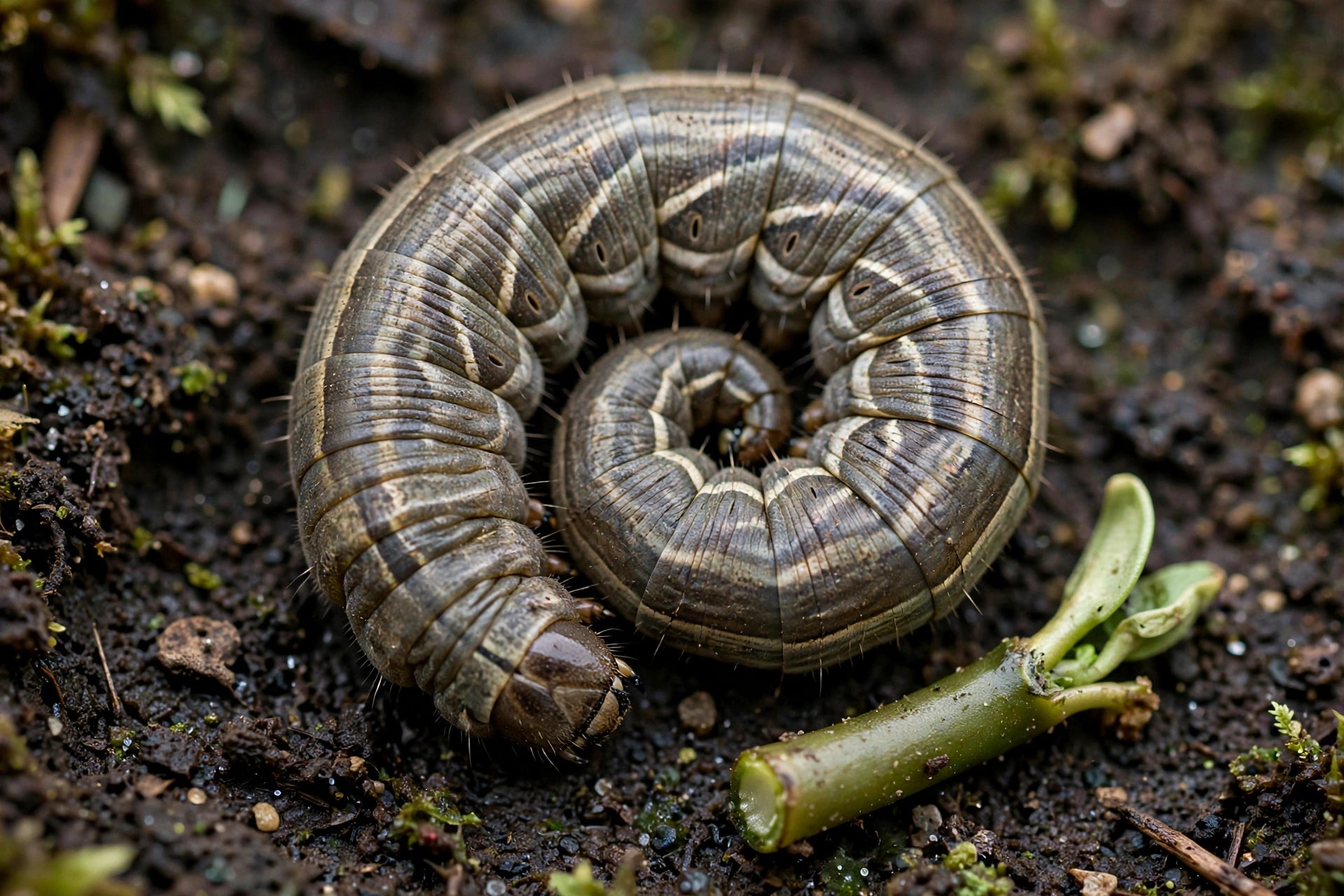
The larvae are plump, smooth-skinned caterpillars, usually gray, brown, or blackish, growing to about 1–2 inches long. Many have faint stripes or spots along their backs, but color varies a lot by species.
The giveaway — the one field mark that never lies — is the curl. Touch a cutworm (or uncover one suddenly) and it snaps into a tight C-shape and plays dead. No other common garden caterpillar does this quite the same way.
Several species attack gardens. The big ones, according to UC IPM, include the black cutworm (Agrotis ipsilon), the variegated cutworm (Peridroma saucia), and the dingy cutworm. Cornell Extension notes the same cast of characters for northeastern gardens. Different species, same playbook.
The adult moths are drab, night-flying, and easy to miss — mottled brown or gray, about an inch across. You'll rarely connect the moth to the damage, but they're the reason new cutworms keep showing up: each female can lay hundreds of eggs.
THE Night Shift: HOW Cutworms FEED
Here's their daily routine. By day, cutworms hide — curled in the top inch or two of soil, tucked under mulch, boards, or debris near your plants. You can dig all afternoon and find nothing.
After dark, they emerge to feed. Young larvae chew small, irregular holes in leaves. But the older larvae — the ones that cause the heartbreak — do the signature move: they wrap themselves around a seedling stem right at the soil line and chew straight through it.
One larva can fell several seedlings in a single night. Sometimes they drag the cut tops underground to feed. Sometimes they just leave them lying there, which somehow feels worse.
A few species, like the variegated cutworm, are "climbing cutworms." They climb up into the plant to feed on buds, leaves, and even developing fruit. If your damage is up in the foliage rather than at the soil line, a climber may be your culprit.
THE LIFE Cycle: WHY Timing IS Everything
Moths lay their eggs on weeds, grasses, and old crop residue — often weeks before you plant anything. The eggs hatch into tiny larvae that feed on weeds first, then move to your transplants as they grow.
Larvae feed for roughly three to four weeks, then burrow into the soil to pupate. Adult moths emerge, mate, and lay eggs again. Depending on the species and your climate, you can get one to several generations per year.
Here's the timing detail that matters most: the black cutworm doesn't overwinter in cold regions — its moths migrate north each spring, arriving just as northern gardeners are setting out transplants. That's why cutworm damage so often peaks in late spring and early summer, exactly when your seedlings are smallest and most vulnerable.
The practical takeaway: your danger window is narrow. It's those first few weeks after transplanting, while stems are still tender. Get seedlings through that window and the risk drops fast — older, tougher stems mostly shrug cutworms off.
HOW TO SPOT Cutworm Damage
Seedlings Severed at the Soil Line
The classic sign. Stems cut clean through at or just below the soil surface, tops lying nearby or vanished. A clean, straight cut — not ragged, not chewed halfway.
The C-Shape Curl
Dig gently in the top inch of soil within a few inches of a damaged seedling. Find a plump, smooth caterpillar that curls into a C when disturbed? Case closed. Check under nearby mulch or debris too.
Wilting Transplants With Girdled Stems
Sometimes the larva doesn't cut all the way through — it chews a ring around part of the stem. The plant wilts even though the roots are fine and the soil is moist. Look closely at the stem base for the chewed band.
Holes in Leaves, Missing Buds
Feeding by young larvae or climbing species shows up as irregular holes in lower leaves or buds chewed off before they open.
Now the look-alikes, because misdiagnosis wastes weeks:
- Damping off also fells seedlings at the soil line — but the stem looks pinched, brown, and rotted, not chewed. No insect involved. - Slugs leave ragged holes and silvery slime trails. Cutworms leave neither. - Rabbits and deer bite higher up and leave ragged, torn stems — plus footprints.
Still not sure? Our seedling diagnosis guide walks through every cause of falling seedlings side by side, and the overnight damage guide covers the rest of the nighttime suspects.
THE Night Patrol: Confirm IT IN 10 Minutes
This is the fastest way to know for sure.
Wait until about two hours after dark. Take a flashlight out to the damaged bed. Slowly check the soil surface and the bases of stems — especially near the newest damage.
Cutworms feed openly at night. You'll often catch them in the act, wrapped around a stem or stretched out on the soil.
Pick them off and drop them into a bucket of soapy water. One good patrol often removes the worst offenders. Repeat for two or three nights to catch the ones you missed.
Your IPM Game Plan
Work this ladder from the top. Most gardens never need the bottom rungs.
Step 1 — Starve Them Before You Plant
Cutworm moths lay eggs on weeds and grasses. UC IPM's first recommendation is beautifully simple: clear weeds from the garden and the surrounding area at least two weeks before planting. Larvae that hatch with nothing to eat will starve or move on.
Turn or till the top few inches of soil before planting, too. It exposes larvae and pupae to birds, drying, and cold — free pest control.
Step 2 — Collar Every Transplant
This is the single most reliable cutworm defense in existence, and it costs almost nothing.
Push a 2–3 inch tall collar around each transplant stem, sinking it about an inch into the soil. Good collar materials: cardboard strips stapled into tubes, toilet-paper rolls, aluminum foil wrapped loosely, or plastic cups with the bottoms cut out.
The collar is a physical wall. The cutworm can't wrap around the stem, so it can't cut it. Simple as that. Leave collars in place for the first three to four weeks, until stems toughen. Our step-by-step cutworm collar DIY guide shows the fastest way to make a whole batch in minutes.
Step 3 — Patrol at Night
The flashlight routine from above. Handpicking is genuinely effective against cutworms because they feed in the open at night and populations per bed are usually small — often just a handful of larvae causing all the damage.
Step 4 — Biological Controls
Bt — Bacillus thuringiensis var. kurstaki. This naturally occurring soil bacterium is toxic only to caterpillars. The critical detail: it works best on young, small larvae. Big, mature cutworms are much less susceptible, so apply early, when larvae are small. They must eat treated foliage, so spray in the evening onto leaves and the soil surface around stems.
Beneficial nematodes. Steinernema carpocapsae and related species are microscopic worms you apply as a soil drench. They hunt down cutworm larvae in the soil — the exact place sprays can't reach. Water the soil before and after application; nematodes need moisture to move.
Invite the predators. Ground beetles devour cutworm larvae. Birds, toads, and even chickens on garden patrol all help. A garden with some undisturbed corners, mulch variety, and no broad-spectrum insecticides builds its own cutworm patrol over time.
One rule across all of this: skip broad-spectrum insecticides. They kill the ground beetles and other predators faster than they kill cutworms, and the cutworms bounce back first.
Step 5 — Targeted Options If Damage Continues
If collars, patrols, and Bt haven't stopped the losses, you can step up — carefully:
- Spinosad products labeled for cutworms on vegetables are effective and relatively low-toxicity, but they're harmful to bees. Apply only in the evening, never on open blooms, and follow the label exactly. - Whatever you choose, treat only the affected beds — not the whole garden on a schedule.
Wrapping Things Up!
Cutworms feel sneaky, but they're honestly one of the fairest fights in gardening. They leave a clear signature. They feed on a predictable schedule. And a two-cent cardboard collar stops them cold.
The gardeners who lose seedlings to cutworms year after year usually skip the same two steps: weeding before planting, and collaring at transplant time. Do those two things and you'll prevent the vast majority of damage — no sprays required.
Starting your garden from seed this year? Strong, stocky transplants with tough stems resist cutworms far better than leggy ones. Browse our vegetable seeds and check each variety's free growing guide for transplant timing in your region. And remember: transplant dates shift with your climate — southern gardeners may plant weeks before northern ones, so go by your local last-frost date, not the calendar.
Not sure what's felling your seedlings? Run them through our free plant problem identifier — it walks you through the symptoms step by step.
Frequently Asked Questions
What does a cutworm look like?
A plump, smooth caterpillar, usually gray, brown, or blackish, about 1–2 inches long when full-grown. The definitive test: disturb it and watch it curl into a tight C-shape. The adult is a drab brown or gray night-flying moth you'll probably never notice.
Will cutworms destroy my whole garden?
Almost never. Cutworms target young seedlings and transplants — the damage looks dramatic because a whole row can go down overnight, but established plants with tough stems are rarely bothered. Protect the first few weeks and the crisis passes.
Do coffee grounds or eggshells stop cutworms?
There's no reliable extension evidence for either. Crushed eggshells don't deter them and coffee grounds are unproven. Cardboard collars, on the other hand, are recommended by virtually every university extension program — use those.
When are cutworms most active?
Damage peaks in late spring and early summer in most regions, coinciding with transplant season. They feed at night and hide in soil by day, returning year after year to the same beds if debris and weeds give them shelter.
Can a cut seedling recover?
If the stem is severed completely at or below the growing point, no — replant. If it's only partially chewed, the plant may survive but will stay weak; replacing it with a fresh, collared transplant is usually the better bet. (Tomatoes are the exception — they can root along a buried stem, as our tomato seedling guide explains.)
Are cutworms dangerous to people or pets?
No. They don't bite, sting, or transmit anything. They're purely a plant pest — annoying, but harmless to everything else.