

Cutworms vs Slugs: Telling Night Damage Apart
Something destroyed your seedlings overnight. The plants were fine yesterday evening. This morning they're wrecked.
Two suspects top the list in almost every garden: cutworms and slugs. Both work at night. Both hide by day. Both can devastate a bed of young transplants in a single evening.
But they leave different evidence — and they require completely different controls. Treat for the wrong one and you'll lose another night's seedlings while the real culprit keeps feeding.
This guide teaches you to read the crime scene in about two minutes.
For the full profile of one suspect, see our cutworm identification guide. For the seedling symptoms in general, our guides to why seedlings fall over and seedlings eaten overnight cover the broader diagnostic picture.
WHY THE Distinction Matters
Here's the practical reason this identification matters so much: almost nothing in the control toolkit overlaps.
Cutworm collars — the single best cutworm defense — do little against slugs, which simply climb over them. Iron phosphate slug bait, the standard least-toxic slug control, does nothing to cutworms. Bt spray kills cutworm caterpillars and is completely irrelevant to slugs. Beer traps and boards that catch slugs won't catch a single cutworm.
Every night you spend treating the wrong pest is a night the right pest feeds undisturbed. So let's get the diagnosis right.
Cutworm Damage: THE Signature
Cutworm evidence is distinctive once you know it:
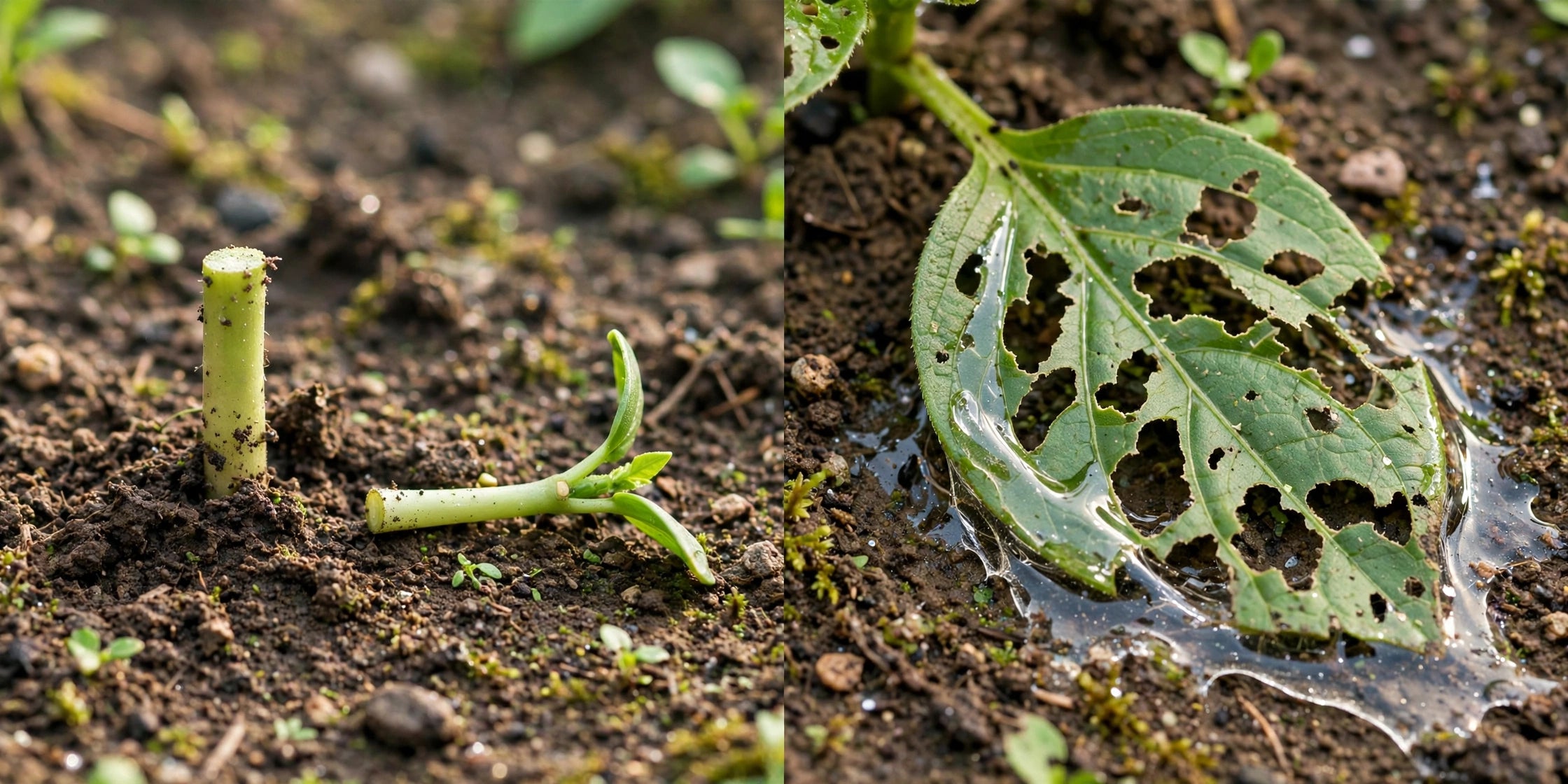
Clean-cut stems at the soil line. The hallmark. The stem is severed as if snipped with scissors, right at or just below the soil surface. The cut is smooth and clean — not chewed, not ragged.
The top lies fresh beside the stump. The severed seedling top is usually still green and unwilted, lying on the soil next to the cut base. Cutworms often don't even eat what they cut — they fell the plant and move on, sometimes dragging a piece underground.
No slime anywhere. This is the fastest differentiator. Cutworms are caterpillars; they leave no slime trails. If the damage zone and surrounding soil are slime-free, slugs are unlikely.
Damage concentrated at the base. Cutworms attack stems at ground level. You'll find intact upper leaves on the fallen tops — the destruction is all at the foundation.
The culprit hides in the soil. Scratch the top inch of soil near a damaged plant during the day and you may find a fat, dull-colored caterpillar curled in a C-shape. That's your cutworm, waiting out the daylight.
SLUG Damage: THE Signature
Slug evidence is equally distinctive, and almost the mirror image:
Ragged, irregular holes in leaves. Slugs rasp leaf tissue with a toothed tongue, leaving uneven holes with torn edges — chewed, not sliced. They feed on leaves themselves, often starting with the tenderest growth.
Silvery slime trails. The giveaway. Slugs travel on mucus, and the dried trails glint silvery in morning light — on soil, on leaves, on pot rims, on pathways. If you see slime, you're dealing with slugs (or snails). Cutworms never leave it.
Damage spread across the plant. Unlike the cutworm's surgical strike at the base, slug feeding is scattered — holes here and there across leaves, sometimes entire seedlings consumed down to stubs, sometimes just the growing tip.
Seedlings may vanish entirely. Small seedlings can disappear completely overnight under heavy slug pressure — no stump, no fallen top, just an empty spot. Cutworms leave the evidence of the stump behind.
The culprits hide under cover. By day, slugs shelter under boards, pots, dense mulch, stones, and debris — cool, damp, dark places. You won't find them curled in open soil the way you'd find a cutworm.
Side-by-side Comparison
| Sign | Cutworms | Slugs | |---|---|---| | Stem damage | Clean slice at soil line | Stems usually intact; leaves attacked | | Leaf damage | Minimal — base is the target | Ragged, irregular holes everywhere | | Slime trails | Never | Almost always present | | Fallen seedling top | Yes — fresh, beside the stump | Rarely — whole plant often consumed | | Culprit by day | Curled in top inch of soil | Under boards, pots, debris | | Active season peak | Spring, on young transplants | Damp weather, spring and fall |
When the signs are mixed — say, cut stems AND slime — you may have both pests working the same bed. It happens, especially in damp springs. Treat for both, with each pest's own tools.
THE Night Patrol TEST
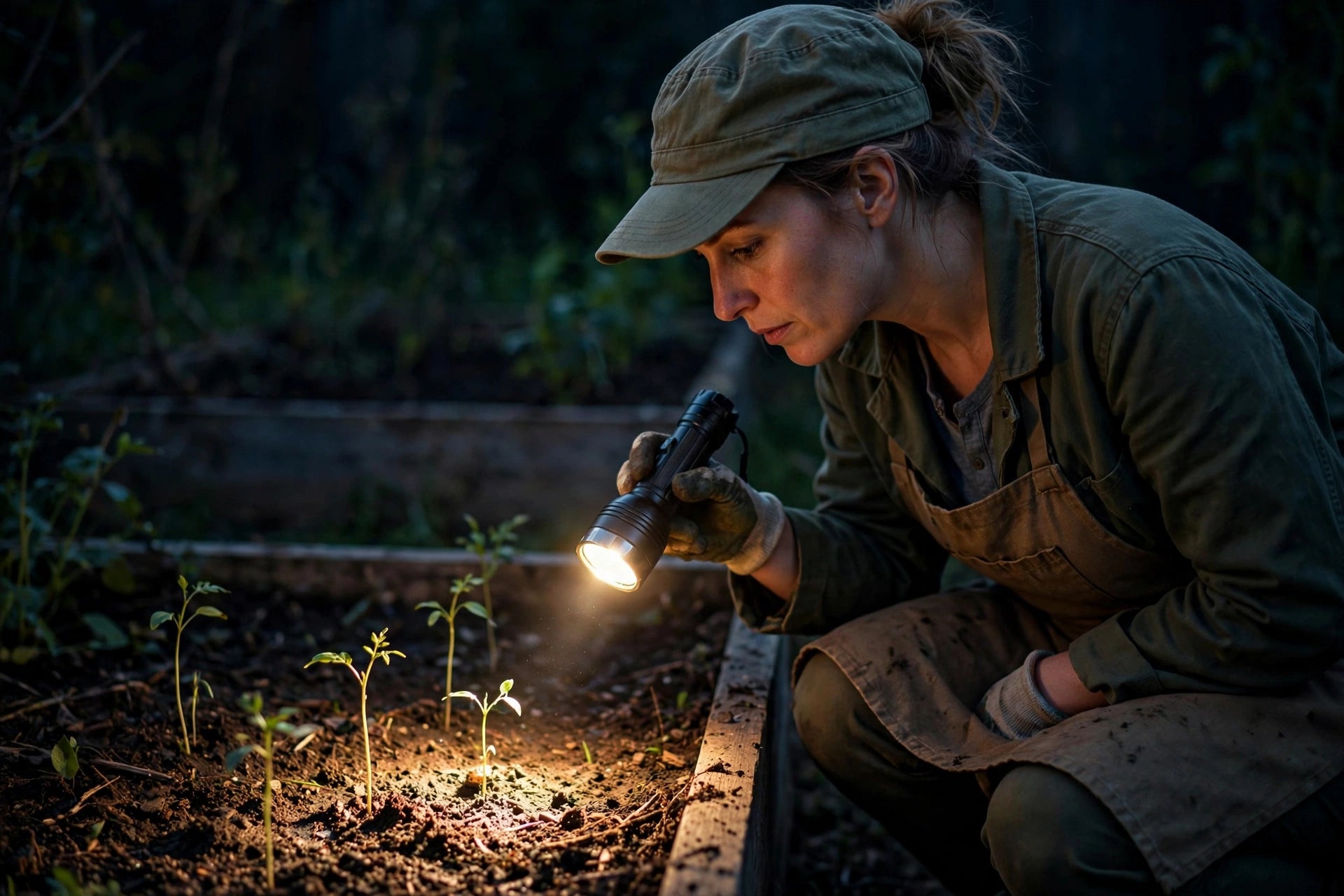
Still unsure? The flashlight settles it.
Go out two to three hours after dark — that's peak feeding time for both pests. Move slowly and shine the light at the base of plants and across the soil surface.
Cutworms appear as plump, smooth caterpillars, gray to brown, often wrapped around a stem or moving across open soil. They freeze or curl when the light hits them.
Slugs are unmistakable: soft, elongated, with eyestalks, gliding on visible slime. You'll often find several, and you'll see the fresh trails glistening.
One patrol usually gives you a definitive answer. Do it on a damp night if you can — both pests are most active then, so a damp-night patrol that finds nothing is meaningful negative evidence.
Not sure what you're looking at even with the flashlight? The Plant Problem ID tool in our gardening tools hub can help you work through the symptoms systematically.
Different PEST, Different Playbook
Once you've identified the culprit, use the right tools:
If it's cutworms: collars around every transplant (our DIY collar guide shows the free methods), Bt spray in the evening aimed at plant bases, night handpicking, and weed cleanup to remove egg-laying sites. Protect your ground beetles — they're eating cutworms for free every night.
If it's slugs: iron phosphate bait scattered per label directions (effective and far safer than the old metaldehyde baits), trap boards laid out in the evening and checked in the morning, beer traps sunk to soil level, and reducing the damp daytime shelters where they hide. Copper tape around pots and raised beds gives slugs an unpleasant mild shock that deters crossing.
If it's both: run both playbooks at once. They don't conflict — collars plus iron phosphate bait plus a night patrol covers the bed against both feeders simultaneously.
One thing never to do: don't spray a broad-spectrum insecticide "just in case." It won't meaningfully control slugs at all, it wipes out the ground beetles and other predators keeping cutworms in check, and it leaves you worse off against both pests than when you started.
Wrapping Things Up!
Cutworms and slugs share a shift — the night — but they sign their work completely differently. Clean slice, no slime, stump left behind: cutworms. Ragged holes, silvery trails, scattered feeding: slugs.
Learn those two signatures and you'll never waste another week treating the wrong pest. Two minutes of reading the evidence, one flashlight patrol to confirm, and then the right playbook.
Starting a fresh bed of seedlings to defend? Browse our vegetable seeds — every variety page links to a free growing guide, so your transplants go out strong enough to survive whatever the night brings.
Frequently Asked Questions
Can cutworms and slugs attack the same garden?
Absolutely — and they often do, especially in damp springs when conditions favor both. If you see clean-cut stems with no slime on some plants and ragged holes with slime trails on others, run both control playbooks simultaneously. The methods don't conflict.
Do cutworm collars help against slugs?
Only marginally. A collar may block a slug from reaching the stem base, but slugs climb readily and will go over a short collar to reach leaves. If slugs are confirmed, add slug-specific controls like iron phosphate bait rather than relying on collars alone.
Why do I see slime trails but no slugs?
Slugs feed at night and hide by day, so morning trails with no visible slugs is the normal pattern — not a mystery. Check under nearby boards, pots, and debris during the day, or patrol with a flashlight two to three hours after dark to catch them in the act.
Are cutworms or slugs worse for seedlings?
For young transplants, cutworms are usually more destructive per individual — one cutworm can fell several seedlings in a night, and a severed seedling is dead. Slugs can be equally devastating in large numbers, especially to direct-sown seedlings that vanish entirely. Both deserve prompt action; neither is a "wait and see" pest.
What if I find damage but no pest, no slime, and no cutworm in the soil?
Widen the suspect list. Birds pull seedlings, earwigs chew at night, and pillbugs finish off already-damaged plants. Our guides to seedlings eaten overnight and why seedlings fall over walk through the other possibilities and their signs.