

Why Are My Seedlings Falling Over? Causes & Fixes
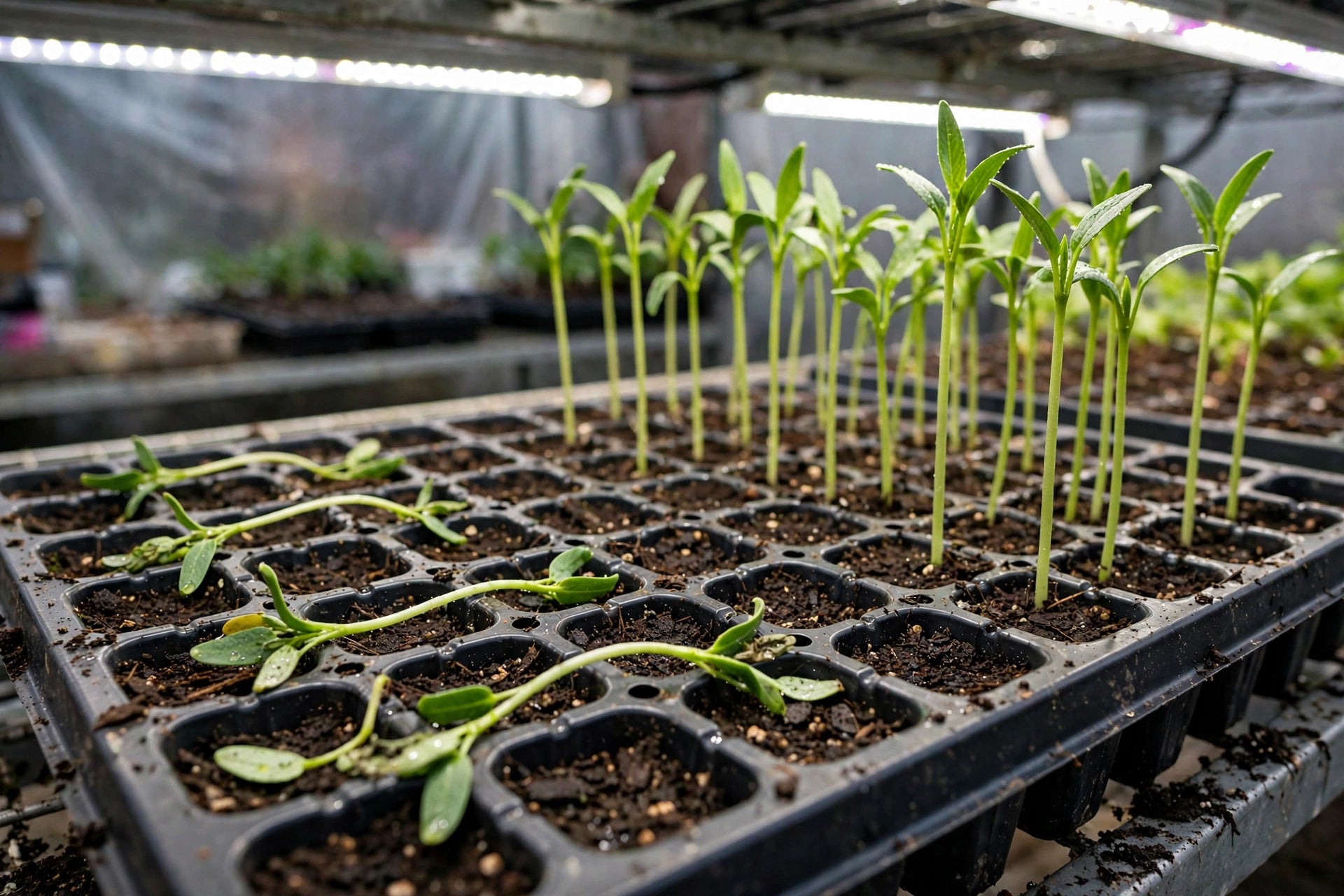
They were fine yesterday.
Today half your seedlings are lying flat — some bent at the base, some sprawled across the soil like they just gave up.
Here's the frustrating part: "seedlings falling over" isn't one problem. It's a symptom with at least five completely different causes — and the fixes are opposites. Watering more for one cause will kill the seedlings suffering from another.
So before you do anything, diagnose. It takes about sixty seconds, and it's mostly about looking closely at the stem.
Start WITH THE STEM: YOUR 60-second Diagnosis
Pick up a fallen seedling and look at exactly where it bent or broke. The stem tells you everything.
Cut Clean Through at the Soil Line → Cutworms
The stem looks snipped — a clean, straight cut right at or just below the soil surface. The top of the seedling lies nearby, or it's gone entirely. The remaining stub looks healthy, not rotted.
That's cutworm feeding, done at night. Dig in the top inch of soil nearby and you'll often find the culprit curled in its trademark C-shape. Our full cutworm identification and control guide covers what to do next — collars and night patrols fix most cases within days.
Pinched, Brown, and Mushy at the Base → Damping Off
The stem narrows to a thin, brown, water-soaked thread right at the soil line — then collapses. The tissue looks rotted, not chewed. Often several seedlings in a row go down, and there's sometimes a faint white mold on the soil surface.
That's damping off, a fungal disease (usually Pythium or Rhizoctonia), not a pest at all. It strikes in cool, wet, poorly ventilated conditions. There's no curing an infected seedling — remove the fallen ones immediately so it doesn't spread, improve airflow, let the soil surface dry between waterings, and check that you're not overwatering.
Prevention beats treatment here: sterile seed-starting mix, bottom watering, a small fan for air circulation, and not sowing too densely.
Tall, Pale, and Floppy → Leggy Seedlings (Not Enough Light)
The seedlings are stretched tall with long, thin, pale stems — then they flop over under their own weight. The stems aren't cut or rotted; they're just too weak to stand.
Classic insufficient light. Windowsills rarely cut it. Move seedlings under grow lights positioned just 2–3 inches above the tops, running 14–16 hours a day. A gentle fan breeze also helps: the slight movement triggers stems to grow stockier and stronger.
Leggy seedlings can sometimes be saved — tomatoes especially, by transplanting deep — but weak, stretched seedlings are also more vulnerable to every other problem on this list.
Wilted and Falling Despite Wet Soil → Overwatering
Seedlings droop and topple even though the soil is clearly moist. Leaves may yellow from the bottom up. The stems look intact — not cut, not pinched — the whole plant is just... sad.
Roots are drowning. Seedling roots need oxygen as much as water, and soggy mix suffocates them. Let the top of the soil dry out between waterings, make sure trays drain freely, and water from the bottom so roots chase moisture downward.
Snapped or Bent Higher Up → Physical Damage
Stems broken or bent an inch or more above the soil — or seedlings flattened in a clear direction. Look for the cause: a strong wind event, a pet walking through, a tray knocked over, or heavy rain pounding unprotected seedlings.
This one's just mechanics. Stake the survivors loosely, protect with a cloche or row cover, and they'll usually straighten out.
Quick Reference: Match THE Symptom
- Clean cut at soil line, healthy stub → cutworms → collars + night patrol - Thin brown pinched stem, maybe mold → damping off → remove, airflow, drier conditions - Tall pale floppy stems → too little light → grow lights + fan - Wilting in wet soil → overwatering → let dry, improve drainage - Broken above the soil line → physical damage → stake and protect
When seedlings vanish overnight with no trace at all, the suspect list widens — our overnight damage guide covers slugs, earwigs, and the other nighttime feeders.
WHAT TO DO Right NOW
1. Diagnose first using the stem check above. Don't guess. 2. Remove the dead. Fallen seedlings won't recover (except leggy ones under lights). Pull them so disease doesn't spread and pests don't get an easy meal. 3. Fix the cause, not the symptom. Collars for cutworms. Airflow and drier mix for damping off. Lights for legginess. Drainage for overwatering. 4. Protect the survivors. Whatever felled the first seedlings is still out there. Row covers, collars, or a move indoors buys safety while you fix conditions.
Preventing THE NEXT TRAY FROM Falling
Most falling-seedling problems are set up weeks before anything topples. A few habits at sowing time prevent nearly all of them.
Give Them Real Light From Day One
The legginess problem starts the day seeds sprout. A sunny windowsill looks bright to you but delivers a fraction of what seedlings need. Set up even a basic shop-light fixture with full-spectrum tubes 2–3 inches above the tray, on a timer for 14–16 hours. Raise the light as seedlings grow, keeping that 2–3 inch gap. Stocky seedlings resist everything better — cutworms included.
Water From the Bottom, On a Rhythm
Top-watering keeps the stem base constantly wet — exactly what damping-off fungi want. Bottom-water instead: set trays in a shallow dish of water for 10–15 minutes, let the mix wick moisture up, then drain fully. Water when the top of the mix feels dry to your fingertip, not on a calendar schedule.
Run a Fan
A small fan on low, a few feet from the trays, does two jobs at once: it dries the soil surface (bad news for damping off) and the gentle movement stimulates seedlings to grow thicker, stronger stems (good news against everything). A few hours a day is enough — you don't need a wind tunnel.
Don't Sow Too Thick
Crowded seedlings compete for light (leggier stems), trap humidity (more damping off), and stress each other. Thin ruthlessly to proper spacing once true leaves appear. It feels wasteful; it's the opposite — every seedling you remove makes the survivors stronger.
Harden Off Before They Go Out
Seedlings moved straight from a sheltered indoor setup to the garden get hit by everything at once: wind, sun, temperature swings, and cutworms. A week of gradual outdoor exposure — a few hours daily, increasing — toughens stems and cuticles before the real test begins.
Wrapping Things Up!
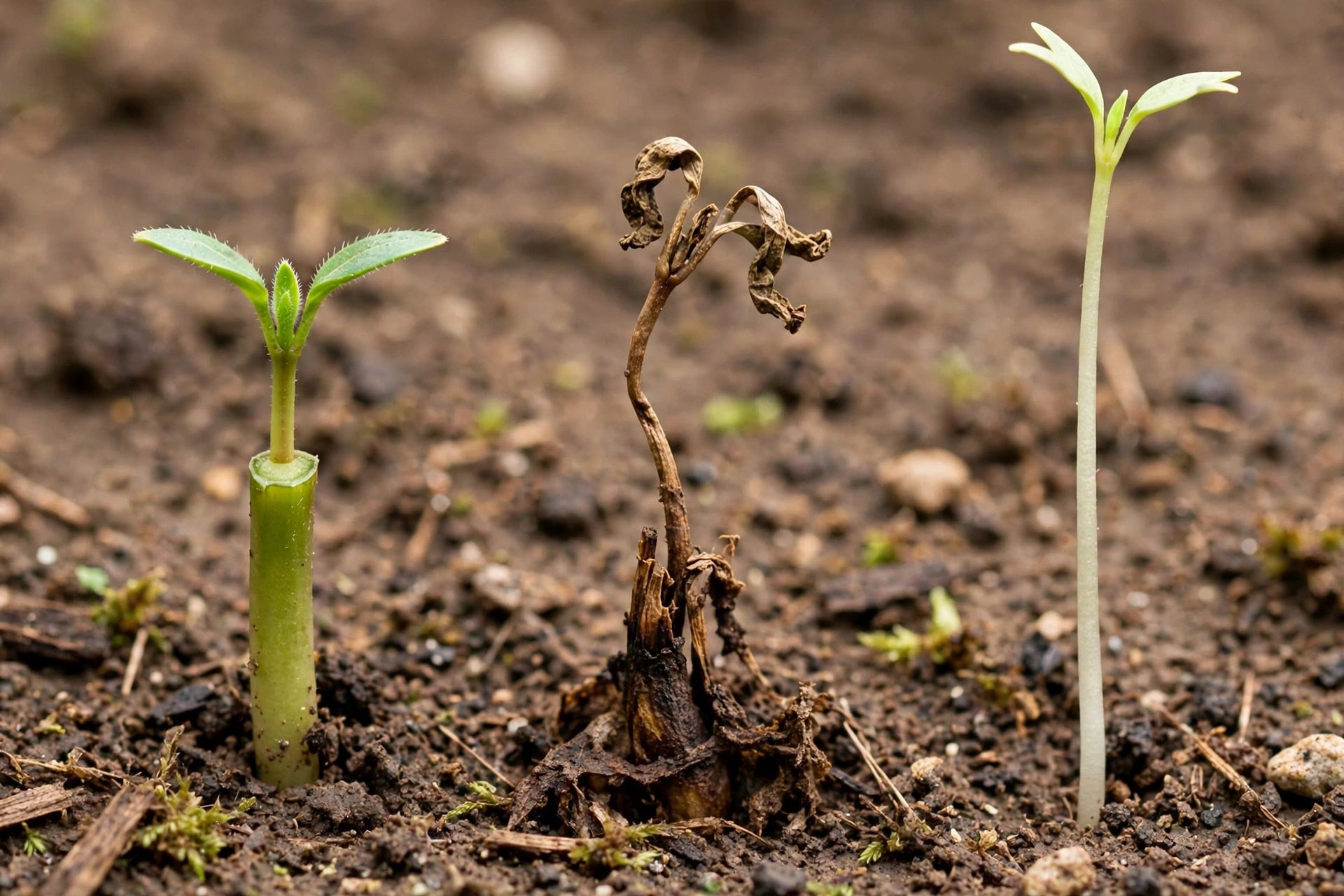
Falling seedlings feel like a disaster, but they're really just a message. The stem tells you exactly what went wrong — cut, rotted, stretched, drowned, or snapped — and each one has a straightforward fix.
The sixty seconds you spend diagnosing will save you from the classic mistake: treating the wrong cause and watching the rest of the tray go down too.
Starting fresh? Strong seedlings start with the right timing and conditions for your climate — seed-starting dates shift by weeks between regions, so plant by your local frost dates, not the calendar. Our free seed starting calculator works it out for you. And when you're ready for seeds, browse vegetable seeds — every variety includes a free growing guide.
Frequently Asked Questions
Why are my seedlings falling over but the stems look fine?
If stems are intact, it's usually legginess from low light or wilt from overwatering. Leggy stems are tall, thin, and pale. Overwatered seedlings droop with yellowing lower leaves in soggy soil. Check which matches — the fixes are completely different.
Can a fallen seedling stand back up?
Sometimes. Leggy seedlings under proper grow lights often straighten within days. Seedlings knocked over by wind usually recover if staked. But cutworm-severed or damped-off seedlings are done — remove and replace them.
Is it damping off or cutworms?
Look at the stem base. Damping off: thin, brown, rotted, pinched — like a wet thread. Cutworms: clean cut through an otherwise healthy-looking stem. Damping off also tends to hit patches of seedlings in cool, wet conditions; cutworms strike scattered individuals overnight.
Should I water fallen seedlings more?
Only if the soil is actually dry. More water on damped-off or overwatered seedlings makes things worse. Check soil moisture first — always diagnose before you water.
How do I prevent seedlings from falling over?
Most of it is setup: strong light (or grow lights), a gentle fan, sterile mix, careful watering, and — once transplanted outdoors — cutworm collars. Our cutworm guide covers the outdoor half of the equation.