

White Spots on Leaves: Causes, Look-Alikes, and Fixes
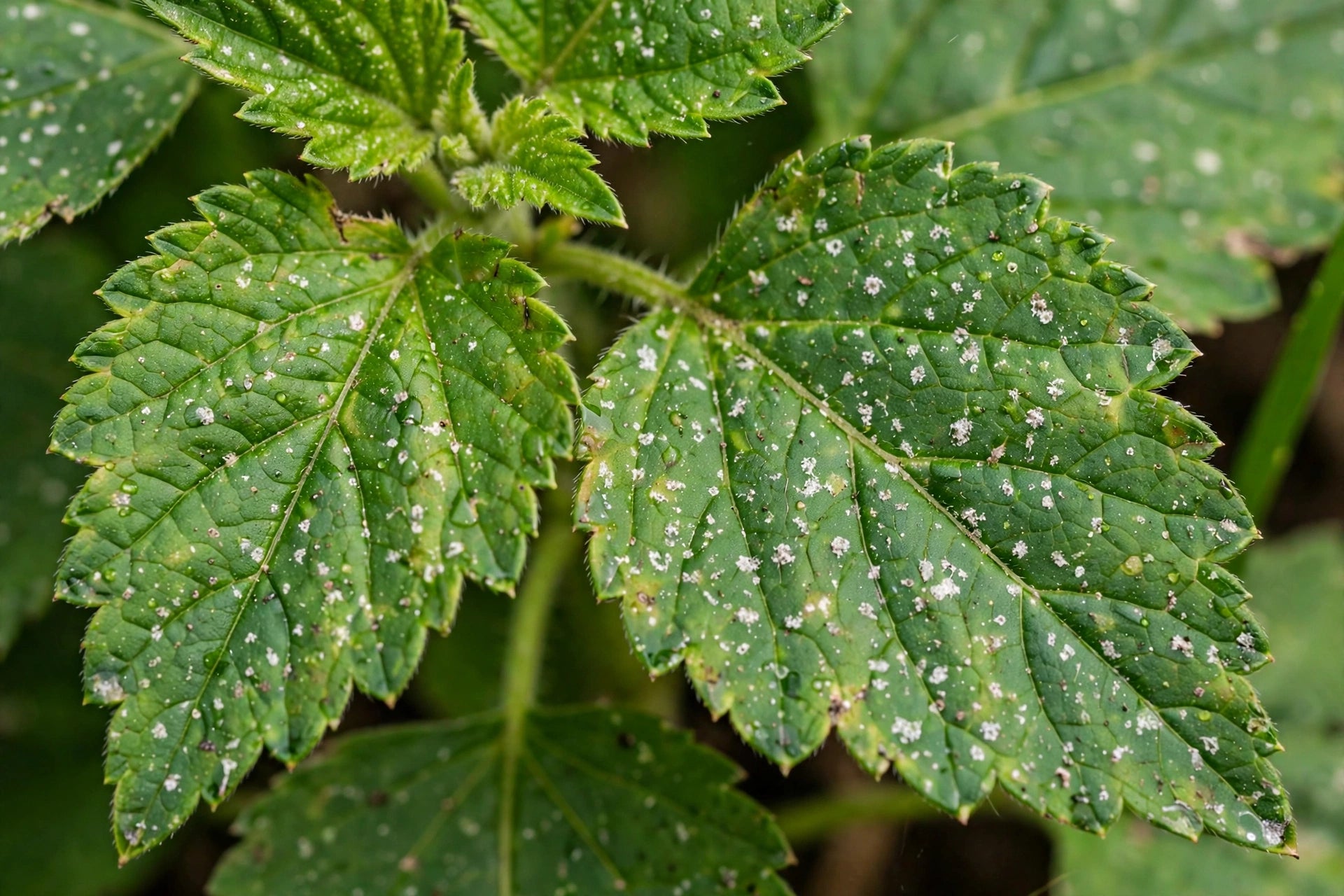
White spots on leaves are sneakier than a full white coating. A coating announces itself; spots make you squint. Are they the start of something? Old damage? Nothing at all? You're not alone in staring at a leaf and feeling unsure — white spots are one of the most searched garden symptoms precisely because so many different things cause them.
This guide ranks the possibilities from most to least likely and shows you how to tell them apart. We'll be honest about the uncertainty throughout: some causes are easy to confirm, others take a day or two of watching. The framework stays the same — this looks most like X, but Y is also possible — so you can narrow it down without guessing.
Most likely: early powdery mildew colonies
Here's the connection to our cluster topic: powdery mildew doesn't start as a full coating. It starts as small, circular white spots — individual colonies that later merge into that familiar dusty film. If your spots are soft, slightly powdery, and sitting on the upper leaf surfaces, early powdery mildew is the leading suspect.
Confirm it with three checks:
- Rub a spot. Powdery mildew smears like talc. If the spot smears, that's a strong clue. - Watch it grow. Check the same leaves in two to three days. Mildew colonies expand and merge; static spots point elsewhere. - Check the weather pattern. Warm days, cool nights, still air, and crowded plants are mildew's favorite setup.
If the spots are spreading and smearing, treat it as early powdery mildew and jump to our powdery mildew identification and treatment guide for the full plan. Catching it at the spot stage is actually the best-case scenario — small infections are far easier to manage. For the coating-stage version of this symptom, see our companion guide on white powder on leaves.
Very possible: insect feeding damage
This is the most common misdiagnosis for white spots. Several tiny pests damage leaves in ways that read as "white spots" from a few feet away — but up close, they're a completely different problem with a completely different fix.
Spider mites. These nearly invisible pests suck individual leaf cells dry, leaving fine white or yellowish stippling — thousands of tiny pale dots. The signature clue is on the leaf underside: fine webbing, especially where the leaf meets the stem, plus the mites themselves (tiny moving dots under a hand lens). Nothing rubs off. If you see stippling plus webbing, it's mites, not mildew.
Thrips. Thrips rasp leaf surfaces and leave silvery-white streaks and speckles, often with tiny black droppings nearby. The damage looks scratchy rather than powdery. New growth may twist or distort. Again — nothing smears off.
Leafhoppers. Similar stippling, often with the added clue that you can see the wedge-shaped insects hop away when you disturb the plant.
The fix here is pest management, not disease treatment — spraying for mildew won't touch a mite problem. Our gardening tools hub includes scouting tools like hand lenses that make this distinction much easier. When in doubt, check the undersides of the leaves first: webbing means mites, powder on top means mildew.
Possible: sunscald or spray burn
Not every white spot is alive. Sometimes it's just damage.
Sunscald. After a heat wave or when tender indoor-started plants move outside too fast, leaves can develop bleached white or tan patches. These feel papery and thin — the tissue is dead, not diseased. Sunscald hits the most exposed leaves first and doesn't spread to shaded foliage. It won't rub off, and it won't grow.
Spray burn or residue. Foliar sprays applied in hot sun can scorch spots into leaves, and some products dry into whitish specks. Ask yourself: did I spray anything in the last week? Did the spots appear right after? Burn spots appear quickly after the triggering event and then stay put — they don't expand over days.
Both of these are "the plant got hurt, not sick" situations. The damaged leaves won't heal, but new growth comes in fine once the cause is removed.
Possible: edema or natural markings
Two more worth knowing, because they're completely harmless:
Edema (oedema). When roots take up water faster than leaves can release it — common in cool, cloudy, humid stretches — cells can rupture and form small pale bumps or spots, sometimes with a corky texture. It's a physiological response, not a pathogen. Improving air circulation and easing off watering usually stops it.
Natural variegation or leaf markings. Some varieties have white speckles, silver mottling, or pale leaf markings bred right in. If every leaf of the same variety shows identical, symmetrical patterning and the plant is vigorous, you're looking at genetics, not disease. New gardeners meet this one every year — it's a rite of passage.
What to do once you've narrowed it down
Different causes, different playbooks. Here's the short version:
If it's early powdery mildew: remove the most affected leaves (bag and trash them — don't compost), open up airflow around the plant, water at the base in the morning, and monitor. If the same plants get hit every year, switch to resistant varieties from the flower collection or vegetable collection next season. Our what to do when you spot powdery mildew guide walks through the response step by step, and the prevention guide helps you stop the next round.
If it's insects: identify the pest first (webbing = mites, silvery rasping = thrips), then use pest-appropriate controls — starting with a strong jet of water and removal of the worst leaves. Don't spray fungicides for an insect problem.
If it's sunscald, burn, or edema: remove the stressor. Provide afternoon shade for scorched plants, avoid spraying in heat, improve air circulation, and let the plant grow past it. No treatment needed — just better conditions.
If you're still unsure after two days of watching: that's fine, and it's more honest than guessing. Keep monitoring, take photos to compare, and hold off on sprays until the picture is clearer. Plants are resilient, and a few days of observation rarely makes a manageable problem unmanageable.
Frequently asked questions
Are white spots on leaves the same as white powder? Related, but not identical. White spots are often the early stage — individual powdery mildew colonies that haven't merged yet — or a different problem entirely (insects, sunscald). A full powdery coating is the later stage. Our white powder guide covers the coating stage in detail.
How can I tell mildew spots from spider mite stippling? Three tests: rub (mildew smears, mite damage doesn't), flip the leaf (mites leave webbing underneath), and watch (mildew spots merge and grow over days). A hand lens settles most debates in seconds — moving dots mean mites.
Will the spotted leaves recover? Leaves with heavy mildew or dead sunscald tissue won't return to normal, but the plant absolutely can. Remove the worst leaves, fix the conditions, and new growth comes in clean. Think of it as pruning away the problem, not curing the leaf.
Do white spots mean I should pull the plant? Almost never at the spot stage. Pulling is a last resort for plants that are mostly defoliated and no longer productive. Spots on otherwise healthy foliage are a "manage and monitor" situation, not a funeral.
Can white spots spread to nearby plants? Powdery mildew spots can — the colonies produce wind-blown spores, though most strains only infect the same plant family. Insect pests can migrate too. Sunscald, spray burn, edema, and natural markings can't spread at all. Another reason the diagnosis matters before you act.
My spots appeared overnight — what does that mean? True overnight appearance points away from mildew (which develops over days) and toward spray burn, a sudden sunscald event, or noticing insect damage all at once. Ask what changed in the last 48 hours: a spraying, a heat wave, a move outdoors? The trigger is usually recent and obvious once you look for it.
Sources
- UC Integrated Pest Management — Powdery Mildew Pest Notes (early colony symptoms, identification) - Cornell Cooperative Extension — Powdery Mildew and insect pest fact sheets (mildew vs. mite/thrips damage) - Missouri Botanical Garden — Plant disease and insect entries (stippling, sunscald, edema descriptions)
Wrapping things up!
White spots are your garden's way of whispering before it has to shout. Whether they turn out to be early powdery mildew, a few hungry mites, a sunburnt afternoon, or nothing at all, the approach is the same: look closely, rub and flip the leaf, watch for two days, and then act on what you actually see — not what you fear.
You've already done the hardest part by looking closely enough to notice. Keep scouting, keep notes, and trust the process. Happy gardening!
