

White Powder on Leaves: What It Means and What to Do
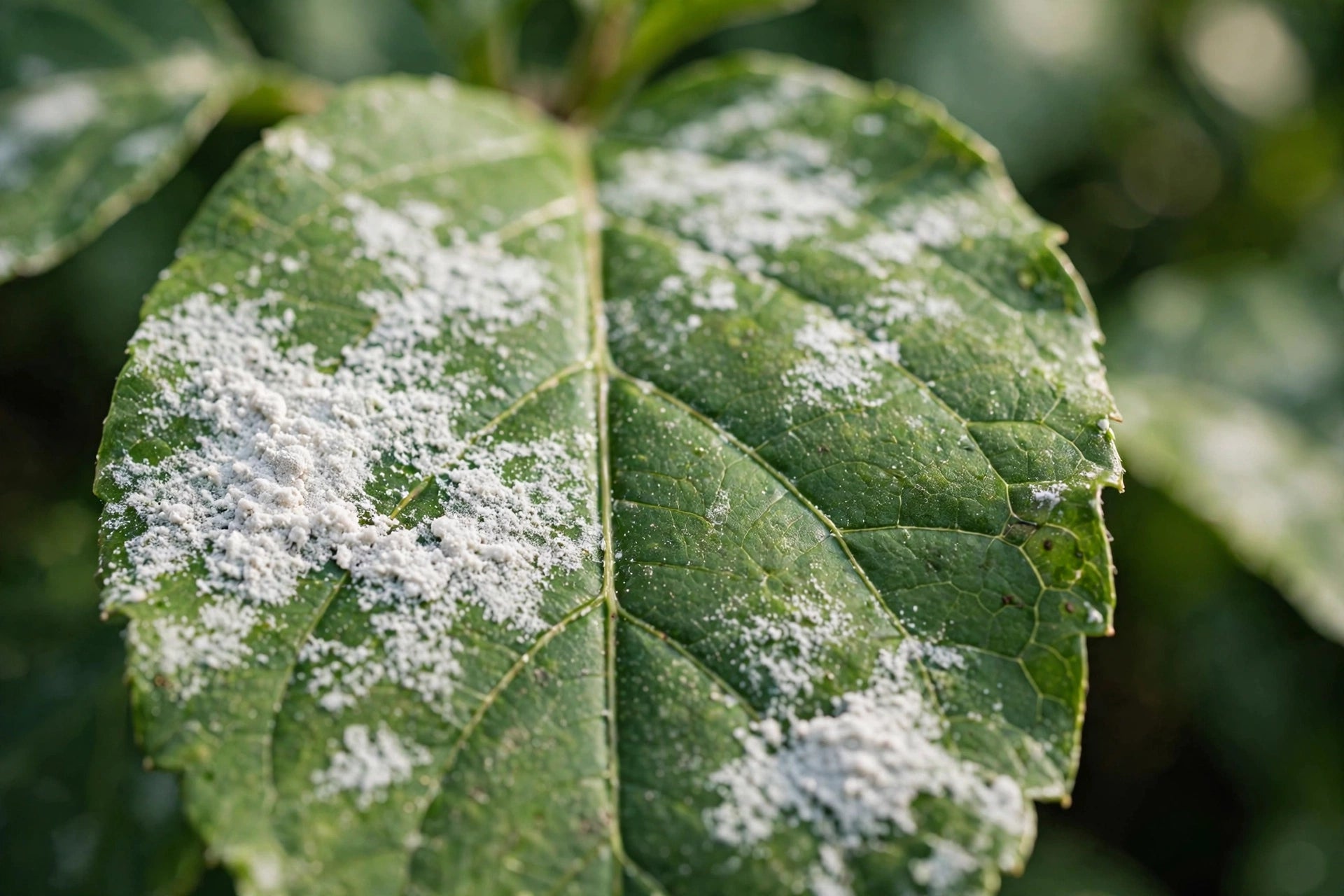
You walk out to the garden, coffee in hand, and notice your leaves look dusted with flour. Nobody dusted them. That white powder showed up on its own — and now you're wondering what it is, whether it's dangerous, and what to do about it before it spreads.
Here's the honest answer: a white, powdery coating on leaves is most likely powdery mildew — but not always. Several look-alikes can fool even experienced gardeners, and treating the wrong problem wastes your time. In this guide, we'll rank the possibilities from most to least likely, show you how to tell them apart, and give you a calm next-steps plan. And since photos alone can mislead, we'll keep the uncertainty visible: this looks most like X, but Y is also possible.
Most likely: powdery mildew
If the white coating is truly powdery — soft, talc-like, smearing when you rub it — and sits mostly on the upper surfaces of leaves, powdery mildew is your top suspect by a wide margin. It's one of the most common garden diseases, and it hits squash, cucumbers, zinnias, roses, bee balm, grapes, and many more.
Check these confirming clues:
- The coating started as small white dots that merged into patches. - It rubs off on your fingertip like fine dust. - New growth looks puckered or distorted. - The weather has been warm days, cool nights, with still air.
If that all lines up, you're probably looking at powdery mildew — but hold the diagnosis loosely until you've ruled out the alternatives below. For the full identification walkthrough, our powdery mildew guide covers the disease in depth, and our comparison with downy mildew helps you separate the two mildews.
Possible look-alike: downy mildew
Downy mildew is powdery mildew's trickier cousin, and confusing the two is the most common misdiagnosis we see. Here's the key difference: downy mildew grows on the undersides of leaves, appearing as a fuzzy or downy grayish-purple layer, while the tops of the leaves show yellow or pale patches — not white powder.
Flip a leaf over. If the white or grayish fuzz is underneath and the top just looks yellowed, that points toward downy mildew, not powdery mildew. Downy mildew also needs leaf wetness to thrive — the opposite of powdery mildew, which needs none. This matters because the watering advice flips completely between the two.
Still unsure? That's normal. Our powdery vs. downy mildew guide lays the differences out side by side so you can compare what you're seeing.
Possible: spray residue or dust
Before you diagnose a disease, ask yourself what the leaf has been through lately.
Spray residue. Foliar fertilizers, hard-water deposits, and some spray products dry into a whitish film that looks convincingly like mildew. The tell: residue tends to look chalky or crystalline rather than soft and powdery, and it often appears right after you've sprayed or after overhead watering with hard water. It also usually doesn't spread or grow over days.
Plain dust. Gardens near roads, construction, or dry bare soil collect dust fast. Dust wipes away completely and cleanly, doesn't smear like talc, and the leaf underneath looks perfectly healthy.
The test is simple: note what you see, then check again in two or three days. Mildew grows and spreads. Residue and dust just sit there.
Possible: natural leaf bloom
Some plants are supposed to look frosty. Many vegetables and ornamentals produce a natural waxy coating — called bloom — that gives leaves a silvery or bluish-white cast. Cabbage, kale, grapes, and some squash varieties show it naturally.
The difference: bloom looks like a smooth, even sheen across the whole leaf, not patchy powder. It doesn't rub off in clumps, it doesn't spread from leaf to leaf, and the plant looks vigorous. If every leaf of the same variety shows the same even frosting and the plant is thriving, you're probably admiring a feature, not fighting a disease.
Possible: insect feeding marks or sunscald
A couple of other suspects show up in the "white on leaves" search results:
Insect feeding. Thrips, spider mites, and leafhoppers can leave stippled, silvery-white speckling that reads as "white spots" from a distance. But up close, this looks like tiny pinpricks or stippling — individual damaged cells — rather than a surface coating. Nothing rubs off. If you see fine webbing too, think spider mites instead.
Sunscald. Intense sun on tender leaves can bleach patches white or tan. These patches are papery, dry, and often appear on the most sun-exposed leaves after a heat wave — not a spreading powder. The damaged tissue feels thin and crisp, not dusty.
What to do next: a calm, step-by-step plan
You've narrowed it down. Now what? Follow this order — it saves you from overreacting to a harmless look-alike or underreacting to a real infection.
Watch and confirm
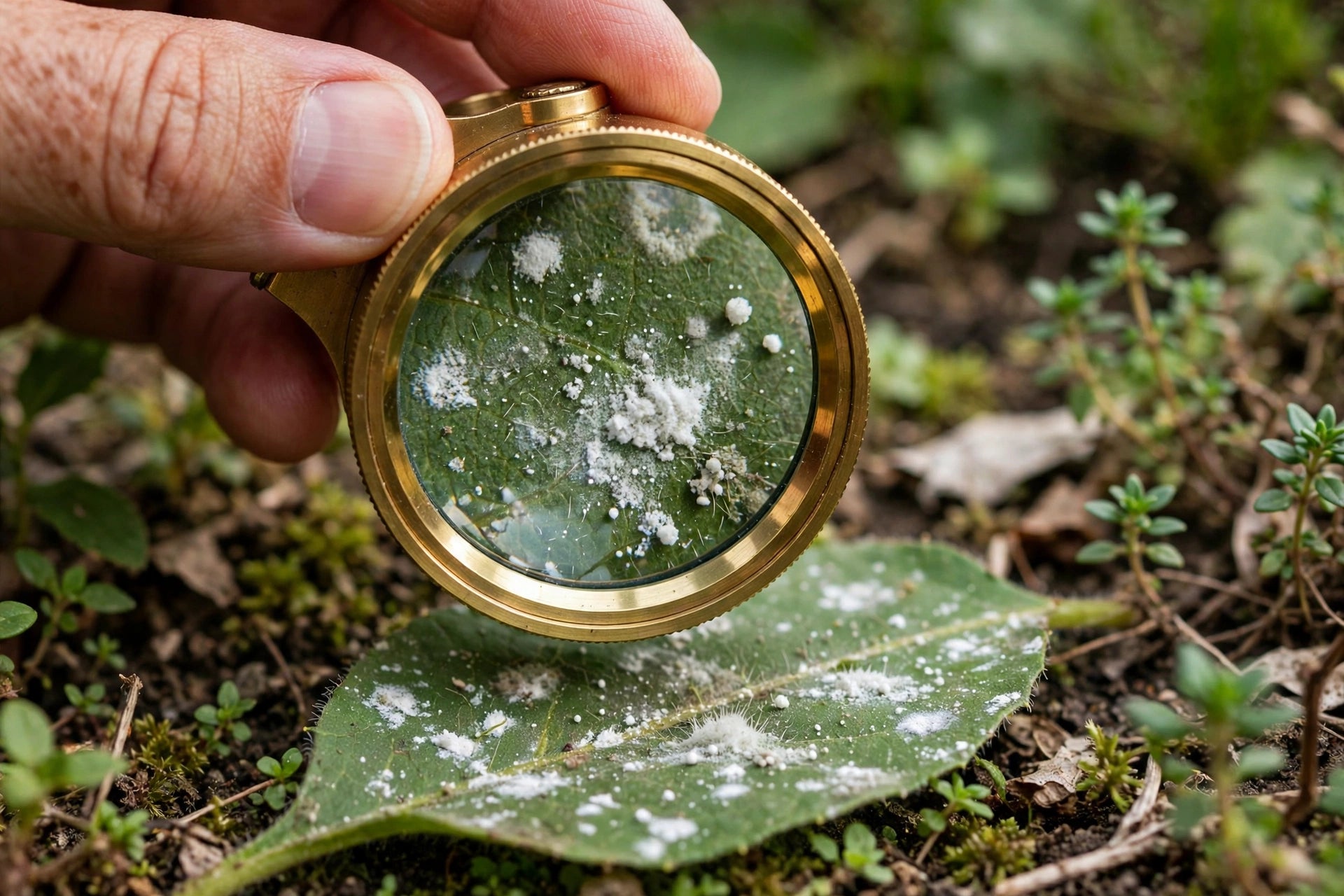
If the coating isn't clearly spreading, give it two to three days. Take a photo now, then compare. Growing, merging patches point to mildew. Static, unchanging white points to residue, dust, or bloom. A hand lens or magnifier helps enormously here — our gardening tools hub has scouting tools that make close-up checks easy.
If it looks like powdery mildew
Don't panic — this is a manageable problem. Start with the gentlest steps: remove the worst-affected leaves (bag and trash them, don't compost), improve air circulation around the plant, and water at the base in the morning. Most mild cases respond well to cultural changes alone. If mildew keeps returning to the same plants year after year, plan next season around resistant varieties from the flower collection or the vegetable collection. For the full ladder of options, our what to do when you spot powdery mildew guide walks through each step in order, and the prevention guide helps you keep it from coming back.
If it looks like something else
Downy mildew, heavy insect feeding, or sunscald each need their own approach — treating for powdery mildew won't help them. That's exactly why the two-day watch matters. A wrong diagnosis treated confidently is worse than an uncertain one handled patiently.
Frequently asked questions
Is white powder on leaves always powdery mildew? No — that's the whole point of this guide. Powdery mildew is the most common cause, but spray residue, dust, natural waxy bloom, downy mildew, insect stippling, and sunscald can all look white on leaves at a glance. The rub test (does it smear like talc?) and the location (upper vs. under leaf surface) narrow it down fast.
Will it spread to my other plants? If it's powdery mildew, spores can spread by wind — but most strains are host-specific, so your squash mildew won't infect your roses. If it's residue or bloom, there's nothing to spread at all. This is another reason a confident diagnosis beats a hasty spray.
Can I wipe it off and be done? Wiping removes what's visible, but if it's mildew, the fungus has already fed from inside the leaf cells and the coating returns. Wipe if you like — then follow up with leaf removal, better airflow, and monitoring. And if you're growing zinnias, check our powdery mildew on zinnias guide for the flower-specific version of this plan.
Should I spray something right away? Not before you know what you're treating. Spraying residue "just in case" wastes product and can stress plants. Confirm mildew first (growing patches over 2–3 days), then start with removal and cultural fixes. Sprays are the last step, not the first — and no spray can promise a cure.
Why do only some of my plants have it? Susceptibility varies hugely. Some varieties are bred for resistance while their neighbors aren't, crowded plants trap more humid air, and shaded spots stay damp longer. That patchiness is actually a clue — it tells you which plants and spots are most vulnerable, which helps you plan for next season.
When should I worry? Worry a little when the coating is spreading fast, covering new growth, or showing up on many plants at once. Worry more if leaves are yellowing and dropping heavily. A few dusty patches on lower leaves of one plant in late summer? That's a Tuesday in the garden — monitor, tidy up, and carry on.
Sources
- UC Integrated Pest Management — Powdery Mildew Pest Notes (identification, look-alikes, host specificity) - Cornell Cooperative Extension — Powdery Mildew fact sheets (symptoms, conditions, cultural controls) - Missouri Botanical Garden — Plant disease entries (symptom descriptions, sanitation guidance)
Wrapping things up!
White powder on leaves is alarming the first time you see it, but now you've got a detective's toolkit: the rub test, the flip-the-leaf test, the two-day watch, and a ranked list of suspects. Most of the time, you'll land on powdery mildew — a common, manageable disease that rewards calm, early action.
The biggest mistake isn't misidentifying it. It's treating it like an emergency. Take the two days. Confirm what you're seeing. Then work the IPM ladder from the gentlest step upward. Your plants — and the beneficial insects in your garden — will thank you.
Happy gardening!
