

How to Prevent Powdery Mildew: 9 Steps That Actually Work
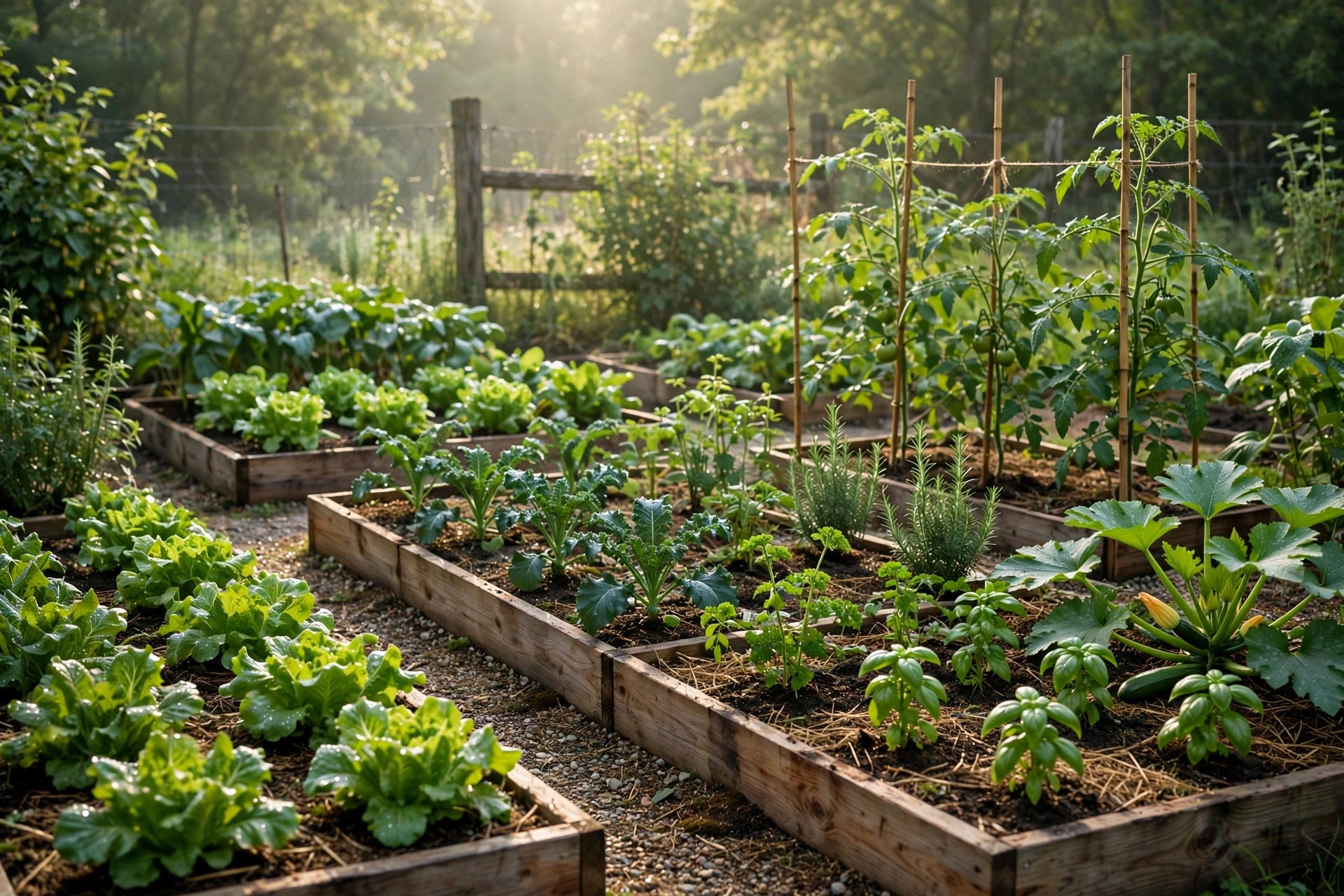
The cheapest powdery mildew treatment is the one you never have to buy.
By the time those white powdery patches show up, the fungus has already been building for days. Prevention works better than any spray because it attacks the one thing powdery mildew can't live without: the right conditions.
These 9 steps are the IPM prevention playbook, in order of impact. Do the first five and you'll dodge most outbreaks entirely. Add the rest and you're running one of the most mildew-proof gardens on the block.
Let's get into it.
1. Choose resistant varieties
Start with the seed packet or plant tag, not the spray bottle.
For crops that mildew hits hardest — squash, cucumbers, melons, peas, phlox, and roses — breeders have developed varieties with real genetic resistance. Look for "PM" or "powdery mildew resistant" in the variety description.
Resistance isn't immunity. A resistant plant can still get a light case in a terrible year. But it buys you time, reduces severity, and often means the difference between a quick prune and a lost crop.
This matters most for plants that get hit in your garden every single year. If your zucchini leaves turn white by July like clockwork, a resistant variety is your highest-leverage change. Our guide to powdery mildew on squash explains which types suffer most.
2. Give every plant room to breathe
Crowding is powdery mildew's best friend. Leaves that stay pressed together trap humidity and block air movement — exactly the microclimate the fungus loves.
Follow the spacing on the seed packet, and be honest about mature size. A squash plant that looks tiny in May will be a sprawling giant by July. Thin seedlings to the recommended spacing even when it feels ruthless.
In flower beds, the same rule applies. Air that moves through the planting dries leaf surfaces faster, and dry leaves are hard for powdery mildew spores to colonize — even though, unlike many fungi, they don't strictly need leaf wetness.
Prune or thin dense growth mid-season if plants fill in more than expected. A few minutes with the shears now saves weeks of mildew management later. Our gardening tools guide covers the pruners and shears that make this easy.
3. Water the soil, not the leaves
Overhead watering keeps foliage damp and splashes spores around. Drip irrigation and soaker hoses deliver water to the roots, where the plant actually wants it.
If you do water from above — with a hose, a sprinkler, or because it rained — do it in the morning. Foliage that gets wet at 7 a.m. dries in the sun. Foliage that gets wet at 7 p.m. stays damp all night, and many leaf diseases thrive in that overnight wetness.
Morning watering is one of the simplest habits in gardening, and it pays off against powdery mildew, downy mildew, and a dozen other problems at once. If you want help telling those two mildews apart, see our powdery vs downy mildew comparison.
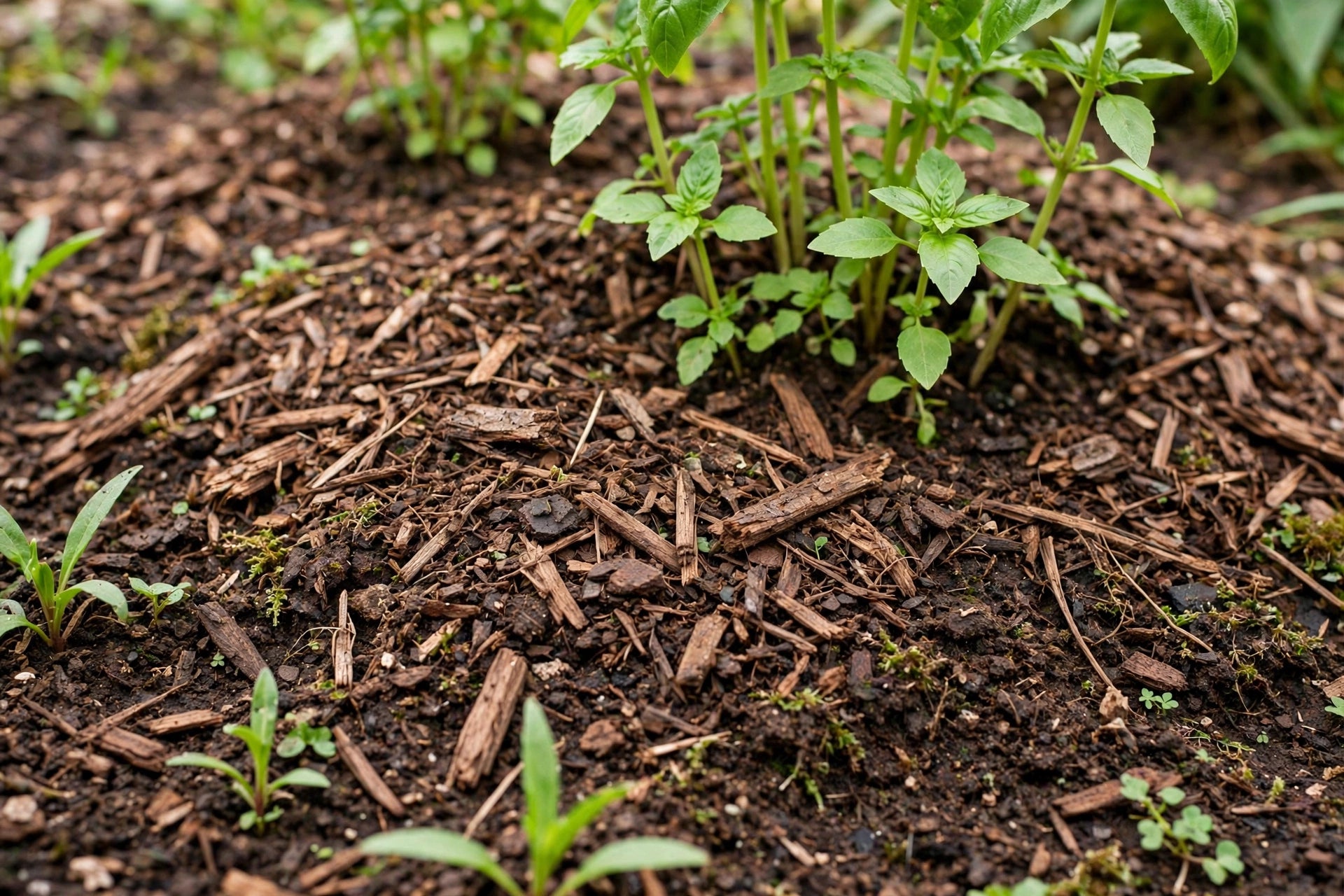
4. Mulch generously
A 2–3 inch layer of mulch under your plants does quiet, powerful work.
It stops soil from splashing onto lower leaves during rain or watering — and soil is where many spores wait. It keeps soil moisture even, which reduces plant stress. Stressed plants get sick more easily; that's true for gardens and people alike.
Use whatever clean mulch you have: straw, shredded leaves, wood chips, or bark. Keep it a few inches away from stems to avoid rot.
Replenish it as it breaks down through the season. Thin, patchy mulch is better than none, but a consistent layer is what actually blocks the splash.
5. Go easy on nitrogen
Lush, soft, fast-growing foliage is powdery mildew's favorite food. Heavy nitrogen fertilizer pushes exactly that kind of growth — tender new leaves with thin cell walls that the fungus colonizes easily.
Feed modestly and follow label rates. A soil test every couple of years tells you what your garden actually needs, which is often less than you think.
If your plants are already vigorous and deep green, skip the extra feeding. More fertilizer doesn't mean more harvest — and in mildew country, it can mean more disease.
This is one of those counterintuitive truths of gardening. Restraint feeds resilience.
6. Scout weekly and pinch the first spots
Walk your garden once a week with your eyes open. Check the youngest leaves first — that's where powdery mildew starts.
When you find the first white patches, pinch or prune those leaves off immediately. Bag them and throw them in the trash, not the compost. One infected leaf removed in June can prevent a hundred infected leaves in July.
This is also the moment to confirm what you're dealing with. Early and accurate beats late and hopeful.
Keep a simple routine: same day each week, top to bottom of the plant, both the vegetable beds and the ornamentals. Five minutes of scouting is the highest-value habit in this entire list.
7. Keep the garden tidy all season
Sanitation sounds boring. It works anyway.
Pick up fallen leaves regularly — the fungus survives in infected debris. Pull weeds, which crowd plants and can harbor spores. At the end of the season, remove spent plants and fallen foliage instead of leaving them to overwinter in place.
Don't compost infected material in a home pile. Most backyard compost doesn't get hot enough to kill fungal spores, so you're just storing the problem for spring. Trash or municipal green waste is the safe route.
Tidy beds dry faster, breathe better, and give the next season a clean start. Future you says thanks.
8. Quarantine new plants before planting
Nursery stock can arrive with powdery mildew already developing — tiny white flecks that explode a week after planting.
Inspect every new plant before it goes in the ground. Look at the youngest leaves and the undersides. If you see suspicious white patches, prune them off or choose a different plant.
For extra caution, hold new plants in a separate spot for a week and watch them. It feels fussy. It's also how you keep one infected nursery pot from seeding mildew across your whole garden.
This applies to seeds too — buy from reputable sources, and start with clean trays and fresh mix. Healthy plants grown from our flower and vegetable collections get the strongest possible start when they go into clean soil.
9. Use a protectant before pressure peaks
If you grow mildew magnets — certain squash, cucumbers, or roses — a preventative protectant applied before symptoms appear can be worth it.
Horticultural oils and neem oil are contact options labeled for powdery mildew prevention. They work by coating the leaf surface, so coverage matters and repeat applications are needed. Always apply per the product label, test a small area first, and spray in cool hours.
Think of this as a supplement to the eight steps above, not a substitute. Protectants help healthy plants stay healthy; they can't rescue a garden that's crowded, overfed, and watered from above every evening.
Our honest guide to neem oil for powdery mildew covers what these products can and can't do.
Frequently asked questions
Can I ever fully prevent powdery mildew? You can prevent most of it, most years. Spores travel on the wind, so a bad year with perfect conditions can still bring a light case. Prevention turns a garden-wrecking outbreak into a few leaves you prune off.
Does watering in the morning really matter? Yes. Leaves that dry quickly are harder for fungal spores to colonize. Morning watering gives foliage the whole day to dry, while evening watering leaves it damp overnight.
Are resistant varieties worth the higher price? If you fight powdery mildew every year on the same crop, absolutely. One resistant variety can save you an entire season of spraying, pruning, and disappointment.
Will mulch really stop a fungus? Mulch won't stop airborne spores, but it blocks the soil-splash route that infects lower leaves — often the first foothold of an outbreak. Combined with spacing and morning watering, it's part of a layered defense.
When should I start preventing powdery mildew? Start at planting time with resistant varieties and proper spacing, then keep up the routine all season. In most regions, pressure peaks in warm, humid stretches of summer — get your habits in place before then. Timing varies by climate region, so watch when it usually appears in your area.
Wrapping things up!
Prevention isn't glamorous. There's no dramatic before-and-after, no satisfying spray session. There's just a garden that quietly stays healthy while your neighbor's squash turns white.
That's the whole point. Resistant varieties. Room to breathe. Morning water on the roots. Mulch. Modest feeding. Weekly scouting. Tidy beds. Clean new plants. A protectant when it earns its place.
Nine small habits, done consistently, beat any cure. Start this season, and next year's powdery mildew problem might just… not happen.
Sources
- UC IPM — "Powdery Mildew" pest management guidelines for gardens (ipm.ucanr.edu) - University of Minnesota Extension — "Powdery mildew in the home garden" (extension.umn.edu) - Missouri Botanical Garden — "Powdery Mildew" plant problem profile (missouribotanicalgarden.org) - Cornell Cooperative Extension — powdery mildew management resources (cce.cornell.edu)
Timing and disease pressure vary by climate region — check your local extension for guidance tuned to your area.
