

Spotted Powdery Mildew? Here's Exactly What to Do First
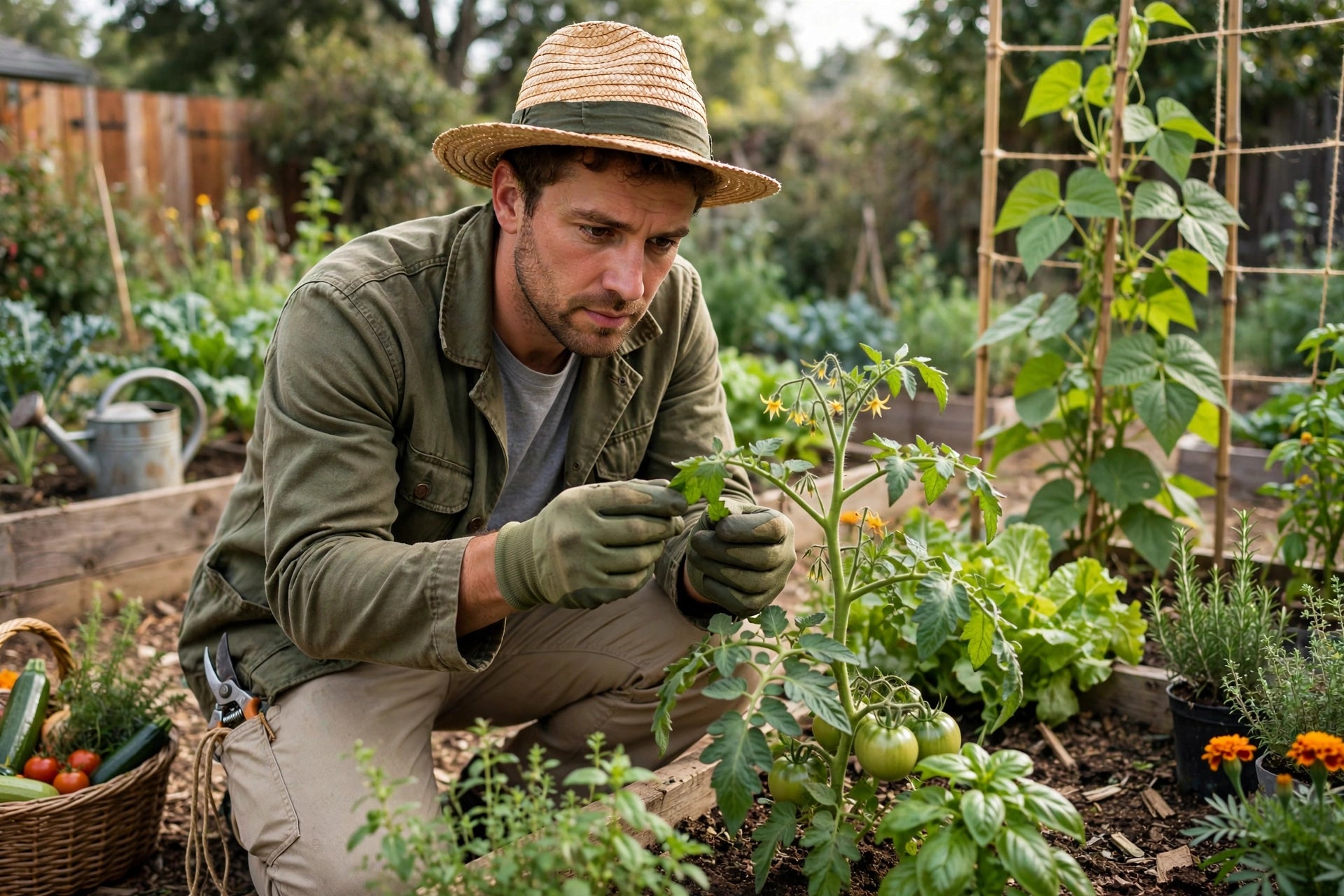
You found it. White powdery patches on the leaves, and your stomach dropped a little.
Take a breath. Powdery mildew is one of the most common — and most manageable — garden diseases. It rarely kills plants outright, it doesn't spread to every species in your garden, and a calm, ordered response beats a panicked one every time.
This is your action plan, in the order that works: confirm, contain, clean up, fix the conditions, respond proportionately, and plan ahead. No single step is hard. Together, they're the whole IPM playbook.
Let's go.
Step 1: Confirm what you're looking at
Before you do anything else, make sure it's actually powdery mildew.
Look for white to grayish powdery coating on the upper surfaces of leaves, starting with the youngest growth. Try rubbing it gently with a finger — powdery mildew sits on the surface and rubs off.
If the white stuff is mostly on the undersides of leaves, or you see yellow patches on top with fuzzy growth below, stop — that's more likely downy mildew or another problem, and the plan changes. Our powdery vs downy mildew guide walks through the difference, and our identification guide covers the full symptom picture.
Also scan for look-alikes: cottony insect clusters (woolly aphids, mealybugs) that move when poked, or naturally fuzzy leaves. A wrong diagnosis leads to a wrong treatment, so spend five minutes here. It's the highest-value five minutes of this whole plan.
Step 2: Don't spread it around
Powdery mildew spores travel on air currents, clothing, hands, and tools. While you're working, be a little careful.
Avoid brushing infected plants against healthy ones. Wash your hands after handling infected foliage. Disinfect pruners and shears between plants with rubbing alcohol or a diluted bleach solution, rinsed and dried.
This isn't about hazmat suits. It's about not carrying the problem from the infected zucchini to the clean cucumbers with your own hands. Small habit, real difference.
Step 3: Prune out the affected growth
Now the satisfying part. Remove the infected leaves and shoots.
Cut back to healthy tissue, and be a bit generous — take the visibly infected leaf plus a small margin. For lightly affected plants, this might be a handful of leaves. For a heavy case, it might be whole stems.
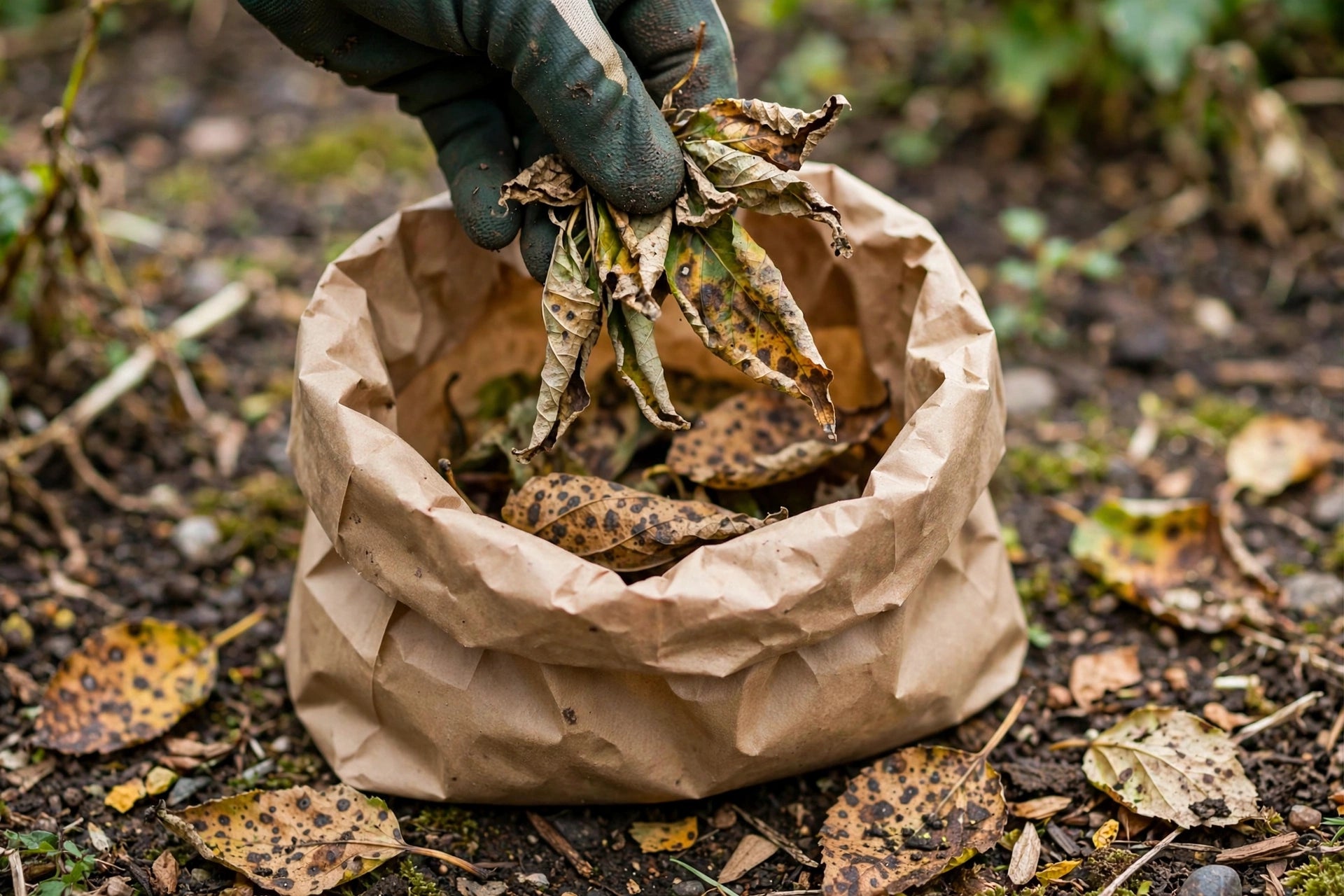
Bag everything as you go. Don't drop infected leaves on the soil, don't toss them in the compost, and don't leave piles sitting in the garden. Trash or municipal green waste only — home compost piles usually don't get hot enough to kill the spores.
This single step — prompt, thorough pruning — does more than any spray. You're physically removing the spore source.
Step 4: Open up the airflow
Powdery mildew loves still, humid air around crowded leaves. Change that today.
Thin dense growth so air moves through the plant. Stake or trellis sprawling plants to lift foliage off the ground. If two plants are pressed together, consider sacrificing the weaker one — a hard call, but one mildew factory can infect its neighbors all season.
Look at the bigger picture too. Weeds crowding the bed, a fence blocking the breeze, a plant that outgrew its spot — all of these feed the problem. Fix what you can now, and note the rest for next season's planning.
Sharp, clean tools make this faster and safer for the plant — see our gardening tools guide if your pruners need an upgrade.
Step 5: Fix your watering today
If you've been watering from overhead, switch to the base of the plant now. Soaker hoses or drip lines are ideal; a careful hand-watering at soil level works too.
Water in the morning so any splashed foliage dries fast. And check your mulch — a 2–3 inch layer under the plants blocks soil splash that carries spores up to the lower leaves.
While you're at it, ease off the fertilizer if you've been feeding heavily. Soft, nitrogen-pushed growth is the tissue powdery mildew colonizes first. The plant doesn't need a growth spurt right now; it needs to harden up.
Step 6: Choose a proportionate response
Not every outbreak needs the same answer. Match your response to what you see:
Light — a few leaves, early catch. Pruning plus the cultural fixes above is usually enough. Monitor weekly and keep removing new spots. Many light cases end right here.
Moderate — spreading across the plant. Add a least-toxic protectant labeled for powdery mildew — horticultural oil or neem oil, applied per label, in cool hours, with thorough coverage. Repeat per label directions. Our honest guide to neem oil for powdery mildew sets realistic expectations.
Heavy — most foliage affected, plant declining. Be realistic: badly damaged leaves won't recover. Prune hard, protect the new growth that's still healthy, and focus on keeping the plant alive and producing. Sometimes the right call is removing a lost-cause plant to protect everything around it. That's not failure — that's triage.
Whatever level you're at, keep expectations honest. Treatments slow powdery mildew and protect new growth; they don't un-damage leaves that are already gone.
Step 7: Monitor weekly from here
Set a weekly reminder and walk the garden. Check the youngest leaves first — that's where new infections start.
Catch new spots early and prune them off immediately. One infected leaf removed promptly beats a month of spraying later. This is the habit that separates gardeners who manage powdery mildew from gardeners who battle it.
Keep notes if you're inclined: when it appeared, which plants, what the weather was doing. Patterns emerge over seasons, and next year's plan gets smarter because of this year's notes.
Step 8: Do the end-of-season cleanup
When the season winds down, don't leave the problem sitting in the garden.
Remove spent plants and fallen leaves from mildew-prone beds. The fungus overwinters in buds and debris, so a thorough fall cleanup genuinely reduces next spring's pressure. Same rule as always: trash or municipal green waste, not the home compost.
Clean your tools, trellises, and stakes too. A quick disinfecting now means clean equipment when spring planting starts.
Step 9: Plan a tougher garden for next year
Here's where this year's headache becomes next year's advantage.
Choose resistant varieties for the crops that got hit hardest. Look for "powdery mildew resistant" or "PM" in variety descriptions — especially for squash, cucumbers, and roses, our powdery mildew on roses guide covers the rose-specific angle.
Give plants real space at mature size, not just at planting time. Sketch the bed on paper if you have to — crowding is the number one preventable cause.
Lock in the watering routine — morning, at the base, with mulch in place from day one.
Timing and pressure vary by climate region, so note when mildew typically arrives in your area and start your prevention routine a few weeks ahead of it. Next year, you're not reacting. You're ready.
Frequently asked questions
How fast should I act after spotting powdery mildew? Same day if you can, within a couple of days at most. Early pruning of the first infected leaves is the single most effective step, and it gets less effective every day you wait.
Should I spray immediately? Not necessarily. For a light, early catch, pruning plus cultural fixes is often enough. Reserve sprays for moderate cases or high-value plants, and always confirm the diagnosis first.
Can I save a badly infected plant? Sometimes. Prune hard, protect new growth, and fix the conditions. But badly damaged leaves won't recover — if most of the plant is affected and declining, removing it to protect neighbors can be the wiser call.
Will powdery mildew come back next year? It can, since the fungus overwinters in buds and debris. Fall cleanup, resistant varieties, and good spacing are your best defenses against a repeat.
Is it safe to eat vegetables from a plant with powdery mildew? Powdery mildew is a plant disease, not a human health hazard — but wash produce well, and don't eat visibly moldy or damaged parts. When in doubt, harvest from the healthiest growth.
Wrapping things up!
You found the white powder. Now you have a plan. That's the whole difference between a gardener who panics and a gardener who handles it.
Confirm. Don't spread it. Prune it out. Open the airflow. Fix the watering. Respond in proportion. Watch weekly. Clean up in fall. Plant smarter next spring.
None of these steps is heroic. All of them together are how healthy gardens are actually made — not by miracle products, but by steady, observant care.
Go take care of your plants. You've got this.
Sources
- UC IPM — "Powdery Mildew" pest management guidelines (ipm.ucanr.edu) - University of Minnesota Extension — "Powdery Mildew" pest management guidelines (ipm.ucanr.edu) - Missouri Botanical Garden — "Powdery Mildew" plant problem profile (missouribotanicalgarden.org) - Clemson Cooperative Extension — powdery mildew management resources (clemson.edu/extension)
Timing and disease pressure vary by climate region — check your local extension for guidance tuned to your area.
