

Powdery Mildew on Plants: Identification and Treatment
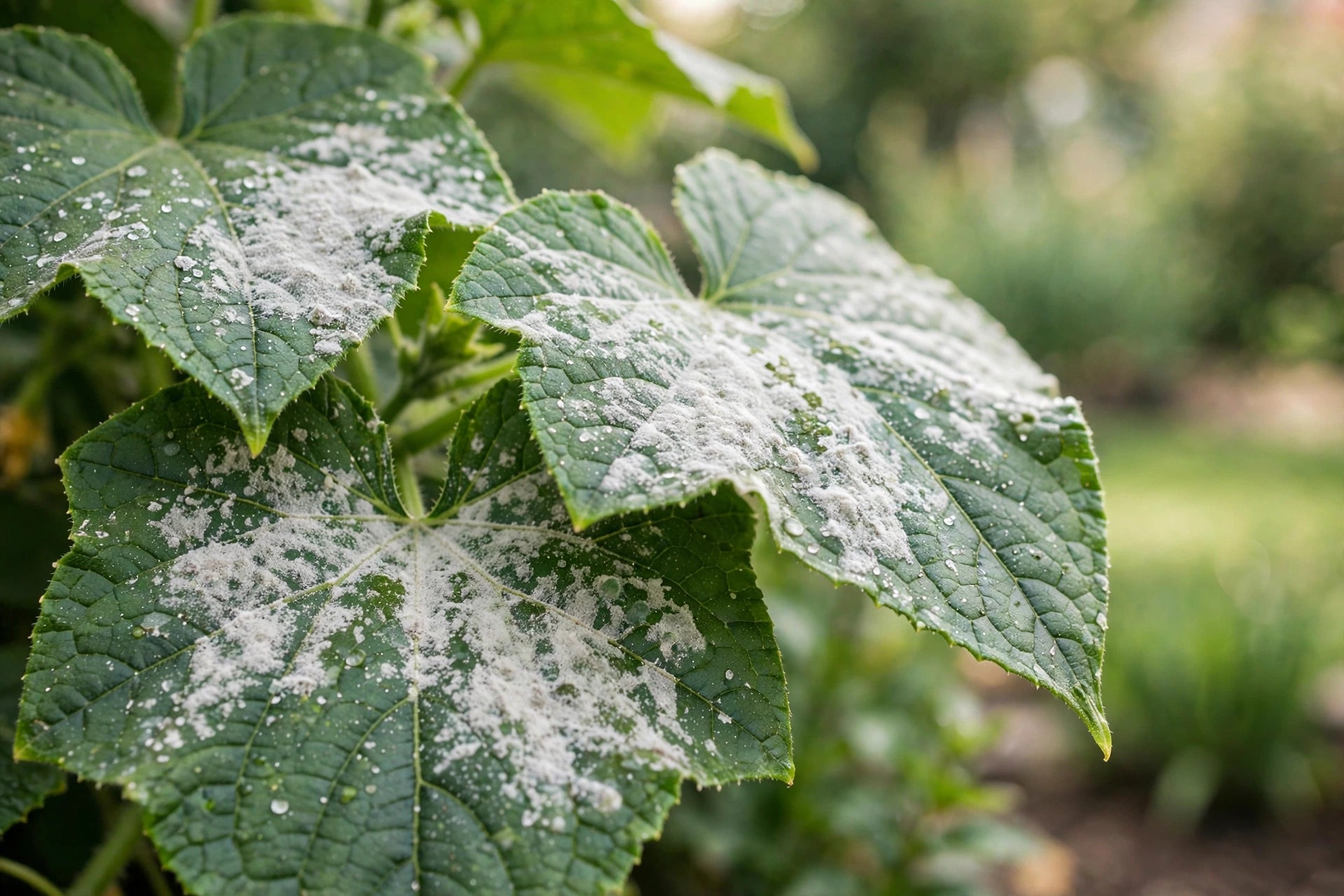
That white, flour-like dusting on your leaves probably isn't dust at all. Powdery mildew is one of the most common plant diseases in home gardens, and it shows up on everything from zinnias to squash to roses. The good news? It's usually manageable, and most plants bounce back once you change the conditions that let it thrive.
We've seen it fool plenty of gardeners. Because the coating looks like something you could wipe away, many people assume it's harmless — or they panic and reach for the strongest spray on the shelf. Neither reaction helps much. In this guide, we'll walk you through exactly what powdery mildew is, how to confirm it's what you're seeing, why it's there, and how to handle it with a calm, prevention-first plan.
What powdery mildew actually is
Powdery mildew is a group of fungal diseases caused by fungi in the order Erysiphales. Despite the name, it's not one single fungus. It's a family of closely related fungi, and here's the part most gardeners find surprising: most strains are host-specific. The powdery mildew attacking your squash won't jump to your roses, and the mildew on your roses won't move to your zinnias. That's a detail worth knowing, because it means you can treat each plant on its own terms.
Unlike most fungal diseases, powdery mildew doesn't need rain or wet leaves to get started. Its spores germinate without free water — in fact, water can kill the spores. The disease favors a specific combo instead: warm days, cool nights, shade, high humidity in the air, and still, stagnant air around crowded plants. Those late-summer weeks, when days hover in the 70s and 80s and nights cool off, are prime time.
It usually starts as small, circular white or pale-gray patches on the upper surfaces of leaves. That placement matters. Most look-alike diseases show up on leaf undersides first, so growth on top is your best early clue. Left alone, the patches merge into a full coating that can cover leaves, stems, buds, and even fruit.
How to spot it early
Early detection changes everything with powdery mildew, because small, fresh infections are far easier to manage than established ones. Make it a habit to glance at the upper leaves of your most susceptible plants — squash, cucumbers, zinnias, roses, bee balm, lilac — every few days once the weather turns warm.
Here's what to look for, in order of appearance:
Small white dots or faint grayish patches on the upper leaf surface, often starting on the oldest, lowest leaves where air barely moves. They look like someone dusted the leaf with flour.
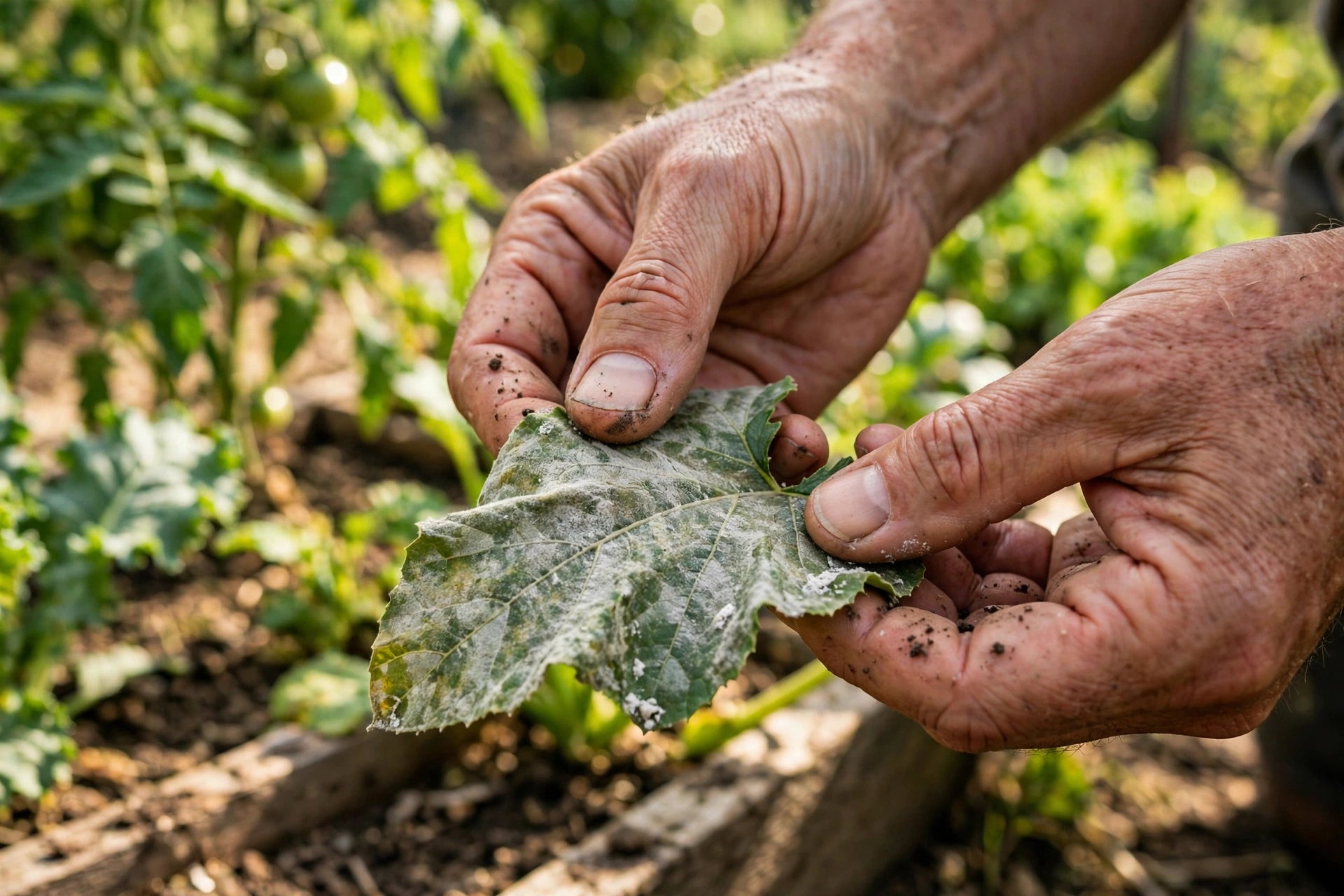
A spreading, powdery film that merges across the leaf. Rub it gently with a fingertip — true powdery mildew smears like talc, while dried spray residue tends to flake or stay put. If you're comparing notes with our symptom guide on white powder, you'll find a full rundown of the look-alikes worth ruling out.
Yellowing, then browning leaf edges, curling or distortion of new growth, and eventually leaves that dry up and drop. Heavy infections can stunt plants, spoil fruit quality, and make harvests smaller — though it's worth saying clearly: powdery mildew rarely kills an established plant outright. It weakens and stresses it, which opens the door to other problems.
One more early-warning trick: watch new growth. Powdery mildew often distorts tender young leaves before the powder is obvious. If new leaves emerge puckered or twisted on a plant that should look normal, look closer at the foliage around them.
Why it shows up: the conditions it loves
Powdery mildew is an opportunist, and it shows up wherever the same handful of conditions line up. If you know the pattern, you can start dismantling it before the disease even arrives.
Warm days and cool nights. University research puts the sweet spot around 68–86°F. Above about 90°F, the fungus struggles — which is why a heat wave can slow an outbreak on its own. Timing varies by climate region: coastal and shaded gardens often battle mildew for months, while hot inland gardens may only see it in spring and fall.
Still air and crowding. Dense plantings, weeds pressing against stems, and hedges that block breezes all trap humid air around leaves. This is the single biggest reason a well-spaced bed stays clean while a crowded one turns white.
Shade and low light. Plants stuck in too much shade stay cool and damp longer each morning. Full sun won't prevent mildew entirely, but it does slow it down.
Lush, soft growth from excess nitrogen. Over-fertilized plants push out tender, thin-walled foliage that mildew loves. Fast growth is great — floppy, overfed growth is a welcome mat.
Susceptible varieties. Some plants are simply born vulnerable. Old-fashioned zinnia types and many squash varieties are famous for it, while modern resistant varieties shrug it off. Choosing resistant varieties is the easiest prevention there is.
How to handle it: an IPM-first plan
Integrated Pest Management (IPM) means using the gentlest effective tools first and saving the heavier ones for last. Extension programs teach this order for a reason: it protects your plants, the beneficial insects in your garden, and you. Here's the ladder, bottom to top.
Prevention and cultural controls
This is where powdery mildew is actually beaten — before it starts, and by changing the environment it needs.
Choose resistant varieties. When you're shopping for seeds or starts, "resistant" or "tolerant" on the label is worth its weight in gold, especially for zinnias and squash. Our guide to preventing powdery mildew walks through the full prevention playbook in detail.
Give plants room to breathe. Follow the spacing on your seed packets — then maybe add a little. Prune or stake dense growers to open the canopy, clear weeds around stems, and don't plant susceptible varieties where hedges or walls block the breeze.
Water at the base, in the morning. Soaker hoses and drip lines keep foliage dry, and morning watering lets everything dry before evening. (Fun fact: a strong jet of water can actually wash powdery mildew spores off leaves — but overhead watering invites other leaf diseases, so keep the water at the base.)
Mulch under susceptible plants. A layer of mulch keeps soil-borne spores from splashing onto low leaves and steadies soil moisture, which reduces plant stress.
Feed moderately. Avoid pushing plants with heavy nitrogen. Steady, balanced nutrition grows tougher leaves that resist infection.
Mechanical and physical controls
When you spot the first patches, act fast and physically.
Remove affected leaves. At the first sign, prune off the worst-affected leaves and stems. This is most effective early — it removes the spore source before the wind spreads it across the garden.
Dispose, don't compost. Bag the material and trash it (or municipal green waste). Home compost piles rarely get hot enough to kill fungal pathogens, so composting infected leaves just stores the problem for next season.
Clean up at season's end. Cut back and remove diseased plant debris in fall, since many powdery mildew fungi overwinter on plant material. A tidy fall garden is a healthier spring garden.
Wash your hands and tools. Wipe pruners with soap and water between plants when you're removing diseased material. It takes seconds and stops you from carrying spores plant to plant.
Biological helpers
Biological controls work with your garden's ecology rather than against it. A few options extension sources mention:
Beneficial microbes. Products based on Bacillus subtilis and similar naturally occurring bacteria are listed by extension programs as low-toxicity options that can suppress powdery mildew, especially when applied early as a protectant. They don't cure heavy infections, but they can slow a developing one.
Invite the good guys. A garden rich in beneficial insects and a healthy soil food web is generally more resilient to disease pressure overall. It won't cure mildew directly, but diverse, well-tended plantings bounce back faster. Our gardening tools hub has scouting and monitoring tools that help you catch problems while biological options still have a chance to work.
Least-toxic options, as a last step
If prevention and physical removal aren't enough, these are the gentlest spray options extension sources list. They work best as protectants on mildly affected plants — nothing truly "cures" leaves that are already heavily coated.
Horticultural oil or neem oil. These smother spores and young colonies. They're most effective when applied at the first sign of disease, and they need thorough coverage of both leaf surfaces. Apply in the cool of the morning or evening, and always test on a few leaves first — some plants are sensitive to oils, especially in heat.
Sulfur. An old, well-documented protectant against powdery mildew. Never mix sulfur with oil, and don't apply sulfur within a couple of weeks of an oil spray — the combination can burn foliage. Skip it entirely when temperatures will exceed about 85–90°F.
Potassium bicarbonate. This disrupts the fungus on contact and is one of the more forgiving options. Like the others, it works best early and needs repeat applications.
The fine print, every time: no spray can promise a cure, and "least-toxic" doesn't mean "no risk." Read the label, follow the rate, test a few leaves first, and keep sprays off open blooms where pollinators are working. Timing varies by climate region, so watch your weather — a cool, still evening is friendlier to sprays (and to you) than a hot afternoon.
When mildew and downy mildew get confused
Quick but important distinction, because the treatments differ: powdery mildew grows on upper leaf surfaces and needs no leaf wetness. Downy mildew grows as a fuzzy or downy layer on leaf undersides, causes yellow patches on top, and loves wet foliage. If you're not sure which one you're looking at, our powdery vs. downy mildew comparison breaks the differences down side by side with photos of what each looks like. Getting this right matters — watering advice for one disease is the opposite of the other's.
Frequently asked questions
Will powdery mildew kill my plants? Rarely outright, but don't ignore it. On established plants it usually causes leaf drop, stunted growth, and smaller or lower-quality harvests. On young seedlings or heavily infected plants, it can be fatal. The real risk is stress — a weakened plant invites every other problem in the neighborhood.
Can I still eat vegetables from a mildewed plant? Yes — powdery mildew on squash or cucumbers doesn't make the fruit unsafe. Wash the fruit normally. But fruit from severely stressed plants may be smaller, misshapen, or less flavorful, which is why protecting the leaves matters for your harvest. For the full vegetable-specific playbook, see our powdery mildew on squash guide.
Does powdery mildew spread from plant to plant? Yes, by wind-blown spores — but remember that most strains are host-specific. Your mildewed squash won't infect your roses. Still, remove and dispose of infected material quickly, because spores from the same plant family will happily find the neighbors.
Can I just wipe it off? Wiping removes the visible coating, but the fungus has already sent feeding structures into the leaf cells, so it comes back. Wiping plus improving airflow and removing the worst leaves works far better than wiping alone.
Should I pull the plant out? Usually not. If less than about a third of the foliage is affected, prune, improve conditions, and monitor. If the plant is mostly coated, defoliating, and past the point of producing, pulling and disposing of it can protect the rest of the garden. When in doubt, our what to do when you spot powdery mildew guide walks through the decision step by step.
Why does it keep coming back every year? Because the conditions keep coming back. Powdery mildew overwinters on plant debris and in buds of perennial hosts, then returns when warm days, cool nights, and crowded foliage line up again. Breaking the cycle means fall cleanup, resistant varieties, and better spacing — the prevention ladder, every season.
Sources
- UC Integrated Pest Management — Powdery Mildew Pest Notes (identification, host specificity, conditions, IPM management) - Cornell Cooperative Extension — Powdery Mildew disease fact sheets (cultural controls, resistant varieties, least-toxic options) - Missouri Botanical Garden — Plant Finder disease entries (symptoms, sanitation, environmental conditions) - Clemson Cooperative Extension — Powdery Mildew fact sheet (IPM ladder, horticultural oil and sulfur guidance)
Wrapping things up!
Powdery mildew looks dramatic, but it's one of the most beatable garden diseases once you understand it. It's a surface-loving, host-specific fungus that thrives on still air, crowding, and soft overfed growth — which means the fix is mostly about gardening well: spacing, airflow, morning watering, resistant varieties, and quick cleanup when you spot the first white dots.
Start at the bottom of the IPM ladder and work up only as far as you need to. Most home gardens never need to climb past the cultural controls. And remember, timing varies by climate region — your mildew season might be spring, late summer, or nearly year-round, so watch your weather and scout your susceptible plants regularly.
You've got this. Happy gardening!
