

Powdery Mildew on Zinnias: Save Your Blooms This Season
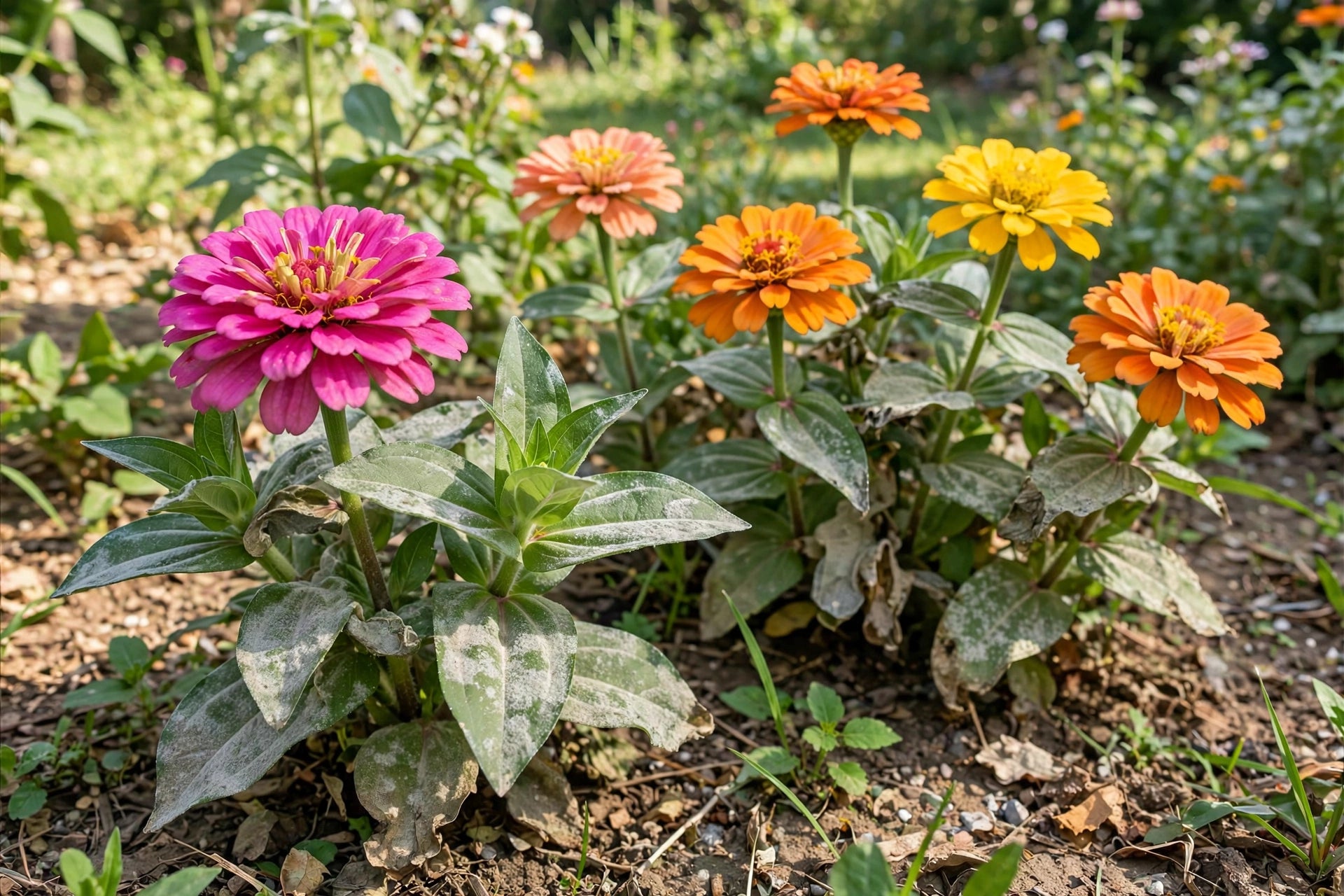
If you grow zinnias, you've probably met powdery mildew. Maybe it started as a few dusty lower leaves in August. Maybe it crept up the whole plant until the flowers looked tired and the foliage looked frosted. Zinnias and powdery mildew go together like summer and sunscreen — and if that frustrates you, you're in very good company.
Here's the thing most gardeners don't hear: zinnias aren't just unlucky. They're genuinely among the most mildew-susceptible flowers you can grow, especially the big, old-fashioned types we all love for cutting. But susceptibility isn't destiny. With the right varieties, smart spacing, and a few cultural habits, you can have buckets of blooms and barely see a speck of white. In this guide, we'll show you how — zinnia-specific, step by step.
Why zinnias get hit so hard
Zinnias check nearly every box on powdery mildew's wish list, which is why they're often the first flowers in the garden to show it.
Dense, thirsty foliage. Zinnias grow fast and leafy, and most of us plant them closer than the packet says because we want that lush cutting bed. Crowded stems trap humid, still air around the lower leaves — mildew's favorite microclimate.
Long bloom season. Zinnias flower from summer into fall, which means their foliage is out there during exactly the warm-days-cool-nights stretches when mildew peaks. A short-season annual might dodge the worst of it. Zinnias stand right in it.
Variety matters enormously. The classic tall cutting types are famously vulnerable, while many modern series were bred specifically for mildew resistance. Two zinnia beds in the same garden can look completely different in September — and the difference is almost always the variety, not the gardener.
The encouraging part: because the causes are so well understood, the fixes work reliably. Zinnias respond beautifully to prevention.
Start with resistant varieties
This is the single highest-impact decision you'll make, and you make it before you ever sow a seed.
When choosing zinnia seeds, look for "powdery mildew resistant" or "tolerant" in the variety description. Resistant doesn't mean immune — in a bad year you might still see a few spots — but it means the difference between a light dusting in October and a defoliated plant in August. If you've battled mildew for years with the same old variety, switching is the fastest upgrade available.
Browse the flower collection with resistance in mind, and give new varieties a trial row next to your old favorites. You'll see the difference yourself — and next year, the choice makes itself.
Spacing and airflow: the zinnia rules
If resistant varieties are step one, airflow is step two — and it's where most zinnia growers can improve immediately.
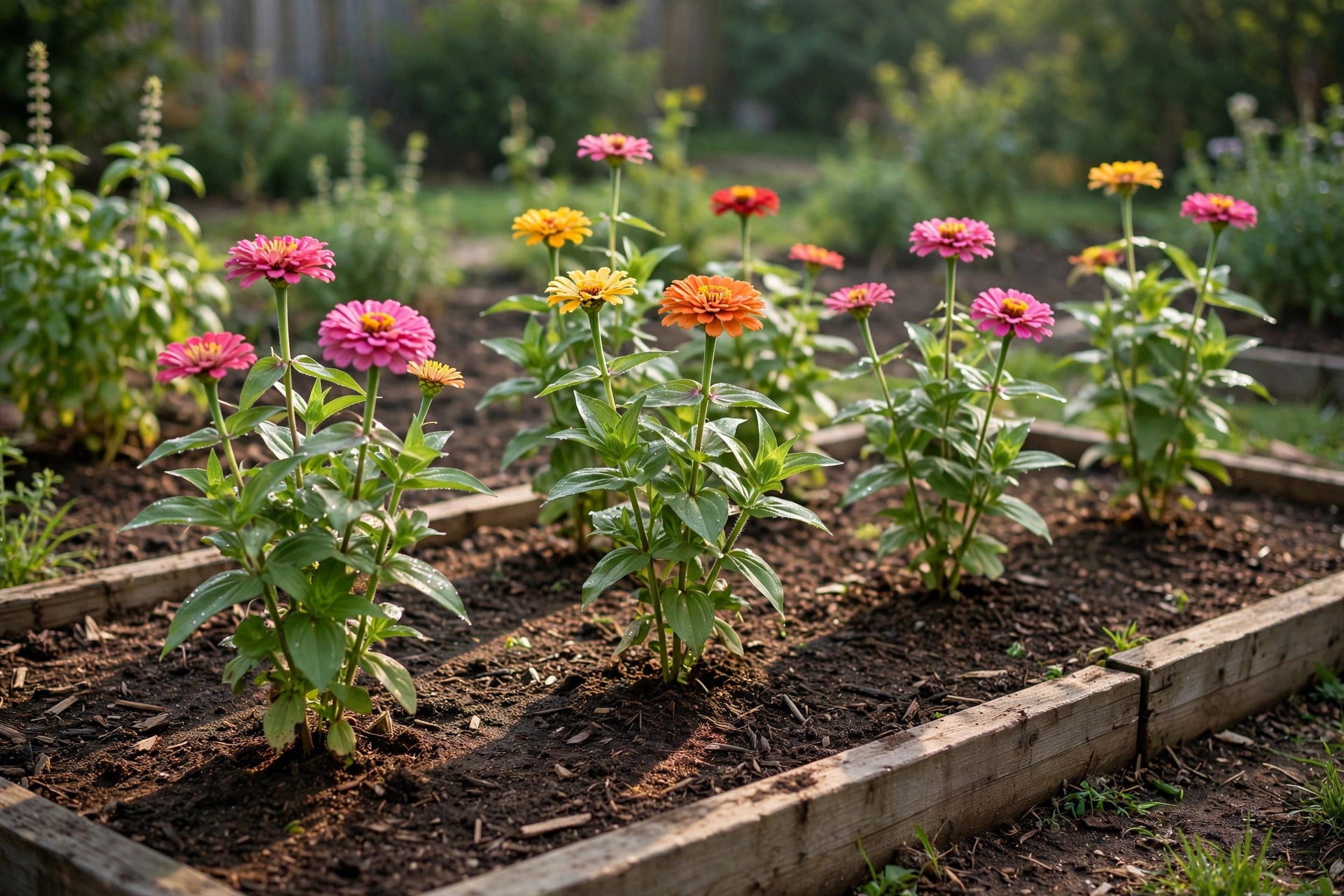
Space wider than feels natural. Those tiny seedlings look lonely at proper spacing. They won't stay that way. Good air movement between plants dries morning humidity fast and denies mildew the still air it needs. When in doubt, thin more than you think you should.
Stake or support tall types. Floppy stems collapse into each other and create damp, airless tangles. A simple stake or a grow-through support keeps stems upright and air moving.
Water at the base, in the morning. Zinnias like consistent moisture, but wet foliage invites trouble. Soaker hoses or drip lines are ideal. Morning watering gives any splashed leaves the whole day to dry. And while you're at it, mulch under the plants — it steadies soil moisture and keeps soil-borne spores from splashing onto low leaves.
Deadhead and tidy. Spent blooms and yellowing lower leaves are mildew's beachhead. Deadheading keeps flowers coming and removes the oldest, most vulnerable foliage before it becomes a spore factory. Bag the trimmings — don't compost diseased material.
Feeding zinnias without feeding mildew
Zinnias are hungry flowers, and hungry flowers get fed — but there's a line between feeding and overfeeding.
Heavy nitrogen pushes out soft, lush, thin-walled growth that mildew colonizes eagerly. You get a big green plant that looks great in July and turns white in August. Instead, feed steadily and moderately: work compost into the bed at planting, then side-dress lightly if growth stalls. The goal is sturdy, well-nourished plants — not pampered, floppy ones.
If your zinnias are already mildewed and overfed, don't try to fix it with more fertilizer. Fix the air, the water, and the spacing first.
When mildew shows up anyway: the zinnia response plan
Even with good habits, a humid late summer can bring mildew to zinnias. Here's the calm, in-order response:
1. Prune the worst of it. Remove the most affected lower leaves and any badly coated stems. Zinnias branch readily, so pruning often stimulates fresh, clean growth from below. Dispose of the material in the trash — not the compost.
2. Open the canopy. Thin crowded stems, remove weeds pressing against the plants, and make sure air moves through the bed. This single step does more than most sprays.
3. Keep cutting flowers. Regular harvesting keeps the plant producing new growth and removes older foliage naturally. A well-harvested zinnia bed is a healthier zinnia bed — one more reason to cut generously.
4. Consider least-toxic options only if needed. If mildew is advancing despite cultural steps, the gentle options from our powdery mildew treatment guide — horticultural oil, neem oil, sulfur, potassium bicarbonate — apply to zinnias too. Test a few leaves first, spray in cool morning or evening hours, keep it off open blooms where pollinators work, and remember that no spray can promise a cure. Timing varies by climate region: in hot-summer areas, mildew often stalls on its own once real heat arrives.
For the full disease background, our powdery mildew identification guide covers what the disease is and why it behaves the way it does, and the prevention guide lays out the season-long strategy. If you're seeing white on leaves but aren't sure it's mildew, our white powder symptom guide and white spots guide help you confirm before you act.
Planning next year's zinnia bed
The best time to beat zinnia mildew is when you're planning, not when you're treating. A few end-of-season notes to your future self:
- Note which varieties stayed clean. That's your shortlist for next year. - Pick a sunnier, breezier spot. Zinnias want full sun anyway — six or more hours — and a spot with natural air movement beats a sheltered corner every time. - Rotate the bed. Don't plant zinnias in the exact same spot year after year. Rotation reduces the overwintering disease pressure waiting in the soil and debris. - Clean up in fall. Cut zinnias down at season's end and remove the debris. Mildew overwinters on plant material, and a tidy fall means a cleaner spring.
Scouting tools make all of this easier — a hand lens for early detection, markers for your trial rows. Our gardening tools hub has the simple tools that turn "I'll keep an eye on it" into an actual routine.
Frequently asked questions
Why do my zinnias get powdery mildew every single year? Because the conditions repeat every year: same susceptible variety, same crowded bed, same warm-days-cool-nights weather. Break any one link — switch to a resistant variety, space wider, improve airflow — and the pattern usually breaks. Break two, and you'll wonder what you were worried about.
Can zinnias recover from powdery mildew? Yes, often impressively. Zinnias branch from leaf nodes, so pruning affected foliage plus better airflow frequently produces a flush of clean new growth. The plant wants to recover — you just have to give it the conditions.
Should I stop deadheading if the plant has mildew? No — keep deadheading. Removing spent blooms keeps energy flowing into new growth and takes aging, vulnerable foliage out of the equation. Just dispose of anything diseased rather than composting it.
Is it safe to cut flowers from a mildewed plant for vases? Absolutely. Powdery mildew affects the plant, not you, and the blooms are fine to bring inside. Just strip any badly affected leaves off the stems before arranging.
Will mildew on my zinnias spread to my vegetables? Unlikely. Powdery mildew strains are mostly host-specific — the zinnia strain infects zinnias and some relatives, not your squash or tomatoes. Still, good sanitation (removing affected leaves promptly) keeps overall spore levels down for everyone.
When should I just pull a zinnia plant? When it's mostly defoliated, no longer producing new growth or blooms, and past the point of recovery — usually late in the season. Pulling a finished plant and cleaning up the debris protects next year's bed more than nursing a lost cause.
Sources
- UC Integrated Pest Management — Powdery Mildew Pest Notes (host susceptibility, cultural controls, resistant varieties) - Cornell Cooperative Extension — Powdery Mildew fact sheets (airflow, spacing, sanitation) - Missouri Botanical Garden — Zinnia and powdery mildew plant entries (variety susceptibility, growing conditions)
Wrapping things up!
Zinnias and powdery mildew have a long history together, but it doesn't have to be your history. Choose resistant varieties, give them room to breathe, water at the base in the morning, feed moderately, and keep those flowers coming with regular cutting. Do those five things and mildew goes from a season-ruining event to a minor footnote.
Your zinnias want to bloom their hearts out for you. Set the stage, and they will. Happy gardening!
