

Powdery Mildew on Roses: Signs, Treatment & Prevention
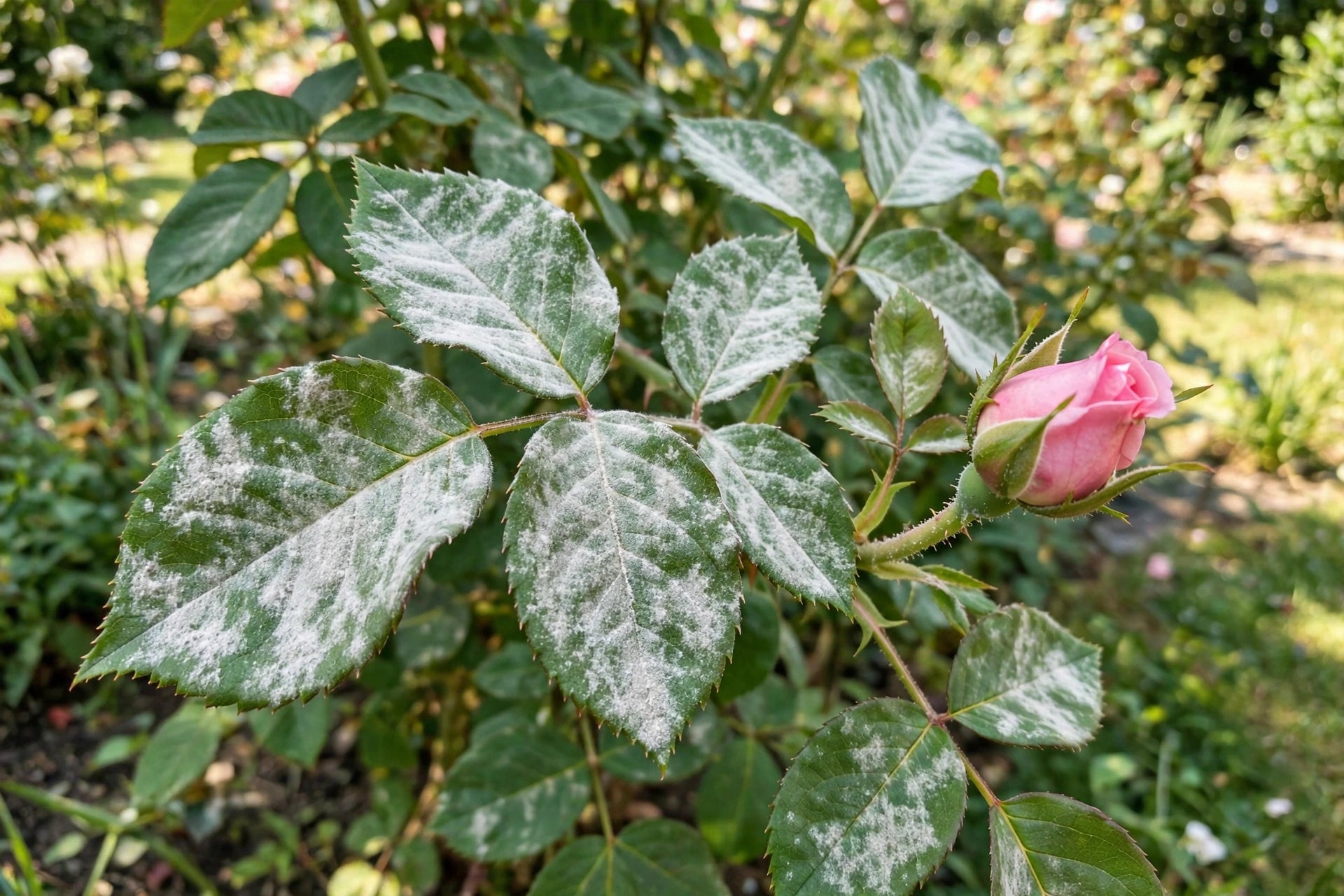
White dust on your rose leaves is almost never just dust.
If it looks like someone flicked flour across the upper surfaces of the leaves, you're probably looking at powdery mildew. Roses are one of its favorite hosts, and the fungus behind it — Podosphaera pannosa — has troubled rose growers for as long as anyone has been keeping records.
It rarely kills an established rose outright. But it weakens the plant, ruins the look of the foliage, and distorts new growth and buds if you let it run.
The good news: powdery mildew on roses responds well to the classic IPM playbook. Prevention first, cultural fixes second, and sprays only as a last resort.
This guide walks you through the whole plan.
How to spot it on roses
Start with the youngest leaves. Powdery mildew almost always shows up there first.
You'll see white to grayish powdery patches on the upper leaf surfaces. The leaves may curl, pucker, or twist — new growth often looks stunted or deformed. Buds can come out small and misshapen, and in heavy cases a powdery coating spreads to the stems too.
One detail matters for the diagnosis. The powder sits on the surface and can be rubbed off with a finger. If the white stuff is mostly underneath the leaf instead, or yellow patches show first on top with fuzz below, you're likely looking at something else — our powdery vs downy mildew comparison walks through the difference.
Severe infections cause leaves to yellow and drop early. A rose can survive that, but it spends its energy regrowing foliage instead of blooming.
Why roses get it (and your neighbor's don't)
Powdery mildew fungi are picky eaters. The species on roses (Podosphaera pannosa) only attacks roses and close relatives — it can't jump to your tomatoes. So an outbreak is really about conditions, not bad luck.
It thrives in warm, dry days paired with cool, humid nights. Crowded plants with poor air movement are the classic setup. Overhead watering that keeps foliage damp, heavy shade, and lush soft growth pushed by excess nitrogen all invite it in.
Some rose varieties are simply more susceptible than others. If the same bed gets hit every year, the variety — not your care — may be the biggest factor.
The flip side: since conditions drive it, conditions can stop it. That's where the plan starts.
Prune for airflow first
This is the single highest-leverage move you can make.
In late winter or early spring, prune your roses to an open center. Remove crossing and inward-growing canes, thin crowded clusters, and cut back weak spindly growth. Air that moves through the plant dries leaf surfaces faster and makes life hard for the fungus.
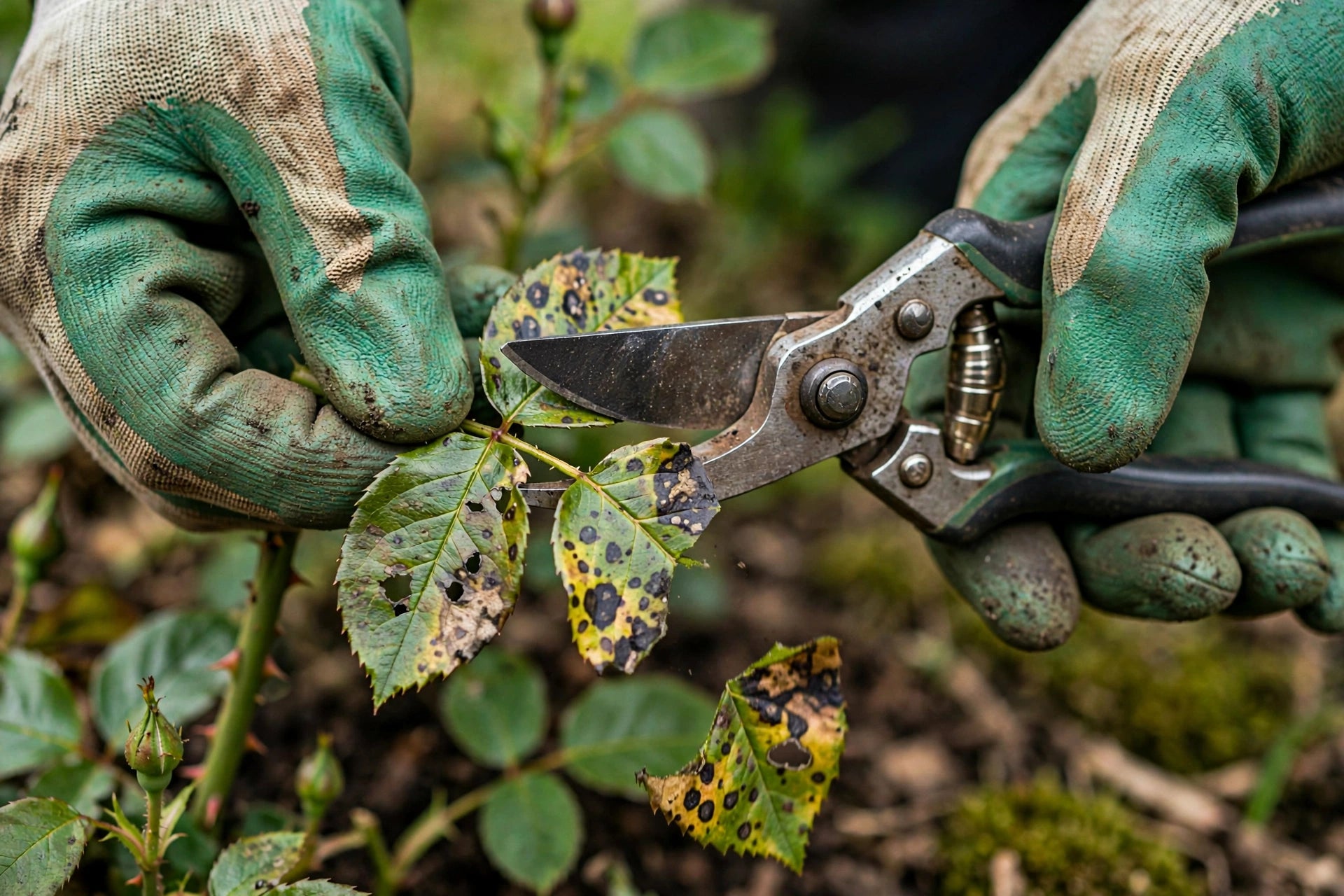
During the growing season, keep at it. Snip out the first powdery leaves you spot — don't wait for them to spread. Bag the clippings and throw them away. Never toss infected material on the compost pile, where spores can survive.
Disinfect your shears between plants with rubbing alcohol or a diluted bleach solution, rinsed and dried after. It takes an extra minute and keeps you from spreading spores from one rose to the next.
Sharp, clean tools make this whole job easier — you'll find the basics in our gardening tools guide.
Clean up like you mean it
Fallen leaves are a powdery mildew savings account. The fungus overwinters in buds and in fallen infected leaves, so every leaf you leave on the ground is a head start for next spring.
Rake up fallen rose leaves regularly through the season, and do one thorough cleanup in fall. Dispose of infected material in the trash or municipal green waste — not the home compost, which usually doesn't get hot enough to kill the spores.
The same goes for spent blooms and pruned canes. Tidy beds aren't just prettier; they're genuinely less diseased.
If you've already confirmed an infection and need a full response plan, our guide on what to do when you spot powdery mildew lays out the steps in order.
Water the roots, not the leaves
Water at the base of the plant, in the morning, so any splashed foliage dries quickly. Soaker hoses and drip irrigation are ideal; overhead sprinklers are the opposite of ideal for roses in mildew country.
A 2–3 inch layer of mulch under the bush helps too. It keeps soil — and the spores sitting in it — from splashing up onto the lower leaves during rain or watering.
And go easy on the fertilizer. Fast, soft, nitrogen-pushed growth is exactly the tissue powdery mildew colonizes first. Feed modestly, following label rates, and skip the extra nitrogen if your roses are already vigorous.
When a spray makes sense
If you've done the cultural work and mildew still shows up, a least-toxic spray can protect new growth. Horticultural oils and neem oil are contact options labeled for powdery mildew; sulfur and potassium bicarbonate products are also commonly used on roses.
Apply strictly per the product label. Test on a small area first and wait a day or two to check for leaf burn. Spray in the cooler hours — never in the heat of the day or when temperatures top 90°F — and avoid spraying stressed or wilted plants.
Repeat applications are usually needed, because these products protect new growth rather than curing tissue that's already damaged. Keep expectations honest: sprays slow powdery mildew down; they don't make infected leaves look new again.
Our detailed look at neem oil for powdery mildew covers what it can and can't do.
Think ahead to next season
If mildew returns to the same roses year after year, consider replacing chronic offenders with resistant varieties. Breeders have made real progress here, and a resistant rose in a sunny, airy spot may never need a spray at all.
When you plant something new, inspect it before it goes in the ground — nursery stock can arrive with mildew already started. Give every rose enough space to breathe at maturity, not just at planting time.
Timing and pressure vary by climate region, so watch when mildew typically appears in your area and start your prevention steps a few weeks ahead of it. Our powdery mildew prevention playbook gives you the full seasonal routine.
Frequently asked questions
Can powdery mildew kill my roses? Rarely outright. It weakens plants and reduces bloom, and repeated severe defoliation can stress a rose over time — but established bushes usually survive and recover once conditions change.
Should I remove infected leaves? Yes. Prune off the first affected leaves and dispose of them in the trash, not the compost. Early removal slows the spread and is one of the most effective steps you can take.
Will the mildew spread to my other plants? The rose powdery mildew fungus (Podosphaera pannosa) is host-specific to roses. It won't infect your vegetables or other flowers — though other plants have their own powdery mildew species, as our guides to powdery mildew on zinnias and powdery mildew on squash explain.
Is neem oil safe to use on roses? Neem oil products labeled for roses can be used per label directions. Test a small area first, spray in cool hours, and keep expectations realistic — results vary with timing and coverage.
When should I start preventing it? Start cultural prevention in spring as new growth emerges, a few weeks before mildew typically appears in your area. Watch for the first white patches and act immediately — early action beats late spraying every time.
Wrapping things up!
Your roses don't need a chemistry set. They need air, sunshine, smart watering, and a gardener who acts at the first white speck.
Prune for airflow. Clean up fallen leaves. Water the roots. Choose resistant varieties when you replant. Save the sprays for when the cultural steps aren't enough — and even then, treat them as helpers, not heroes.
Do that consistently and powdery mildew goes from a season-ruining crisis to a minor chore. Your roses will thank you with the only currency that matters: blooms.
Sources
- UC IPM — "Powdery Mildew on Ornamentals" pest management guidelines (ipm.ucanr.edu) - Missouri Botanical Garden — "Powdery Mildew" plant problem profile (missouribotanicalgarden.org) - Clemson Cooperative Extension — "Powdery Mildew on Roses" (clemson.edu/extension) - RHS — "Powdery mildews" advice (rhs.org.uk)
Timing and disease pressure vary by climate region — check your local extension for guidance tuned to your area.
