

Seedlings Eaten Overnight? What's Happening & What to Do
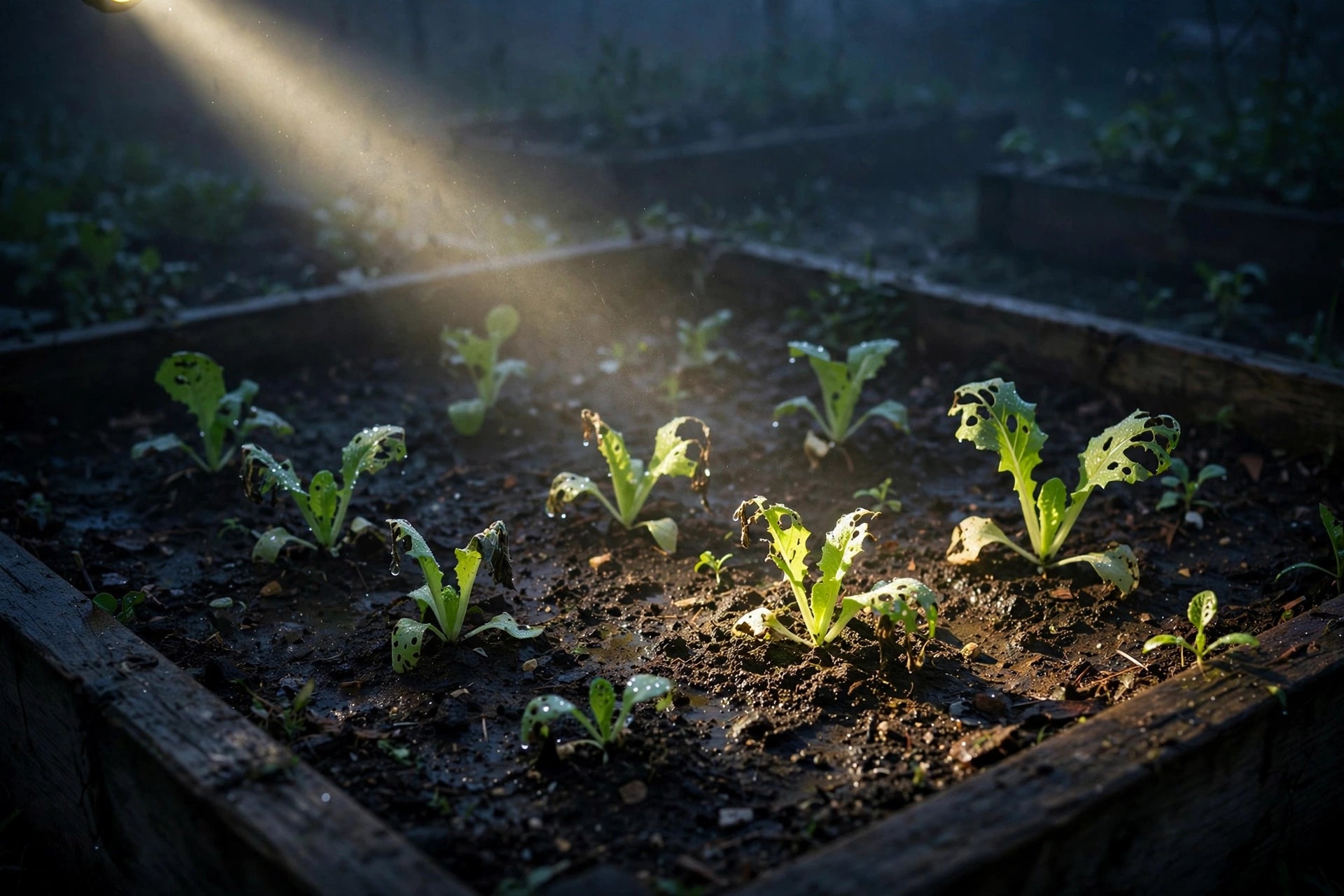
Seedlings chewed, clipped, or missing overnight — with no pests visible during the day — point to nocturnal feeders. Several common garden pests feed after dark and hide by sunrise, including cutworms, slugs, and earwigs. This guide covers the most likely culprits, how to tell them apart by the damage they leave, and how to catch the responsible pest in the act.
THE Usual Nighttime Suspects
Cutworms — The Clean Cutters
Signature: seedlings severed clean through at the soil line, as if cut with scissors. Tops lying nearby or missing. No slime, no ragged edges.
Cutworms are smooth, plump caterpillars (moth larvae) that hide in the top inch of soil by day and feed at night. One larva can fell several seedlings per night. Our cutworm identification guide has the full profile — including the C-shape curl test that confirms them in seconds.
Slugs and Snails — The Ragged Chewers
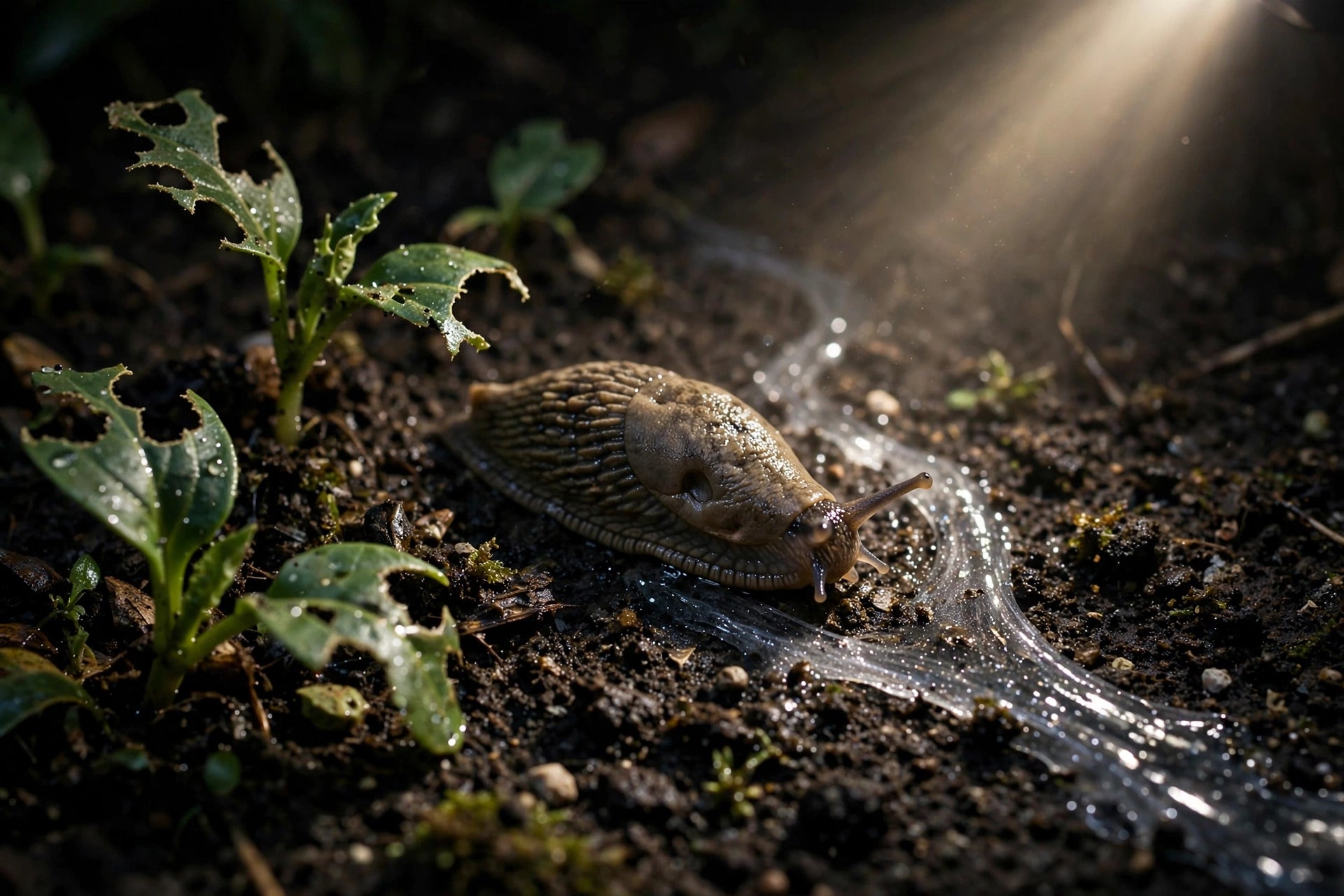
Signature: irregular, ragged holes chewed in leaves and stems — plus silvery slime trails on soil, leaves, or nearby surfaces. The slime is the clincher. No slime, probably not slugs.
Slugs feed at night and on damp, overcast days, hiding under boards, pots, mulch, and debris by day. They rarely cut a stem clean through like cutworms do — they rasp away at tissue, leaving tattered edges.
Earwigs — The Edge Nibblers
Signature: leaves chewed from the edges inward, sometimes leaving only the veins — plus small, dark, pellet-like droppings. Seedlings may be partially defoliated rather than felled.
Earwigs hide in tight, damp places by day: under mulch, in curled leaves, inside hollow stems. They're omnivores — they also eat aphids and mites, so small numbers aren't all bad. But a big population will shred young seedlings overnight.
Pillbugs and Sowbugs — The Cleanup Crew Gone Wrong
Signature: damage on seedlings that were already weak, plus feeding on fallen fruit and decaying matter. These crustaceans mostly eat decomposing material, but in large numbers they'll chew tender young stems at the soil line.
If pillbugs are your problem, you usually have a moisture and debris problem underneath it — too much damp mulch piled against stems.
Rabbits, Deer, and Other Mammals — The Vanishers
Signature: entire seedlings gone, or stems bitten off inches above the soil with ragged, torn ends. Footprints, droppings, or a cleanly browsed row.
Mammals don't usually leave the neat soil-line cut of a cutworm — they browse higher and messier. If whole plants disappear, think bigger than insects.
THE Flashlight TEST: Catch THEM IN THE ACT
Stop guessing. Go out about two hours after dark with a flashlight and look.
- On the soil surface near stem bases → cutworms, stretched out and feeding - Under boards, pots, and mulch edges → slugs, earwigs, pillbugs - On the foliage itself → earwigs, climbing cutworms, slugs
Move slowly and keep the beam low. You'll be amazed what you see on the first night. Handpick what you find into soapy water — one or two patrols often break the cycle, because nighttime populations in a home garden are usually small.
For slugs specifically, a beer trap (a shallow cup of beer sunk to soil level) works as both monitor and control — check it in the morning to confirm slugs are active.
Matching THE Defense TO THE Culprit
Cutworms → cardboard collars around every transplant stem, pushed an inch into the soil. Plus the night patrol. Bt (Bacillus thuringiensis) works on young larvae.
Slugs → reduce hiding places (pull mulch back from stems), water in the morning so surfaces dry by night, set beer traps, and consider iron phosphate bait — it's effective against slugs and safe around pets and wildlife when used as labeled.
Earwigs → trap them with rolled damp newspaper or cardboard tubes left out overnight — collect and dispose in the morning. Reduce daytime hiding spots near seedlings.
Pillbugs → pull heavy mulch away from seedling stems, let the surface dry, remove debris they're sheltering under.
Mammals → that's a fencing conversation, not an insect one. Row covers stop rabbits; deer need real fencing.
One caution that applies to all of them: don't reach for a broad-spectrum insecticide "just in case." You'll kill the ground beetles, toads, and other predators that eat these nighttime pests — and the pests come back faster than their predators do.
If your seedlings are falling over but not clearly chewed, the cause might not be a pest at all — our seedling diagnosis guide sorts cutworms from damping off, legginess, and overwatering.
After THE Attack: Recovery PLAN
So the flashlight test gave you a name. Now what?
Assess before you act. Walk the bed in daylight and sort plants into three groups: untouched, chewed-but-growing, and destroyed. Leaf-chewed seedlings with intact growing points usually recover on their own — leave them alone. Severed-at-the-soil-line seedlings won't come back — pull and replace.
Replant into protection. Don't put fresh seedlings into the same unprotected spot and hope for the best. If cutworms were the culprit, every replacement gets a collar — our cutworm collar DIY guide makes it a five-minute job. If slugs, clear the hiding spots and set traps first. Replanting without fixing the cause just feeds the next wave.
Stagger your risk. If a whole bed got hit, consider replanting only part of it now and the rest a week or two later. Succession planting means one bad night can't take everything at once — and later plantings go into warmer, faster-growing conditions that outrun pests.
Feed the recovery. Chewed-but-surviving seedlings benefit from a gentle boost: consistent water, and a half-strength balanced fertilizer once they show new growth. Don't fertilize a stressed, non-growing plant — wait for the new leaves first, then feed.
Wrapping Things Up!
Overnight damage feels mysterious, but it's really just a scheduling problem — the pests work nights, you work days. One flashlight patrol closes that gap and usually identifies your culprit in minutes.
Once you know who it is, the fix is targeted and simple: collars for cutworms, dry surfaces and traps for slugs, rolled-newspaper traps for earwigs.
Healthy, fast-growing seedlings outrun pest pressure better than weak ones — and timing matters everywhere. In warm regions you might be transplanting while northern gardeners are still starting seeds indoors, so work from your local frost dates. Our free plant problem identifier can walk you through the diagnosis if you're still unsure, and when you're ready to replant, browse vegetable seeds — every variety ships with a free growing guide.
Frequently Asked Questions
What animal eats seedlings at night?
Insects and mollusks far more often than animals. Cutworms cut stems at the soil line; slugs leave ragged holes and slime trails; earwigs chew leaf edges. True mammals (rabbits, deer) take whole plants and leave footprints and ragged, higher cuts.
How do I know if it's slugs or cutworms?
Two tests. First, look for slime trails — silvery dried streaks mean slugs. Second, look at the cut: a clean scissor-like snip at the soil line means cutworms; ragged, tattered chewing means slugs. Our cutworms vs. slugs comparison puts the two damage patterns side by side. The flashlight test settles any remaining doubt.
Will seedlings grow back after being eaten?
If the growing point is intact, often yes — leaf-chewed seedlings usually push new growth. If a cutworm severed the stem at the soil line, no — replant. Fast replanting into protected (collared) spots beats waiting on a doomed seedling.
What can I put around seedlings to protect them at night?
Cutworm collars (cardboard tubes) for stem-cutters. Copper tape or dry barriers for slugs around containers. Row cover fabric draped over young transplants excludes most nighttime insects at once — just remove it once plants flower if pollinators need in.
Are earwigs good or bad for the garden?
Both. They eat aphids, mites, and decaying matter — genuinely useful. But large populations chew seedlings, soft fruit, and flower buds. Tolerate small numbers; trap and reduce when they're damaging plants.
Does diatomaceous earth stop nighttime pests?
Somewhat, with caveats. Food-grade diatomaceous earth can deter soft-bodied slugs and crawling insects — but only while dry. One watering or heavy dew renders it useless until reapplied, which makes it unreliable as a primary defense outdoors. It also doesn't stop cutworms feeding at the soil line very effectively. Use it as a supplement around containers or in dry spells, not as your main plan.