

Mold on Seed Starting Mix: Is It Dangerous?
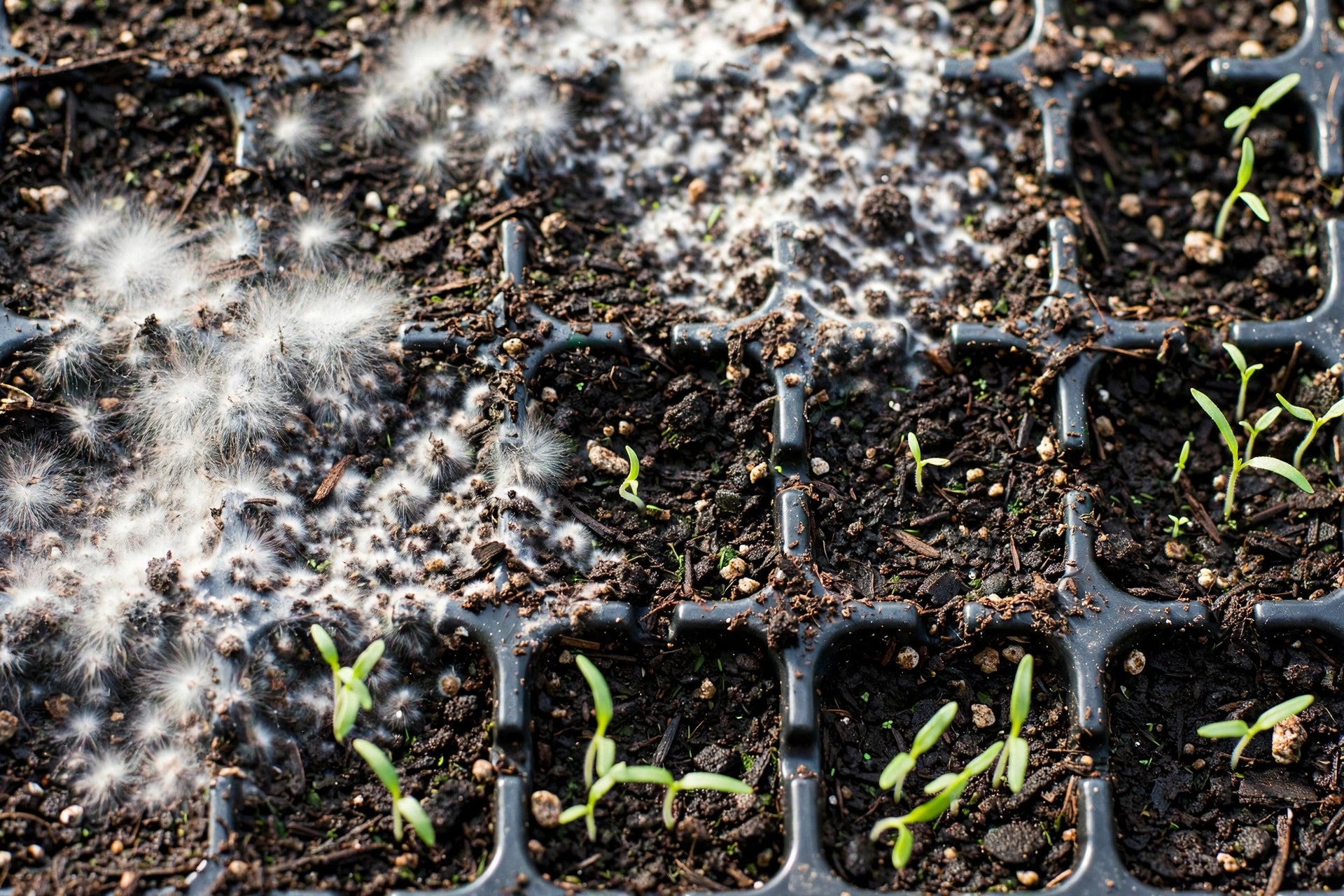
Seeing white or grayish fuzz spread across your seed starting mix is alarming, but in most cases it is not dangerous to your seedlings. That surface mold is usually saprophytic — it feeds on dead plant material in the mix, not on living tissue — and university greenhouse programs confirm it is not pathogenic to plants. That said, the same damp conditions that grow surface mold also favor the real threat: damping off. So treat the mold as harmless in itself, but take its warning seriously.
The honest uncertainty first: nobody can identify the exact organism from a photo of white fuzz. The overwhelming majority of surface mold on seed starting mix is harmless saprophytic fungi, but a small fraction of situations involve something more serious. This article will help you read the situation and respond correctly either way.
What the harmless surface mold actually is
Seed starting mixes are made of peat, coir, bark, and compost — all dead plant material. That is exactly what saprophytic fungi eat. Their spores are everywhere: in the air, in the mix itself, on seed coats. Given warmth and constant moisture, they bloom into the familiar white, gray, or occasionally greenish fuzz.
According to the University of Massachusetts Greenhouse Crops and Floriculture Program, these molds live on dead plant material such as bark, peat, coir, or compost, and they "will not hurt the plants or roots" — they are not harmful to plants or people. Greenhouse Grower, reporting the same UMass guidance, notes they are more likely to appear when the mix stays wet for long periods, especially with overwatering or poor drainage.
Some evidence even suggests these fungi can be mildly beneficial: as they break down complex organic matter in the mix, they release plant-available nutrients like nitrogen and phosphorus, and some compete with genuine pathogens around the roots. You do not need to panic, and you certainly do not need to throw out a healthy-looking tray because of surface fuzz.
How to tell harmless mold from something serious
This is the key skill. Use these clues:
It is probably harmless if: the fuzz is white, gray, or light green and sits on the mix surface or on bits of bark; your seedlings are upright, green, and growing; and the stems are firm at the soil line. This is the standard saprophytic bloom.
It may be serious if: seedlings are toppling, stems are pinched and brown at the soil line, or a dead patch is spreading through the tray. That combination points to damping off, the seedling disease that kills — and surface mold alongside it just confirms the tray is too wet.
One more caution: in severe cases, UMass notes, a thick mold layer can form a crust on the mix surface that limits water penetration, so even harmless mold deserves attention if it is heavy. And surface mold should not be confused with algae — green slime on the mix — which creates an ideal habitat for fungus gnats, whose larvae feed on roots and can spread plant pathogens.
If you also see fuzz directly on the seedlings themselves, read our guide on mold on seedlings — mold on plant tissue needs a slightly different response.
Why it shows up: the usual suspects
Surface mold is a moisture story. The most common triggers:
- Overwatering. The number one cause. Mix that never dries at the surface grows mold; mix that cycles between moist and slightly dry does not. - Humidity domes left on too long. Domes are wonderful for germination and terrible afterward — they trap saturated air against the mix surface. - Poor air circulation. Still air over wet mix is mold's favorite habitat. - Overcrowded trays. Dense seedlings slow evaporation and trap humidity. - Overcast, humid weather. Even indoors, long stretches of damp weather raise ambient humidity around your trays.
Notice that every one of these is also a risk factor for damping off. That overlap is exactly why mold on the mix is useful as an early warning: it tells you the tray is wetter and stuffier than it should be, days before disease might take hold.
What to do about it: fix the conditions
You do not need to kill the mold — you need to fix the environment that grew it. In IPM order:
Prevention and cultural steps (do these first)
- Water less, and water from below. Let the tray absorb water from the bottom, drain the excess, and let the surface dry slightly between waterings. Water in the morning so the surface dries during the day. A moisture meter helps you water only when the mix actually needs it. - Remove humidity domes as soon as seeds sprout. Ventilate them progressively if you are worried about a shock — but get them off. - Run a fan. Gentle air movement across the trays dries the mix surface and is one of the single most effective mold preventives. Browse our gardening tools page for small fans suited to seedling setups. - Thin crowded seedlings and space trays apart so air flows around every cell. - Loosen the surface. As UMass suggests, gently breaking up the compressed surface layer helps it dry out and discourages regrowth. - Give strong light. Healthy light (12–16 hours a day) dries the surface faster and grows sturdier seedlings.
Mechanical steps
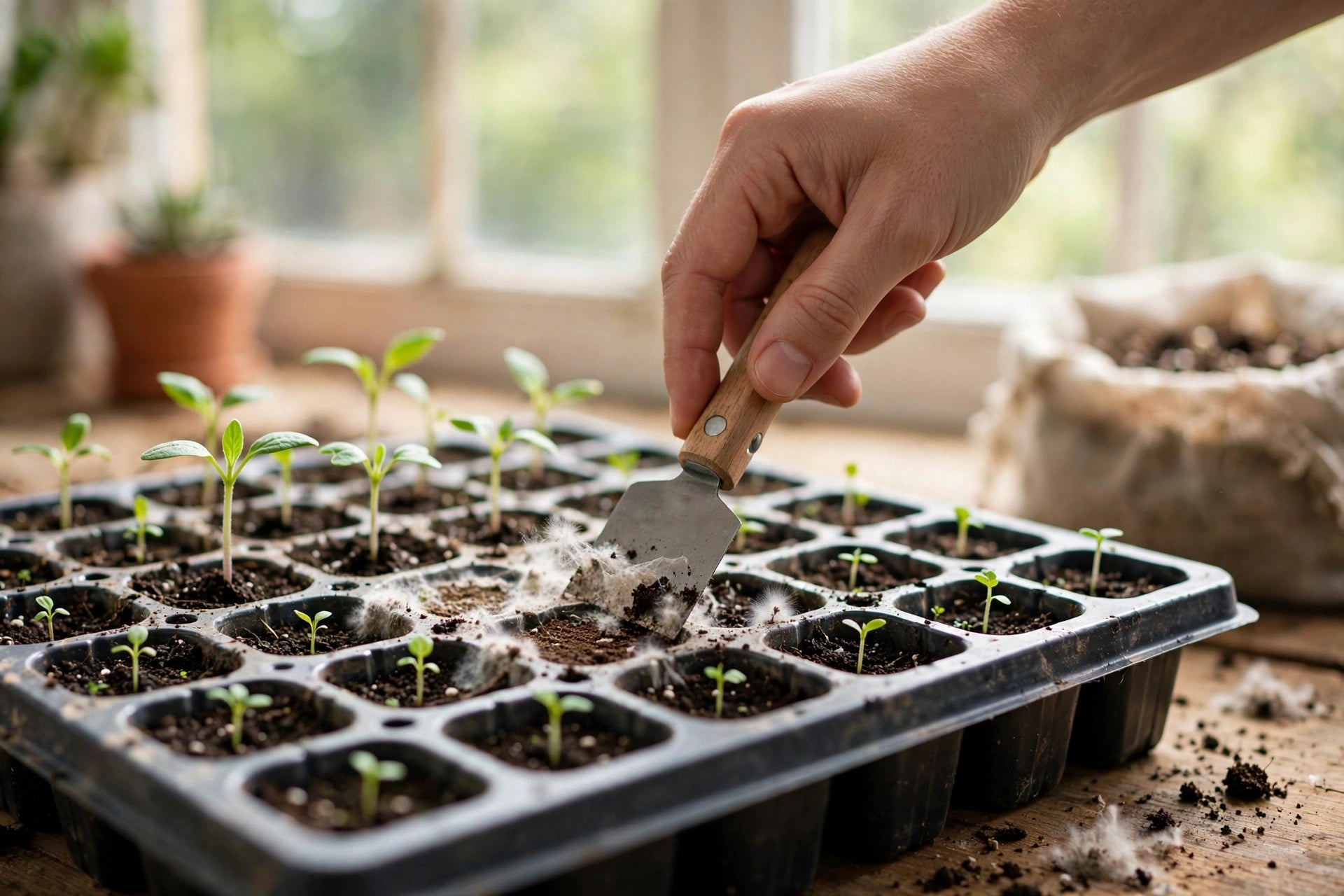
- Scrape off heavy mold. If the fuzz forms a thick mat, you can gently scrape it off the surface — mainly for appearance and to let water penetrate. This is cosmetic; the real fix is still the conditions.
Biological and chemical options
- Beneficial microbe products (Trichoderma, Bacillus subtilis) can help balance the mix biology, but they are unnecessary for simple surface mold — cultural fixes are faster and free. - Fungicides are overkill for harmless surface mold and are best avoided around young seedlings. Save your money and your seedlings' roots.
When mold IS a red flag
Take the situation seriously — not just the mold — when:
- Seedlings are collapsing or stems are browning at the soil line (see seedling stems turning brown for the full diagnosis walkthrough). - Seeds are not emerging at all, which can mean seeds rotting before germination — pre-emergence damping off. - The mold has a foul smell, which can indicate anaerobic, sour mix. - Seedlings look stunted, yellow, or wilted despite damp mix.
In these cases, remove the affected seedlings, discard suspicious trays rather than reusing the mix, and restart the problem tray with fresh sterile mix and corrected watering.
A note on timing and climate
Indoor seed starting runs on your home's conditions, not the garden calendar — but humidity swings with the seasons. Damp spring weather and cool rooms make surface mold more likely, while dry winter indoor heating can nearly eliminate it. If you start seeds in a humid basement or a cool room, budget extra attention for airflow. Timing varies by climate region for outdoor sowing, where cool wet springs are the classic setup for both surface mold and damping off — so check soil warmth before sowing your vegetable or flower seeds directly.
Frequently asked questions
Is white mold on seed starting mix harmful to seedlings? Usually not. It is typically saprophytic mold feeding on dead material in the mix, and UMass greenhouse research confirms it does not harm plants or roots. But it signals excess moisture, which does invite damping off.
Should I throw away mix that has mold on it? If the seedlings are healthy and growing, no — just fix the moisture and airflow. If seedlings are dying or the mold is extremely heavy and foul-smelling, discard the mix and start fresh.
Will cinnamon stop mold on my seed starting mix? Cinnamon is a popular home remedy, but extension guidance does not support it as a reliable control. Drying the surface, improving airflow, and watering from below work far better.
Can I just scrape the mold off and keep going? Yes, for light surface mold — scrape it off if it bothers you, then address the real cause: reduce watering, remove the dome, and add a fan. The mold will fade on its own once the surface dries regularly.
How do I tell mold from algae? Mold is fuzzy — white, gray, or greenish threads. Algae is slimy and flat, a green film on the mix. Algae is the more significant problem because it shelters fungus gnats, whose larvae damage roots.
Does mold on the mix mean my seeds will rot? Not directly — saprophytic mold does not attack seeds. But the soggy conditions behind it can cause seeds to rot from damping-off pathogens, so adjust watering promptly.
Sources
- UMass Amherst Greenhouse Crops and Floriculture Program — molds on the surface of growing media: saprophytic fungi vs. pathogens, control by reducing irrigation and increasing airflow. - Greenhouse Grower — reporting UMass guidance on monitoring molds on growing media and distinguishing them from algae. - Penn State Extension — "Damping Off": the connection between excess moisture and seedling disease. - Better Homes & Gardens — mold on indoor seedlings: why it appears and how to fix conditions.
Wrapping things up!
White fuzz on your seed starting mix looks scary but is almost always just nature doing its recycling job. Let it be your early warning system instead: dry the surface, add air, water from below.
Your seedlings will thank you — and so will the next tray you start.
