

Seedling Stems Turning Brown? Causes and Fixes
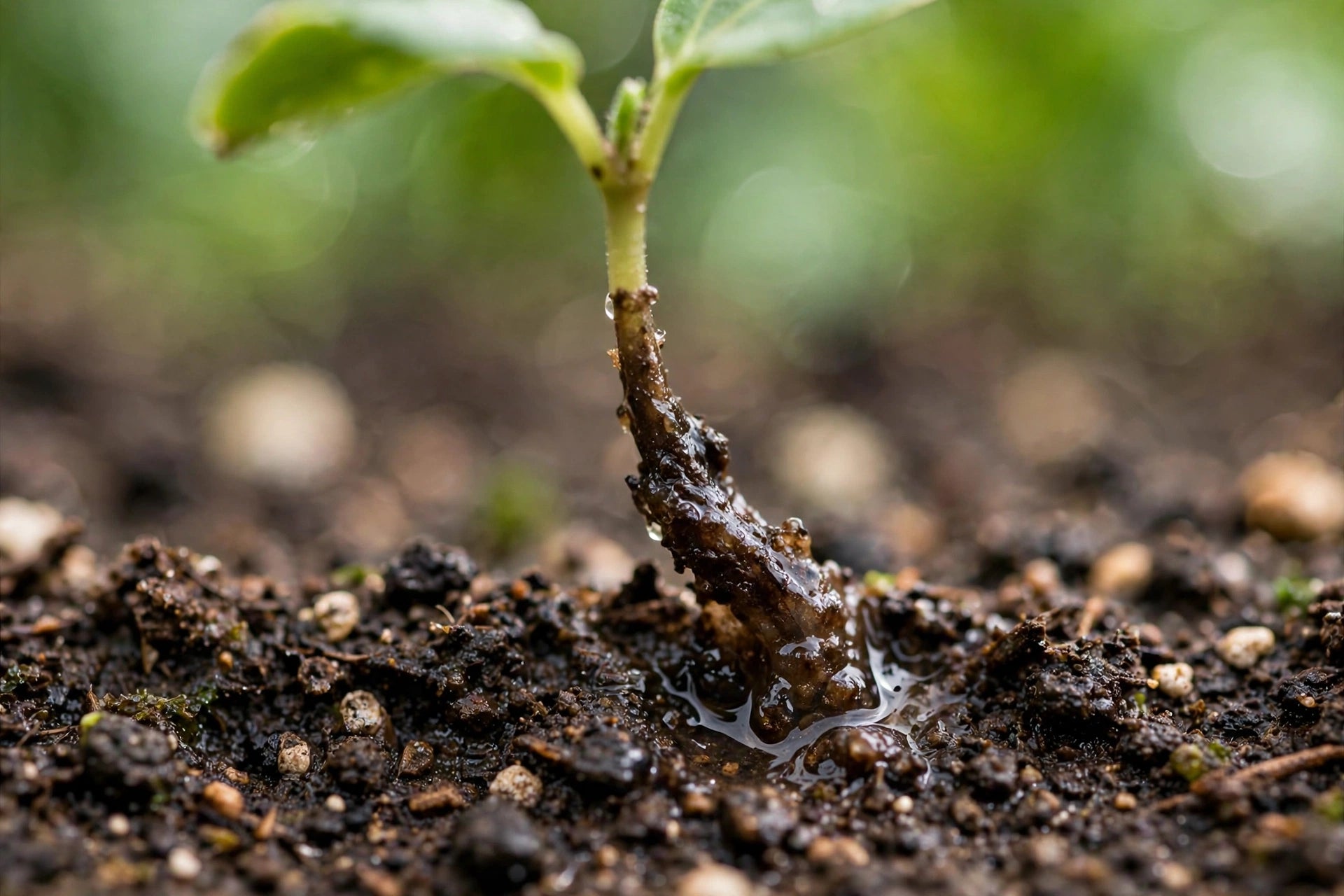
A brown stem on a seedling can mean several different things, and getting the diagnosis right matters because the fixes are completely different. The most serious cause is damping off — a soil-borne disease that rots the stem at the soil line — but brown stems can also come from overwatering, cold damage, or fertilizer burn. Here is how to read the symptoms and what to do for each possibility.
Before anything else, an honest caveat: diagnosing from color alone is unreliable. A brown stem is a symptom, not a disease name. If you are not sure what you are seeing, treat the whole setup as suspect — improve the growing conditions first (less water, more air, more light), and you will cover most of the likely causes at once.
What a brown stem can look like — and what each version means
The details of the browning tell you a lot. Look closely at exactly where the brown appears, what the texture is, and what the rest of the plant looks like.
Brown, pinched, and water-soaked at the soil line. The classic sign of damping off. The stem narrows to a thin, dark thread right where it meets the mix, the tissue looks wet and translucent, and the seedling topples over even though the leaves may still be green. This is the pattern described in detail in our main guide to damping off in seedlings. If this is what you see, the seedling will not recover.
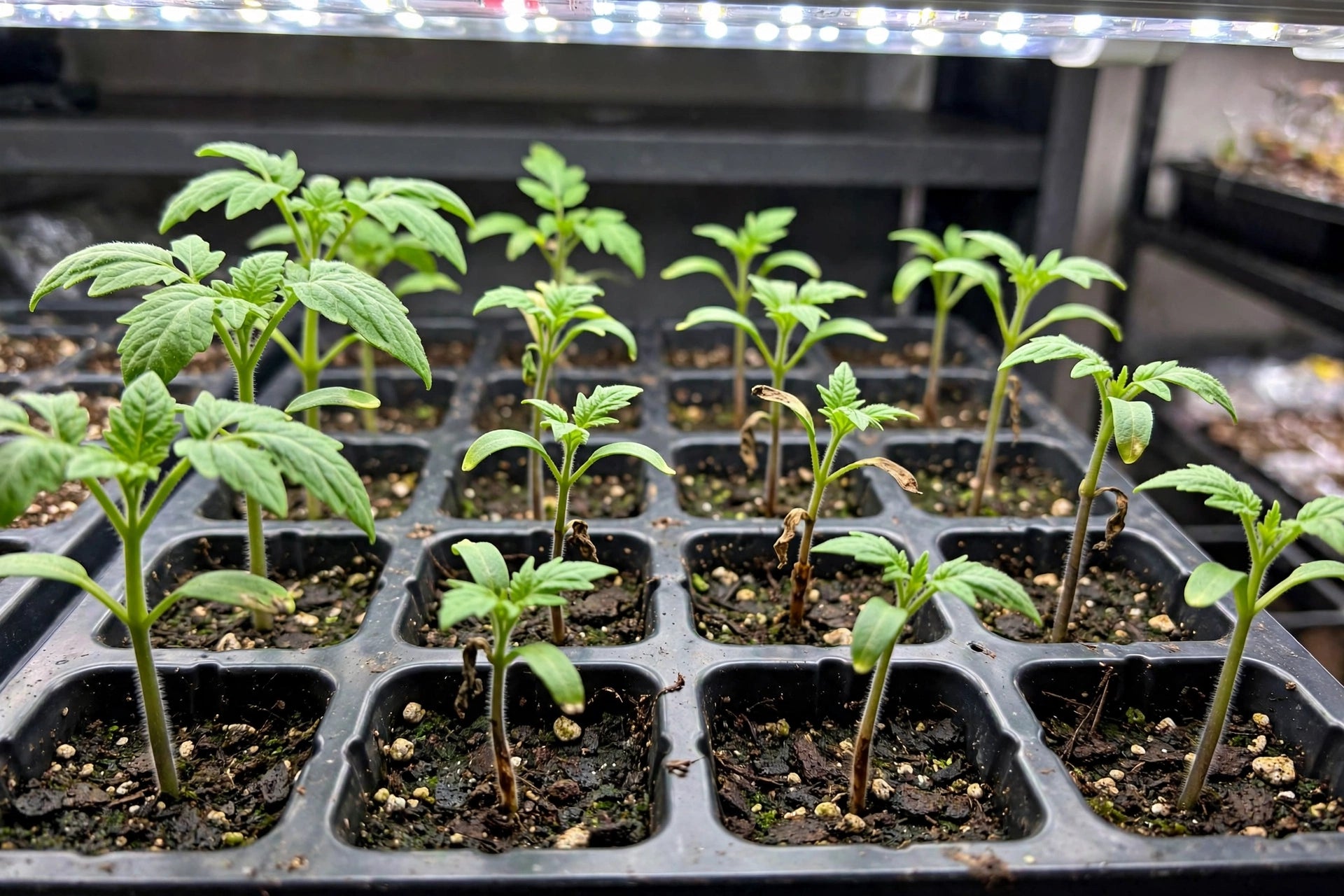
Brown and mushy along the whole lower stem. This points to the same family of problems — damping-off pathogens or root rot — especially when the seedling wilts even though the mix is damp. The stem has lost its structure because the tissue is decaying.
Brown and firm, mostly on older stems. If the stem is brown but sturdy, and the plant otherwise looks fine, it may just be the natural hardening of the stem as the seedling matures. Many seedlings develop a slightly woody, tan-colored base as they grow. That is not a problem.
Brown tips or edges spreading from the top down. Browning that starts in the leaves rather than the stem base usually points away from damping off — toward fertilizer burn, heat stress, or low humidity. The stem base stays intact, which is the key distinction.
The most serious cause: damping off
When damping off is responsible, the sequence is consistent: the seedling emerges healthy, grows for a few days, then the stem base darkens, pinches inward, and the plant collapses. University extension sources describe post-emergence damping off exactly this way — rotten, discolored stems at or near the soil line, with affected seedlings appearing shriveled, brown, collapsed, or stunted.
It often starts in a patch and spreads. If you see several seedlings in one area of the tray going down over a day or two, that pattern strongly suggests disease rather than an environmental blip. Timing varies by climate region and indoor setup, but warm days following cool, wet nights tend to accelerate it.
If this matches what you are seeing:
1. Remove affected seedlings immediately — every browned, collapsed one, plus their immediate neighbors if the patch is growing. Bag and trash them; do not compost them at home. 2. Let the mix surface dry between waterings and switch to watering from below. 3. Add air circulation with a small fan running gently over the trays — see our gardening tools page for options sized for seedling setups. 4. Thin crowded seedlings so air moves freely around every stem. 5. Do not reuse the mix from a tray that showed damping off.
Could also be: overwatering damage
Constantly soggy mix suffocates roots. A seedling sitting in waterlogged mix can develop brown, soft stem bases and yellow, wilting leaves — and it may look very much like damping off. The difference is usually in the details: overwatering damage tends to affect the whole tray evenly, develops more gradually, and the stem base, while discolored, is less sharply pinched.
This is the most common look-alike, and honestly, the two often travel together — soggy mix is also the number one trigger for actual damping off. The fix covers both: let the top of the mix dry before watering again, water from below, make sure drainage holes are open, and never leave trays sitting in standing water.
Could also be: cold injury
Seedlings exposed to cold drafts, chilly windowsills, or nighttime temperatures below their comfort range can collapse with brownish, water-soaked stems that mimic damping off. The distinguishing clue is timing: cold injury follows a cold night or a move to a chilly spot, and it usually hits many seedlings at once rather than spreading from a patch.
If your seedlings are on a windowsill or in an unheated space, move them somewhere warmer and more stable. Most seedlings germinate best with mix temperatures around 70–75°F. A seedling heat mat helps enormously in cool rooms.
Could also be: fertilizer burn or salt buildup
Seedlings are sensitive to fertilizer. Feeding too early or too strongly can brown stem bases and root tips and scorch leaf edges. Unlike damping off, the damage usually appears on leaf margins first, and the stem base stays firm rather than pinched and rotten.
The fix is simple: seedlings started in plain seed-starting mix do not need fertilizer until they have true leaves and are growing vigorously. When you do feed, use a diluted, gentle fertilizer — half strength or less of what the label suggests.
Could also be: cutworm or pest feeding
Cutworms and similar chewing pests slice stems at the soil line, leaving the top lying on the mix. At a glance this can look like a browned, collapsed stem. Look closer: pest damage leaves a clean cut, often with the severed top still nearby, rather than soft, rotted tissue. If you find the culprit, hand-pick it and protect remaining seedlings with a simple cardboard collar around the stem base.
What to do when you are not sure
Honest answer: you do not always need a perfect diagnosis. If you are not sure which cause fits, do the things that help in every scenario:
- Improve drainage and let the mix dry slightly between waterings. - Run a fan gently over the trays for air circulation. - Thin out crowded seedlings. - Move the tray to a warm spot with strong light (12–16 hours a day). - Remove any seedlings that are clearly collapsing, so problems do not spread.
These steps are harmless to healthy seedlings and directly address the conditions behind damping off, overwatering damage, and surface mold. If the problem was environmental, the remaining seedlings will perk up within a few days. If the collapse keeps spreading from patches, treat it as damping off and follow the removal steps above.
When starting vegetable or flower seeds indoors, prevention beats treatment every time — fresh sterile mix, clean trays, and watering discipline stop most of these problems before they start. Also see our article on mold on seedlings if you are seeing fuzz along with the browning.
Frequently asked questions
My seedling stem is brown but the plant is standing upright — is it dying? Not necessarily. A brown but firm stem base can be natural hardening as the seedling matures. The warning signs are a pinched, water-soaked, or mushy base combined with wilting or toppling.
Can a seedling with a pinched brown stem recover? No. Once damping off has rotted the stem at the soil line, the vascular tissue is destroyed and the seedling will not recover. Remove it so it does not harbor pathogens near healthy seedlings.
How fast does damping off spread? It can move through a patch of seedlings within a day or two under warm, wet conditions. That is why daily inspection and quick removal of affected seedlings matter.
Is brown stem base always damping off? No — it could also be overwatering damage, cold injury, natural stem hardening, fertilizer burn, or cutworm feeding. Location, texture, pattern, and timing together point to the real cause.
Should I treat the tray with fungicide? For home growers, fungicides are rarely the best answer for seedlings, and some can inhibit germination or root growth. Fixing water, air, and sanitation usually does more. If you are growing at scale, talk to your local extension office for crop-specific guidance.
Can I save seeds that haven't sprouted in a tray with brown-stemmed seedlings? It is safer not to. The mix is likely carrying the pathogen, and unsprouted seeds sitting in it are at risk of pre-emergence damping off. Start fresh with sterile mix.
Sources
- Penn State Extension — "Damping Off": post-emergence symptoms and greenhouse control practices. - UC Integrated Pest Management — seedling root rot management and soil temperature guidance. - University of Delaware Extension — distinguishing damping-off pathogens and their lesion patterns (Pythium vs. Rhizoctonia vs. Fusarium). - UMass Amherst Greenhouse Crops and Floriculture Program — saprophytic surface molds vs. plant pathogens on growing media.
Wrapping things up!
A brown stem is your seedling's way of asking for a closer look. Check the texture, the pattern, and the timing — pinched and spreading means damping off, while even and gradual points to water, cold, or feeding.
When in doubt, dry things out, add air, and thin the crowd. Healthy growing conditions cure the uncertainty even when the diagnosis stays fuzzy.
