

Seeds Rotting Before Germination? Here's Why
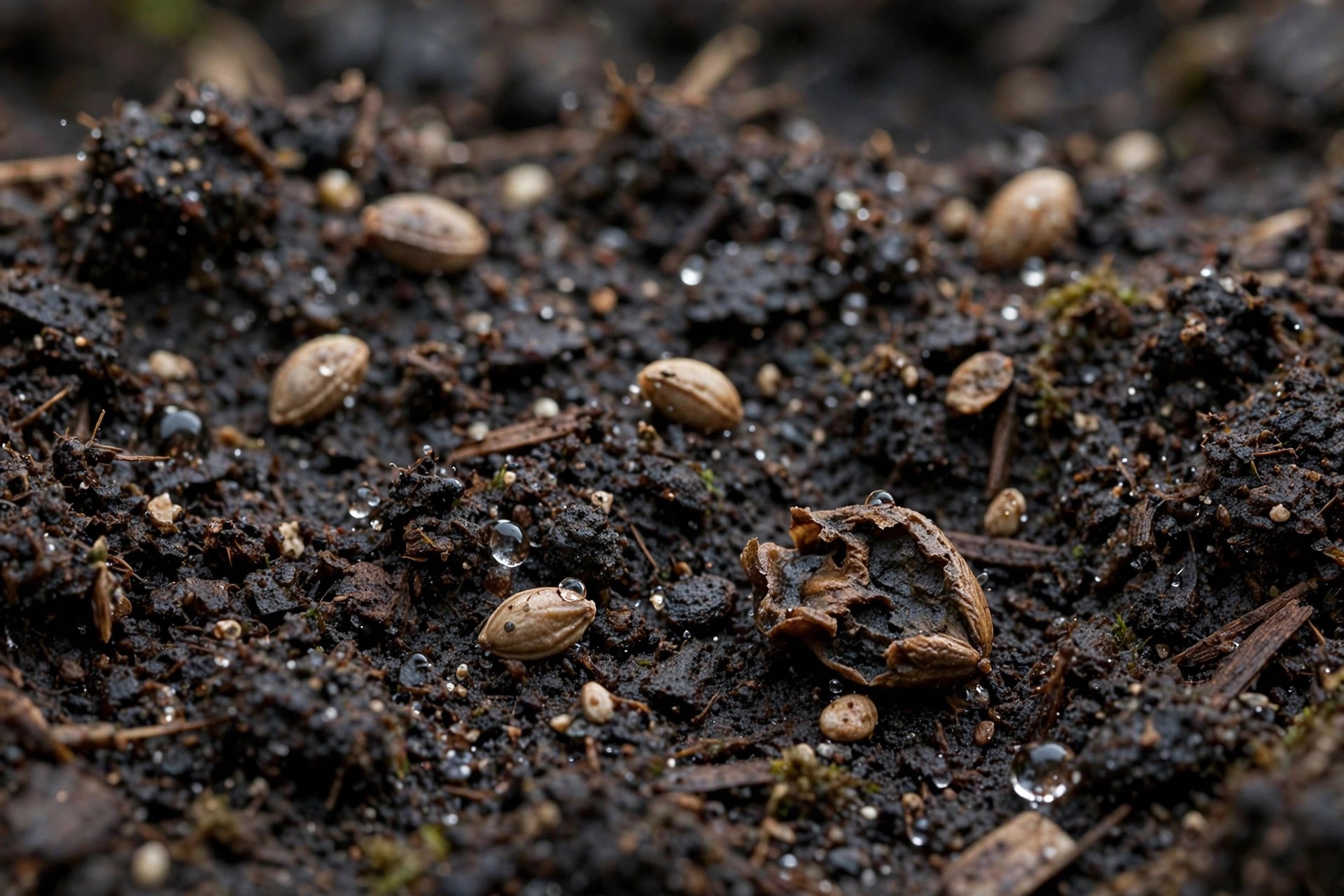
You sowed the seeds, kept them moist, waited — and nothing came up. Digging into the mix reveals the disappointing truth: the seeds turned soft, brown, and mushy instead of sprouting. This is most often pre-emergence damping off, the below-ground phase of the seedling disease caused by soil-borne organisms like Pythium, Fusarium, Rhizoctonia, and Phytophthora. The pathogens rot the seed or the emerging shoot before it ever breaks the surface. The good news: it is preventable, and a few changes will get your next sowing sprouting reliably.
What pre-emergence damping off looks like
Unlike its post-emergence sibling — where seedlings collapse at the soil line, covered in our main damping off in seedlings guide — pre-emergence damping off is invisible from above. The tray just looks... empty. No sprouts, no action, no explanation.
The evidence is underground. If you gently dig up a sown cell, you will find one of these:
- A seed that swelled but turned soft and brown, sometimes with a foul smell — the seed coat split, then the embryo rotted. - A seed that never swelled at all, sitting unchanged in wet mix — likely dead seed or conditions too cold to start. - A tiny shoot that emerged from the seed but rotted a few millimeters long, brown and mushy at the tip — the classic pre-emergence kill, where the pathogen struck the emerging root or shoot.
Penn State Extension describes it plainly: the entire seed may decay before germination. Nursery Management's propagation guide adds that the pathogen attacks the emerging root or hypocotyl before full emergence, resulting in poor stands. University of Delaware Extension notes that Pythium in particular tends to kill seeds pre-emergence, while Rhizoctonia and Fusarium more often strike after emergence — though all of them can do both.
The top reasons seeds rot instead of sprouting
Seeds rot when something keeps them sitting in vulnerable conditions too long. Here are the causes, roughly in order of how often they strike home gardeners:
Cold, wet soil
This is the big one. Seeds sown into cool mix germinate slowly, and every extra day in damp soil is another day the pathogens have to work. Penn State Extension flags low soil temperatures before germination (below about 68°F/20°C) as a key favoring condition for damping off. UC IPM notes that soil temperatures around 65–70°F generally prevent seedling infections by the main pathogens.
For indoor starting, a heat mat holding the mix at 70–75°F during germination makes an enormous difference. Outdoors, patience beats the calendar: sow when the soil is actually warm enough for your crop. Timing varies by climate region, so use a soil thermometer rather than a date — cool-season crops tolerate cooler soil, but warm-season crops like tomatoes, peppers, and basil punish early sowing.
Overwatering and poor drainage
Soggy mix suffocates seeds. Seeds need moisture to imbibe water and start growing, but sitting in saturated mix deprives them of oxygen and invites Pythium and its relatives. If your trays never dry at the surface, or water pools in the bottom, seeds drown and then rot.
Contaminated or reused mix
Damping-off organisms survive in old potting soil, on unwashed trays, and on dirty tools. Sowing into last year's mix — or into mix that sat open and got splashed with garden soil — plants your seeds directly into a pathogen reservoir. Fresh, sterile seed-starting mix is one of the cheapest insurances in gardening. Most commercial soilless mixes are free of these organisms.
Old or weak seed
Seeds lose vigor with age. Old seed germinates slowly and unevenly, which stretches the vulnerable window — and weak seedlings that do emerge are more susceptible. Very old or badly stored seed may simply be dead: no swelling, no rot, just silence. Store seeds cool, dry, and dark, and when in doubt, sow a few extra.
Sowing too deep
Deeply buried seeds take longer to emerge, and the longer journey through damp mix gives pathogens more opportunity. It also exhausts the seed's energy reserves. Follow the packet's depth guidance — most small seeds want only a light covering, and some need light to germinate at all.
Overcrowding
Densely sown seeds trap moisture and reduce air movement around each emerging shoot. Sow thinly; you can always thin later, but you cannot un-rot a seed.
How to prevent it: a clean, warm, well-drained start
Run through this checklist before your next sowing, in IPM order:
Start clean (prevention)
- Use fresh, sterile seed-starting mix every time. Do not reuse old potting soil for seeds. - Wash and disinfect trays, pots, and tools. A soak in diluted household bleach (about 1 part bleach to 9 parts water) for around 30 minutes, then a good rinse, kills carryover pathogens. - Start with clean hands and clean water. Do not set sterile trays on dirty surfaces.
Get the environment right (cultural controls)
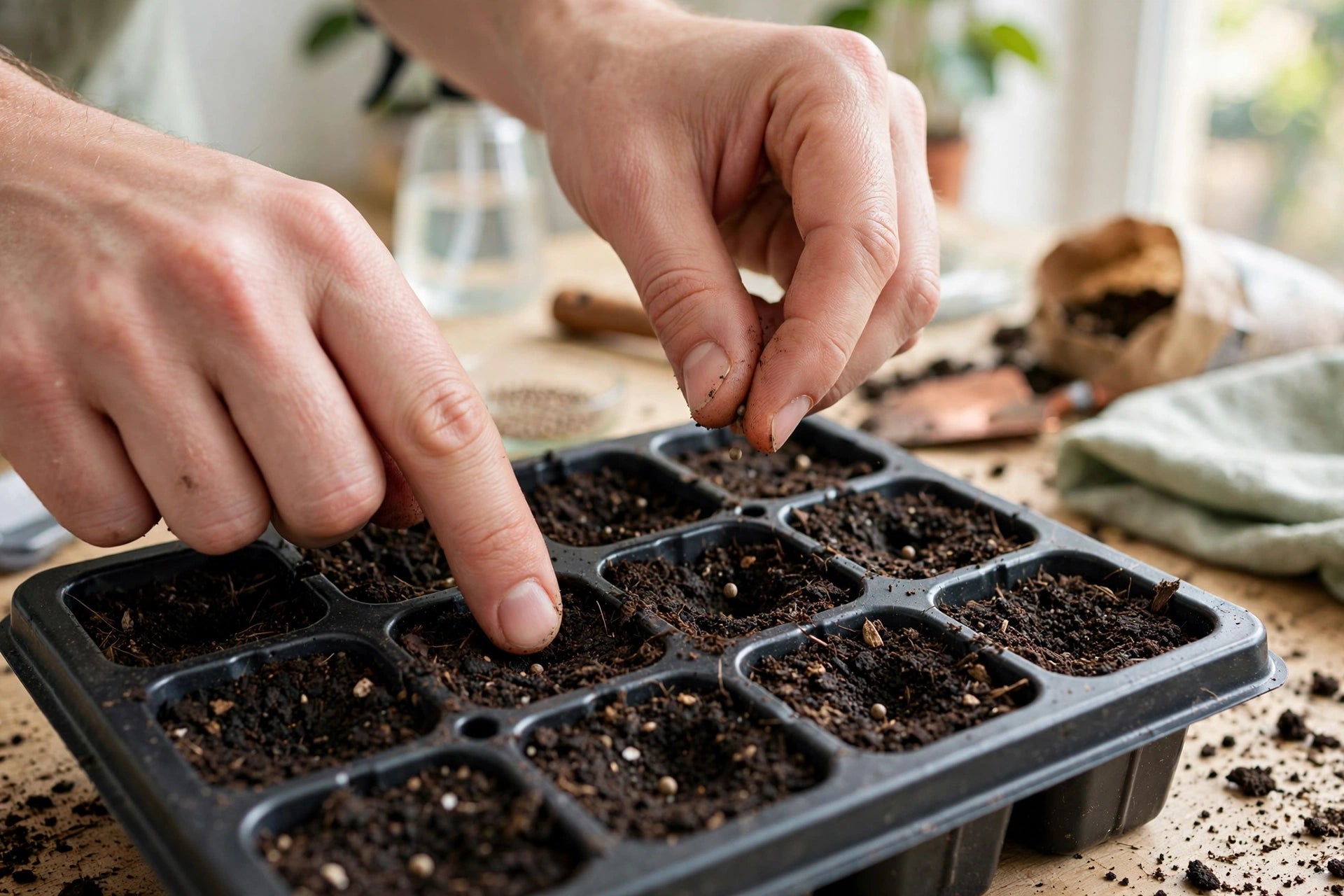
- Warm the mix. Use bottom heat to hold 70–75°F during germination. Remove the mat once seedlings are up unless the room is cold. - Water carefully. Moisten the mix before sowing, cover or dome to hold humidity during germination, then water from below and let the surface dry between waterings once sprouts appear. Never let trays sit in standing water — a moisture meter removes the guesswork. - Sow at the right depth and spacing. Follow packet guidance; sow thinly. - Give strong light immediately after sprouting — 12 to 16 hours a day — so seedlings grow fast and sturdy. - Add gentle air circulation once the dome comes off. A small fan over the trays dries surfaces and strengthens stems; see our gardening tools picks for seedling setups.
Mechanical steps
- Ventilate or remove humidity domes as soon as germination starts, so emerging shoots are not sitting in saturated air. - Thin promptly so air moves around every seedling.
Biological options
- Preventative products with Trichoderma or Bacillus subtilis exist and can suppress damping-off organisms, per University of Delaware Extension. Consider them a supplement to — never a substitute for — clean mix, correct temperature, and good watering.
Chemical options
- Skip them for home seed starting. Fungicides are rarely needed, and some can inhibit germination. If you garden at scale, your local extension office can advise on labeled, crop-specific options.
What to do when a sowing fails
If a tray produces nothing:
1. Check before you toss. Dig up a few cells. Mushy brown seeds confirm rot; firm unchanged seeds may just need more warmth or time. 2. Do not reuse the mix. A failed tray's mix is suspect — discard it rather than sowing into it again. 3. Disinfect the tray before reusing it. 4. Re-sow fresh with sterile mix, correct temperature, and disciplined watering. Most failures are environmental, not the seed's fault — your second sowing with fixed conditions usually succeeds.
If the problem repeats across multiple fresh sowings, suspect your water source, your storage conditions, or the seed lot itself — try a different batch or supplier for comparison.
How this connects to the rest of the damping-off story
Pre-emergence rot and post-emergence collapse are two faces of the same disease, driven by the same organisms and the same conditions. A tray that loses seeds underground this week can lose seedlings at the soil line next week if nothing changes. That is why the whole cluster matters together: our guides to damping off in seedlings, mold on seed starting mix, and mold on seedlings all describe the same wet, cool, still conditions from different angles. Fix the environment once, and you prevent all of them.
When you are ready to sow again, browse our vegetable and flower seed collections — and give every new sowing the clean, warm, well-drained start it deserves.
Frequently asked questions
How long should I wait before deciding seeds have rotted? Check the packet's expected germination time and add a few days for cool conditions. If nothing has emerged well past that window — especially for fast crops like radish or lettuce — investigate by digging up a cell.
Can I save seeds that are starting to rot? No. Once a seed has turned soft and mushy, it is dead. Remove the failed sowing, discard the mix, disinfect the tray, and start fresh.
Does this happen with direct-sown seeds outdoors too? Yes. Cold, wet spring soil is the classic setup. Wait until soil temperatures suit the crop, sow into well-drained soil, and avoid waterlogged beds.
Is it the seeds' fault or mine? Usually the conditions. But very old, badly stored, or low-vigor seed rots more easily, so use fresh seed stored cool and dry, and sow a few extra as insurance.
Will a heat mat really make a difference? For most crops, yes — dramatically. Warm mix speeds germination, and fast germination is the single best defense against pre-emergence damping off.
Can seeds rot in the packet before I even sow them? Seeds can die in storage if kept hot or humid, but they do not "rot" in a dry packet. Store seeds in a cool, dry, dark place — a sealed container in the refrigerator works well for many kinds.
Sources
- Penn State Extension — "Damping Off": pre-emergence seed decay, favoring conditions, and greenhouse control. - University of Delaware Extension — managing damping off in direct-seeded vegetables: Pythium's pre-emergence role and biological control options. - UC Integrated Pest Management — soil temperature thresholds for preventing seedling infections by Pythium, Phytophthora, and Rhizoctonia. - Cornell Cooperative Extension — seed starting guidance: sanitation, temperature, and moisture management for healthy germination.
Wrapping things up!
Empty trays are frustrating, but they are almost always telling you something fixable: the mix was too cold, too wet, or not clean. Warm it up, water with discipline, and start sterile.
Your next sowing gets a fresh start — and this time, it will come up.
