

Mold on Seedlings: What It Means and What to Do
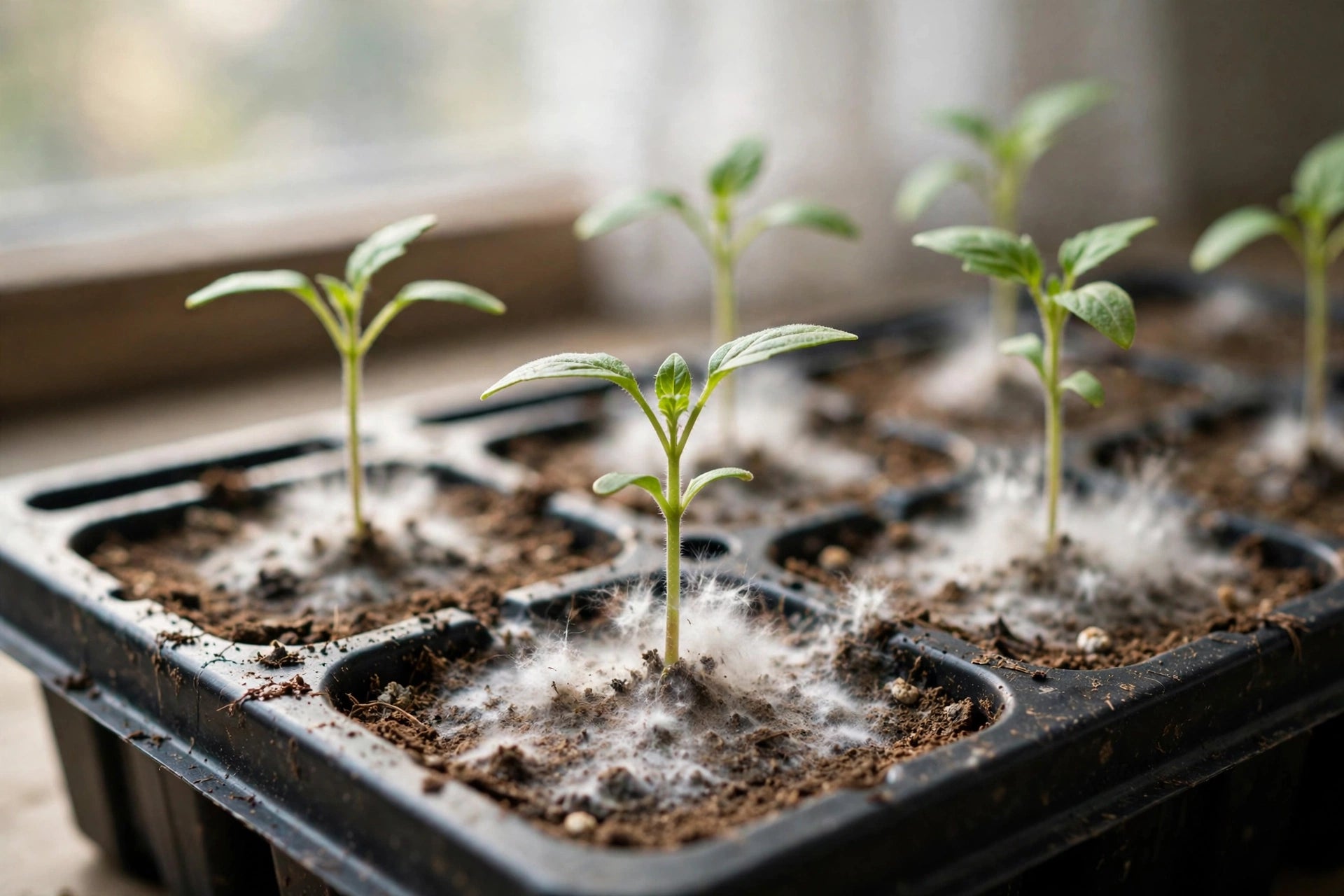
Finding fuzzy white or gray mold on your seedlings is unsettling, but in most cases the mold itself is not attacking your plants. It is usually a saprophytic fungus — one that feeds on dead organic matter — growing in response to warm, damp, still air around the tray. The seedlings are victims of the conditions, not the mold. Fix the conditions and the problem fades. But do not ignore it entirely: the same environment that grows mold on seedlings can also trigger damping off, which does kill.
Why mold grows on seedlings
Mold spores are everywhere — in the air, in the seed starting mix, on seed coats. Most of the time they sit dormant. They germinate into visible fuzz when they get three things at once: food, warmth, and constant moisture.
Around indoor seedlings, that combination is common. Humidity domes trap saturated air. Overwatering keeps the mix surface perpetually wet. Heat mats add warmth. Crowded trays slow evaporation. The result is a little tropical microclimate where mold spores wake up and start feeding on the mix's peat, coir, and bark — and sometimes on the seedlings' own spent seed coats, fallen cotyledons, or damaged leaf tissue.
Better Homes & Gardens' gardening guide notes that the type of mold growing on indoor seedlings typically feeds on the organic matter in the mix or potting soil and does not directly harm seedlings — it can even make soil nutrients more available. That is reassuring, but the guide adds the important warning: mold on seedlings signals growing conditions that need adjusting to avoid more serious problems like damping off.
What mold on seedlings usually looks like
Recognizing the typical harmless version helps you spot the exceptions:
- White or silvery thread-like fuzz on the mix surface, on seed coats that failed to shed, or on lower leaves touching the mix. This is the classic harmless bloom. - Grayish fuzz on a spent seed coat stuck to a cotyledon. The mold is eating the dead seed coat, not the living leaf — help the seedling shed it gently rather than panicking. - Fuzz on a fallen or damaged leaf lying on the wet mix. Again, the mold is decomposing dead tissue, which is its job.
In all of these cases, the living seedling tissue underneath is fine, and the plants keep growing normally. If your seedlings are upright, green, and growing while the fuzz sits nearby, you are almost certainly looking at a benign bloom.
When mold on seedlings is a warning sign
Mold becomes a concern when it arrives with other symptoms, or when it grows directly on healthy living tissue:
- Seedlings toppling or stems browning at the soil line. That is damping off, and it is the real danger in this whole cluster. Remove affected seedlings immediately. - Brown, pinched stems. Our guide to seedling stems turning brown walks through the full differential diagnosis, including uncertainty you should honestly account for. - Dense gray fuzz on living stems and leaves with rapid collapse — this pattern can indicate Botrytis (gray mold), a genuine plant pathogen, especially in cool, humid conditions. Remove affected seedlings, improve airflow drastically, and reduce leaf wetness. - Seeds that never emerge. Pre-emergence damping off rots seeds in the mix; our article on seeds rotting before germination covers that failure in depth. - A foul, sour smell from the tray, which suggests anaerobic mix — discard and restart.
A useful rule of thumb: mold on the mix or on dead bits is normal; mold spreading aggressively across healthy green tissue, especially with wilting or collapse, deserves action.
What to do: fix the environment, step by step
Treat the conditions, not the mold. In IPM order:
Prevention and cultural controls
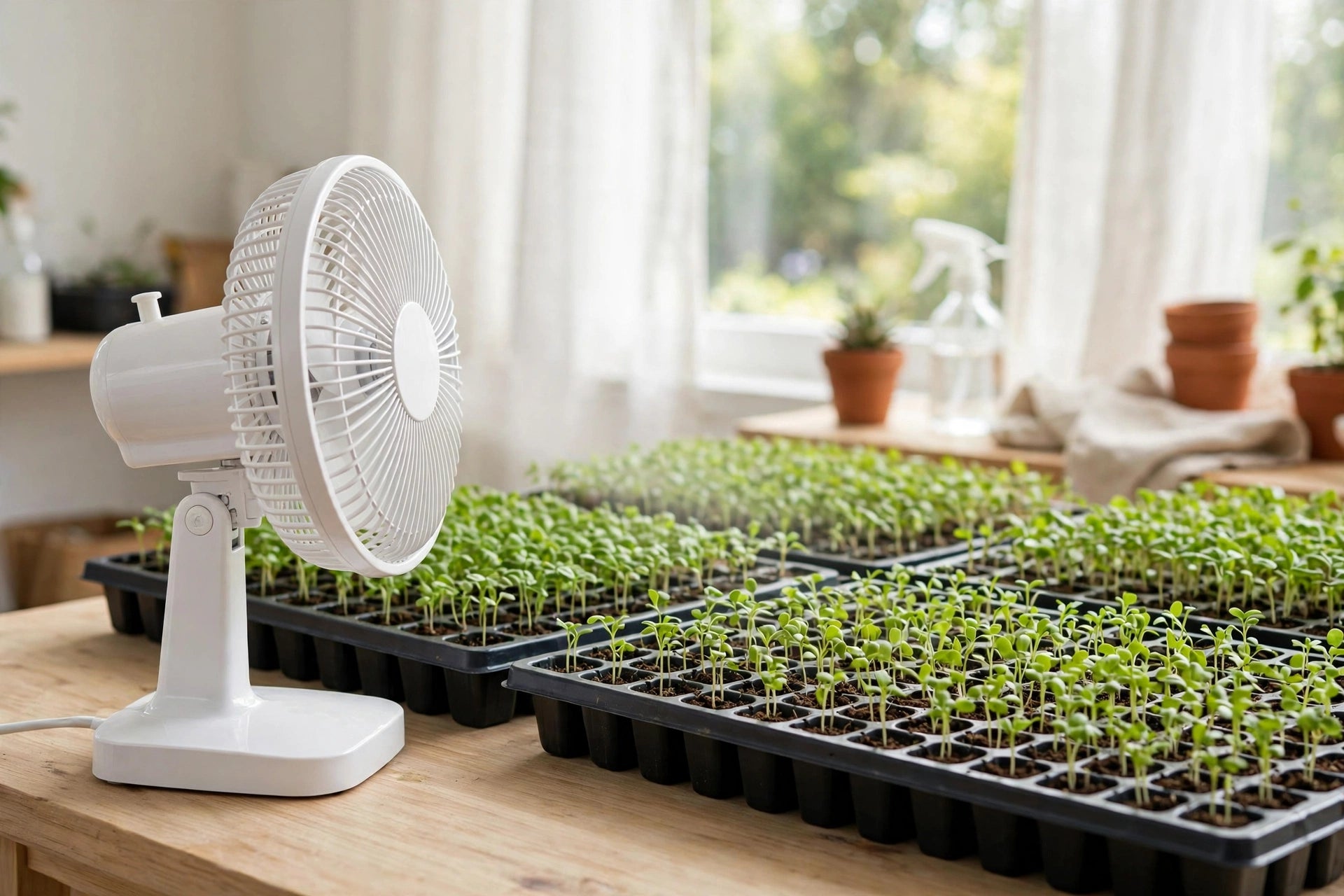
- Remove humidity domes now. If your seedlings are up, the dome's job is done. Ventilate it off over a day if you are cautious, but get it off — trapped humidity is the single biggest driver. - Water from below, and water less often. Let trays soak up water from the bottom, drain thoroughly, and wait until the mix surface is dry to the touch before watering again. Water in the morning. - Add air circulation. A small fan on its lowest setting, running a few hours a day or continuously, is transformative. It dries surfaces, strengthens stems, and is one of the best damping-off preventives too. Our gardening tools page has fan options sized for indoor trays. - Thin and space. Crowded seedlings trap humidity. Thin to proper spacing and separate trays so air flows around them. - Increase light. Strong light — 12 to 16 hours a day under grow lights or a bright window — dries surfaces faster and produces stocky, resilient seedlings. - Remove dead material. Pick off spent seed coats, fallen leaves, and any mushy debris. You are removing the mold's food supply. - Check temperature. Warmth plus wetness equals mold. If you are using a heat mat, consider removing it once seeds have sprouted, unless the room is genuinely cold.
Mechanical controls
- Gently wipe or pick off mold from seed coats and leaves if it bothers you — use clean tweezers or a soft brush. This is cosmetic; the lasting fix is the environment. - Scrape heavy surface mold off the mix and loosen the top layer so it dries faster.
Biological and chemical options
- Neither is needed for ordinary seedling mold. Save beneficial microbe products and any fungicide for genuine disease pressure, and remember that some fungicides can harm young seedlings. If you suspect Botrytis or damping off rather than simple surface mold, act on the disease guidance instead — remove affected plants first.
Protecting the rest of the tray
One practical question gardeners always ask: will the mold spread to healthy seedlings? Saprophytic mold spreads by spores, and spores are already everywhere — the question is never really about the spores, it is about the conditions. Seedlings in a tray with good airflow and proper watering stay clean even sitting next to a fuzzy patch. So instead of quarantining moldy cells, fix the tray's environment, and the whole flat improves together.
The exception is genuine disease. If you confirm damping off or Botrytis, remove and discard the affected seedlings (bag and trash, not home compost) and handle the sick tray last to avoid carrying spores to healthy ones on your hands and tools.
A note on where and when you start seeds
Mold pressure follows your indoor climate. Cool, humid rooms and damp basements grow more mold; dry, warm rooms grow less. If you are starting vegetable or flower seeds in a basement or garage, plan for extra airflow from day one. And for outdoor sowing, remember that timing varies by climate region — cool, wet spring soil is prime time for both surface mold and damping off, so sow when the soil is warm enough for quick germination.
Frequently asked questions
Is mold on seedlings harmful? Usually not — it is typically saprophytic mold feeding on dead material, and it does not attack living tissue. But it indicates damp, still conditions that favor real diseases, so correct the environment promptly.
Should I throw away seedlings with mold on them? If the seedlings are green, upright, and growing, no — clean off the mold and fix the moisture and airflow. Discard only seedlings that are wilting, collapsing, or rotting.
Will a fan really help? Yes. Gentle air movement is one of the most effective things you can do for indoor seedlings. It dries surfaces, discourages mold, strengthens stems, and reduces damping off.
Can I spray something on the mold? You can, but you do not need to. Household sprays are unproven and some harm seedlings. Cultural fixes — less water, more air, dome off, more light — solve the problem at its root.
How do I tell harmless mold from Botrytis? Harmless mold is usually white and sits on the mix or dead bits while seedlings stay healthy. Botrytis is grayer, grows on living tissue, and comes with wilting, browning, and rapid decline. When in doubt, remove the affected seedling and improve airflow.
Does mold on seedlings mean I overwatered? Very often, yes. Perpetually wet mix is the most common cause. Let the surface dry between waterings and switch to watering from below.
Sources
- Better Homes & Gardens — "What Causes Mold on Seedlings": why indoor seedlings get moldy and seven treatment and prevention tips. - UMass Amherst Greenhouse Crops and Floriculture Program — saprophytic molds on growing media: not harmful to plants, controlled by reducing irrigation and increasing airflow. - Penn State Extension — "Damping Off": the disease risk behind the same wet conditions that grow surface mold. - Cornell Cooperative Extension — seed starting and transplant production guidance on sanitation, moisture management, and seedling health.
Wrapping things up!
Mold on seedlings is mostly a messenger, not a murderer. It is telling you the tray is too wet, too still, and too humid — and it is asking you to fix that before something worse moves in.
Dome off, fan on, water from below. Your seedlings will outgrow the fuzz in days.
