

Cutworms on Tomato Seedlings: Protection & Control
Of all the seedlings in the garden, cutworms seem to have a favorite.
Tomatoes.
There's a reason. Tomato seedling stems are thick, juicy, and tender — exactly the right diameter for a cutworm to wrap around and chew through. A single larva can take down a whole row of tomato transplants in one night, right at the moment you've been nurturing them indoors for six weeks.
But tomatoes also have something most vegetables don't: a built-in escape hatch. More on that in a minute.
WHY Tomatoes ARE Target #1
It's structural. Cutworms fell seedlings by encircling the stem at the soil line, and tomato stems at transplant size are the perfect fit — sturdy enough to be worth the effort, tender enough to chew through in minutes.
Peppers, eggplants, and brassicas get hit too. But tomatoes take the worst of it in most gardens, partly because we transplant them young and partly because there are just so many of them.
The damage window is also at its widest for tomatoes. We coddle them indoors for 6–8 weeks, then set out soft, pampered stems into a garden where cutworms have been waiting in the soil since early spring. That transition — from windowsill to garden bed — is when nearly all tomato cutworm damage happens.
For the full cutworm playbook (identification, life cycle, all control methods), see our cutworm identification and control guide.
THE Collar Method — Non-negotiable FOR Tomatoes
If you do one thing for your tomatoes, make it this.
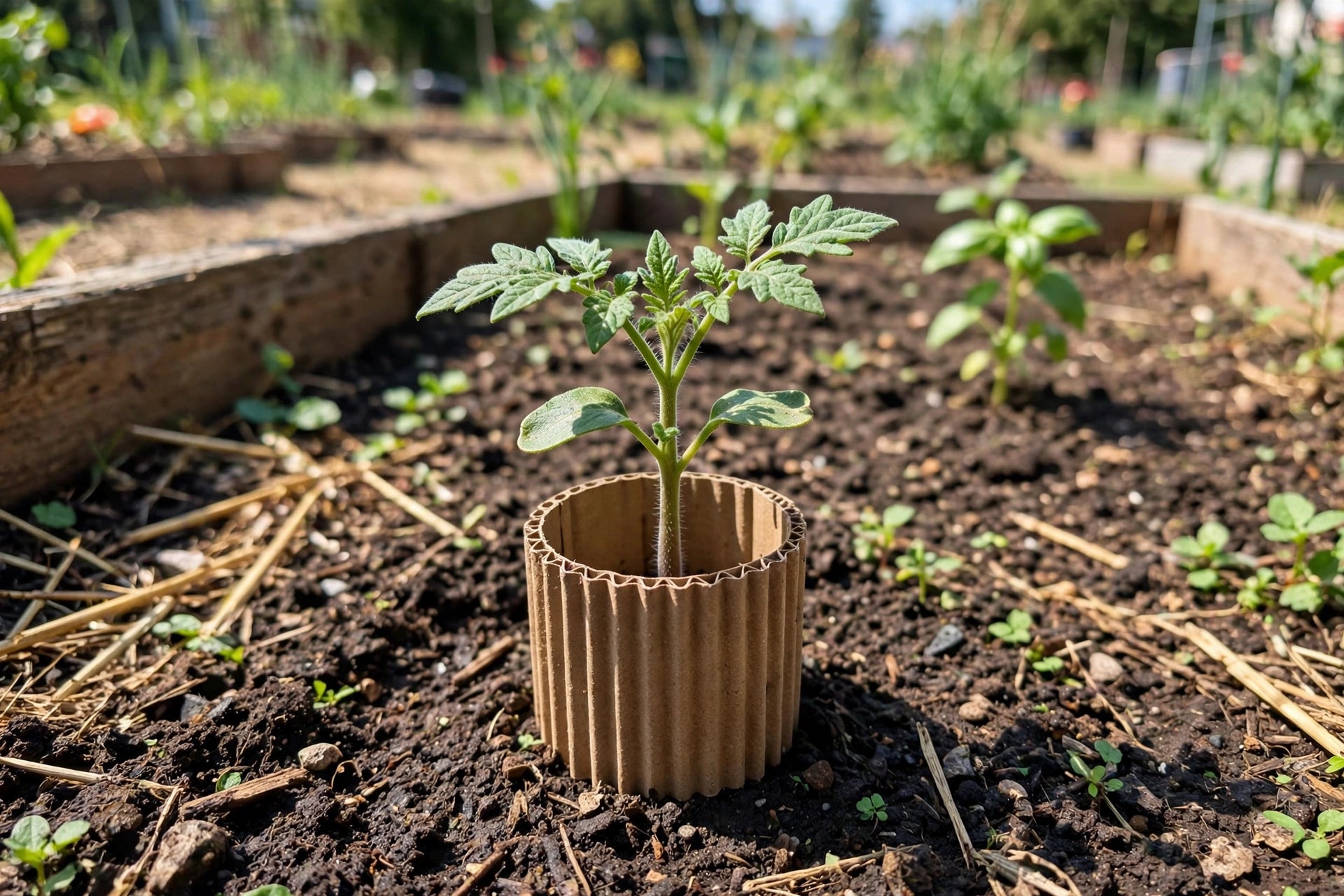
At transplant time, slip a 3–4 inch tall collar around every tomato stem, pushing it about an inch into the soil. Cardboard strips, toilet-paper tubes, and plastic cups with the bottoms cut out all work. The collar must hug the stem loosely — snug enough that a cutworm can't squeeze between collar and stem, loose enough not to strangle growth.
Why 3–4 inches for tomatoes instead of the usual 2–3? Tomato transplants go in deeper and their stems thicken fast — the extra height covers you through the whole vulnerable stretch.
Leave collars on for the first month. By then the lower stem has toughened into something no cutworm bothers with.
Tomato's Secret Weapon: Plant DEEP
Here's the escape hatch. Tomatoes — unlike almost every other vegetable — grow roots all along a buried stem. Those little bumps on a tomato stem are adventitious root primordia, just waiting for soil contact.
Two ways this beats cutworms:
Prevention. Plant your transplant deep, burying the lower few inches of stem. The stem section at the soil surface is older, thicker tissue from lower on the plant — tougher for cutworms to chew through than the tender top growth.
Recovery. Found a tomato seedling with a partially chewed stem? If it's not severed completely, mound soil up around the damage. The buried stem section will throw out new roots, and the plant often recovers completely. No other common vegetable can do this — it's a tomato superpower.
If the stem is cut clean through, though, even tomatoes can't come back from that. Replant — with a collar this time.
TIME YOUR Transplants Right
Cutworm pressure is highest in the weeks right after spring warm-up — which is exactly when impatient gardeners transplant. Two timing adjustments cut your risk dramatically:
Wait for pencil-thick stems. Don't transplant spindly, just-germinated tomatoes. Hold them under strong light until stems are sturdy. Thicker stems resist chewing, and bigger transplants establish faster.
Wait for warm soil. Tomatoes sulk in cold soil anyway — they want 60°F+ soil to actually grow. Transplants sitting motionless in cold spring soil are sitting ducks for weeks. Warm soil means fast establishment, and fast establishment means a short vulnerable window.
Harden off properly. A week of gradual outdoor exposure toughens stems and thickens cuticles. Pampered indoor stems are cutworm candy; hardened ones put up a fight.
And the climate note that matters everywhere: "after last frost" means wildly different dates depending on where you garden. Southern growers may transplant in March; northern growers in late May. Work from your local frost dates — our free seed starting calculator maps it out for your area.
BT, Cleanup, AND ROW Covers FOR Tomato BEDS
Bt early. If you've had cutworm trouble before, apply Bacillus thuringiensis var. kurstaki to the soil surface around new transplants in the evening. It works best on young, small larvae — catch the first generation small and you'll barely see damage.
Clean beds before planting. Cutworm moths lay eggs on weeds and residue. Clear tomato beds of weeds at least two weeks before transplanting, and till the top few inches to expose overwintering pupae. This one habit prevents more cutworm damage than any product.
Row covers for the first weeks. Lightweight floating row cover over newly transplanted tomatoes excludes cutworm moths (so no new eggs) and gives a physical barrier while stems toughen. Pull it off once plants are sturdy and flowering — tomatoes need their pollinators.
Pepper growers face a longer vulnerable window since peppers can't be planted deep — our pepper seedling protection guide covers the pepper-specific adjustments.
Tomato Transplant Mistakes THAT Invite Cutworms
Most tomato cutworm disasters trace back to one of these:
Transplanting too early. Cold soil plus a motionless plant plus hungry cutworms equals losses. Wait for 60°F soil and settled warm weather. Two weeks of patience costs nothing; replanting costs you a month of growing season.
Skipping hardening off. Seedlings moved straight from indoors to the garden have the softest possible stems. Seven days of gradual exposure — increasing sun and wind — measurably toughens them before they face the night shift.
Leaving the weeds. Every weed in and around the tomato bed is a cutworm nursery. Moths lay eggs on weeds; larvae start there and migrate to your transplants. A clean bed two weeks before planting breaks the cycle before it starts.
No collars "just this once." The gardeners who lose tomatoes to cutworms almost always skipped collars on the row that got hit. It's a thirty-second job per plant. Our step-by-step cutworm collar DIY guide shows the fastest method for a whole bed.
Transplanting under blazing midday sun. Set transplants out in the evening or on a cloudy day instead. Less transplant shock means faster establishment — and a shorter vulnerable window for cutworms to exploit.

Wrapping Things Up!
Tomatoes and cutworms are old enemies, but it's a fight tomatoes are built to win. Collar every transplant. Plant deep. Time it for warm soil and sturdy stems. Clean the bed before you plant.
Do those four things and cutworm season becomes a non-event — just another spring chore between hardening off and first trellis.
Growing tomatoes this year? Browse our vegetable seeds — every tomato variety page links to a free growing guide with spacing, timing, and transplant tips for your region.
Frequently Asked Questions
How do I protect tomato seedlings from cutworms?
Collars are the core defense: 3–4 inch cardboard or plastic collars around each stem at transplant, sunk an inch into the soil. Combine with planting deep, transplanting only sturdy hardened-off seedlings into warm soil, and clearing weeds two weeks before planting.
Can a tomato seedling survive cutworm damage?
Sometimes — this is the tomato exception. If the stem is partially chewed but not severed, mound soil over the wound; the buried stem will root and the plant usually recovers. If cut clean through at the soil line, replant.
When should I remove cutworm collars from tomatoes?
After about a month, once the lower stem has thickened and toughened. You'll see the stem turn from soft green to a woodier texture at the base — that's your signal.
Do cutworms eat tomato fruit?
The common soil-line cutworms generally don't, but climbing cutworm species (like the variegated cutworm) will feed on foliage, buds, and occasionally fruit. Night patrols with a flashlight catch climbers on the plant itself.
Why do cutworms hit my tomatoes but not my other plants?
Stem diameter and tenderness. Tomato transplant stems are the ideal size for a cutworm to encircle, and they're juicier than most. It's not preference so much as opportunity — which is exactly why collars work so well.