Slug Slime Trails: Read Them & Find the Culprit Tonight
By Paul Smith, pemdasgarden.com
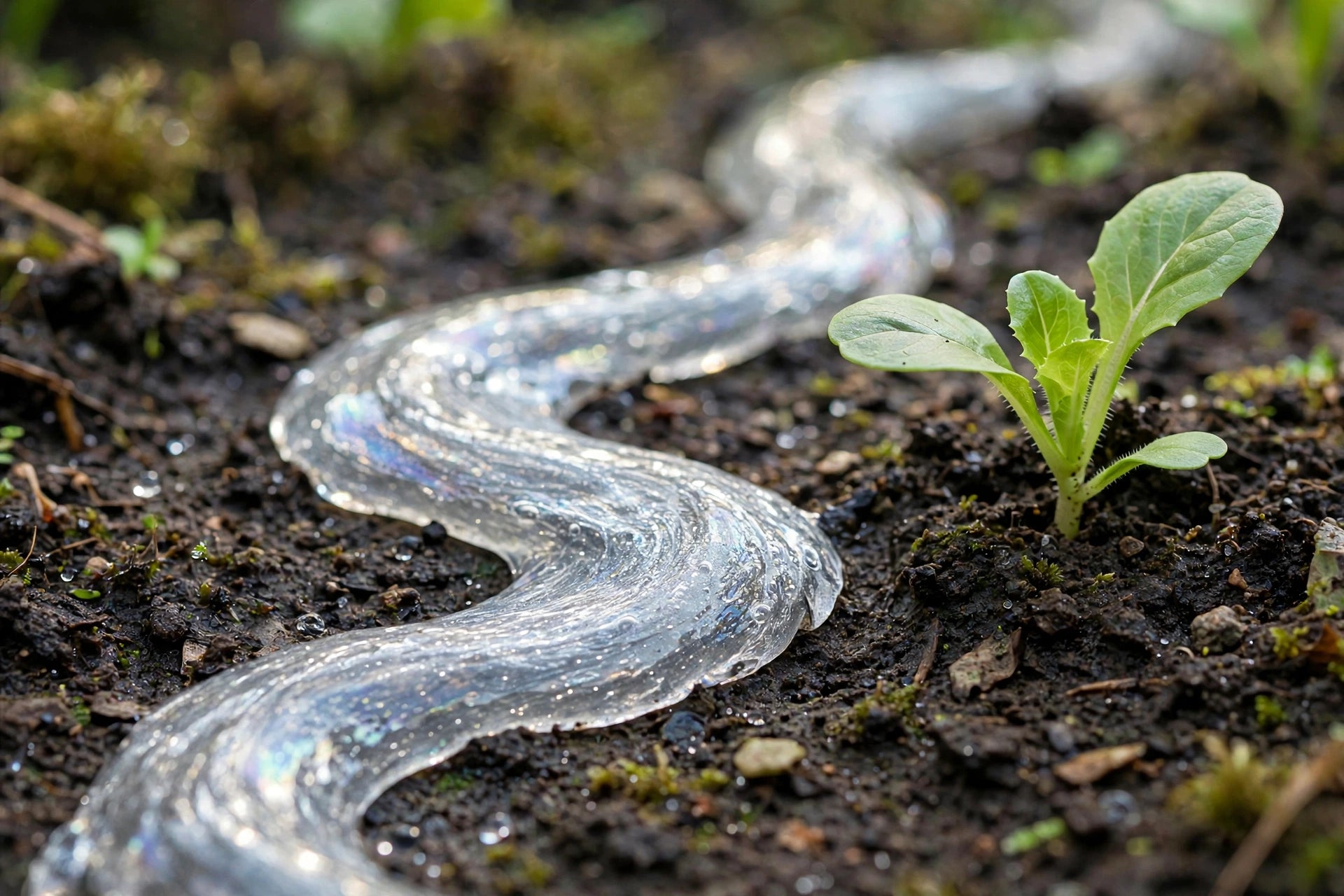
That silvery ribbon winding across your soil or leaves is slug or snail mucus — the sticky secretion these soft-bodied mollusks produce from the muscular foot they glide on. It glistens because it goes down wet and light-catching, then dries into a thin, silvery film; the mucus keeps the animal from drying out and cushions it against sharp surfaces as it moves (Iowa State Extension). A trail tells you one thing with near certainty: a gastropod passed this way recently. What it does not tell you on its own is how much damage to expect, whether the culprit is a slug or a snail, or how fresh the visit was. Reading the trail properly — and knowing when the reading is uncertain — is what this guide is for.
This is the trail-reading companion to our slugs-and-snails pillar, Slugs & Snails: Garden Damage, Identification & IPM Guide, which covers full identification and the complete control playbook. If you found chewed leaves rather than trails, start with Irregular Holes in Leaves: What Caused Them & How to Read the Damage — the two pages are designed to be used together, one for trails, one for damage.
What the trails tell you: fresh, dried, wide, narrow
Not all trails carry the same information. A fresh trail is still wet and tacky, glinting brightly when it catches the light; a dried trail has set into a thin, silvery-white film that flakes when touched. Fresh means the animal was here within hours — almost certainly the previous night — and is very likely still hiding nearby. Dried means the visit could be days old; Ohio State Extension notes that silvery trails on drying are a common diagnostic character for slug presence, but they persist long after the animal has moved on. After rain or overhead watering, expect trails to wash away entirely — a trail-free bed the morning after a storm proves nothing.
Trail width roughly scales with the animal. A fine ribbon two or three millimeters wide suggests a small slug; a broader, five-millimeter-plus ribbon suggests a larger slug or a snail. But the mucus itself carries no reliable field mark that separates slugs from snails — that work is done by nearby evidence instead: shells resting under pots and boards, smooth-edged feeding holes, and night-time feeding behavior. Treat a trail as a gastropod sign, not a species verdict.
Read it with honest uncertainty
This looks most like slug or snail activity, but other residues can mimic a dried trail — so keep the reading provisional until you have a second line of evidence. The confidence ladder looks like this:
- High confidence — act: wet, glistening trails plus smooth-edged feeding holes on nearby plants. This looks most like slugs or snails, and it is the combination extension sources use to confirm the diagnosis.
- Moderate confidence — verify tonight: dried silvery trails with no visible damage yet. Slugs probably visited, but the trail alone cannot tell you whether they fed, passed through, or moved on days ago.
- Low confidence — do not treat: crusty, broken white films after a dry spell, or marks that appeared right after hard-water irrigation or a fertilizer spray. Mineral deposits, dried spray residue, and even dust-catching spider silk can all read as "slime" at a glance. Rain-washed trails are inconclusive in the other direction: no trail after rain is not evidence of no slugs.
Trail readings vs look-alikes: the comparison table
Before you plan any control, rule the look-alikes out. The table below compares what you are actually seeing against the most common impostors.
| What you see | How it looks | What it most likely means | Confidence |
|---|---|---|---|
| Fresh slug or snail trail | Continuous wet ribbon that glistens in light, tacky to the touch | A gastropod passed within hours, probably last night | High — this is the real thing |
| Dried trail | Silvery, flaking film on soil or leaves, breaks when touched | A slug or snail visited days ago; says nothing about tonight | Moderate — proves a visit, not current activity |
| Snail trail with shells nearby | Like a slug trail, often wider, with coiled shells under pots or boards | Snails rather than slugs — same response plan either way | Moderate — shells, not mucus, make the call |
| Hard-water or fertilizer residue | Whitish crust along drip lines, pot rims, or leaf edges; no ribbon shape | Mineral deposits or dried spray, not an animal at all | High — rules slugs out |
| Spider silk catching dust | Fine strands floating or strung between stems, visible only at an angle | Spider webbing, not a trail | High — rules slugs out |
| White fungal strands in soil | Thread-like growth through damp soil or mulch, fuzzy rather than glassy | Harmless soil fungi, common in rich damp beds | High — rules slugs out |
The verdict: follow the slug-trail reading if the mark is a continuous, ribbon-like film — wet or freshly silvery — that runs toward feeding damage, seedlings, or a daytime hiding spot. Downgrade to "uncertain" and investigate further if the film is crusty and discontinuous, if there is no feeding damage anywhere in the bed, or if the marks appeared right after you watered with hard water or sprayed fertilizer. When in doubt, the night walkthrough below settles it in one evening.
The trail-reading field guide: our compiled reference
This quick-reference table is our own compilation from university extension pest profiles — it turns common trail patterns into a concrete next step, which is the part most guides skip.
| Trail pattern | What it means | Your next check |
|---|---|---|
| Thin ribbon circling a seedling stem | A small slug is patrolling; the seedling is at risk of being severed overnight | Shield the stem tonight and check with a flashlight after dark |
| Wide ribbon crossing a path into a bed | A larger slug or snail is traveling from a daytime shelter elsewhere | Follow the trail to its far end at dawn to find the shelter |
| Trail ending at a leaf with smooth-edged holes | Feeding confirmed — the culprit ate here | Set a board trap within a few feet tonight |
| Several trails radiating from under one pot or board | You have found a daytime shelter | Lift it in daylight and remove whatever is hiding there |
| Crisscrossing old trails, no damage anywhere | Earlier activity; pressure may have already passed | Monitor for fresh trails before doing anything |
| No trail at all, but smooth-edged holes on leaves | Rain or watering likely washed the evidence away | Wait for a dry night, then re-check for fresh trails |
| Trail that stops at a copper strip or dry barrier | The barrier is doing its job | Keep the barrier clean and dry; do not let mulch bridge over it |
The 5-step night flashlight walkthrough
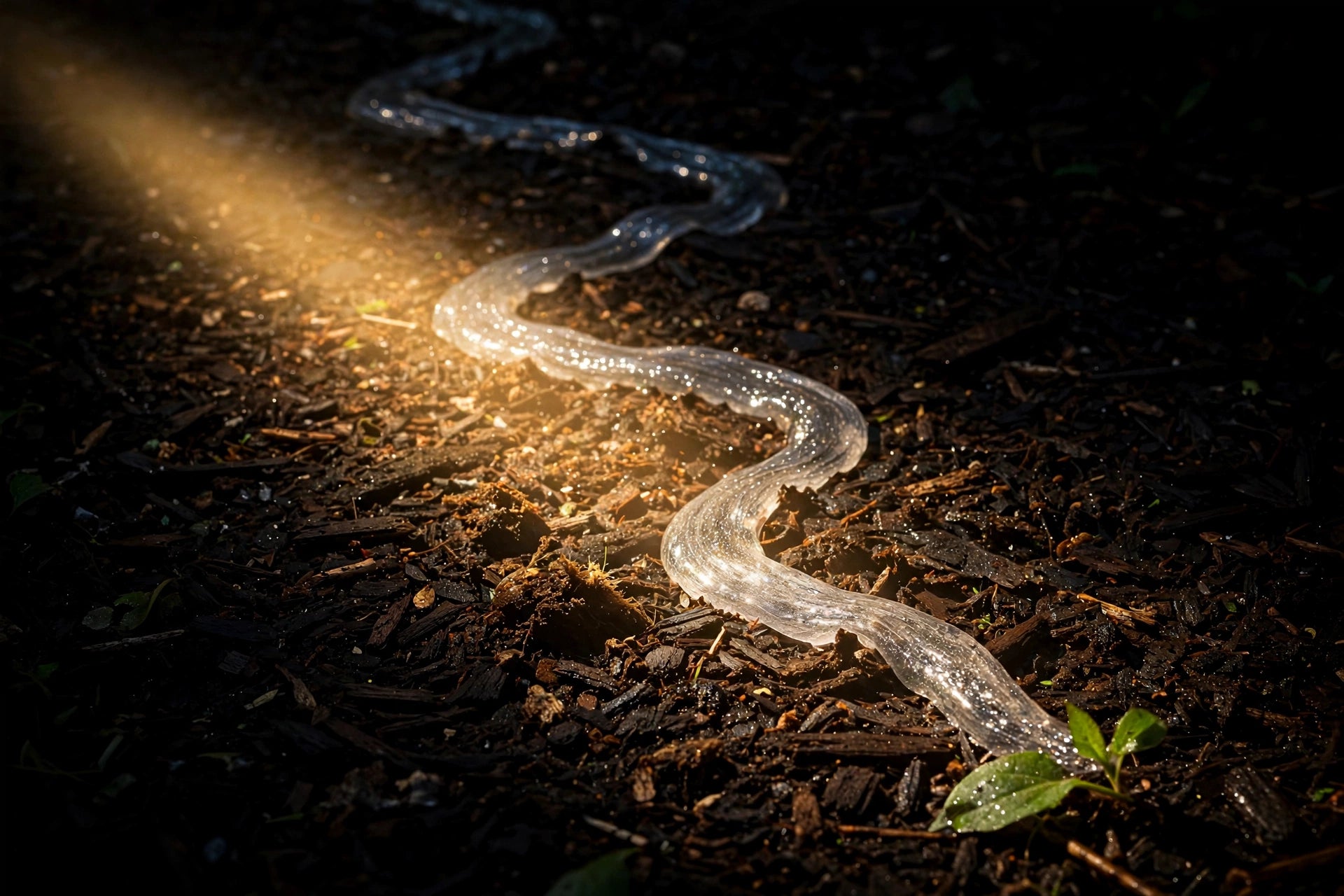
Slugs and snails feed at night and hide by day under mulch, boards, pots, and debris (UC IPM), so one flashlight walk after dark is worth a week of guessing. Here is the first-hand routine:
- Go out one to two hours after dark. This is peak feeding time on damp nights; a dry, windy night may show little even when slugs are present.
- Work the freshest trail backward. Start at the wettest, glistening section and follow it to its end — trails often terminate at a daytime shelter, and finding the shelter is the real prize.
- Sweep the beam low and sideways. Mucus glints far better at a low angle than under a straight-down beam; raking light turns invisible trails into bright ribbons.
- Check the prime suspects. Seedlings, low lettuce and basil leaves, and hosta crowns take the worst of slug feeding — run the beam across them slowly.
- Decide on the spot. Handpick any slugs or snails you find into a bucket of soapy water, and note where trails were thickest — that is exactly where tomorrow's traps go.
Your IPM-first action plan
Treat in this order — prevention first, least-toxic options last — and only escalate when the previous step has not solved it (UC IPM).
1. Prevention. Site new vegetable and flower beds away from dense groundcover and turf, which are ideal daytime shelters. When choosing what to plant, know that slugs tend to avoid aromatic, stiff-leaved plants such as lavender, rosemary, and sage (Utah State Extension) — use them as edging around vulnerable crops. If a whole lettuce row was wiped out overnight, restarting from lettuce seeds is faster than nursing chewed stubs: seedlings are the most vulnerable stage, so sow a fresh row and protect it from night one. Planting times vary by climate region, so start the new row when your local conditions favor quick, strong germination.
2. Cultural controls. Sanitation is the foundation of slug control: remove boards, stones, and debris that shelter the pests, and rake leaves out of beds in fall (Utah State Extension). Keep mulch shallow — about a one-inch layer — so the soil surface dries between waterings, and avoid mulching with fresh grass clippings where slugs are a problem (Iowa State Extension). Water in the morning rather than the evening so the soil surface is dry by nightfall, when slugs become active. These steps cost nothing and, for light pressure, are often enough on their own.
3. Mechanical and physical controls. Handpicking at night is slow but genuinely effective when done regularly — daily removal beats occasional efforts (Utah State Extension). Lay damp boards or cardboard near damaged plants and check under them each morning. Beer traps — shallow containers sunk so the rim sits at soil level — catch slugs overnight, though they can draw slugs in from neighboring areas, so place them at the bed's edge and empty them regularly. Copper strips around pots and raised beds give slugs a mild electric-style deterrent on contact (UC IPM). Young basil is a favorite target, so if you are setting out basil seeds or transplants, ring the planting with a copper strip or a board trap for the first vulnerable weeks.
4. Biological controls. You have allies: ground beetles, toads, birds, snakes, and ducks all eat slugs (UC IPM; Michigan State Extension). A garden with undisturbed mulch edges, a small log pile, and no broad-spectrum insecticide use gives ground beetles and toads the shelter they need to patrol your beds every night for free. If ducks are practical where you live, a supervised evening visit from a duck to a slug-hit bed is one of the oldest biological controls in gardening.
5. Least-toxic options, last. When pressure stays high despite the steps above, iron phosphate baits are the least-toxic chemical option extension sources point to — UC IPM notes they are effective against slugs and snails while posing far less risk to pets and wildlife than older metaldehyde baits. Scatter the pellets thinly near — not on — seedlings, following the label exactly, and reapply after rain. Do not expect any single product to solve a slug problem on its own: baits work as part of the IPM sequence above, and no treatment works in every garden, so keep monitoring with the flashlight routine. For beds you plan to replant, tomato seeds and pepper seeds started after the bed has been cleaned, dried, and trapped give seedlings the head start chewed-over transplants never get. Ornamental gaps left by shredded hostas can be filled with quick color from flower seeds, and the full vegetable collection is worth browsing when a bed needs a complete restart — planting times vary by climate region, so match your restart to your local season.
For tool-based monitoring and the complete identification playbook, see our pillar guide Slugs & Snails: Garden Damage, Identification & IPM Guide, compare trail evidence against feeding damage in Irregular Holes in Leaves, and note how night-feeding cutworm damage differs in Cutworms vs Slugs: Night Damage. Our gardening tools hub includes the symptom checker and other diagnostic tools for nights like these.
Frequently asked questions
Do slime trails mean slugs are in my garden right now?
Fresh, wet trails mean a slug or snail was active within hours — very likely last night — and is probably hiding nearby. Dried, flaking trails only prove a visit happened days ago. Check after dark to find out what is current.
Can I tell a slug trail from a snail trail?
Not reliably from the mucus alone. Wider trails and shells resting nearby point toward snails, but the control plan is the same either way, so do not let the distinction slow you down.
How long do slime trails last?
Until rain, irrigation, or heavy dew washes them away. Fresh trails glisten for hours; dried trails turn silvery-white and can persist for days in dry weather before flaking off.
Are slime trails harmful to plants or people?
The mucus itself does not damage plants — it is evidence, not a disease. Wash harvested produce as you normally would. If you handle slugs, wash your hands afterward as a matter of routine garden hygiene.
Will following a trail actually lead me to the slug?
Often, yes. Trails frequently end at the daytime shelter — under a pot, board, mulch clump, or dense foliage. Follow the freshest trail to its end in the early morning for the best chance.
Should I act on a single dried trail?
Monitor, do not treat. A lone dried trail with no feeding damage means earlier activity, not a current infestation. Act when fresh trails appear together with smooth-edged feeding damage.
Sources
- University of California IPM — Slugs and Snails Pest Notes
- Ohio State University Extension — Slugs and Their Management in Landscapes
- Iowa State University Extension — Slugs
- West Virginia University Extension — Slugs & Snails
- Michigan State University Extension — Controlling Slugs and Snails in the Garden
- University of Minnesota Extension — Slugs