Deer Eating Garden Plants? Identify Damage and Stop Them
By Paul Smith, pemdasgarden.com
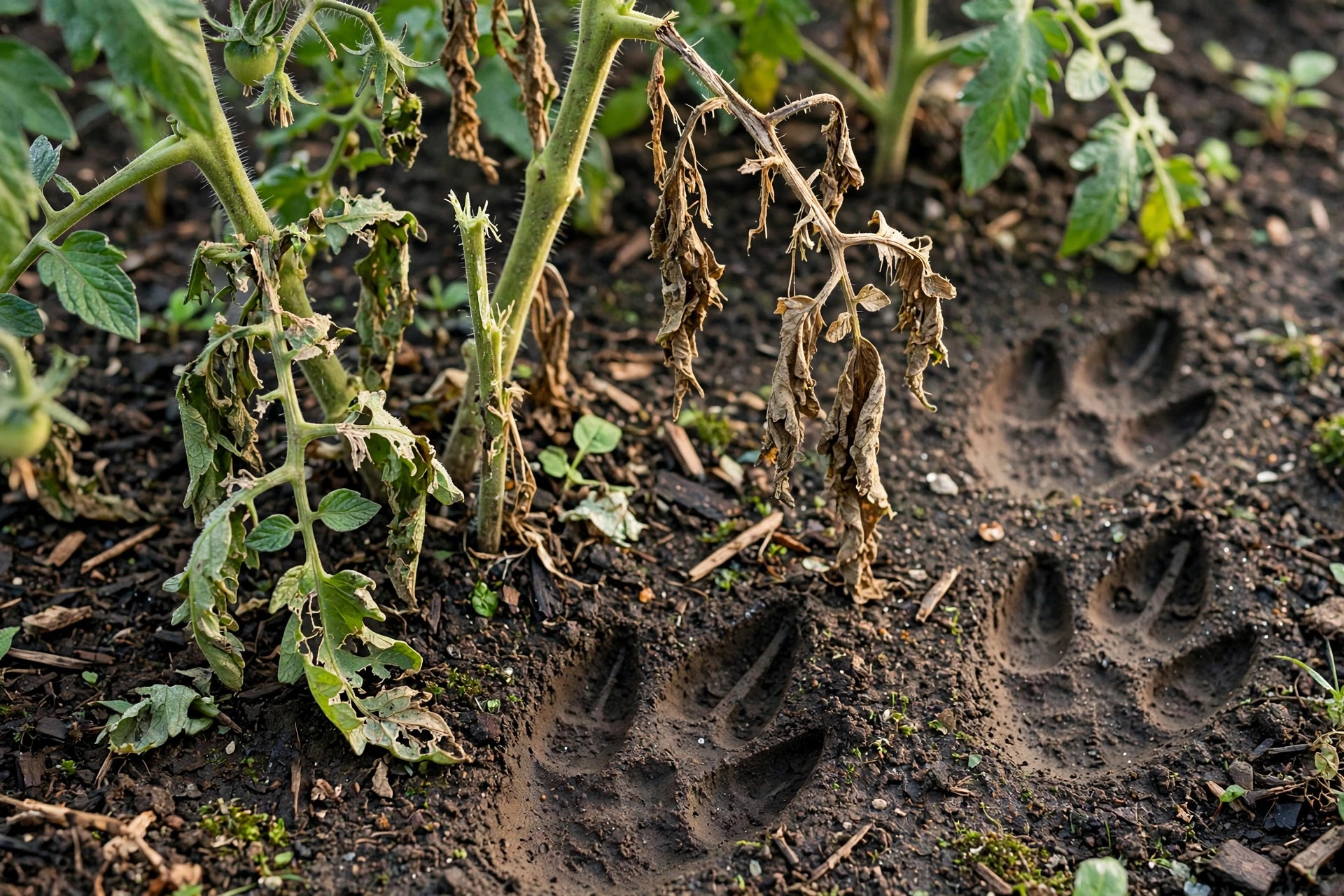
Waking up to stripped stems and missing leaves usually means a large visitor came through in the night. A single deer can clear a bed of tender seedlings in one visit, and deer return to the same food sources again and again. The good news: deer leave unmistakable signs, and once you learn to read them you can apply controls in the right order — prevention first, fencing second, deterrents third — instead of guessing.
How to tell deer damage from other animals
Deer are not neat eaters. They have no upper front teeth, so they grip a stem with their lower teeth and tear it off, leaving a ragged, shredded end. Rabbits and rodents, by contrast, have sharp upper incisors and clip stems at a clean 45-degree angle, as if cut with pruners. That single difference — torn versus cleanly cut — is the fastest field clue you have.
Look for these supporting signs:
- Ragged browsed stems: shredded or frayed tips on stems and twigs. The University of Minnesota Extension notes that deer-browsed twigs show rough, ragged edges — never a clean cut — and bark removed by deer shows no tooth marks.
- Browse line: deer feed from the ground up to about 6 feet, so damage often sits between 3 and 6 feet high on shrubs and the lower branches of trees.
- Hoofprints: cloven, heart-shaped prints about 2 to 3 inches long, pressed into soft soil or mulch.
- Droppings: clusters of dark pellets scattered near feeding areas.
- Buck rubs: in fall, male deer rub their antlers on young trees and saplings, shredding long strips of bark. The exposed wood can look shiny or polished.
Hold a damaged stem next to the photo below: the shredded, fibrous end on the left is classic deer browsing; the smooth angled cut on the right is a rabbit signature.
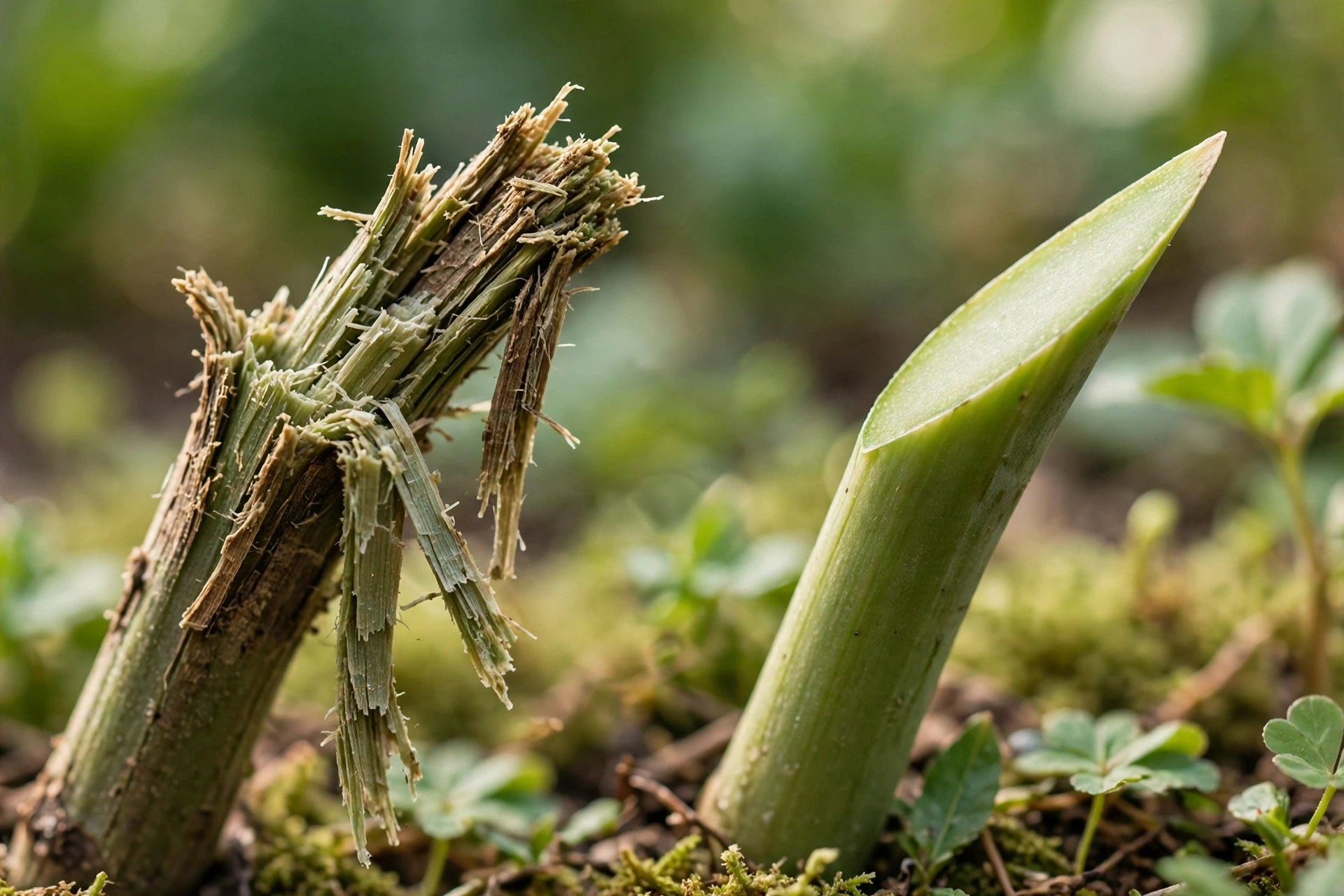
This looks most like deer damage when you see torn stem ends plus browsing at shoulder height and cloven prints — but rabbits or groundhogs are also possible, especially when the signs are mixed. If your seedlings simply vanished overnight with no clear browsing pattern, compare against our guide to seedlings disappearing overnight, which covers the other likely culprits. And if the damage is on established plants — chewed stems, missing branches, bark stripped low on the ground — rather than browsed tips, work through our chewed stems and missing plants guide, which reads the bite marks like evidence.
The 2-minute deer-damage ID check
Walk your beds with this five-step check before you buy anything. It takes two minutes and keeps you from spending money on the wrong fix.
- Check the stem ends. Pinch a damaged stem. Ragged and fibrous means deer; a smooth, angled cut means rabbits.
- Measure the damage height. Hold your hand at the highest nibbled point. Damage reaching up to 6 feet, with a visible browse line, points to deer. Damage below about 2 feet points to rabbits.
- Look at the ground. Scan soft soil and mulch for cloven, heart-shaped hoofprints. Small paired hopping prints point to rabbits instead.
- Check droppings and hair. Pellet-group droppings near the bed support deer. Tufts of hair snagged on rough fence wire at knee-to-waist height also point to deer squeezing through.
- Inspect nearby saplings. Long shredded bark strips in fall mean bucks are rubbing antlers nearby — a strong deer confirmation. Clean chewing at the trunk base in winter leans toward rabbits.
If the signs point mostly to rabbits instead, our rabbits eating seedlings guide and the deer vs rabbit damage comparison cover the rabbit side in full forensic detail.
Night-feeding insects and slugs leave very different signs — slime trails, holes chewed in leaves, or stems severed at the soil line. If your damage looks like that instead, see our cutworms vs slugs comparison to rule those out first.
Deer vs rabbit vs groundhog: damage signs compared
We compiled this table from our own field checks plus university extension diagnostic guides, so you can match what you see to the right animal in one glance:
| Sign | Deer | Rabbit | Groundhog |
|---|---|---|---|
| Stem ends | Torn and ragged (no upper teeth) | Clean cut at a 45-degree angle | Chewed close to the burrow |
| Damage height | Up to 6 feet; browse line at 3–6 feet | Ground level to about 2 feet | Ground level, near burrow entrances |
| Tracks | Cloven, heart-shaped prints | Small paired hopping prints | Clawed prints near the burrow |
| Droppings | Pellet groups near feeding areas | Small round pellets | Oblong pellets near the burrow |
| Bark | Shredded strips in fall (buck rubs) | Chewing at the trunk base in winter | Rarely bothers bark |
| Digging | Never digs | Never digs garden holes | Dug burrow entrances, about 8 inches wide |
| Feeding time | Dawn, dusk, and night | Dawn, dusk, and night | Daytime |
Verdict: choose your deterrent by the sign. Torn stem ends plus browsing at shoulder height and cloven prints means fence like it is deer. Clean 45-degree cuts with damage below 2 feet means exclude like it is rabbits. Daytime feeding near a dug burrow means it is likely a groundhog — and only then should you focus on the burrow rather than the whole perimeter. If you find dug-up bulbs and churned seed rows instead of browsing, the culprit is more likely a digger — see our guide to squirrels digging up bulbs and seeds. If the signs are mixed — torn stems but no hoofprints — this looks most like deer damage, but rabbits or groundhogs are also possible; start with the control that matches the most signs, then re-check after a week.
Deer pressure changes with the season — time your defenses
Deer do not pressure your garden evenly all year. Mississippi State Extension notes that deer feed most heavily in late spring, summer, and fall, with an adult eating 6 to 10 pounds of vegetation per day — while Penn State Extension flags winter as the season of the most serious damage, when natural food is scarce. Knowing which season you are in tells you which defense to deploy:
| Season | What deer are doing | Your best defense move |
|---|---|---|
| Spring | Bucks have their highest food consumption of the year, and deer browse the new growth on woody and herbaceous plants. Does give birth around late May to mid-June and may make a garden their activity center for a couple of weeks. | Start repellents before browsing begins — University of Minnesota Extension stresses that repellents work best applied early, before deer develop a habit of feeding on your plants. Cover tender new growth with temporary netting or wire guards. |
| Summer | Heavy feeding continues while gardens are at their most productive; deer establish feeding routines and visit shortly before sunset. | Rotate repellents every 3 to 4 weeks (Mississippi State's interval) and reposition scare devices regularly — the University of Maryland Extension warns that deer quickly become accustomed to new sounds and smells, so alternate methods. |
| Fall rut | Bucks rub antlers on young trees and saplings, shredding bark; fruits and nuts make up a large part of the diet as other forage fades. | Put tree guards or 4-foot woven-wire cylinders on young trees — Maryland Extension notes tree protectors are the effective defense against antler rubbing, while repellents are not. Harvest fallen fruit promptly. |
| Winter | The most serious browsing damage of the year: deer eat evergreens, dry leaves, and dormant buds, and will browse nearly any plant under nutritional stress. | Permanent 8-foot fencing is often the only realistic answer (Maryland Extension). Never feed deer — Minnesota Extension warns that human-fed deer habituate to gardens, and winter feeding can actually harm them. |
Verdict: act in late winter if your worst losses are winter browsing — build the permanent fence before spring growth arrives. Act in early spring if tender new growth is the target: get repellents on before the first bites. Act before the fall rut if young trees are being rubbed. Match the fix to the season the damage happens in, not to when you feel like doing the work.
One caveat: timing shifts with your climate region. Rut, deep winter stress, and fawning arrive weeks earlier in northern zones and barely register in the far south, and planting dates vary by climate region too — so check your local extension calendar rather than following a national month-by-month chart.
Deer are already inside: tonight's triage
The full 4-step plan below is the permanent fix. But if deer hit tonight, do this walkthrough before dark — it protects what is left and buys you the time to build the real fence.
- Cover the highest-value plants first. Drape bird netting or floating row cover over the hit bed, propped on stakes so it does not rest on the foliage. Slip wire cylinders around young trees and shrubs. Move portable containers against the house for the night.
- Photograph the evidence. Take close-ups of the stem ends, the damage height, tracks, and droppings. Confirming the ID tomorrow in daylight beats guessing tonight in the dark — this looks most like deer when torn ends, shoulder-height browsing, and cloven prints line up, but photos keep you honest when the signs are mixed.
- Close the gap they used. Shut gates, lean a pallet or stacked crates across a broken fence section, and clear the firewood, bins, or brush piles deer used as a step-over.
- Do not escalate tonight. Do not chase the deer — they feed at dawn and dusk and will simply return. Do not set out poisons or improvised chemicals: they are ineffective against deer, dangerous to pets and people, and illegal in many places. Do not feed them either; Minnesota Extension notes that human-fed deer become habituated to foraging near homes and cause more damage.
- Schedule the permanent fix for tomorrow. Order the materials for an 8-foot fence or a two-tiered system, and start the prevention-first plan below. Tonight's covers are stopgaps, not a strategy.
Step 1: prevent damage before it starts
The cheapest control is the one you never have to build. Make your garden less attractive than the surrounding habitat: harvest promptly, clear fallen fruit, and avoid planting the most deer-preferred foods along the outer edges of the garden where deer first enter.
Deer also tend to avoid strongly scented plants, so borders of onions and hot peppers can make beds less inviting. You can find both in our onion seed collection and pepper seed collection. Tucking flowers like marigolds around bed edges — sow them from our marigold seed collection or the wider flower seed collection — adds another layer of less-preferred planting. Be honest with yourself here: University of Minnesota Extension warns that deer will eat almost any plant when they are hungry enough, so "less preferred" is not deer-proof — it is one layer in a plan.
Step 2: fence them out
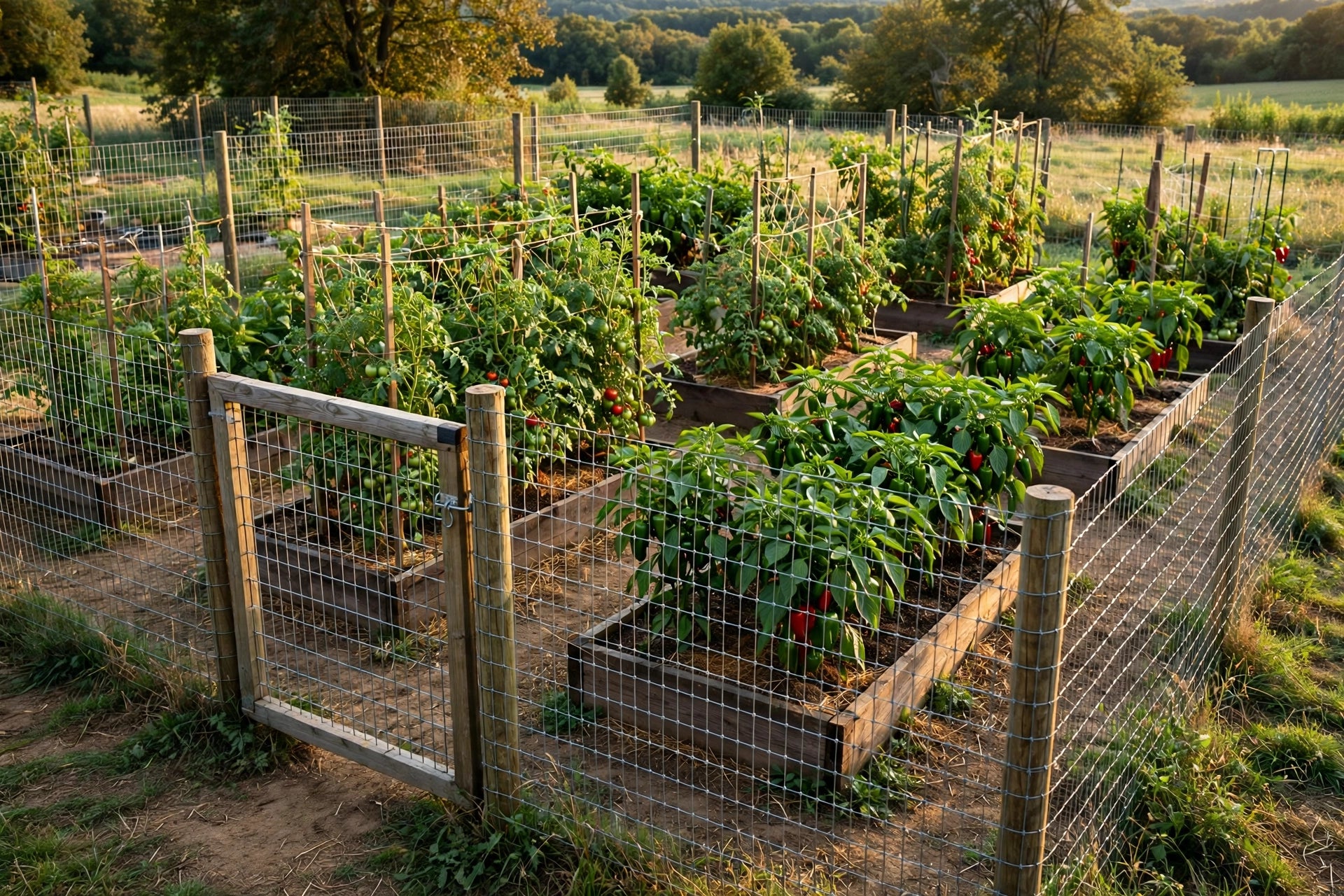
Physical exclusion is the most reliable deer control available. An 8-foot woven-wire fence is the standard recommendation from Penn State and University of Minnesota Extension, because deer easily clear shorter fences. A lower fence that a deer can see through is little more than an invitation. For fence designs that stop both deer and rabbits — height, mesh size, and a buried apron — see our fencing for deer and rabbits guide.
If a full perimeter fence is too much right now, protect what matters most first. Wire cylinders and sturdy netting around individual beds or young trees work well for small areas; extension guidance recommends removing temporary guards once plants are large enough to withstand browsing. For raised beds specifically, see our wildlife-proofing raised beds guide for covers, hoops, and height tricks that stop deer without a yard-wide fence. For the posts, wire, and fastening supplies a fence project needs, see our gardening tools hub.
High-value crops like tomatoes deserve priority protection — a few individual cages or a netted section now, while you plan the full fence. If deer stripped your tomato planting, see our deer eating tomatoes and roses deep dive for plant-by-plant protection, then start replacements from our tomato seed collection and keep the new plants caged until the perimeter is secure.
Step 3: repellents and scare tactics
Scent-based repellents — often made with putrescent egg solids or other strong-smelling ingredients — can reduce browsing, but be realistic about their limits. They need reapplication after rain, they must be reapplied as new growth appears, and results vary widely: hungry deer or high deer pressure can overwhelm them. No repellent keeps deer out every time, so treat them as a supplement to fencing, not a replacement.
Motion-activated sprinklers and other scare devices can startle deer away at first, but deer habituate. Rotate tactics and reposition devices regularly. A layered approach — fence plus repellent on the most tempting plants — performs better than any single tactic alone.
Step 4: last-resort options
If prevention, fencing, and deterrents all fall short, check your options with the people who manage wildlife — not the garden center. Deer are managed as wildlife under state law, and trapping or relocating them is regulated: permits are often required, and rules vary by state and county. Penn State Extension's landowner guide to wildlife control laws is a good starting point for understanding which methods your state allows.
Do not use poisons or improvised chemical controls against deer. They are ineffective at best, dangerous to pets, wildlife, and people at worst, and illegal in many places. When damage is severe and ongoing, contact your state wildlife agency or a licensed wildlife-control professional instead of escalating on your own.
Replanting after deer damage
Once the fence is up, do not leave bare beds — weeds will claim them. Replant fast-turnaround crops right away: lettuce is one of the quickest beds to refill, and you can sow it directly from our lettuce seed collection. Many herbaceous plants will also push new growth on their own once feeding stops, according to Iowa State Extension — but if a plant was chewed to the crown or stripped of its growing points, restart it rather than waiting. For warm-season beds that were stripped, start replacements from our tomato seed collection or pepper seed collection. Planting times vary by climate region, so check your local frost dates and soil warmth before sowing.
Frequently asked questions
Do deer really eat tomato plants?
Yes. Deer browse tomato foliage and will eat ripening fruit, especially in late summer when other forage dries up. The damage looks like deer damage should: torn, ragged stems rather than cleanly cut ones. If tomatoes are your priority crop, fence them first.
How tall does a deer fence need to be?
Eight feet is the standard recommendation from university extension sources for woven-wire fencing, because deer can jump lower fences. A 6-foot solid fence can sometimes work since deer hesitate to jump into areas they cannot see, but 8 feet of woven wire is the reliable option.
Will deer repellent keep deer out of my garden?
Sometimes, partially, and not forever. Scent-based repellents need reapplication after rain and as plants grow, and their effectiveness drops when deer are hungry or populations are high. Use repellents to protect specific plants inside a fenced area, not as your only defense.
Why did the damage appear overnight?
Deer feed mostly at dawn, dusk, and during the night, so a bed that looked fine at dinner can be stripped by morning. If the damage is low to the ground and the stems are cut cleanly, it may not be deer at all — see our guide to seedlings disappearing overnight for the other night-time culprits.
Can I trap and relocate a deer that is eating my garden?
Not without checking the law first. Deer are regulated wildlife, and most states require permits for trapping or relocation — some prohibit relocation entirely. Contact your state wildlife agency before taking any action.
What should I plant to avoid deer damage?
Choose plants deer prefer less, such as strongly scented onions and hot peppers from our onion seed collection and pepper seed collection, and use them as border plantings around more tempting crops. No plant is deer-proof, so pair planting choices with fencing for reliable protection.
Can I protect a raised bed without fencing the whole yard?
Yes — protect the bed instead of the perimeter. Hoop-and-netting covers, rigid wire-mesh lids, and tall sturdy covers sized to the bed all keep deer out of a single bed, and they cost far less than a yard-wide fence. Our wildlife-proofing raised beds guide walks through cover types, hoop heights, and which designs also stop rabbits and diggers.
Do motion-activated sprinklers actually work?
At first, then less and less. The burst of water startles deer away, but the University of Maryland Extension warns that deer are extremely adaptable and quickly become accustomed to new sounds, smells, and devices. Rotate or reposition the sprinkler every week or two, alternate it with other deterrents, and treat it as a layer inside a fenced area — not as the fence itself.
Is any vegetable truly safe from deer?
Honestly, no. A well-fed deer in summer may pass over onions, hot peppers, and strongly scented herbs, but University of Minnesota Extension warns that deer will browse nearly any plant under winter nutritional stress — and what a deer eats varies by region, season, and hunger. "Less preferred" is a delaying tactic, not a guarantee. If the crop matters to you, fence it; if it does not, let it be the decoy.
Want more plant-by-plant help? Browse the rest of our Plant Health articles for pest, disease, and prevention guides.
Last reviewed: October 2026.
Sources
- University of Minnesota Extension — How to manage deer damage on trees and other plants
- Penn State Extension — Orchard wildlife: integrated management of white-tailed deer
- Clemson Cooperative Extension — Deer management for home gardeners using a two-tiered fence system
- Cornell Cooperative Extension — Deer
- Penn State Extension — Landowner's guide to wildlife control and prevention laws in Pennsylvania
- Mississippi State University Extension — Discouraging deer in the garden
- University of Maryland Extension — Deer damage
- Iowa State University Extension — How to protect gardens from deer