Squirrels Digging Up Bulbs and Seeds: How to Protect Them
By Paul Smith, pemdasgarden.com
Squirrels dig in gardens to bury food for winter and to dig it back up in spring — and freshly planted bulbs and newly sown seed rows sit right in their work zone. The damage is easy to spot: small excavated holes with loose soil scattered around them, unearthed bulbs lying on the surface, and seed rows churned up just days after sowing. It rarely looks like feeding damage on leaves or stems, which is what sets it apart from most other garden pests. Rabbits, for example, snip seedling stems at a clean 45-degree angle rather than disturbing the soil at all — see our rabbit damage guide if the stems are cut but the ground is untouched.
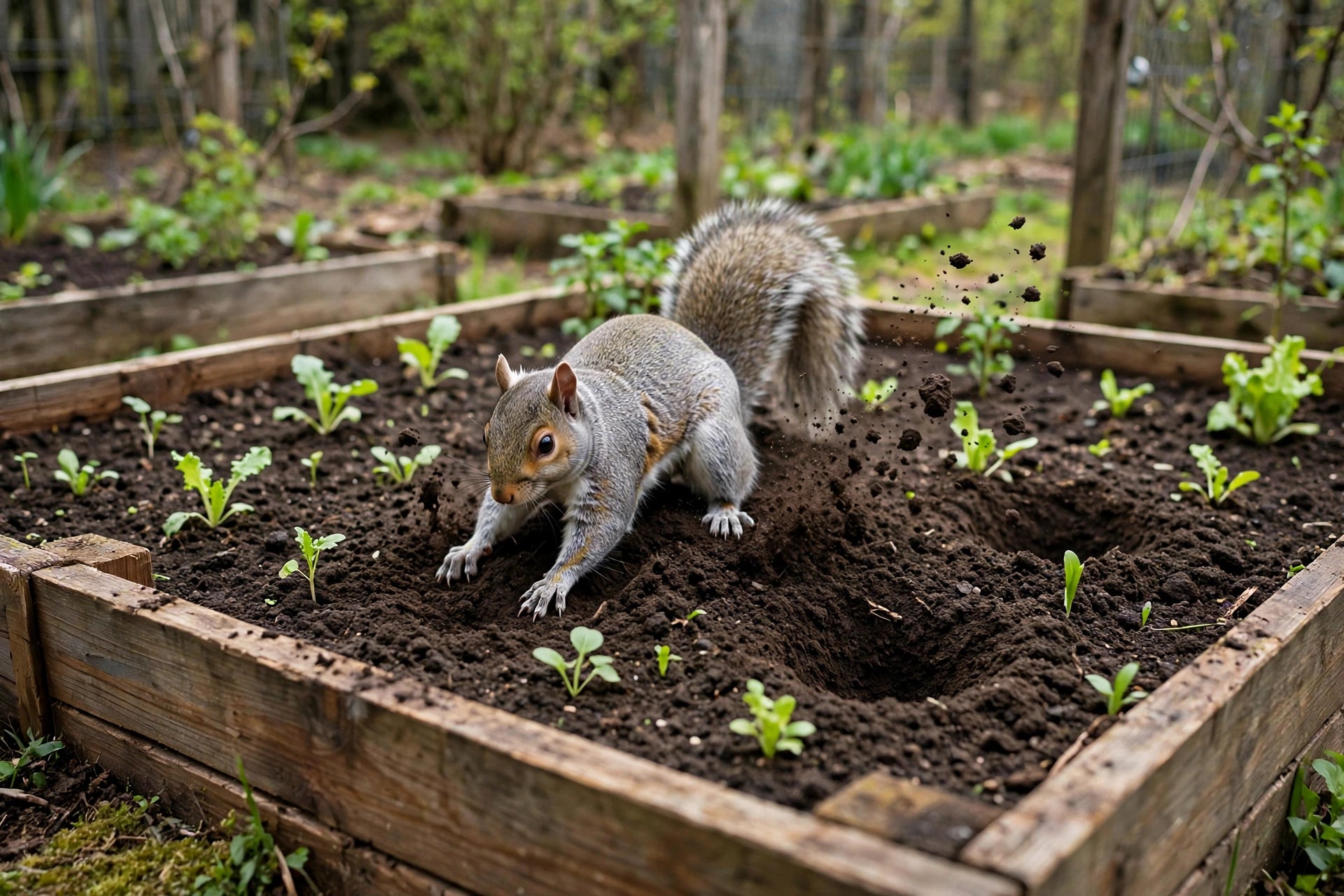
What squirrel digging damage looks like
Squirrel digging centers on the soil surface, not on the plants themselves. You will typically find holes about 2 inches across and several inches deep, with loose soil pulled to one side and no neat mound — a pattern the University of Georgia's hole-identification guide describes as characteristic of squirrel digging. Freshly planted bulbs may be unearthed and left on the soil, gnawed, or carried off entirely; Illinois Extension notes that squirrels often unearth and scatter bulbs without eating them, while tulips and crocus are the most likely to be eaten. Newly sown seed rows get churned as squirrels probe the loose soil, and the same bed can be hit repeatedly — UC IPM's tree squirrel pest notes confirm that squirrels dig holes in garden soil to bury nuts, acorns, and other seeds, and they return to the same caches later.
This looks most like squirrel digging when the holes are shallow, the soil is freshly scattered, and you see signs during the day — but chipmunks also dig 2-inch holes, and voles work similar ground, so never settle on one culprit from holes alone. The comparison table below sorts the look-alikes out.
Squirrel vs chipmunk vs vole vs bird: digging-sign comparison
Four diggers cause most soil-disturbance complaints in garden beds. Squirrel work is the best match when holes are shallow and scattered with loose dirt, but chipmunk burrows, vole tunnels, and bird scratching can look similar at a glance.
| Culprit | Hole and soil signs | Timing | Choose squirrel if… |
|---|---|---|---|
| Squirrel | Holes ~2 in across, several inches deep, soil scattered to one side, no real mound; bulbs unearthed; buried nut caches nearby | Daytime | Damage appears during the day and bulbs or large seeds are missing or scattered on the surface |
| Chipmunk | Holes ~2 in across but cleaner and less conspicuous — chipmunks carry excavated soil away in their cheek pouches; often near foundations, walls, or shrubs | Daytime | Holes look tidy with little scattered dirt, clustered near structures or shrub cover |
| Vole | Dime-sized holes (~1 in), often around plant roots; narrow surface runways through mulch or grass; roots may show fine tooth marks | Mostly hidden, day or night | Holes are smaller with surface runways, and roots or bark at the soil line are gnawed |
| Bird | Seedlings pulled up with roots attached and left lying on the soil; shallow scratching in mulch; peck marks on leaves | Daytime | Whole seedlings lie loose on the surface with roots intact rather than holes being dug |
Verdict: Choose squirrel if you find shallow scattered holes appearing in daylight with bulbs unearthed or large seeds gone; choose chipmunk if the holes are tidy and near cover; choose vole if holes are dime-sized with runways and gnawed roots; choose bird if seedlings are pulled, not cut. If seedlings are disappearing without digging, see our overnight seedling disappearance guide; for bite marks on stems rather than digging, see chewed stems and missing plants.

Why squirrels dig in your garden
Two seasonal drives explain nearly all squirrel digging. In fall, tree squirrels scatter-hoard: they bury nuts, acorns, and seeds across the landscape as winter food stores, which is why freshly planted fall bulbs — sitting in soft, loose soil — get investigated and often dug up within days of planting. In spring, the same squirrels dig to retrieve those caches, and the digging can hit spring-sown seed rows just as hard. Oklahoma State Extension describes this directly: as weather cools, squirrels gather food for winter, and a gardener's freshly planted bulbs read as an easy food source.
Freshly turned soil itself is part of the attraction. Loose, fluffy soil is easier to dig than settled ground, and the disturbance signals "something new buried here" to a foraging squirrel. That is why the first two weeks after planting bulbs or sowing large seeds are the highest-risk window. Nearby bird feeders compound the problem: spilled seed draws squirrels into the yard in the first place, so feeders hung over or beside beds can turn a garden into a daily digging route.
The 10-minute squirrel-sign survey
Before buying anything, confirm your culprit and map the pattern. Walk the garden slowly with this checklist:
- Measure the holes. Squirrel holes run about 2 inches across and several inches deep, with loose soil pulled to one side. Tidy holes with almost no scattered dirt lean chipmunk; dime-sized holes with surface runways lean vole.
- Check what's missing. Unearthed or gnawed bulbs and missing large seeds (sunflower, beans, corn-sized) point to squirrels. Gnawed roots and bark at the soil line point to voles. Seedlings pulled up with roots intact point to birds.
- Note the timing. Mark when fresh damage appears. New holes found in the afternoon were made in daylight — that rules out nocturnal diggers like skunks and raccoons, which leave conical or larger torn-up holes overnight.
- Look for caches. Squirrels sometimes leave half-buried nuts or partially eaten bulbs near the holes — direct evidence of caching behavior rather than random digging.
- Map the pattern. Squirrel damage clusters where soil was recently disturbed: new bulb beds, fresh seed rows, and loose mulch. Damage spread evenly across settled beds suggests a different digger.
- Watch for 10 minutes at midday. Squirrels are daytime foragers. A short quiet watch from a window often shows the culprit directly — faster and more reliable than any sign reading. If signs stay ambiguous after all six steps, assume "most likely squirrel, but chipmunk is also possible" and choose controls that work for both.
Which plantings are most at risk: bulb and seed vulnerability table
Not every planting faces the same risk. This table is compiled from extension damage reports — use it to decide which beds get protected first.
| Planting | Risk level | Why |
|---|---|---|
| Tulips and crocus bulbs | Very high | The top targets in extension reports: Iowa State singles out tulips for protection, and Illinois Extension found crocus and other shallow bulbs dug up first; often eaten, not just scattered |
| Freshly sown large seeds (sunflower, beans) | Very high | Large, nutritious seeds in loose soil are exactly what caching squirrels probe for; whole rows can be churned within days of sowing |
| Garlic and shallow-planted small bulbs | High | Illinois Extension reports garlic and shallow bulbs unearthed and scattered even when not eaten — shallow planting puts them in the digging zone |
| Hyacinths and other mid-size bulbs | Moderate | Dug up when shallow or in fresh soil; deeper planting at the recommended 6–8 inches reduces losses noticeably |
| Daffodils and alliums | Lower | Extension observations note squirrels leave these largely alone, partly because they are planted deeper and are less palatable; a practical substitute where tulips keep failing |
| Small, fine seeds (lettuce, carrots) | Lower | Too small to be worth a squirrel's digging effort, though the loose soil of a fine seedbed can still be disturbed in passing |
Protecting bulbs and sown seeds: IPM in order
Integrated pest management works from the least disruptive step to the strongest. Follow this order — each step only as far as your damage warrants.
1. Prevention: make digging harder and the yard less attractive
Plant bulbs at the proper depth: Iowa State Extension recommends 6 to 8 inches deep for tulips, daffodils, and hyacinths, and 3 to 4 inches for smaller bulbs like crocus and grape hyacinths. As you cover the bulbs, tamp the soil down firmly with your hands and water the area — firm, settled soil is noticeably harder to dig than fluffy backfill. Then remove the attractants that keep squirrels returning: pick up fallen fruit and nuts promptly, and move bird feeders away from beds or use catch trays so spilled seed does not pile up under the planting area.
2. Cultural: plant smarter around squirrels
Where squirrels repeatedly clean out tulips, switch those beds to daffodils or alliums, which extension reports show they largely ignore. For vegetables, start large seeds like beans indoors or under cover and transplant sturdy seedlings out — transplants skip the vulnerable freshly-sown stage entirely, and note that planting times vary by climate region, so time your sowing to your local frost calendar. You can also sow a small backup row under protection a week after the main sowing; if squirrels churn the first row, the backup is already germinating. Keep replacement bean seeds and quick lettuce seeds on hand so a dug-up row never costs you the season — both are inexpensive to re-sow, and our vegetable seed collection covers the rest of the backup list.
3. Physical barriers: the most reliable protection
Exclusion beats every other method for squirrel digging. Iowa State Extension calls covering the planting area with chicken wire or hardware cloth the best protection: lay it over the bed right after planting, weight the edges with bricks or pin them down so squirrels cannot lift or shove it aside, and remove it promptly in early spring before foliage emerges. For a more permanent fix, Oklahoma State Extension describes laying half-inch hardware cloth an inch or two below the soil surface over the whole bulb bed, with edges staked down — the mesh blocks digging while the openings are wide enough for foliage and flower stalks to grow straight through. For prized clusters, bury a small cage of half-inch hardware cloth around the bulbs. For freshly sown rows, floating row cover or a simple cloche keeps paws out until germination finishes. A roll of hardware cloth, wire cutters, and landscape staples are the core kit — our gardening tools hub rounds up the tools that make this a one-afternoon job.
4. Biological: let predators patrol
Hawks and owls hunt squirrels, and a yard with a raptor perch and open sight lines is less comfortable for daytime digging. This is a slow background lever, though — it trims pressure over seasons, not days. Pair it with physical barriers for real protection this planting season.
5. Repellents and trapping: last resorts
Taste- and odor-based repellents are the least reliable option in the set: rain washes them off, they must be reapplied after new growth, and squirrels quickly learn to ignore them. Apply before squirrels discover the bed — repellents work best as prevention, not rescue — read the product label to confirm the target species, follow it exactly, and never expect any product to work for sure. Live-trapping is a last resort, not a first move: trapping and relocation rules vary widely by state and locality, and releasing a trapped squirrel elsewhere is restricted or illegal in many places, so check your local wildlife agency's regulations before setting any trap. No lethal control is recommended here — exclusion solves the problem without it.
Replant and recover: growing back from seed
Dug-up bulbs are usually a total loss — a bulb left on the surface dries out fast, and gnawed bulbs rarely recover. Your best move is to protect the bed first, then replant. And if the same bed gets hit year after year, consider switching strategy: grow the color from seed instead of fighting for bulbs.
Step 1 — Protect before you replant. Never put new bulbs or seeds into an unprotected bed. Lay the hardware cloth first, then plant. For flower beds where tulips keep failing, pivot to fast, high-impact annuals grown from seed: zinnia seeds and dahlia seeds produce full, showy beds in one season with no bulb for squirrels to dig, and the broader flower seed collection has replacements for nearly any lost spring display.
Step 2 — Re-sow disturbed rows under cover. Beans and other large seeds re-sow quickly once the row is covered with row cover or mesh. Keep bean seeds ready for a second sowing, and fill gaps with lettuce seeds, which germinate fast and mature before the next digging wave. Note that planting times vary by climate region — a fall re-sow that works in a mild zone may need to wait for spring in a cold one.
Step 3 — Protect what squirrels want most. Sunflowers are a special case: squirrels love the developing seed heads, so cover ripening heads with mesh bags or harvest them just before full maturity. If you are re-sowing, sunflower seeds are cheap enough to plant in a protected backup patch away from the main bed.
Step 4 — Keep a backup stash. Squirrel pressure peaks in fall and again in spring, exactly when you are planting. Keeping a small reserve from the vegetable seed collection means a dug-up row is a one-week setback, not a lost season.
Frequently asked questions about squirrels digging in gardens
How can I tell squirrel digging from chipmunk digging?
Squirrel holes are about 2 inches across with loose soil scattered to one side and no real mound, and the damage appears in daylight. Chipmunk holes are a similar size but much tidier — chipmunks carry excavated soil away in their cheek pouches, so there is little scattered dirt, and the holes cluster near foundations, walls, or shrubs. This looks most like squirrel digging when bulbs are unearthed and soil is flung around; but if the holes are clean and near cover, chipmunks are also possible. When signs stay ambiguous, use controls that stop both, like hardware cloth over the bed.
Do squirrels eat the bulbs or just dig them up?
Both happen. Illinois Extension reports squirrels digging up freshly planted bulbs and scattering them without eating — especially garlic and shallow bulbs — while tulips and crocus are the most likely to actually be eaten. Either way the planting is ruined, so the protection is the same: exclude them before they start.
Will chicken wire really stop squirrels from digging up bulbs?
Yes, when it is installed properly — Iowa State Extension calls it the best protection available. The keys are covering the whole planting area, weighting or pinning the edges so squirrels cannot lift or shove the wire aside, and removing it promptly in early spring before the foliage emerges and tangles. A cover that can be nudged aside is not a barrier.
When should I remove the wire covering from bulb beds?
In early spring, before the foliage begins to emerge. Iowa State Extension is explicit on the timing: leave it too long and the emerging leaves tangle in the mesh and get damaged. Mark your calendar when you lay the wire down in fall so you do not forget the spring removal.
Can I trap and relocate a squirrel that keeps digging up my garden?
Only with caution. Trapping and relocation rules vary widely by state and locality, and releasing a trapped squirrel elsewhere is restricted or illegal in many places. Check your local wildlife agency's regulations before setting any trap, and treat trapping as a last resort — exclusion with hardware cloth solves the digging problem without moving the animal at all.
Why do squirrels dig in my garden more in fall and spring?
Fall digging is caching: squirrels bury nuts and seeds as winter food stores, and fresh bulb beds in loose soil get investigated as potential cache sites. Spring digging is retrieval of those caches, which can hit spring-sown seed rows just as hard. The two-week window right after you plant or sow is the highest-risk period in both seasons.
Sources
- Iowa State University Extension — How can I keep squirrels from digging up newly planted tulip bulbs?: yardandgarden.extension.iastate.edu
- Oklahoma State University Extension — Protect bulbs from pesky critters: news.okstate.edu
- University of Illinois Extension — Ravaging rodents and fall planted bulbs: extension.illinois.edu
- Penn State Extension — Tree Squirrels: extension.psu.edu
- UC IPM (University of California Statewide IPM Program) — Pest Notes: Tree Squirrels: ipm.ucanr.edu
- UF/IFAS Extension — How to Identify the Wildlife Species Responsible for Damage in Your Yard (EDIS UW369): edis.ifas.ufl.edu
- University of Georgia — What Made This Hole in My Yard? (hole identification guide): openscholar.uga.edu
Last reviewed: October 2026. Planting times vary by climate region.