Rabbits Eating Seedlings? How to ID Damage and Stop Them
By Paul Smith, pemdasgarden.com
Rabbits can clear a row of young seedlings in a single dawn feeding, and the damage looks strangely tidy. Their sharp front teeth snip soft stems with a smooth, angled cut that can look like someone went through the bed with pruning shears. Because seedlings are tender, low to the ground, and easy to reach, they sit squarely in a rabbit's comfort zone — and the earlier you confirm the culprit, the sooner you can protect what's left and re-sow with confidence.
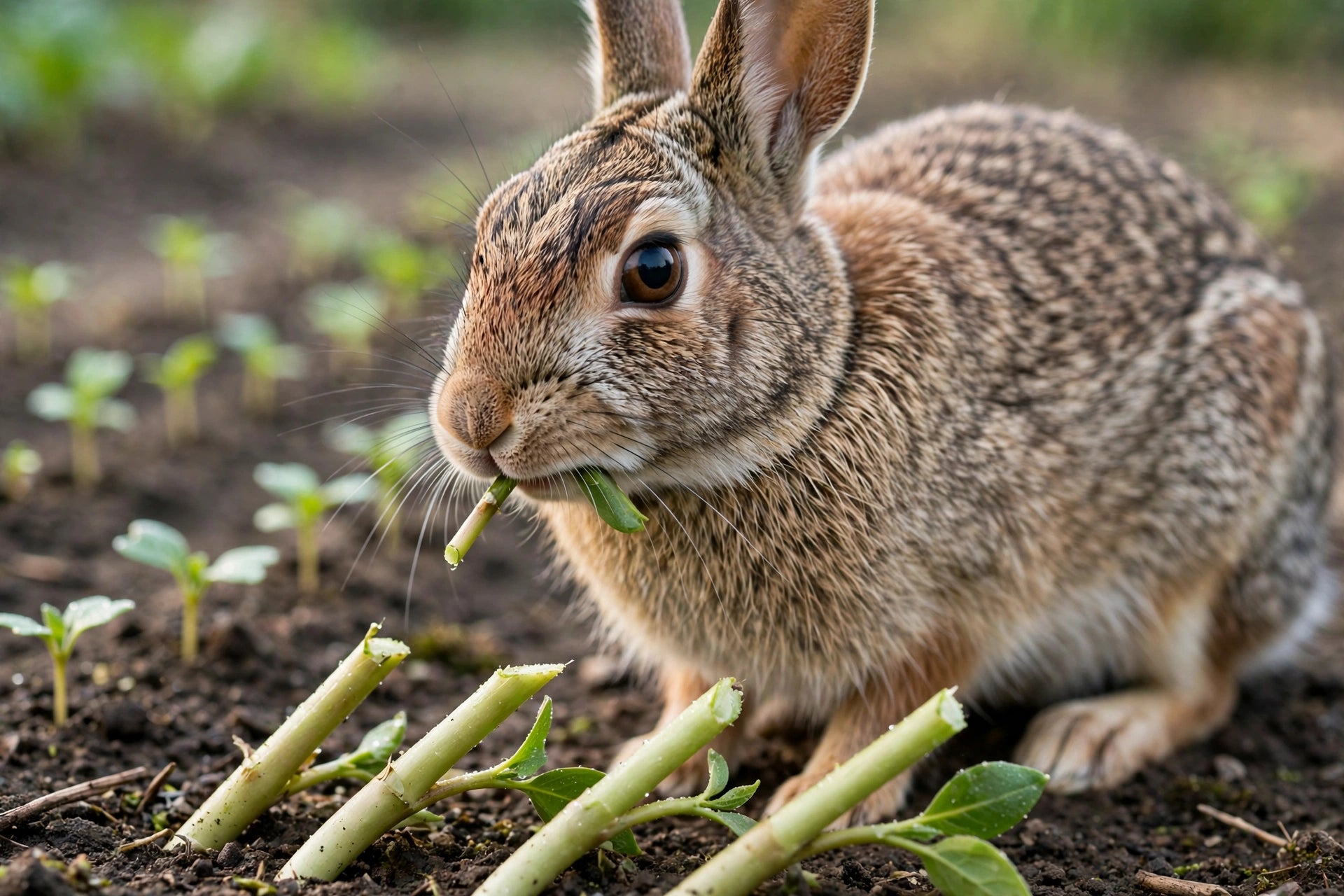
What rabbit damage on seedlings looks like
The calling card of rabbit feeding is a clean, angled cut. Cottontails' incisors — about 2.7 millimeters wide on the upper jaw — slice stems at roughly a 45-degree angle, leaving a smooth, pruner-like tip. Seedlings are often clipped down to stubs just above the soil, or eaten to the ground entirely. You will also commonly see small, round droppings scattered in the bed and, in loose soil, alternating tracks of small front feet and large hind feet.
Height is a strong clue. Rabbits feed within about two feet of the ground (higher in winter when they can stand on snow), so seedling damage is almost always at bed level. If the cut edges are ragged and torn instead of clean, deer are the more likely culprit — deer lack upper front teeth and tear vegetation rather than slicing it.
Seedling damage comparison: rabbit vs deer vs bird vs insect
When seedlings are chewed, four suspects cover most cases. This looks most like rabbit damage if you see clean angled snips, but cutworms are also possible when stems are felled right at the soil line, and deer when the damage sits higher up.
| Culprit | What the seedling looks like | Typical height | Choose rabbit if… |
|---|---|---|---|
| Rabbit | Clean 45-degree angled cut; stems snipped like pruners; sometimes eaten to the ground | Ground level to ~2 ft | You see smooth angled tips plus round droppings or paired tracks |
| Deer | Torn, ragged edges; stems shredded rather than sliced | Up to 6 ft (browse line) | Damage is above 2 ft and edges look ripped, not cut |
| Birds | Seedlings pulled up with roots; scattered stems; pecking marks on leaves | Ground level | Whole seedlings lie loose on the soil with roots attached |
| Cutworms | Stems severed at or just below the soil line; seedling topples intact | Soil line | The fallen top looks whole with no bite taken out |
Verdict: Choose rabbit if the stems are neatly snipped at an angle and the bed shows pellets or paired tracks; choose cutworm if whole tops lie felled at the soil line; choose deer if the damage is ragged and above knee height; choose birds if seedlings are uprooted rather than cut. For full disappearance forensics across all mammals, see our guide to seedlings that vanished overnight, and for bite marks on older plants, see chewed stems and missing plants.
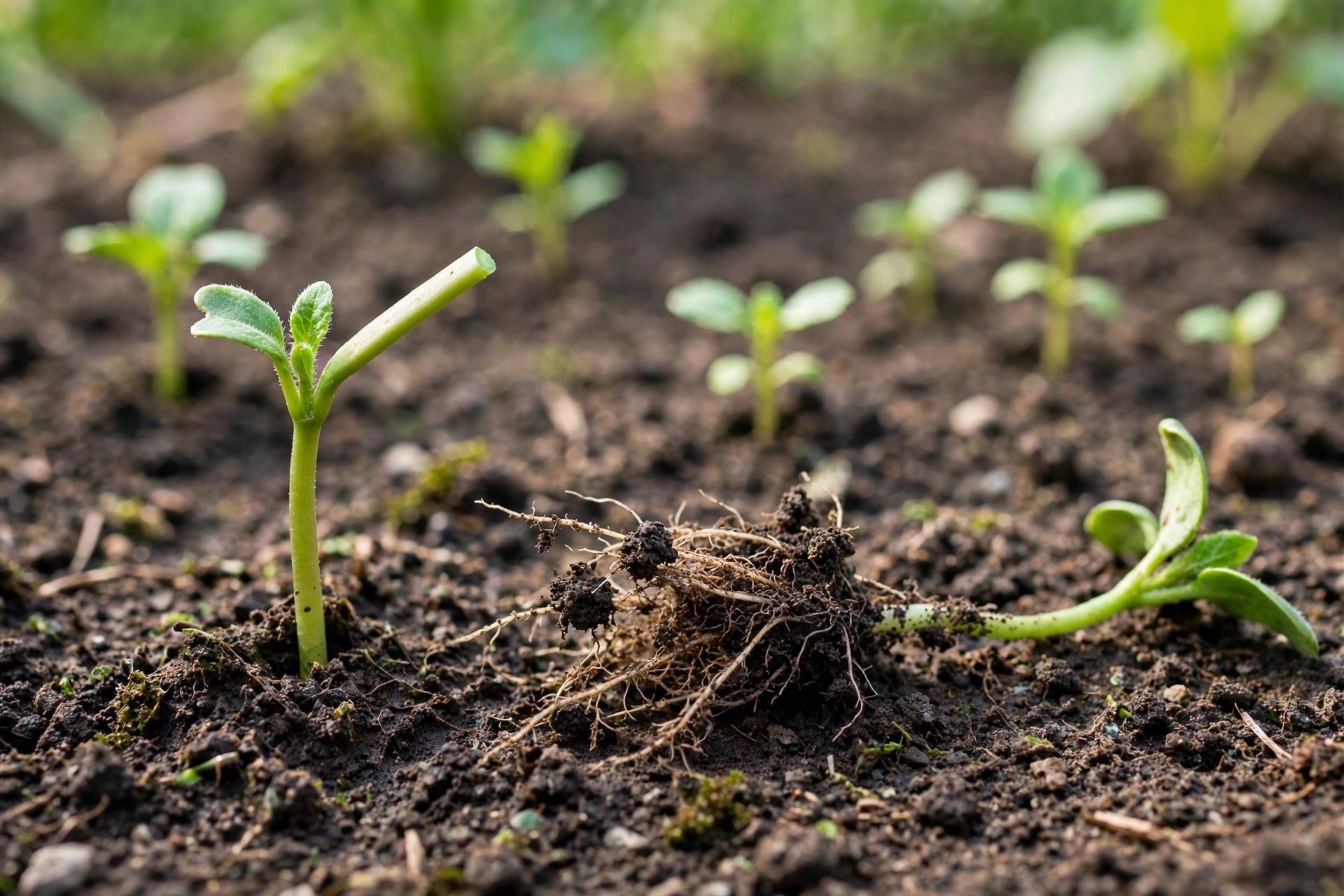
Why rabbits target seedlings
Rabbits feed morning and evening through the growing season, and in spring and summer they eat mostly tender green growth — exactly what seedlings are. New growth is the most nutritious, least fibrous food available, so a bed of fresh sprouts outranks mature foliage every time. A rabbit's reach is limited, which is why damage concentrates on low plants, but seedling beds are an ideal match: food at nose height, in dense rows, with no tough stems to chew through.
Rabbits also breed from February through September and can raise up to six litters a year, so pressure on seedling beds can build fast in a single season. A few rabbits causing minor damage is rarely a problem — action becomes worth it when whole rows start disappearing.
The 5-minute rabbit sign check
Before you build anything, confirm your culprit. Walk the bed slowly and check these, in order:
- Look at the stem tips. Crouch to seedling level and examine 5–10 damaged stems. Clean, smooth, angled cuts point to rabbits. Ragged, torn tips point away from rabbits — think deer.
- Look at the soil. Rabbits leave pea-sized round droppings, often in small piles, and an alternating pattern of small front feet and large hind feet in soft soil.
- Check the height. Measure the highest damage. Rabbit damage on seedlings stays near the ground — a raised bed of about 24 inches already deters most cottontails.
- Check the timing. Rabbits feed most in the early morning and evening, so fresh damage usually appears overnight. If the damage shows up midday, other suspects move up the list.
- Note what was eaten — and what wasn't. Rabbits favor beans, peas, lettuce, beets, and spinach, and often pass over tomatoes, potatoes, onions, cucumbers, and squash. A bed where lettuce vanished but tomatoes stand untouched is classic rabbit behavior.
If you're still unsure after the check, run through our broader overnight seedling disappearance guide before spending money on controls — it walks through every other mammal suspect step by step.
Which crops rabbits hit hardest: seedling vulnerability table
Not every seedling is equally at risk. This table groups common garden crops by how rabbits treat their seedlings, based on extension damage reports — use it to decide which rows get fenced first.
| Crop group | Risk level | Why |
|---|---|---|
| Beans and peas | Very high | Among the first targets; rows of young shoots can be clipped to the ground overnight |
| Lettuce, spinach, leafy greens | Very high | Tender leaves eaten right to the soil; rabbits may graze the whole planting |
| Beets and carrots | High | Tops and young roots are favored; carrot seedlings are especially appealing |
| Flowers (tulips, zinnias, sunflowers, ornamentals) | High | Tender shoots and blooms eaten in spring; newly sprouted flower seedlings are prime targets |
| Young brassicas (cabbage, broccoli, kale seedlings) | Moderate | Nibbled when very young; plants that survive past the seedling stage usually recover |
| Tomatoes, potatoes, onions, garlic | Low | Consistently among the least-damaged crops in extension trials |
| Cucumbers and squash | Low | Rabbits tend to pass these over; bites on squash or cucumber warrant checking for groundhogs |
Protecting seedlings from rabbits: IPM in order
Integrated pest management works from the least disruptive step to the strongest. Follow this order — each step only as far as your damage warrants.
1. Prevention: make the garden less inviting
Rabbits live where food meets cover. Clear brush piles, tall grass, and debris near the garden, and mow or trim low cover along fences and sheds. If you're fencing only part of the garden, put low-risk crops — tomatoes, onions, cucumbers, squash — in the unfenced area and reserve protection for the favorites above.
2. Cultural: grow smart around rabbits
Raised beds 24 inches or taller place seedling tops above comfortable rabbit reach for cottontails. Starting seeds in trays and transplanting sturdy, larger seedlings can also help — bigger transplants tolerate some nibbling and are less attractive than soft sprouts. Just note that planting times vary by climate region, so time your sowings and transplants to your local frost calendar, not a generic date.
3. Mechanical and physical: exclusion works best
Exclusion is the most reliable rabbit control. For seedlings, use 1-inch-mesh chicken wire or hardware cloth, 24 inches tall, pinned tightly to the ground or buried a couple of inches so rabbits can't squeeze under. For the whole garden, a 3- to 4-foot chicken wire fence with 1-inch holes, buried at least six inches deep (or bent outward at a 90-degree angle and tacked to the soil), stops both adults and young rabbits. Individual seedling rows can be covered with floating row cover until the plants are past their most tempting stage — a few days of cover often carries seedlings through. A sturdy hand trowel and wire cutters make installing a rabbit fence a one-afternoon job; if you need to upgrade your tool kit, browse our gardening tools hub.
4. Biological: let predators do the patrolling
Hawks, owls, and foxes are natural rabbit predators. You can make your yard more predator-friendly by leaving a perch for raptors or avoiding features that give rabbits predator-free cover — but this is a slow, background lever, not a fix for tonight's seedling raid. Pair it with exclusion for real protection.
5. Repellents: last resort, used correctly
Taste- and odor-based repellents can discourage browsing but are the least reliable option: rain washes them off, they must be reapplied after growth flushes, and hungry rabbits may ignore them. Apply before rabbits discover the seedlings — repellents work best as prevention, not rescue. Read the product label to confirm rabbits are listed as a target species, follow the label exactly, and never assume any product will work for sure. Trapping and relocating is another option, but rules vary by state and locality — check your local wildlife regulations before setting any trap.
Re-sow and recovery plan
Seedlings eaten to stubs rarely recover — beans and peas clipped at the soil line usually won't regrow. Your best move is a fast re-sow, but only after you've excluded the rabbits; re-sowing into an unprotected bed is just feeding them a second time.
Step 1 — Protect first. Install row cover or a rabbit-proof fence around the bed the same day. Lettuce and greens can be sown again immediately once the bed is covered, so order your replacement lettuce seeds along with radish seeds — radishes mature fast and fill the gap while slower crops come back.
Step 2 — Choose quick-maturing replacements. When the season is short, pick crops that mature quickly so you still get a harvest. Beans are a rabbit favorite, but they germinate fast and re-sow well — keep bean seeds on hand for a second planting under cover. Carrot seeds and spinach seeds also re-sow easily in protected rows, and cucumber seeds started under row cover can still produce a strong summer harvest.
Step 3 — Replant flower seedlings too. Flower beds get hit just as hard as vegetables. If your ornamentals were grazed, re-sow zinnia seeds or sunflower seeds in a fenced section, or browse the full flower seeds collection for replacements that bloom before the season ends.
Step 4 — Stage your sowings. Sow a small backup row a week after the main sowing. If rabbits find the first row, the backup — already germinating under cover — takes its place without losing the season. Keep a general vegetable seed stash so a rabbit raid never leaves you empty-handed.
Note that planting times vary by climate region: a re-sow that works in October in a mild zone may need to wait until spring in a cold one. Check your local last-frost date before re-sowing warm-season crops like beans, cucumbers, and sunflowers.
Frequently asked questions about rabbits and seedlings
How can I tell rabbit damage from cutworm damage on seedlings?
Rabbit damage leaves clean, angled cuts on the remaining stem, often with pellets or paired tracks nearby. Cutworms sever the stem at or just below the soil line, and the fallen top lies intact beside it with no bite taken out. This looks most like rabbit damage when you see pruner-clean tips; but if whole tops lie felled at the soil line, cutworms are also possible. Our cutworm-focused guide covers soil-line damage in detail.
Will eaten seedlings grow back?
Usually not. A seedling clipped at or below its first true leaves has no growing point left, so it won't recover. Leafy greens sometimes resprout if only outer leaves were nibbled, but for most vegetables — especially beans and peas — re-sowing is the practical answer.
How high does a fence need to be to keep rabbits off seedlings?
Extension guidance converges on 2 feet of 1-inch mesh for the seedling bed itself, pinned or buried at the base so rabbits can't go under. A garden perimeter fence of 3–4 feet works for larger areas. Cottontails are poor jumpers, so height matters less than sealing the bottom — the mesh must have no gaps for young rabbits to slip through.
Do rabbit repellents really work on seedlings?
They help in light-pressure situations but are the weakest tool in the set. They must be applied before rabbits find the seedlings, need reapplication after rain and new growth, and a hungry rabbit may ignore them entirely. Use repellents as a supplement to fencing, not a replacement — and never rely on any product with an expectation it will work for sure.
Are rabbit repellents safe around pets?
That depends on the product and your pet. Read the label carefully for pet warnings, and keep dogs and cats away from treated areas as directed. This is general information only — not veterinary advice. Talk to your veterinarian before using any repellent product where pets play or roam.
Why did rabbits eat my lettuce but ignore my tomatoes?
Rabbits strongly prefer tender, mild-flavored greens — lettuce, spinach, beans, peas, and beets rank at the top in extension reports. Tomatoes, potatoes, onions, garlic, cucumbers, and squash are consistently among their least-preferred foods. This pattern is one of the best field clues: a bed where the lettuce is gone and the tomato seedlings stand untouched is classic rabbit behavior. If bites do appear on squash or cucumbers, it may be worth checking for groundhogs instead.
What time of day do rabbits eat seedlings?
Mostly at dawn and dusk. Fresh damage discovered in the morning usually happened in those low-light hours, which is also why rabbit damage is so often noticed "overnight." If you walk the garden at dusk and see rabbits in the beds, you've found your culprit directly.
Sources
- University of Maryland Extension — Eastern Cottontail Rabbits in Gardens and Home Landscapes (FS-2024-0703): extension.umd.edu
- Iowa State University Extension — How do I prevent rabbits from damaging plants in the vegetable garden?: yardandgarden.extension.iastate.edu
- Iowa State University — Rabbits: Damage Management: naturalresources.extension.iastate.edu
- NDSU Extension — Dakota Gardener: Protecting Your Vegetable Garden From Pesky Rabbits: ag.ndsu.edu
- UF/IFAS Extension Sarasota County — Wondering About Wildlife: What to do About Rabbits in Your Yard: blogs.ifas.ufl.edu
- Penn State Extension — Cottontail Rabbits: extension.psu.edu
- University of Wisconsin–Madison Extension — Rabbit Ecology and Damage Management: hort.extension.wisc.edu
Last reviewed: October 2026. Planting times vary by climate region.