

Cutworms on Pepper Seedlings: Protection & Control
Tomatoes get all the cutworm attention. But ask experienced gardeners, and many will tell you peppers are the harder crop to protect.
The reason is time. A tomato seedling toughens its stem in a few weeks — and you can plant it deep for extra insurance. A pepper seedling grows slowly, stays tender for a month or more, and must be planted at exactly the same depth it grew in the pot.
That adds up to a long, wide-open window where a single cutworm can end a plant you started from seed ten weeks ago.
The fixes aren't complicated. But with peppers, you have to be more disciplined about them — every transplant collared, no exceptions, and patience with timing.
WHY Peppers STAY Vulnerable Longer
Three things stack against peppers:
Slow growth. Peppers are famously unhurried. While a tomato races to toughen its stem, a pepper seedling sits at the same tender stage for weeks — sometimes over a month. Every extra week is another week of cutworm exposure.
No planting-deep trick. Tomatoes root along buried stems; peppers don't. A pepper planted too deep will rot at the stem. So peppers go in at exactly their nursery depth — which puts the most tender part of the stem right at the soil line, exactly where cutworms feed.
Heat lovers, planted early. Peppers want warm everything — warm soil, warm nights. But gardeners eager for the season often set them out while nights are still cool. A pepper sitting still in cool soil isn't growing, isn't toughening, and isn't going anywhere. It's just waiting to be found.
For cutworm basics — identification, the C-curl test, the full IPM ladder — start with our cutworm identification and control guide.
Collar Every Pepper — NO Exceptions
With tomatoes you might get away with skipping collars on a few plants. With peppers, don't.
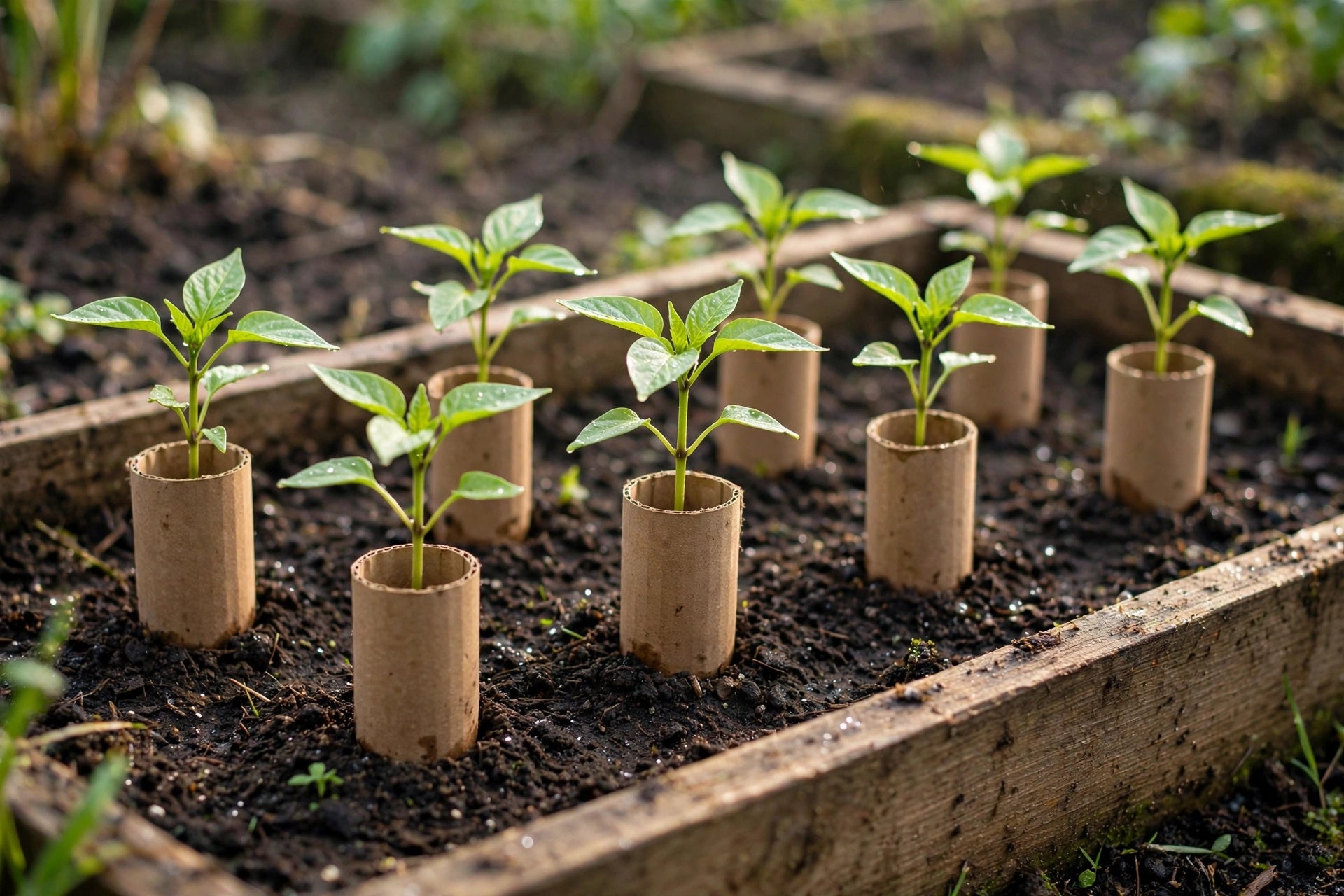
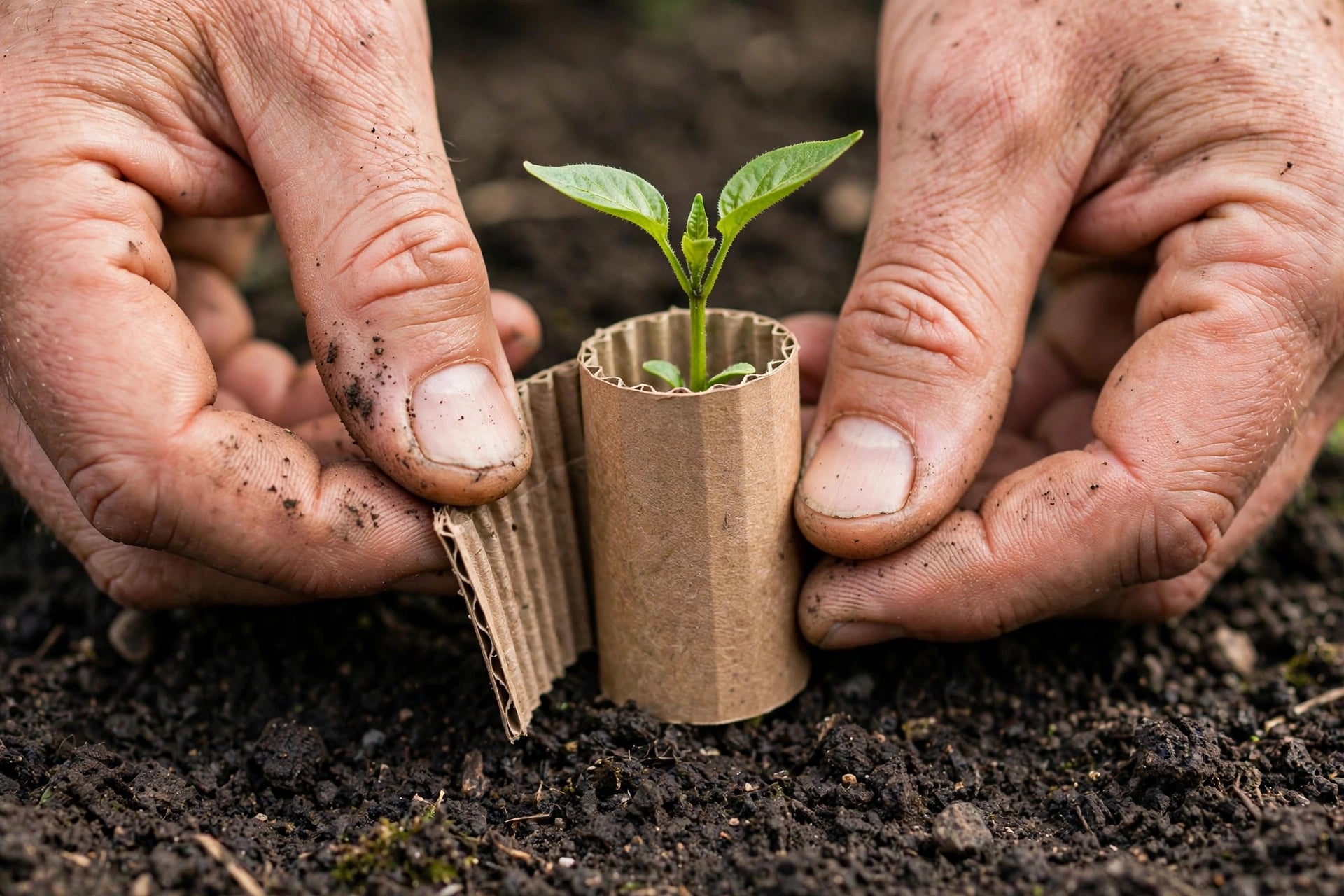
At transplant, fit a 2–3 inch collar around every pepper stem, sunk an inch into the soil. Cardboard tubes, foil wraps, bottomless plastic cups — whatever you have. Because pepper stems stay thin, make sure the collar fits snugly; a gap between collar and stem is an open door.
Leave collars on for at least a month, and don't be in a hurry to remove them. Check weekly that the collar isn't constricting the stem as it thickens — loosen or replace as needed.
One cutworm can kill a pepper plant that took you ten weeks to raise. A thirty-second collar is cheap insurance.
WARM SOIL, Strong Transplants, Right Timing
This is where pepper cutworm defense is really won — before the plant ever goes in the ground.
Wait for 65°F soil. Peppers stall below this; they grow — and toughen — above it. Transplanting into cold soil extends the vulnerable window for no benefit. Use a soil thermometer; don't guess.
Grow them stocky indoors. Strong light (2–3 inches above the tops, 14–16 hours daily), a gentle fan for stem strength, and no rush. A thick-stemmed transplant resists cutworms far better than a tall, soft one.
Harden off for a full 7–10 days. Gradual sun, wind, and temperature exposure thickens stems and cuticles. This step matters more for peppers than almost any other transplant.
Time it to your climate. Pepper transplant dates swing enormously by region — Gulf Coast gardeners may plant in March while upper-Midwest gardeners wait until June. Plant by your local last-frost date plus two weeks of warm nights, not by what the calendar says. Our free seed starting calculator works out your dates.
BT, Nematodes, AND Night Patrols
The biological tools work the same for peppers as everywhere else — with one timing note: because the vulnerable window is longer, you may need to repeat applications.
Bt (Bacillus thuringiensis var. kurstaki). Apply to the soil surface and lower foliage around transplants in the evening. Remember it works best on young, small larvae — early and repeated beats late and once.
Beneficial nematodes. A soil drench of Steinernema carpocapsae hunts cutworm larvae underground. Keep the soil moist for a couple weeks after application so the nematodes can move and hunt.
Night patrols. Two hours after dark, flashlight, soapy water. Pepper beds are small enough that a five-minute patrol covers them. Do it for the first two weeks after transplanting — that's when most damage happens.
Mulch Smart AND WEED Early
Cutworm moths lay eggs on weeds — so a weedy pepper bed is a cutworm nursery. Clear weeds from pepper beds at least two weeks before transplanting, the same as any crop.
With mulch, be strategic. A heavy mulch layer right against pepper stems gives cutworms daytime hiding spots exactly where they feed at night. Keep mulch pulled back a few inches from each stem until plants are established, then mulch normally for moisture and warmth.
Tomato growers get the plant-deep shortcut peppers can't use — our tomato seedling protection guide covers the tomato-specific version of this fight.
THE Pepper Transplant Checklist
Run through this the week you transplant and cutworm losses drop to near zero:
- Soil 65°F+ at 4 inches deep — measured with a thermometer, not guesswork - Nighttime lows reliably above 50°F in the 10-day forecast - Seedlings hardened off 7–10 days, with visibly sturdy stems - Bed weeded clean at least two weeks ahead of planting day - Collars ready — one per transplant, 2–3 inches tall (our cutworm collar DIY guide covers the best materials) - Bt mixed and ready for an evening application at transplant time - Mulch on hand, but kept pulled back from stems for the first few weeks - Flashlight by the door for the first two weeks of night patrols
Peppers reward preparation more than any other transplant. Every item on this list shortens the vulnerable window or hardens the plant against it — and the ten-week-old seedling you protect will pay you back all summer.
Wrapping Things Up!
Peppers demand more patience than tomatoes — in the garden and against cutworms. But the formula is the same, just applied with discipline: collar every transplant, wait for genuinely warm soil, grow stocky hardened-off plants, and patrol the first couple of weeks.
The ten-week-old seedling you protect with a thirty-second collar will pay you back all summer. That's a trade worth making every time.
Growing peppers this season? Browse our vegetable seeds — sweet bells, hot chiles, and everything between, each with a free growing guide tuned to real garden conditions.
Frequently Asked Questions
How do I keep cutworms off my pepper plants?
Collar every transplant with a 2–3 inch cardboard or foil collar sunk an inch into the soil, keep it on for at least a month, and transplant only sturdy, hardened-off seedlings into 65°F+ soil. Night patrols for the first two weeks catch stragglers.
Can peppers recover from cutworm damage like tomatoes?
Not really — this is the key difference. Tomatoes root along buried stems; peppers don't, and deep planting rots pepper stems. A partially chewed pepper may survive but stays weak; a severed one won't recover. Prevention matters more for peppers than any other common transplant.
When is it safe to transplant peppers outdoors?
When nighttime temperatures stay reliably above 50°F and soil is at least 65°F — typically 2–4 weeks after your last frost date, depending on region. Transplanting early into cold soil is the single biggest pepper mistake.
Do cutworms eat pepper leaves or just stems?
Mostly stems at the soil line — that's the classic damage. But young larvae chew leaf holes first, and climbing cutworm species will feed on pepper foliage and buds at night. Leaf holes on young peppers warrant a flashlight check.
Should I use mulch around pepper seedlings?
Yes, but keep it pulled back a few inches from each stem until plants are established. Mulch piled against tender stems shelters cutworms exactly where they feed. Once stems toughen, mulch normally.
Do cutworms attack peppers in containers?
Less often, but it happens — usually when pots sit directly on infested garden soil (larvae crawl in through drainage holes) or the potting mix contained soil from the garden. Use fresh, bagged potting mix, set pots on a patio or stand rather than bare soil, and collars work just as well on container peppers as in-ground ones.