Pemdas Garden
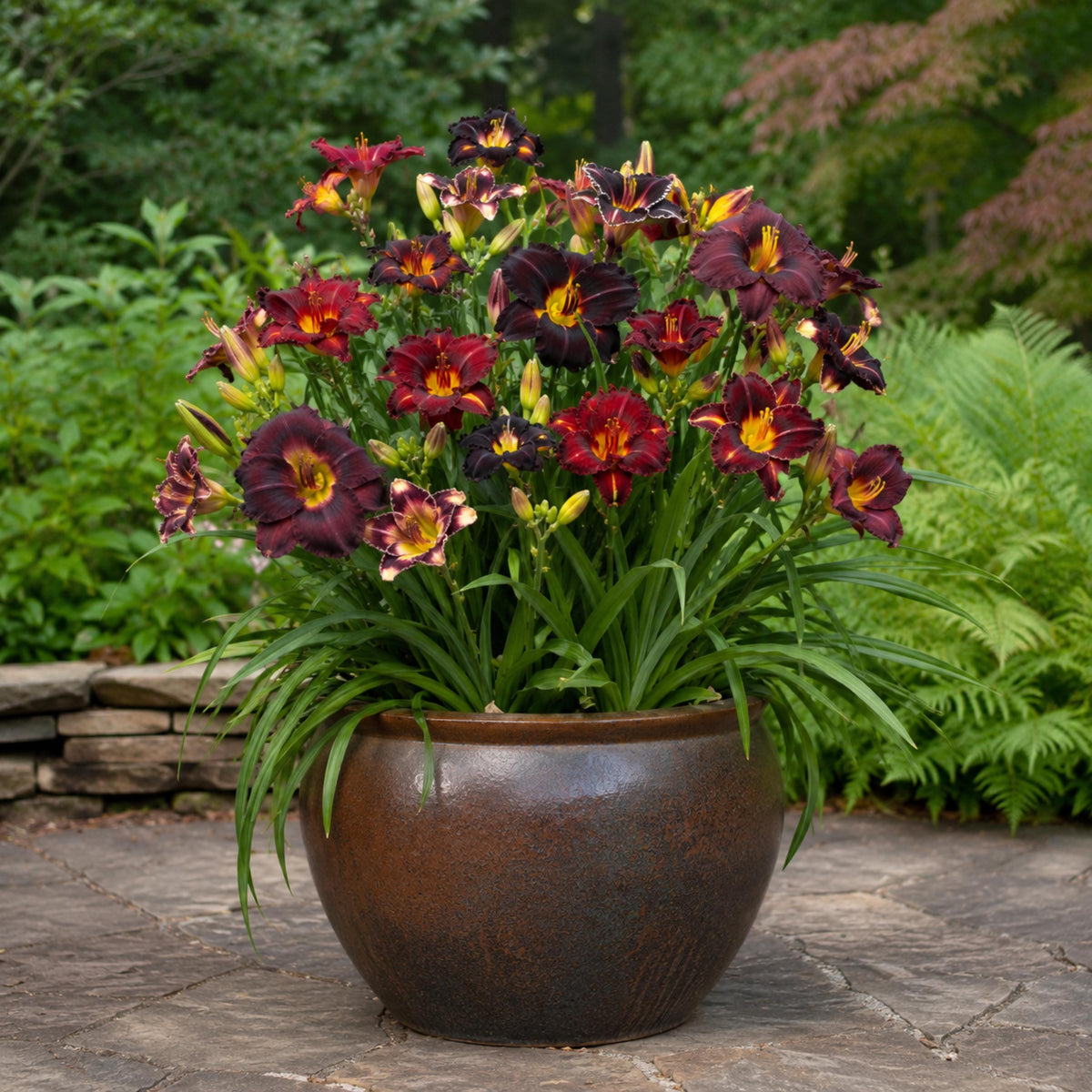
Near Black Daylily Seeds - Hemerocallis Hybrida, 20 seeds
Near Black Daylily Seeds - Hemerocallis Hybrida, 20 seeds
Regular price
$3.79 USD
Regular price
$7.58 USD
Sale price
$3.79 USD
Shipping calculated at checkout.
Quantity
Your seeds arrive beautifully wrapped and ready to give.
Couldn't load pickup availability
Quantity: 20 Seeds / pack
Near Black Daylily (Hemerocallis hybrida) is grown from seed selected for deep, dark-hued trumpet-shaped blooms. Each flower lasts a single day but is replaced daily for weeks in late spring and summer. Because they are grown from seed, individual seedlings will vary in exact shade, and many will bloom in their first or second year.
Why choose our seeds?
- Deep, dark-hued trumpet-shaped blooms
- Each flower lasts one day; new blooms open daily for weeks
- Forms clumps of arching foliage
How to grow Near Black Daylily seeds
Choose Your Planting Method
- Indoors: Start seeds indoors in late winter, 6-8 weeks before the last frost.
- Outdoors: Sow outdoors in fall for natural cold conditioning, or in spring after the last frost.
Prepare Your Materials
- Seed-starting trays or pots (if indoors)
- Well-draining potting mix
- Spray bottle for misting
Sowing the Seeds
- Sow 1/4 to 1/2 inch deep in moist seed-starting mix.
- Keep the soil evenly moist until germination.
Provide the Right Conditions
- Light: Bright light after germination; full sun to part shade for growing plants.
- Temperature: 60-70°F (16-21°C) for germination.
Germination
- Seeds typically germinate in 2-6 weeks.
- Seedlings grow slowly at first; keep them evenly moist and in bright light.
Transplanting
- Transplant after the last frost, when seedlings have several grass-like leaves.
- Space plants 12-18 inches apart.
Care Tips
- Sun: Full sun to light shade.
- Water: Water regularly the first season; established plants tolerate brief dry spells but bloom best with steady moisture.
- Fertilizer: A light feeding of balanced fertilizer in spring is enough for most soils.
- Remove spent flower stalks at the base; divide crowded clumps every 3-5 years to keep them vigorous.
Bloom Time:
Late spring to summer; some may bloom the first year, with stronger bloom in the second year.