Pemdas Garden
Merlin Blue Morn Petunia Seeds - Petunia, 20 seeds
Merlin Blue Morn Petunia Seeds - Petunia, 20 seeds
Regular price
$3.79 USD
Regular price
$7.58 USD
Sale price
$3.79 USD
Shipping calculated at checkout.
Quantity
Your seeds arrive beautifully wrapped and ready to give.
Couldn't load pickup availability
Quantity: 20 Seeds / pack
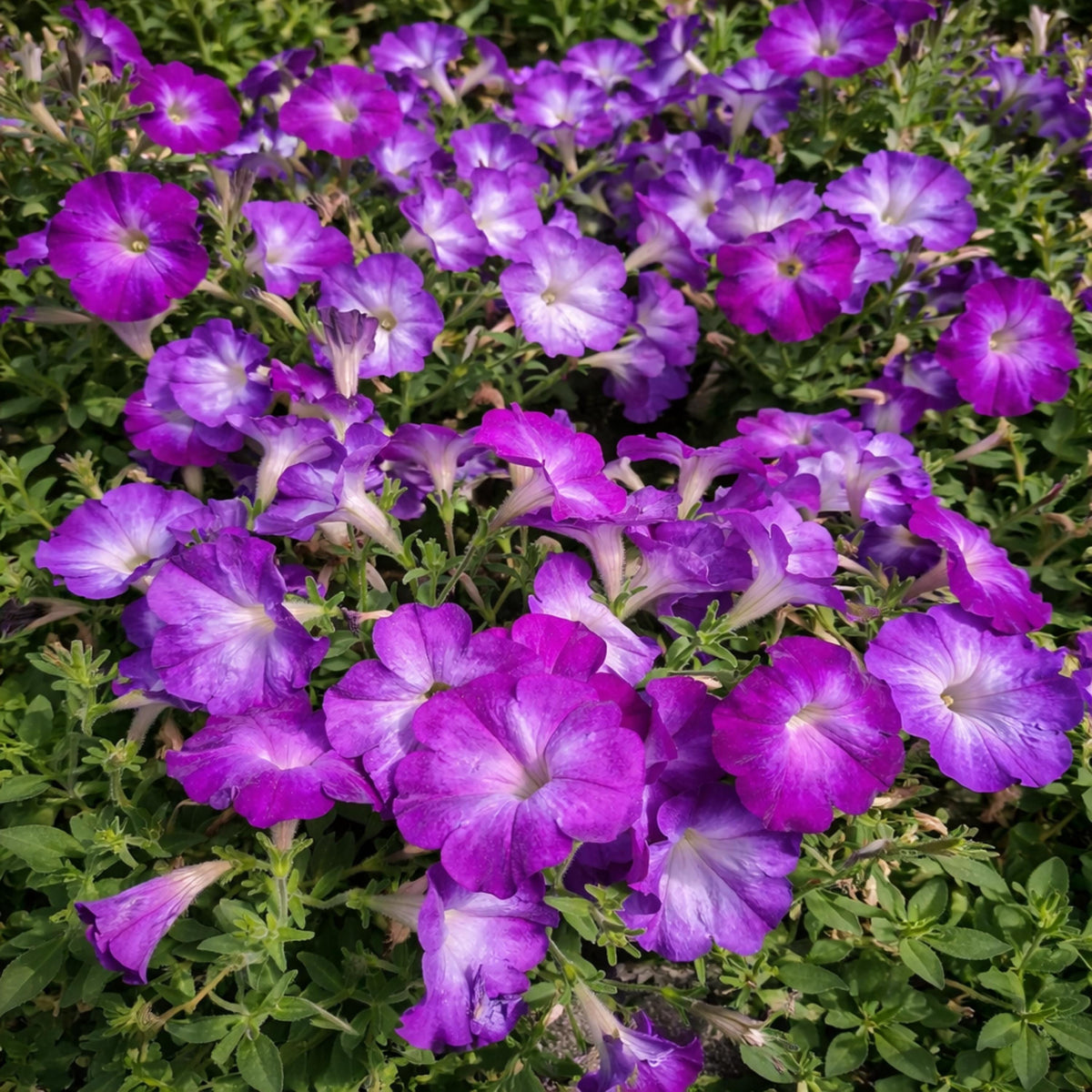
Merlin Blue Morn Petunia is a classic multiflora petunia with deep blue blooms that pale to a soft silvery throat, giving each flower a glowing, morning-sky look. Multiflora petunias bloom abundantly and hold up better in rainy weather than large-flowered types. Like all petunias, it flowers nonstop from planting until frost.
Why choose our seeds?
- Deep blue blooms fading to a silvery throat for a luminous, two-tone effect
- Multiflora habit with abundant blooms and good weather tolerance
- Excellent for beds, borders, and massed container displays
How to grow Merlin Blue Morn Petunia seeds
Choose Your Planting Method
- Indoors: Start 8-10 weeks before your last frost; petunias are slow to reach flowering size.
- Outdoors: Direct sowing is not recommended; start indoors for the best results.
Prepare Your Materials
- Seed-starting trays or pots
- Fine, well-draining seed-starting mix
- Clear plastic dome or wrap to hold humidity
- Spray bottle for misting
Sowing the Seeds
- Sow on the surface of the mix and press in gently; do not cover the seeds, as they need light to germinate.
- Mist to settle the seeds; keep the surface evenly moist.
Provide the Right Conditions
- Light: Light is required for germination; bright light keeps seedlings stocky.
- Temperature: 70-75°F (21-24°C).
Germination
- Seeds germinate in 7-14 days, sometimes taking up to three weeks.
- Grow seedlings on under strong light to prevent legginess.
Transplanting
- Transplant to individual pots when seedlings have several true leaves.
- Plant out after all danger of frost, spacing plants about 12 inches apart.
Care Tips
- Sun: Full sun for the heaviest bloom.
- Water: Water when the surface of the soil feels dry; petunias dislike constantly soggy soil.
- Fertilizer: Feed every two weeks with a diluted balanced fertilizer; hungry plants stop blooming.
- Deadhead spent blooms to keep flowers coming all season.
Bloom Time:
Late spring to the first frost; plants bloom continuously.