1
/
of
1
Pemdas Garden
Hairy Vetch Seeds - Flower, 30 seeds
Hairy Vetch Seeds - Flower, 30 seeds
No reviews
Regular price
$3.79 USD
Regular price
$7.58 USD
Sale price
$3.79 USD
Shipping calculated at checkout.
Quantity
Your seeds arrive beautifully wrapped and ready to give.
Couldn't load pickup availability
Quantity: 30 Seeds / pack
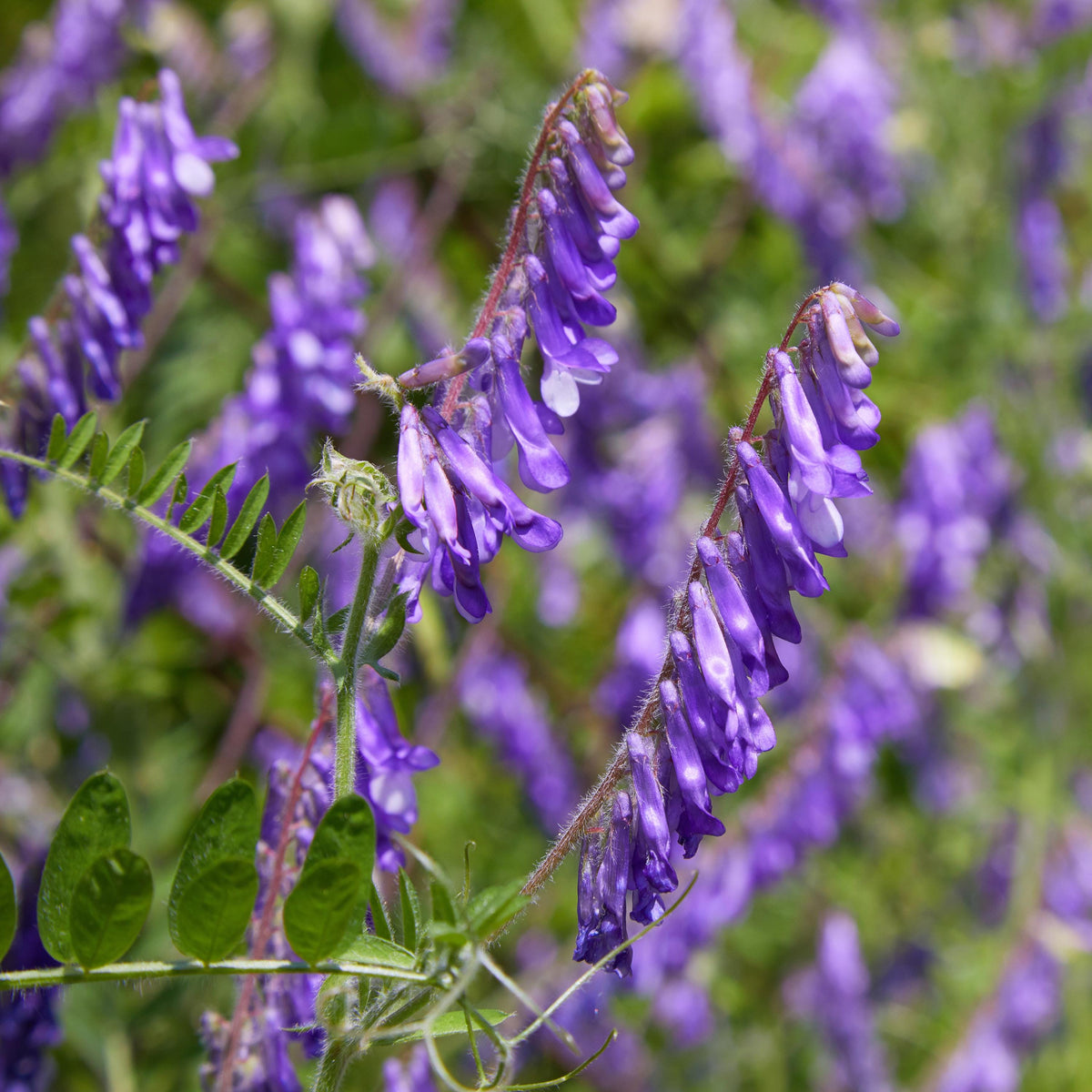
Hairy Vetch (Vicia villosa) is a vigorous cool-season legume grown as a cover crop and green manure. Its climbing vines reach 6-8 feet, fixing nitrogen in the soil while smothering weeds, and bloom with clusters of lavender-purple tubular flowers in late spring. Note: the seeds are poisonous to livestock; mow plants before they set seed to keep them from becoming weedy.
Why choose our seeds?
- Nitrogen-fixing legume cover crop for soil building
- Vigorous 6-8 foot vines that smother weeds
- Clusters of lavender-purple tubular blooms in late spring
How to grow Hairy Vetch seeds
Choose Your Planting Method
- Outdoors only: Direct sow in late summer or fall, at least 30 days before the first frost, so roots establish before winter. In cooler regions it can also be sown in spring.
- Hairy vetch is not suited to indoor growing.
Prepare Your Materials
- Prepared garden bed or field soil
- Rake for covering broadcast seed
Sowing the Seeds
- Sow 1/2 to 1 inch deep; broadcast the seed over the soil and rake it in lightly, or drill in rows.
- For garden beds, sow about 1-2 pounds of seed per 1,000 square feet.
Provide the Right Conditions
- Light: Full sun.
- Temperature: 60-75°F (15-24°C) for germination.
Germination
- Seeds typically germinate in 7-14 days with adequate moisture.
- Keep the seedbed moist until seedlings are established.
Transplanting
- Hairy vetch is direct-sown and not transplanted.
- Seedlings form a low leafy mat that survives winter, then grows rapidly in spring.
Care Tips
- Sun: Full sun.
- Water: Water well until established; plants need adequate moisture to reach full growth.
- Mow or till the plants before flowering in spring for green manure, and to prevent self-seeding.
Bloom Time:
Late spring, typically late May to June.
Share