Pemdas Garden
Common Bladder Catchfly Seeds - Silene Vulgaris, 30 seeds
Common Bladder Catchfly Seeds - Silene Vulgaris, 30 seeds
Regular price
$3.79 USD
Regular price
$7.58 USD
Sale price
$3.79 USD
Shipping calculated at checkout.
Quantity
Your seeds arrive beautifully wrapped and ready to give.
Couldn't load pickup availability
Quantity: 30 Seeds / pack
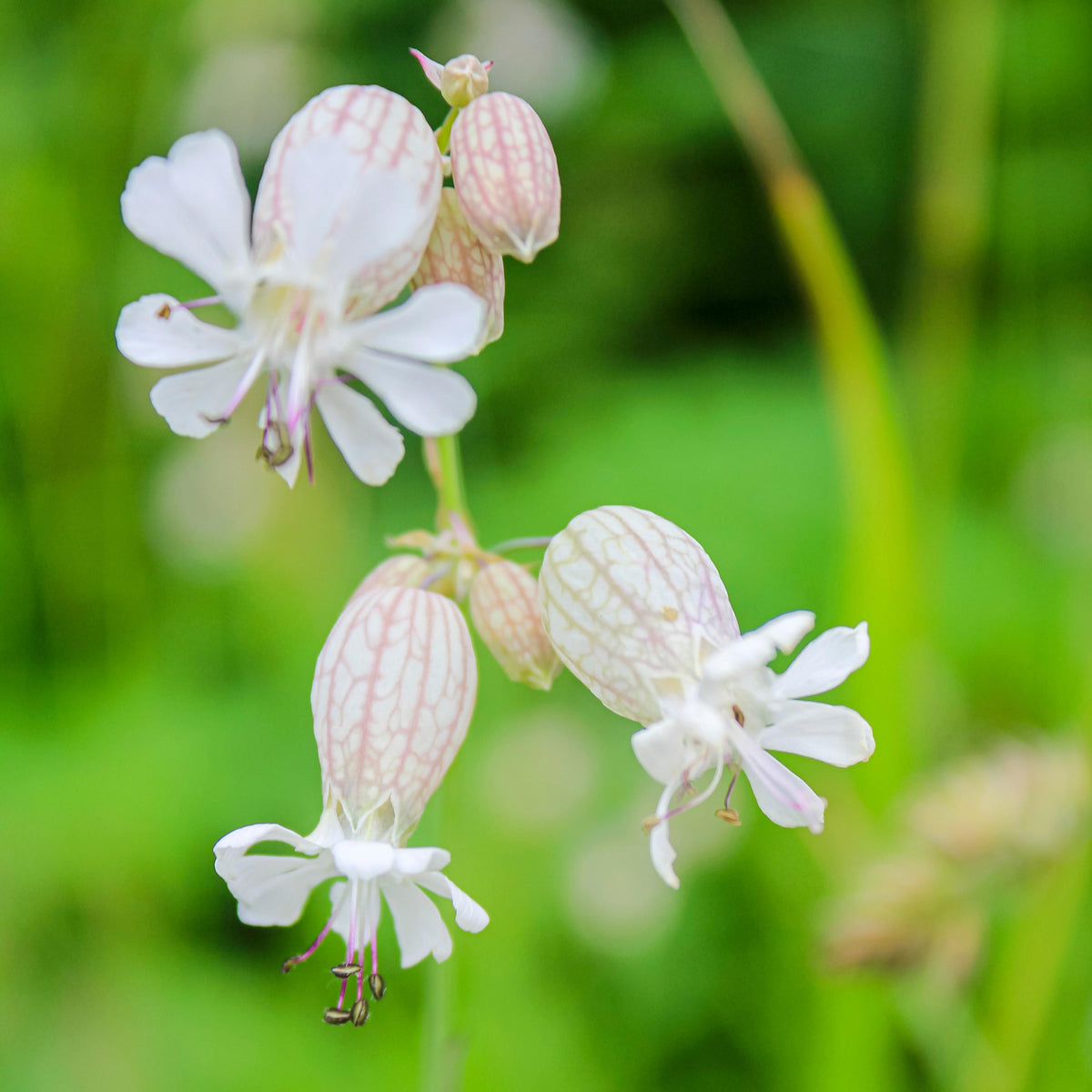
Common bladder catchfly (Silene vulgaris) is a cottage-garden wildflower with an unmistakable trick: each small white bloom sits in front of an inflated, balloon-like calyx. In the evening the flowers give off a light clove-like scent. An easy, undemanding plant for meadows, wildflower mixes and naturalized borders.
Why choose our seeds?
- Distinctive inflated, balloon-like buds opening to white, star-shaped flowers
- Light clove-like scent in the evening
- Easy, low-maintenance wildflower for meadows and natural plantings
How to grow Common Bladder Catchfly seeds
Choose Your Planting Method
- Indoors: Start indoors from late winter to early spring.
- Outdoors: Direct sow in spring or autumn where plants are to flower.
Prepare Your Materials
- Seed-starting trays or pots (if indoors)
- Well-draining potting mix
- Humidity dome or plastic wrap to hold moisture
- Spray bottle for misting
Sowing the Seeds
- Surface-sow: scatter on moist seed compost and press in lightly, covering with only the thinnest sprinkling of mix — seeds need light to germinate.
- Keep the compost moist but not wet.
Provide the Right Conditions
- Light: Bright, indirect light; shade from harsh direct sun during germination.
- Temperature: 59-70°F (15-21°C).
- Humidity: A propagator lid or plastic cover helps hold moisture; ventilate daily.
Germination
- About 2-3 weeks; germination can be slow and erratic, so be patient.
- Grow seedlings on in cooler, bright conditions; pot up when they have their second set of leaves.
Transplanting
- After the last frost.
- Harden off over about 10 days before planting out.
- 8-12 inches apart.
Care Tips
- Sun: Full sun (tolerates partial shade).
- Water: Water during dry spells while plants establish; avoid waterlogged soil.
- Fertilizer: Generally not needed — moderately fertile garden soil is plenty.
- Deadhead to prolong flowering, or leave some seed heads to ripen if you want plants to self-seed.
Bloom Time:
May through September.