

How to Grow Turnips from Seed: Fall Harvest Guide
By Paul Smith, pemdasgarden.com
Turnips are the fall garden's quiet overachiever: sown in late summer, they hand you two harvests — peppery greens in weeks and sweet roots by frost — from a seed that germinates in days. Seven Top turnip is grown especially for its abundant leafy tops rather than big roots, which makes it one of the easiest, most forgiving fall crops a beginner can plant.
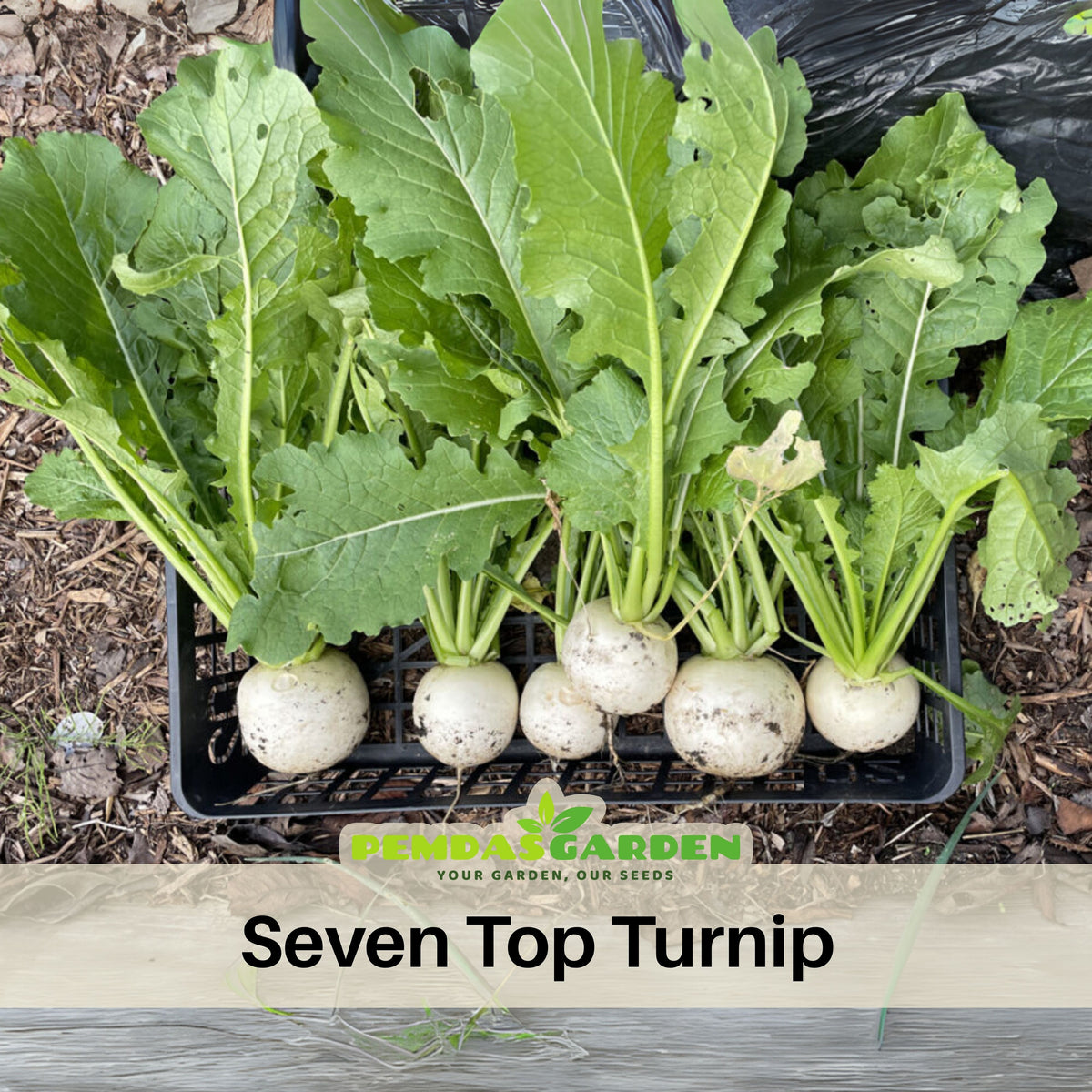
Turnips (Brassica rapa) are cool-season brassicas. Like all root crops, they insist on direct sowing — transplanting disturbs the developing root and ruins its shape. The good news: they germinate fast and grow faster.
Direct Sow Only — Never Transplant Turnips
Sow turnip seed directly where it will grow, about 2 months before your first expected fall frost. Late-summer sowing is ideal because the plants mature as weather cools, and cool weather is what makes turnips sweet.
- Depth: Plant 1/2 inch deep in loose, well-worked soil. Crusty or compacted soil blocks emergence — rake the bed smooth first.
- Time: Seeds germinate in 5 to 10 days when soil is 60 to 85°F. They can sprout in soil as cool as 40°F, just more slowly.
- Spacing: Sow 1 to 2 inches apart in rows 12 to 18 inches apart, or broadcast and rake in. Thin ruthlessly once seedlings are 3 to 4 inches tall.
- Soil: Deeply tilled, stone-free soil, pH 6.0 to 7.5. Fresh manure is a hard no — it contaminates root crops and forks the roots. Use finished compost instead.
Thinning Decides Your Harvest
Crowded turnips make no roots worth eating. Thin seedlings to 3 to 4 inches apart for roots, or leave them denser if you are growing only for greens — Seven Top is typically grown for its tops, so a tighter stand is fine and even helps shade out weeds. Eat the thinnings as microgreens; they are excellent in salads and sandwiches.
Water Steadily Or Roots Turn Woody
The single biggest quality factor: even moisture. Turnips need about 1 inch of water per week, and fluctuations — drought followed by downpour — cause cracking, woody texture, and bitter, pithy roots. Mulch around plants to hold soil moisture steady, and never let the bed dry out completely during root swell.
High summer heat does the same damage as drought: it makes roots hot-flavored and tough. That is why fall crops, maturing in 50 to 70°F weather, consistently out-taste spring ones.
Harvest By Size, Not By Calendar
Turnip greens are ready for cutting when 4 to 6 inches tall — snip outer leaves and the plant keeps producing. For roots, pull when they reach 2 to 3 inches across. Bigger is not better here: oversized turnips turn pungent, stringy, and pithy. When in doubt, harvest small and sweet.
Turnips tolerate frost and even light freezes, and cold actually sweetens the roots. In mild climates you can leave them in the ground and harvest through winter; in cold zones, pull before the ground freezes hard. Timing shifts with your USDA zone — southern gardeners can sow from September into winter, while northern gardeners should count back about 60 days from first frost.
Rotate Away From Cole Crops
Turnips share pests and diseases with cabbage, broccoli, kale, and radishes. Do not sow where any cole crop grew in the last four years — rotation is the simplest defense against clubroot and flea beetle buildup. Floating row cover from sowing day also blocks flea beetles, which love turnip seedlings.
Common Mistakes
- Skipping thinning. A crowded bed gives you leaves and marbles, not turnips.
- Erratic watering. Drought-then-deluge is the recipe for cracked, woody, bitter roots.
- Sowing in summer heat and wondering why roots taste harsh. Sow for fall.
- Waiting too long to harvest. Pull at 2 to 3 inches; giants are pithy.
- Planting after cabbage or broccoli in the same bed — rotate brassicas on a multi-year cycle.
Garden tools that help: build your fall schedule with the Planting Calendar, and check whether your crop still has time with the Last Chance to Plant tool on our gardening tools hub.

Frequently Asked Questions
How long do turnip seeds take to germinate?
About 5 to 10 days in warm soil (60–85°F). Cooler soil slows emergence but rarely stops it.
Can you grow turnips just for the greens?
Absolutely — varieties like Seven Top are grown primarily for their leafy tops. Sow densely, cut outer leaves at 4 to 6 inches, and let plants regrow.
Why are my turnips woody and bitter?
Heat, drought stress, or over-maturity. Even watering, fall timing, and harvesting at 2 to 3 inches keep roots sweet and tender.
Do turnips survive frost?
Yes — they tolerate frosts and light freezes, and cold sweetens the roots. Mulch heavily to extend the harvest.
Keep growing: pair with fellow fall roots in our beet growing guide and radish guide, browse vegetable seeds, or return to the Growing Guides hub.